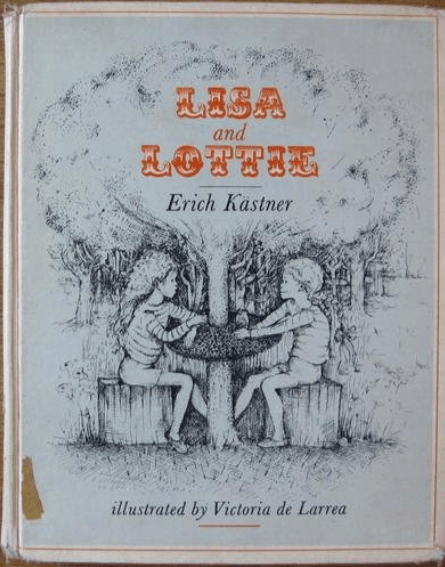
Like Baby Island for the 1937 Club, I was astonished to find that Erich Kästner’s Lisa and Lottie was published much earlier than I had thought — actually, I was rather surprised to find that there was a book at all, since I was quite familiar with the 1961 Disney movie “The Parent Trap” , and I don’t remember anyone ever mentioning an original novel, either about that movie or the multiple sequels and remakes. But there it is. Lisa and Lottie, or in its original German Das Doppelte Lottchen, is about identical twins whose parents, upon divorcing, each take one of the girls and are determined not to reveal to their twin the existence of the other.
But, being a humorous novel for children, obviously they find out, in this case at summer camp, where each is determined to hate the other until they realize the truth. The girls quickly come to the conclusion that the best course is for them to bring their mother and father back together, and so they spend the rest of their days at camp with Lisa learning how to “be” Lottie, and Lottie Lisa.
Things back home seem to be going fairly smoothly, though Father, a composer and conductor in Vienna, is a bit surprised at “Lisa”‘s sudden talent for cooking. All is not quite well, however.
Girls have a way of knowing when something is wrong. When fathers talk of children’s operas and never speak of stylish young ladies, their daughters know which way the wind is blowing.
Enter, of course, that Miss Gerlach, wicked-stepmother-in-training.
This is the first English translation of Kästner’s book, from 1962, and I’m a bit curious to read the 2014 one by Anthea Bell, as the prose seems more than a bit spare, even for an audience of ten-year-olds. Aside from the mind-boggling decision by the parents to separate their twins to the point of not even telling them of the other’s existence, it’s an amusing story in which, as it were, the journey and not the arrival is what matters, as it is pretty obvious at most points which way things are going to go!
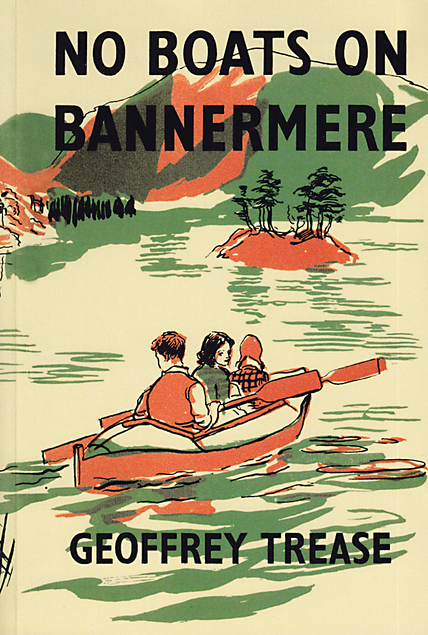
Anyone — like me — who loves the “Swallows and Amazons” series by Arthur Ransome might indeed look at a summary of Geoffrey Trease’s No Boats on Bannermere with some trepidation. Children and boats in the Lake District? And the lake has a tiny island at one end, furnished with tall pines and eminently suitable for camping? and one of the children is named Susan, and the house on the shore is called Beckfoot? Oh, no!
But not to worry. Trease, already by 1949 an accomplished writer of children’s fiction, was well aware of his predecessor, for nearly the first thing that happens once his main characters, siblings Bill and Sue, reach Bannermere itself, is that they find out that the parvenu squire has forbidden boats on “his” lake — hence the title. Trease also seems fairly determined to go in quite different directions from Ransome — the children’s father, unlike Lt. Walker, is not merely away, but has in fact done a bunk, leaving his wife to fend for herself and the two children — luckily, she inherits a cottage in the Lake District from an elderly cousin, and although it is not a little bit dilapidated, and the lack of income makes the idea of offering teas to hikers and other visitors fairly appealing. Trease has also chosen to write the story as told by Bill, whose authorial style — Bill is already determined to be a writer — is nothing like any of the Walker children, and he sounds quite “modern” even just twenty years later than them.
Bill and Sue, with new friends Tim and Penny, are thwarted in their interest in camping on the little island, which “belongs” to Sir Alfred.
It was rather a disappointment after the plans we’d been making. We could still save up and buy a tent, and it would be fun to go camping, but it wouldn’t be the same as having an island all to ourselves.
But while casting about for things to do instead, the children begin to suspect Sir Alfred, with his mysterious comings-and-goings in the woods near the manor, of more than just being a pompous killjoy. Complications obviously ensue!
I’m glad that I gave this book a chance, and I’m very glad that I didn’t have to pay the exorbitant amount that book dealers are charging for it — into three figures in most cases — as a copy is available to borrow from the Internet Archive for free, as long as one doesn’t mind not having the “real” paper version.
Links to other readers’ reviews for today’s edition of the 1949 Club can be found here.
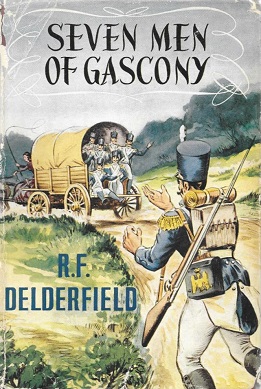
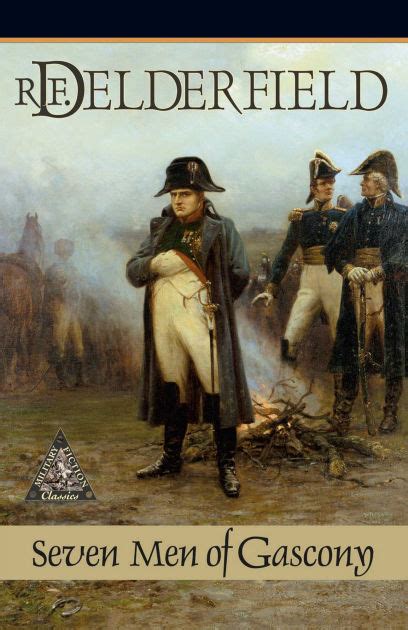
I was rather delighted to see R.F. Delderfield on Wikipedia’s list of books published in 1949, even more so to find that his book, Seven Men of Gascony, was easily available secondhand. I went through a fairly extensive Delderfield phase after seeing the dramatization of To Serve Them All My Days way back when, reading everything that my local public library had of his — presumably the “biggies,” the “Avenue” and “Swann” cycles certainly, though no non-fiction, and not Seven Men, and so I was happy to choose it for the 1949 Club.
The novel tells the story of a group of voltigeurs, sharpshooters or skirmishers, in Napoléon’s army, who come together in their own ways and for their own reasons, and form, as people do under dangerous circumstances, deep and lasting bonds. The story encompasses some six years of Napoléon’s war and a great swathe of the European continent, from Moscow to Lisbon, even, for a time, England when a number of the seven are taken prisoner by the British, and yet there is always at the heart of it the events of the men’s lives and, it must be said, of many deaths along the way. Delderfield’s prose is as intelligent and smooth as I remember it, and he brings the fortunes of the seven voltigeurs alive as easily as he does with his own present-day.
It is to the credit of the first edition’s dust-jacket illustrator, by the way, that he had clearly read the book, but I guess I had the idea that a French cantinière‘s cart of the Napoleonic era would look less like an American pioneer’s covered wagon than this one does …! And I was pleased that although the cover of the McBooks Press edition that I did buy was focused on Napoléon instead of any of his men, let alone any of the title’s seven, the illustration itself is much better, certainly more period-appropriate than some of the other choices for this book! —
For other readers’ reviews in the 1949 Club today, visit Simon’s blog here.
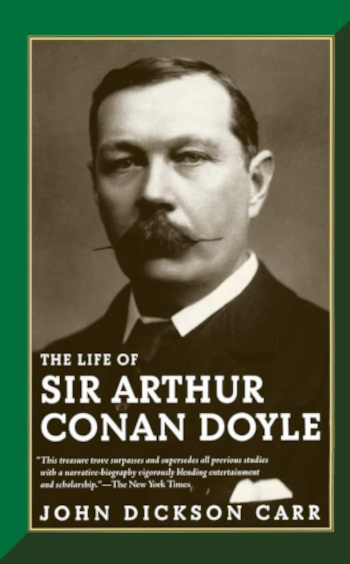
I confess that I rather expected a sort of dry, “he did this, he did that” kind of thing from John Dickson Carr‘s The Life of Sir Arthur Conan Doyle, but I was quite disappointed in the best possible way, for I found Carr’s writing intelligent yet easy to read, and Doyle himself, apart from that lamentable episode with the fairies, to be quite an interesting and engaging person.
Doyle began his adult life by studying medicine, gaining knowledge and experience by hiring himself out as a naval surgeon before going, not particularly successfully (though mostly due to bad luck), into private practice, and he began to write, as many writers do, to earn money. Unlike many writers who simply want to earn money, however, he proved to be quite good at it, publishing short stories throughout his twenties, and his first Sherlock Holmes novel, A Study in Scarlet, at the comparatively tender age of 28. (I admit that I haven’t read the Holmes stories for decades, but I devoured them all I think well before I was in high school, which is to Doyle’s credit that while certainly complex in plotting, they were not difficult to read, even though written a century earlier!)
Doyle famously had a deep and abiding interest in spiritualism, not prompted by but certainly deepened by the deaths of many family members, including one of his sons and a brother, in the Great War, and although a number of the spiritualists that he supported (some in print) later proved to be frauds, and Doyle himself was at times quite skeptical about particular psychic readings, séances, and so on, he clearly wanted to believe in the paranormal — which seems curiously at odds with Sherlock Holmes’s utter rationality, but to me it only makes Doyle more sympathetic as a person, that he could carry these contradictions within him, and perhaps it is also Carr’s even-handed presentation of this side of Doyle, that makes it easier to accept those contradictions.
Doyle also had a strong sense of moral honor — he had married a pretty and likeable young woman when both in their mid-twenties, then a little over ten years later fell completely in love with another woman, but due to loyalty to his wife, the relationship remained platonic until after his wife’s death — and also of justice, to the extent of being instrumental in reversing the decisions in two separate criminal cases, exonerating the two men, one of whom certainly and possibly the other as well, had been the victims of racial stereotyping.
It is also fascinating to realize that, although we associate Sherlock Holmes (the original one, anyway!) and thus Doyle himself, with the Victorian era, he lived well into the 20th century, even appearing in filmed interviews such as this one —
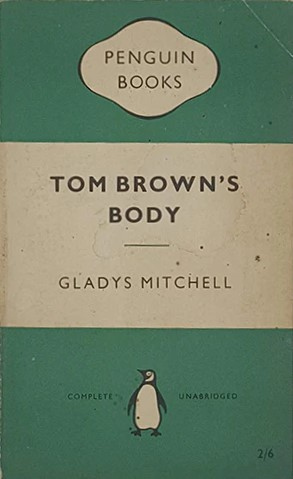
My second book for the 1949 Club is Tom Brown’s Body by Gladys Mitchell. I had heard of Mitchell, having handled a great number of her titles in my shelving days at the library — she had a long career, spanning some sixty years — though I had never read a single one, but I quite enjoyed this, which appears perhaps a third or so of the way into Mitchell’s writing days.
Gerald Conway is a junior master at a smallish public school (old-style, I mean, it is 1949 after all), but although he is well-thought of by the headmaster as a teacher and as a games coach, the other members of the staff find him rude and insufferable — so that there is no shortage of suspects, even at times among the boys, when he turns up dead. Mitchell herself, I find, was a teacher — like Conway, in fact, of both history and games — which clearly is the source of her facility with schoolboy dialogue, as here where Merrys is trying to talk his friend Skene into an illegal late-night outing —
“… We could take turns at riding the bike and standing on the step. We could get to the place by nine, see two or three dog-races, nip back again on the bike, and so home by about eleven.”
“And suppose we get nabbed? We’d be sacked at once.”
“You can’t be sacked unless you’re out after midnight. I know that for a cast-iron fact. Besides, we shan’t be nabbed. How can we be? Who’s to nab us?”
“Things might go wrong. Besides, the bike! Think of the frightful row there’d be if Albert-Edward knew we’d pinched his bike! He may be an ass, but he is a Housemaster.”
“Oh, rot! He never even looks at the bike. He only had the thing for the war when he was in the Home Guard. It’s just shoved inside that little place by Jack the Ripper’s toolshed. I expect Albert-Edward’s forgotten he’s got it by now. Beaks are always absent-minded about property.”
“The tyres’ll be flat.”
“Oh, well, it’s sure to have a pump on it. Tell you what! Let’s get Jack the Ripper to pump it up, and tell him to see that the lamps are O.K. He’ll do it for a bob, and once he’s taken the bob he’ll have to keep his mouth shut for his own sake. What do you say?”
“We’ll have to go out past Spivvy’s cottage, remember.”
“What odds. Ten to one, hell be up in the masters’ Common Room when we go, and asleep by the time we get back. Now you saidyou’d come –“
“On condition that you get the bike, then.”
“All right, then, although I think –“
“And that the lamps and the tyres are all right. I’m not going to break my neck.”
“All right, then, but they will be all right. And who cares, anyway, about your bally neck?”
“And,” said Skene, with sudden cunning, “that if we win anything on the Dogs, we split it fifty-fifty. You’re always much luckier than I am.”
“Win anything on the — Gosh! I’d never thought of that!” said Merrys, startled. “I say, though, that would make a stink if it came out! Do you think –?”
“It’s my last condition,” said Skene, who now saw a ray of hope that the expedition, of which he was thoroughly nervous, might, after all, be abandoned.
There is much like this from a number of the boys, but Mitchell’s facility in giving each boy a characteristic way of speaking makes it easy to read and at times very amusing. (I am quite fond, myself, of little Ingpen, who is too young to know that school is not something he should enjoy.)
The school-masters and their wives — in one case, his sister — are equally well-drawn, although I must say there do seem to be quite a lot of them, quite a lot, I mean, who feature significantly in the story. Mr. Loveday and his sister, for one, are rather mind-bogglingly eccentric in that wonderfully English way: Mr. Loveday has indulged himself, being a housemaster, in building a replica of a Roman baths (“The Romans did not use coke, of course,” he mourns), and his sister enjoys airing her numerous opinions and sparring (gently? icily? this is not quite clear!) with the equally strong-minded psychoanalyst and amateur detective Mrs. Bradley.
“You are still with us, then?” Miss Loveday remarked, when next she encountered Mrs. Bradley. “I thought you have left for good just before the Christmas holiday.”
“I have been asked to treat Mr. Poundbury, who seems to be indulging in a nervous breakdown,” replied Mrs. Bradley, “and I am still partly in attendance on Mrs. Poundbury, whose recovery seems to be slow. I think she has had a bad shock.”
This leading gambit was pointedly ignored. “She suffers from self-pity,” said Miss Loveday. “And that is a bad sort of medicine. What she needs is an airing.”
“What kind of an airing?” Mrs. Bradley enquired.
“Why, she needs to tell somebody how she came to be struck on the head. She knows very well who did it, and why,” said Miss Loveday positively. “She should be made to unburden herself. Not for nothing was the Confessional invented. Leo the Isaurian knew that.”
“Did he?” said Mrs. Bradley, somewhat puzzled by this last reference. “We have tried to get from Mrs. Poundbury how she came to meet with her accident, but she declares she does not know.”
“Shielding him, I suppose,” said Miss Loveday, with a virtuous, spinsterly snort. “That heaven, there is only one man I’m foolish about, and that is my brother. Brothers, I find, are the only satisfactory members of their sex. They can drive the car, and climb step-ladders, and do not require one to waste time and strength in procreation.”
“The Poundburys have no children, though,” Mrs. Bradley felt compelled to point out.
“Ah, but they cohabit,” proclaimed Miss Loveday. “You can see it in their faces.”
I admit that I can’t quite vouch for the mystery plotting, as I rarely even try to guess whodunit — indeed, am usually disappointed if I guess before the end, feeling that in that case the author has not been particularly clever! — but this was for the most part an enjoyable, intelligent if quirky read.
But there are, it must be said, some quite repellent attitudes towards Jews and blacks, some of which might be ascribed to public-school ragging (and possibly in the case of Prince Takhobali, “the scion of a West African royal house,” attempting in awkward English to imitate the dialect of his schoolmates), but mostly not. Considering that this book was written some time after the Holocaust, it is especially discomfiting to find such casual racism still in evidence. Reader beware.
I enjoyed my first participation in one of the “clubs” at Stuck in a Book, which clubs focus on books published in a particular year, but have not yet had the wherewithal to do another until now — and so here, in no particular order except that in which they arrived on my bedside table, are my Adventures in the 1949 Club.
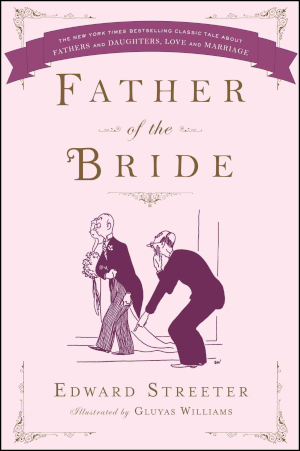
First is Edward Streeter’s Father of the Bride, which, yes, is the novel on which was based the 1950 movie with Spencer Tracy as the father and Elizabeth Taylor as the daughter, and the 1991 remake with Steve Martin, as well as numerous other remakes and sequels, which shows how universal a trope marrying off one’s daughter really is. And the novel will certainly be familiar to every parent who has married off a child, to most of those children, and probably to anyone who has ever organized a major event or listened to anyone even talk about organizing a major event.
Basically, it should have been so simple. Boy and girl meet, fall in love, marry, have babies — who eventually grow up, meet other babies, fall in love, marry. Looked at from this angle, it was not only simple, it was positively monotonous. Why then must Kay’s weeding assume the organizational complexity of a major political campaign?
Streeter’s comic style is fluid and witty, and I enjoyed his descriptions like this one —
Each day there were several frantic messages from Buckley [the fiancé]’s family about V.I.P.s who had been overlooked and must be invited immediately. It was Mr. Banks’ job to get these belated invitations into the mailbox on the corner before going to bed. As he remembered it in after years, it seemed to him that, like a figure from a Brontë novel, he was always struggling through violent rain and sleet storms on these profitless errands.
And aside from the funny bits — of which there are a great many — there is also a great deal of truth in it. I certainly have of my own wedding a similar sort of dream-like memory — I remember being there (!), I remember enjoying it — because everything went smoothly, it was a beautiful day, and people we loved were there — and yet it is still a kind of blur.
A wedding was like the experimental explosion of the atom bomb, thought Mr. Banks as he walked out behind his wife, smirking to right and left. You made the most careful preparations for months, them someone like Mr. Tringle [the sexton] pressed a button — and it was all over. There was scarcely any present tense in connection with weddings. They existed either in the future or in the past.
I’m not a computer-gamer, really. That said, I may have been playing a number of computer games recently ….
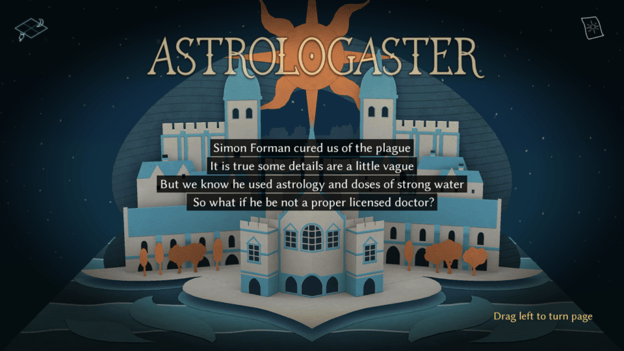
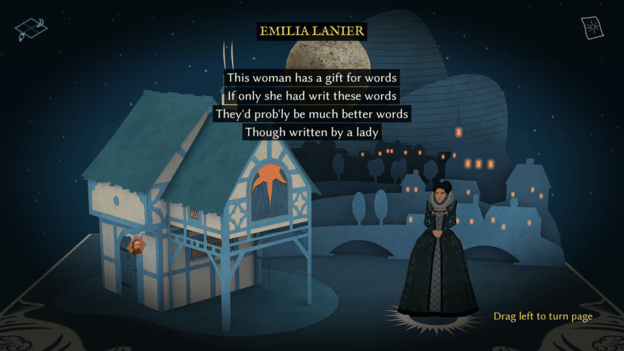
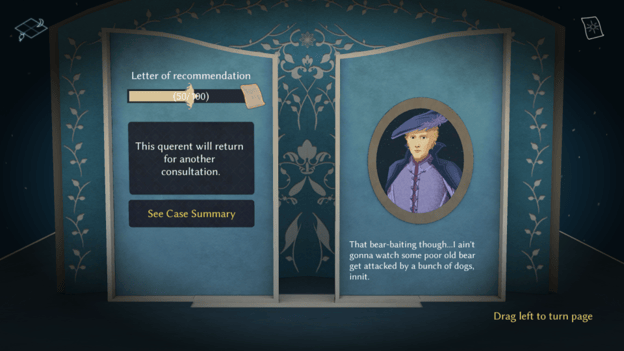
I first heard of “Astrologaster” from a review, I think in the Los Angeles Times of all places, and bought it when it came out in 2019. How could I resist a computer game set in the late-Elizabethan period?! I bought it, logged in a number of hours, and enjoyed the game, but my computer went on the fritz and by the time I got a new one, too many other things were going on for me to think of picking it back up again.
When I first heard of “Tales of the Shire,” of course, I perked up immediately, and waited eagerly for its release, and, clearly from other posts on this blog, I was not disappointed! It has some flaws and quirks, of course, but on the whole it is a gentle, amusing, low-stress “cozy” game.
Laura, seeing my extended enjoyment of “Tales of the Shire,” suggested “Tiny Bookshop” as a similarly low-stress follow-up, once I had gone through my various hobbity iterations. Owning a bookshop-trailer, stocking and decorating it, recommending books to customers, what’s not to love for a library-cataloger?!
I really liked the graphic design of this game — and appreciated its difference from “Tales of the Shire” — it’s got a hip, modern look to it, a coffee-shop vibe one might even say, with a laid-back guitar soundtrack. Perhaps obviously, the best part for me was recommending books to customers, and I got pretty good (if I may say so myself!) at interpreting and fulfilling the requests, although of course, just like in real life, you get someone who says, “Wuthering Heights?! Boo, that’s not tragic/historical/romantic enough!” and you just have to say — to yourself — “enh, get out of my bookshop”!
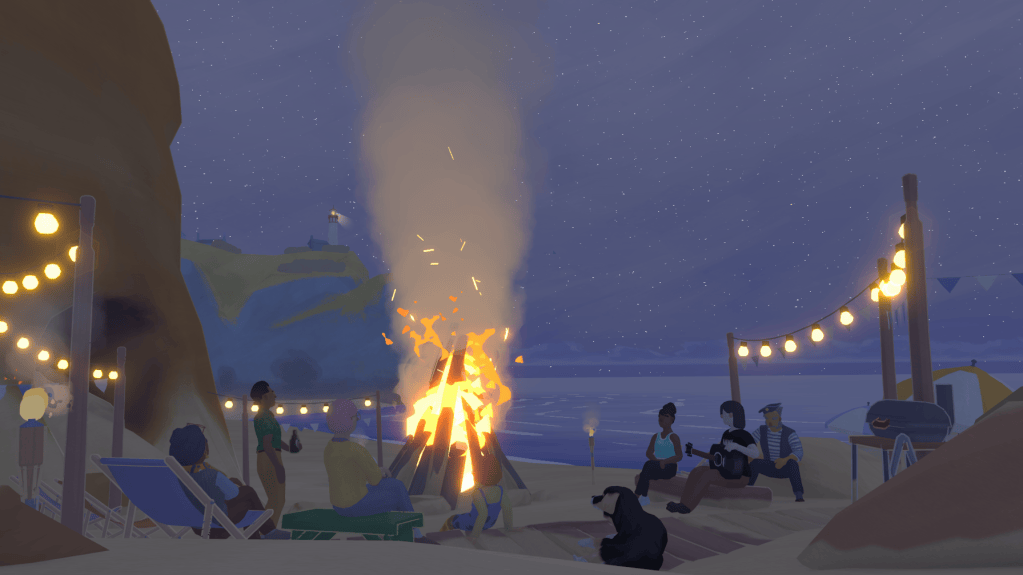
(I made some other screencaps to show my appreciation for the graphic design, but for the life of me this is the only one I can find! It is a bonfire at Far Beach on the last day of summer.)
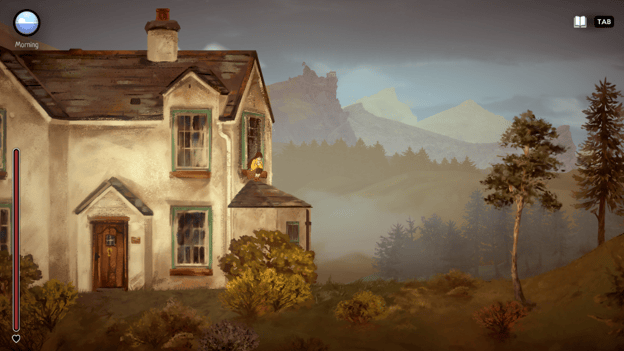
And then, well, I was on the lookout for other cozy games, and Steam recommended “A Highland Song” and “Eastshade,” both of which I bought because they were on deep sale.
But first, back to “Astrologaster” —
I really enjoyed this! It is a charmingly original game in which the action “moves” in the manner of a pop-up book, and an unseen vocal ensemble sings a short original madrigal at the beginning of each scene. The songs can be, in sooth, somewhat o’erlabour’d in rhyme and meter, but are full of wit, and full marks must be given even for the idea of it! I found myself laughing aloud at some of the jokes — Latin puns, historical foreshadowing, Essex slang, or the sheer number of times Forman’s lady querents think to themselves, “What a fine-looking young man Doctor Forman has for a manservant” (whom, alas, we never see). I had a bit of a time deciding whether Forman’s astrological readings should be essentially what he thinks that people want to hear (“Good news, my lord, your investments will prove sound”) or more historically prescient (those suspicious barrels being ferried across the Thames late on a November night in 1605 …), so I ended up with a mixture of both, but it came out alright in the end! Huzzah!
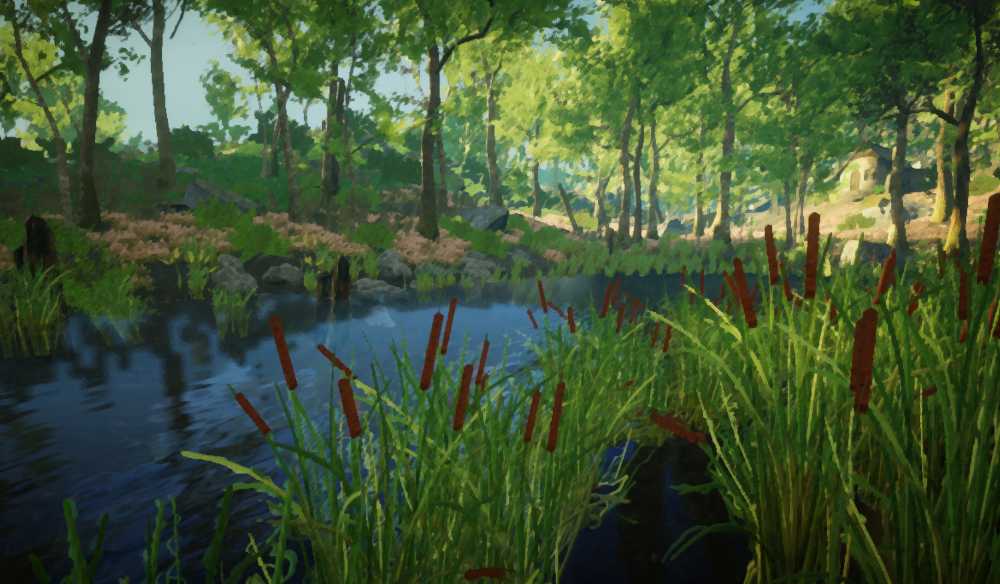
After that — and, it must be said, this sequence has taken many months! — I started “Eastshade,” which I confess that I’m a bit less enthusiastic about than I had hoped now that I’m a couple of hours in, but a good part of that might be that I am quite unexpectedly getting motion-sickness from it. Apparently this is not unusual with computer games, usually those where the point of view is through your own eyes, as though you yourself are moving through the action instead of watching it (as in “A Highland Song”), even from only a short distance away (as in “Tales of the Shire”), and there are a number of sites with tips about how to lessen the effects, though I have found that for me with “Eastshade” it isn’t really helping.
(I can feel it in my eyes even now, just watching the trailer!) But I have managed to do four “paintings” so far —
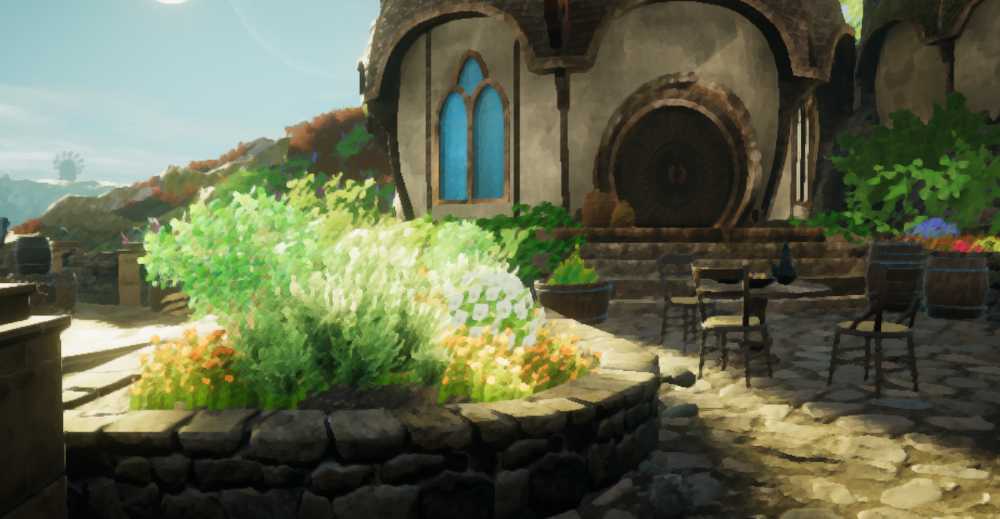
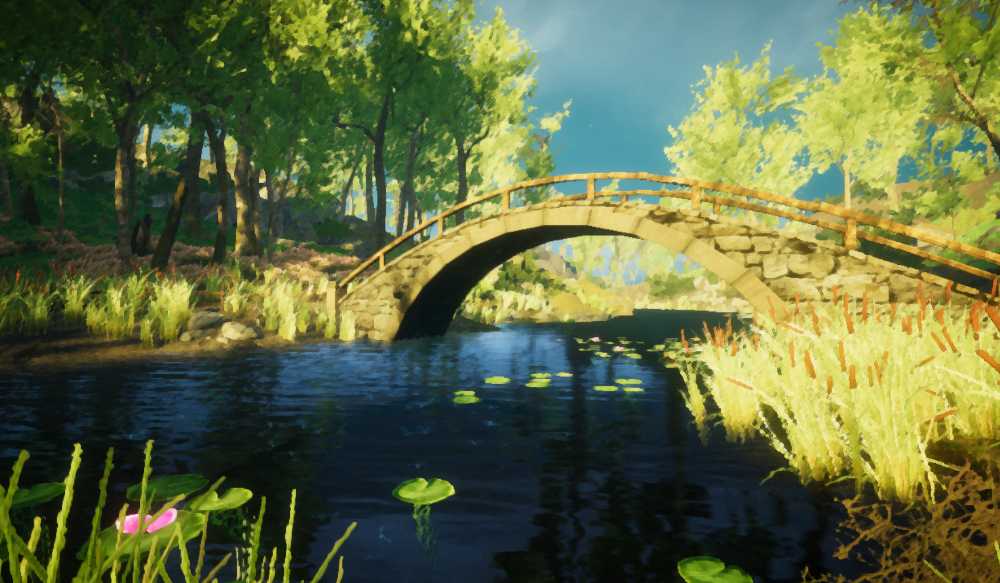
These are the ones I did for myself in the first few “days” in-game — I don’t know why the one I sold to the fisherman doesn’t show up in my real-life downloads — first is the inn in the middle of Eastshade, the other two just some moody-ish ones of views that I liked!
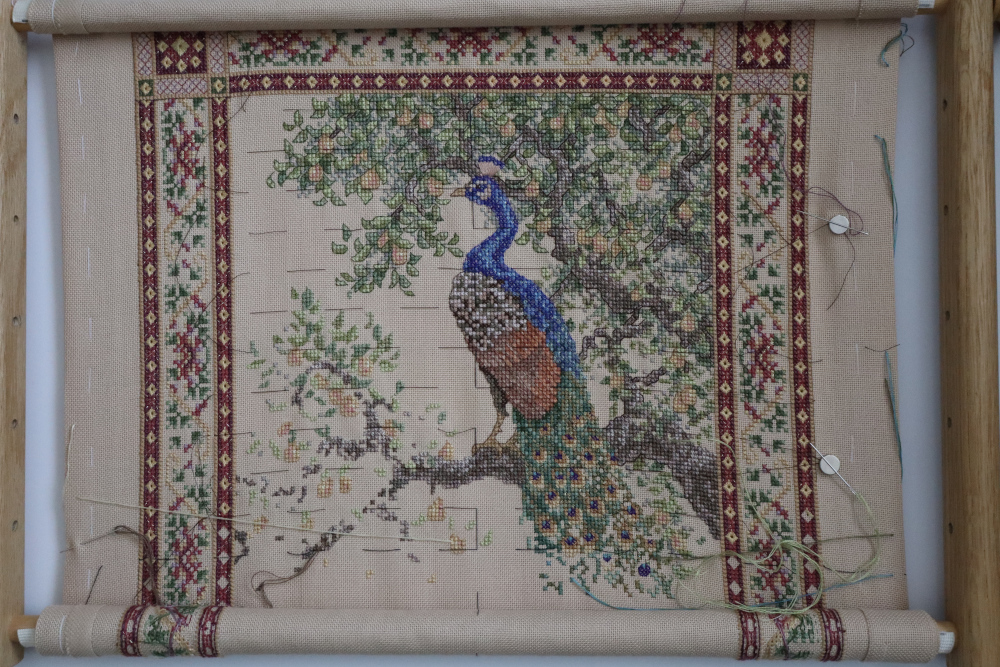
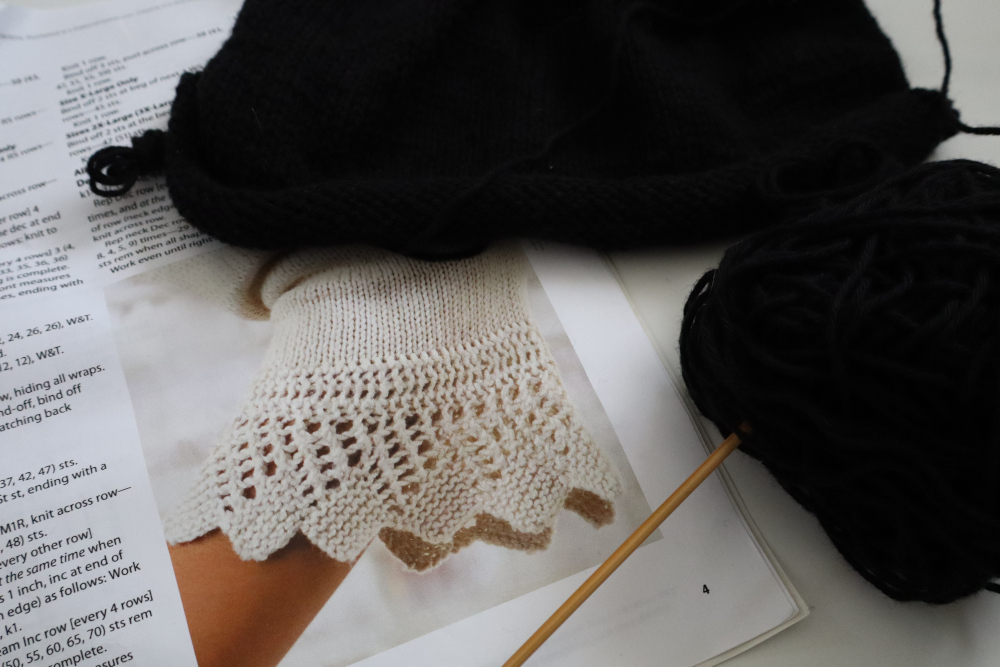
I’m quite a lot further along after this month — possibly because cross-stitching was really the only thing that the brutal heat would allow. We didn’t even get our usual Southern-California consolation, “but it’s a dry heat,” because it was not. I’ve got Mr. Peacock down through about a third of his tail, and mostly outlined, but as a result, I think I’ve got a bit of peacock fatigue. (Yes, that’s a real thing, ask anyone who has worked this piece….) All those leaves. And so I’m thinking a bit about knitting —
Maybe I can finish this in time to wear it for the Christmas concert in early December ….
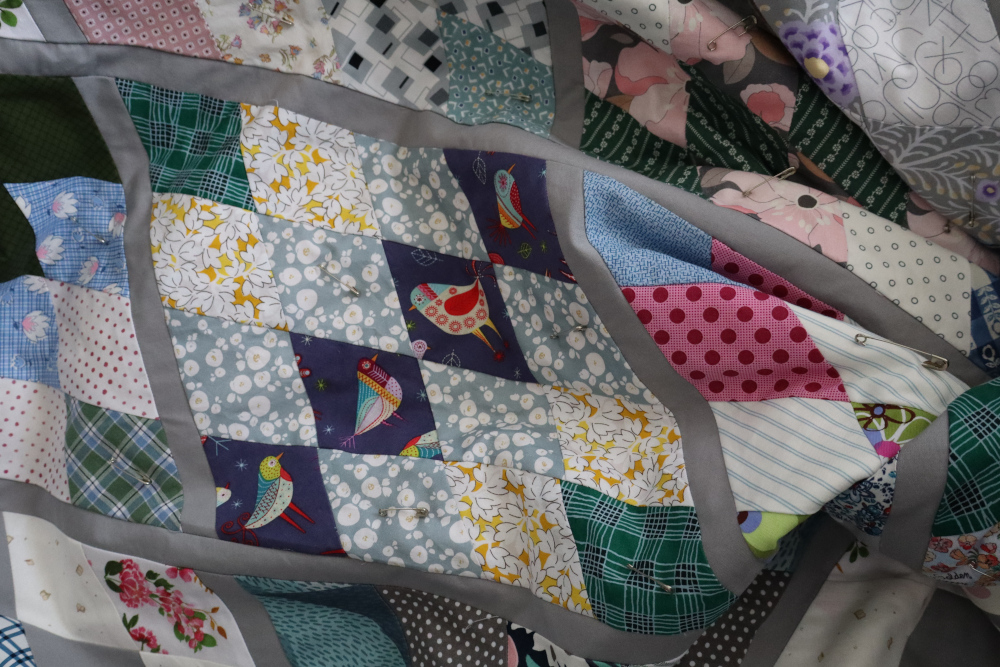
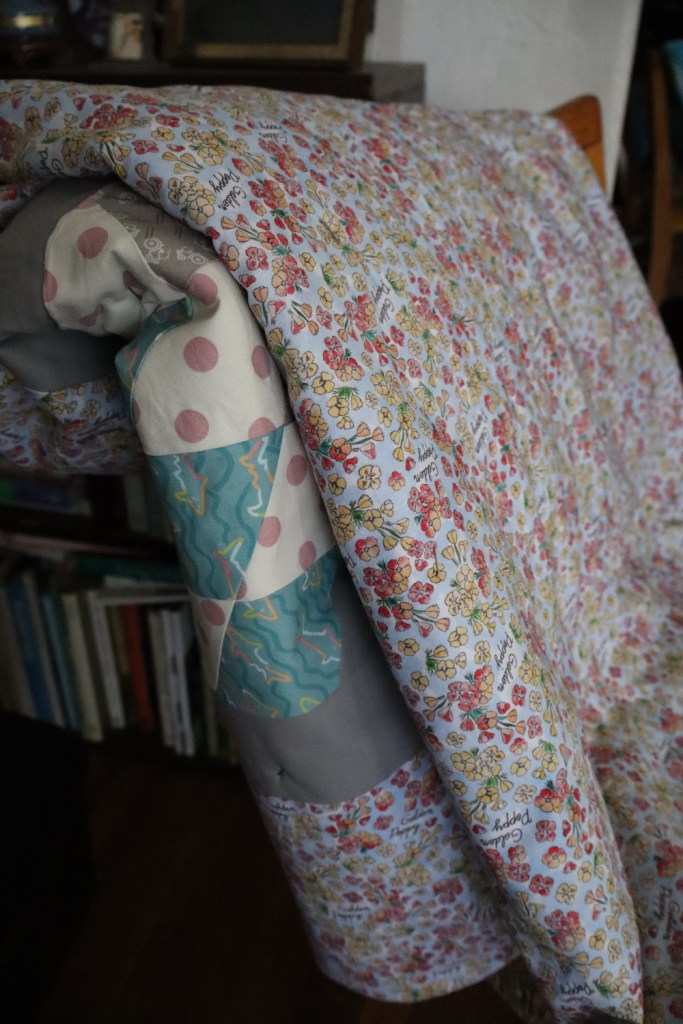
Have been thinking wistfully of my “Lucy Diamond” quilt, now that it is merely “warm” enough to bear having it on my lap while I do the hand-quilting! I am still utterly delighted by this quilt.
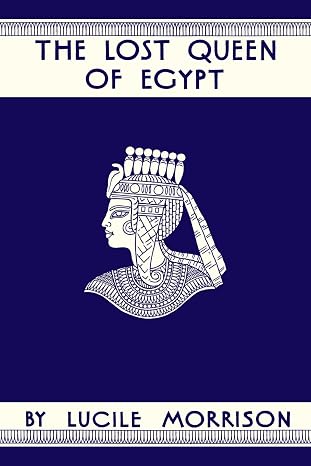
It has not been, of course, too hot to read, and so I went through all three volumes of the Lord of the Rings cycle, then turned — I don’t know what made me think of it — to The Lost Queen of Egypt, which was an indelible part of my childhood, and the start of a lifelong fascination with Ancient Egypt. Aside from the twists and turns of later research (Tutankhamon’s health and the cause of his death, as well as his parentage, especially, still both the subject of much theorizing), the story itself holds up very well as it approaches its 90th anniversary — I can’t hold it against Morrison that she draws her heroine with an admiring brush, so to speak, for the spirited and lively Ankhesenpaaten is an engaging heroine, and Morrison’s prose is beautifully atmospheric, often appropriately elegant and courtly in dialogue, as befits Egyptian kings and queens, and richly rewarding for those who can understand that people of the past spoke and behaved differently from the way we do now.
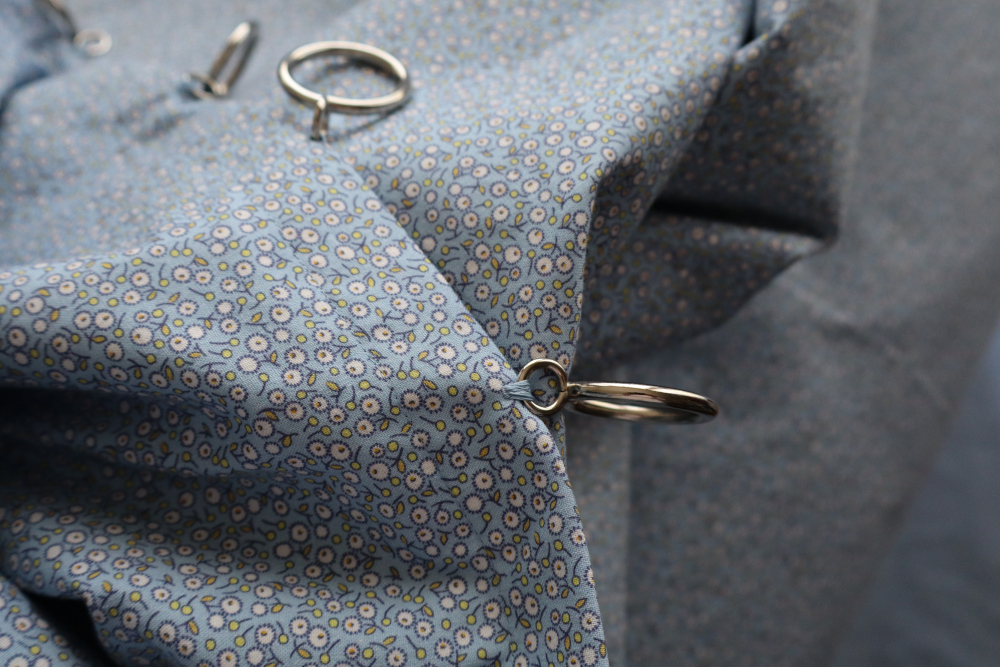
And in between all of these things, I am at the stage of sewing rings onto a new set of curtains for our breakfast room — two fairly large windows facing west, and one facing north. We kept thinking “blackout fabric would help” and so I thought, “right, now’s the time!” In keeping with the 1930s kitchen that we hope to start putting back soon, I chose an “Aunt Grace” reproduction by Judie Rothermel — “Dandelion” — and am quite happy with the results!
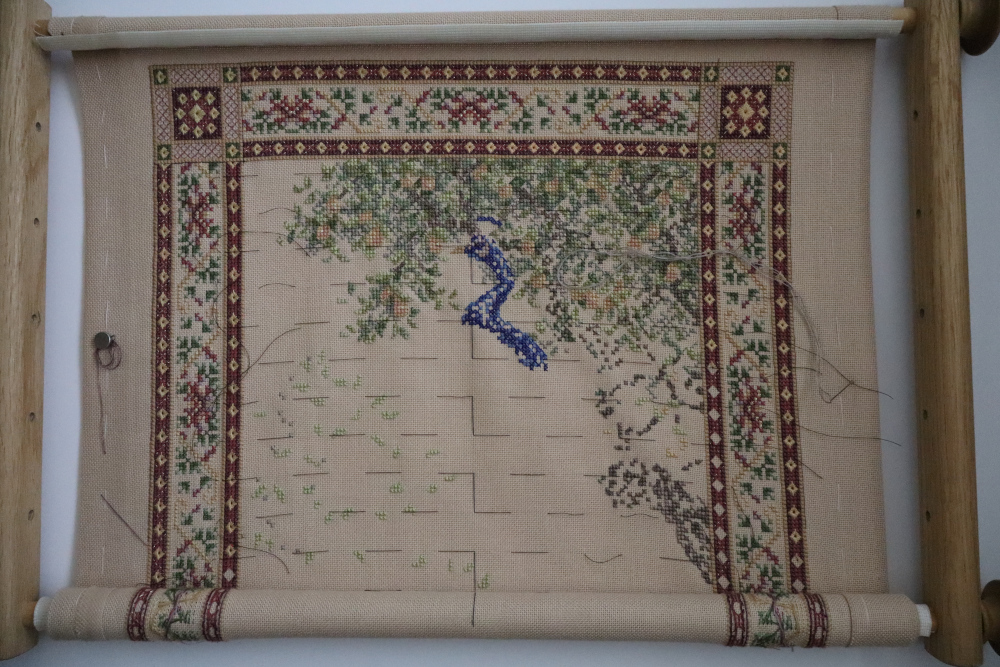
It feels sometimes like I’ve made very little headway on this “Peacock Tapestry,” and so it will do me good to post a monthly progress report. This does help me see that I’ve done quite a noticeable amount!
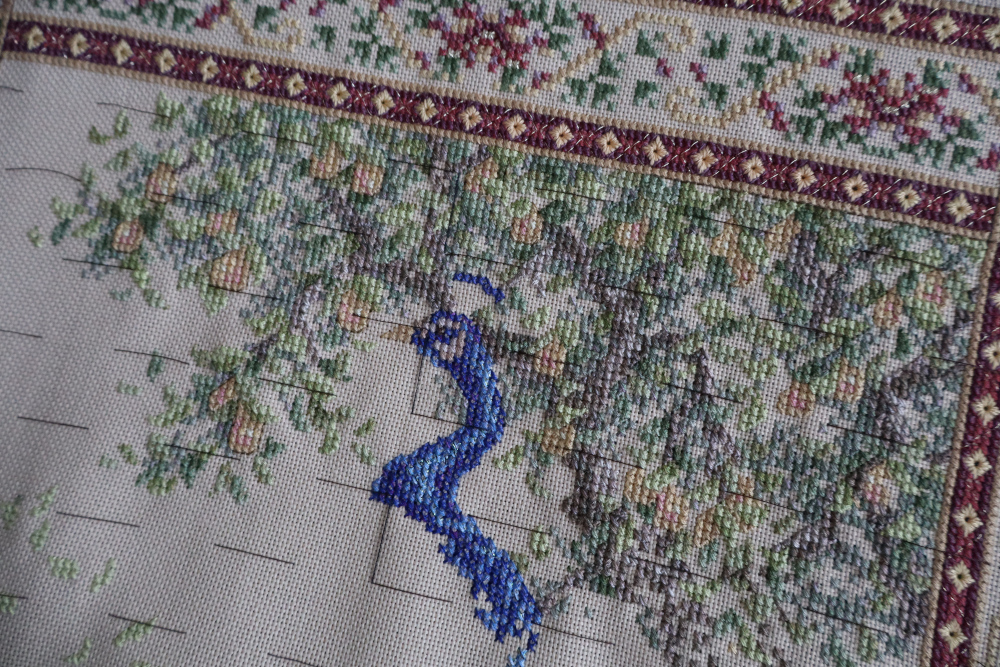
I did give in and put in some guidelines, after quite a number of times realizing that I’d put some particular color or other in the wrong place. I’m still doing that now and then, but not nearly as much (!) — there are a lot of leaves in here, not quite packed solid, but close.
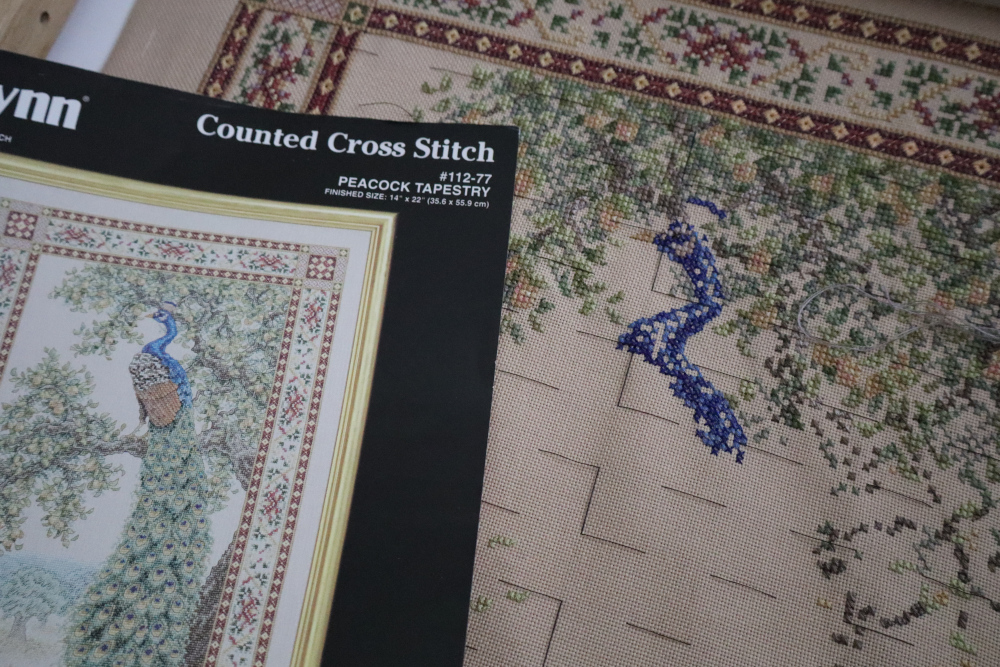
It’s a bit startling to see how much richer the colors are in person than in the photo on the pattern cover. Even just this little bit of Mr. Peacock is quite stunningly blue compared to the pattern one —
It was at the above point that I decided to start doing some of the backstitch outlines around the leaves and pears here in the top corner. I’ve done the pears since this photo, and a smattering of leaves — it certainly does make it look more “finished”, and it will be good to alternate between cross stitch and backstitch.
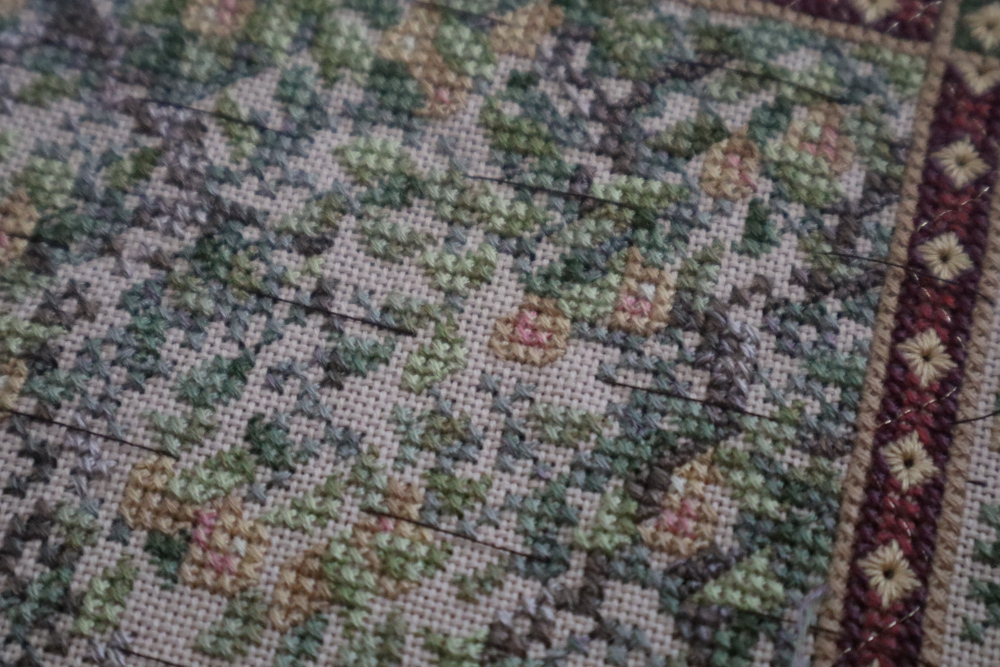
Can you see the difference between J’s “right-handed” crosses and my “left-handed” ones?! No? That’s because to my chagrin, it wasn’t nearly as difficult as I’d expected for me to do right-handed ones. I have slipped up here and there, as Laura pointed out just now, but for the most part they are the same as J’s — possibly this is because of the frequent color changes and jumping around, that stitches already in place make it a bit easier to see that they should go this way, not that way.
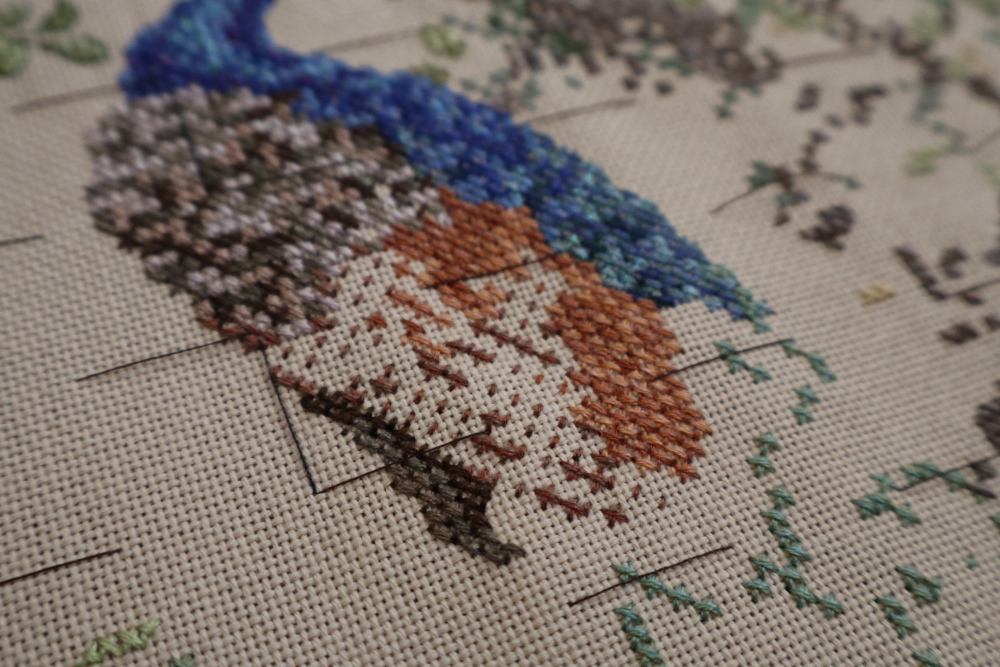
This lower-wing bit is a bit of a headache at the moment, to be honest, with all of the partial stitches — one of Wentzler’s “specialties”. So very many in one small section like this make it quite difficult to line up the rest of the stitches properly, even with the grid lines! Is that little fleck in the upper right of the stitch or the lower left? which makes for almost-constant reference to the chart. Thank goodness they’re all in one color, at least — I didn’t have to change threads!
Meanwhile, my “Lucy Diamond” quilt is waiting patiently, as it has been far too hot this summer to have it on my lap for any length of time, much as it would cheer me up to see it! (Despite my recording each block as I finished piecing it, I ended up with not just one but two extra! which are now part of the back ….)
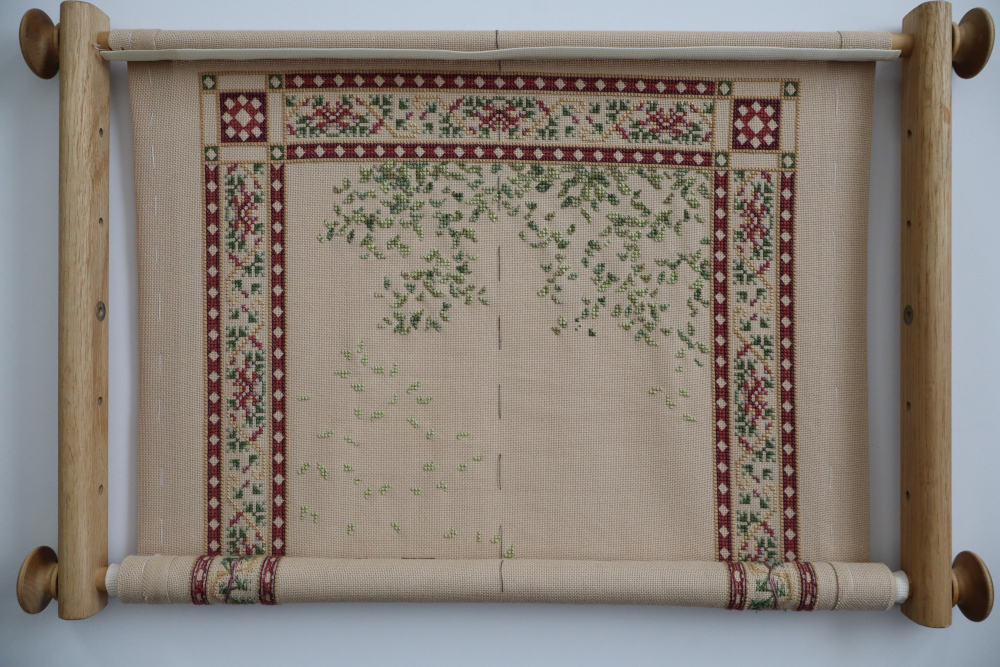
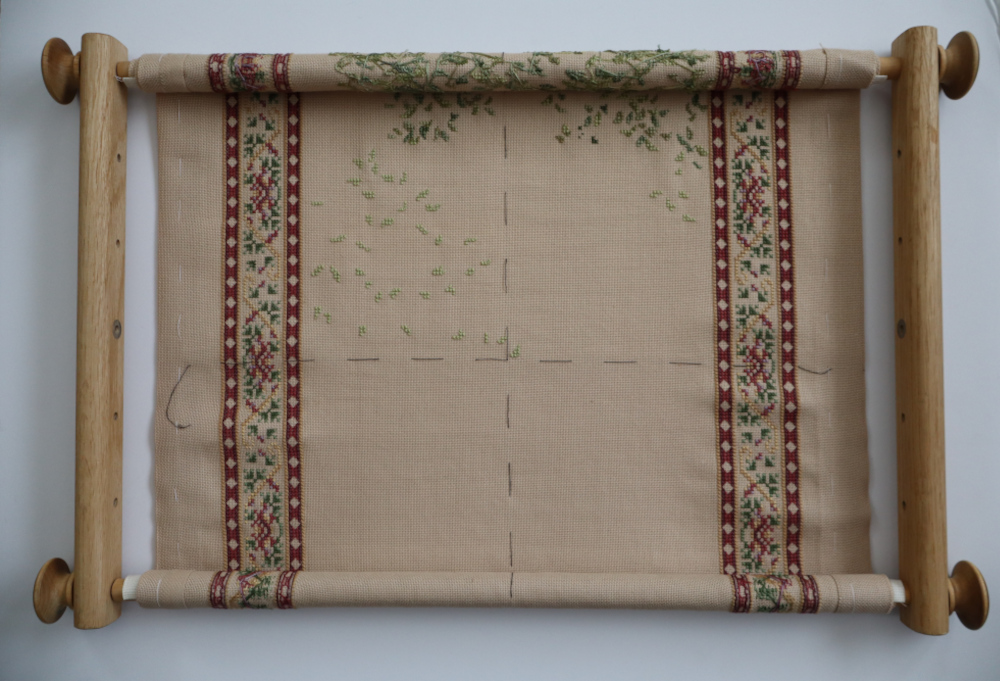
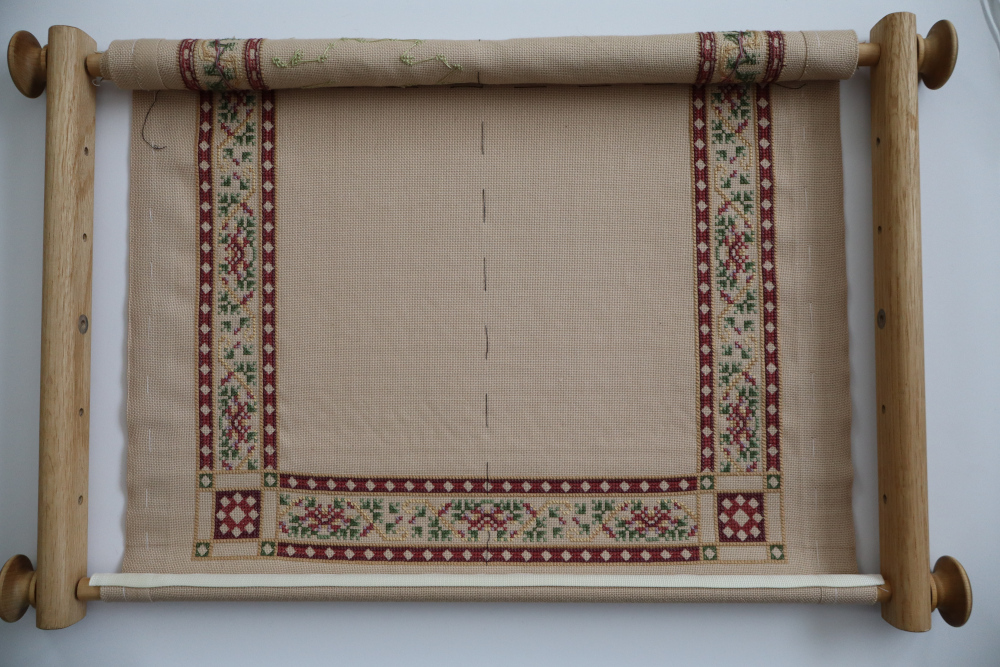
This is my friend J’s “Peacock Tapestry” cross-stitch that was her half of our “finish-along” in the summer of 2022. It has been six months now since she died, and although I am slowly getting used to that — it can be surprisingly easy, when one is hundreds of miles away, to forget that someone is gone, to find yourself picking up the phone to text her then thinking, “oh wait, no” — just seeing this is still hard.
I had to laugh when her sister-in-law and best friend brought me the frame and supplies a few weeks ago — of course, I had told J that I didn’t think I should finish it for her when she asked me in 2020, because of the “left-handed, right-handed crosses” issue, and then two years later, when I had pulled out my equally long-unfinished “English Cottage” (also by Teresa Wentzler), we had a memorable summer exchanging photos and encouraging messages by text, as we worked on our respective projects.
But Laura and I had a chat about it yesterday, and I have decided to finish it. I admit that I have been reluctant, since it isn’t really my style — definitely J’s though, she liked rich colors and textures and, it must be said, a bit of drama! not in her personal life, mind, just in her decorative sense! — but it will be my memorial to her and to our friendship, since, unless I can wrap my brain around making my crosses the “other” way, hers will be this way / then \, and mine will be \ then /, so that it will be clear, to me and to the eagle-eyed at least, which are hers and which are mine. She had worked, really, comparatively few of the leaves in the tree, and I am hoping that, if it really does matter about mixing the two kinds of crosses, the scattering of her leaves here and there will not be too distracting. Luckily for me, she had finished pretty much all of the border except for the Algerian eyelets in the lines of diamonds, and a few other spots, so that at least will be relatively cohesive!
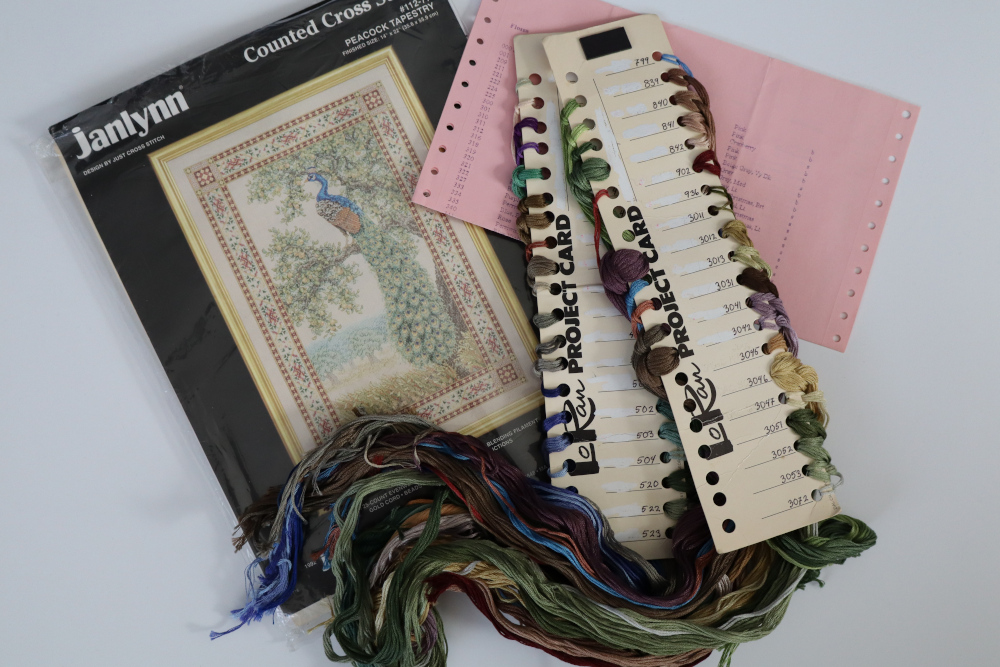
She was sometimes even more librarian-y than me, even though she was never actually a librarian — yes, there is a dot-matrix printed inventory of threads! She bought the chart in 1994! —