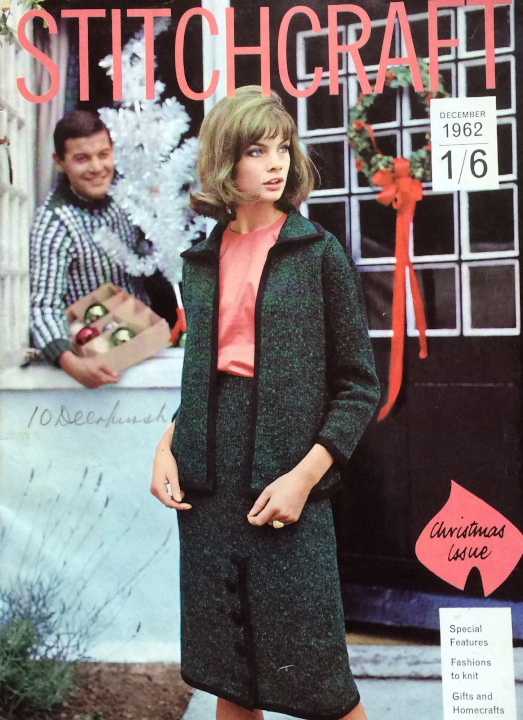
Oh, it’s been so long since I’ve knitted that I completely forgot to participate in my own virtual knitalong! Here, then — better late than never — is my newest contribution to “Knitting with D.E. Stevenson,” for my recent re-read of Fletchers End. The book was published in 1962, and I had to take some time finding a pattern that would suit the classic “shrinking violet” character of Bel Brownlee, née Lamington. I doubt that Bel — unlike, perhaps, her friend Louise — would throw herself into Swinging Sixties fashions much, and so this modest-yet-au-courant suit works rather well for her. (I don’t think that a metallic Christmas tree is at all Bel’s thing, though, so to that fellow leaning out of the window we’ll just have to say, sorry, that will not do!)
-
-
I had a sinking feeling as I began to work this over with the new colors, that I'd miscounted the first time. Of course when I picked it up again the other day, I started with the next dividing band under the little filip on the end of the ribbonwork, and carried on blithely (wanting to start with positive new colors instead of negative picking-out). I kept trying to tell myself that it was okay, it just looked a bit longer than it should because there was nothing beside it for scale (!), but no — I had counted not just slightly wrong, but very wrong, when I started the ribbonwork of the floral band last summer. Not just "threads" wrong, but "inches"! so that new signature line will have to come out.
Well — (sigh) — I am certainly enjoying the new colors, that's something! And I must say, I do like a nice bit of satin stitch …
-
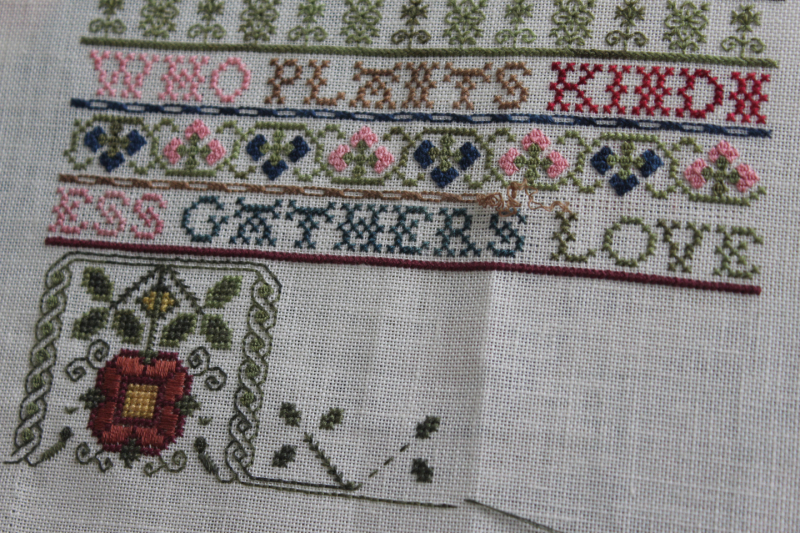
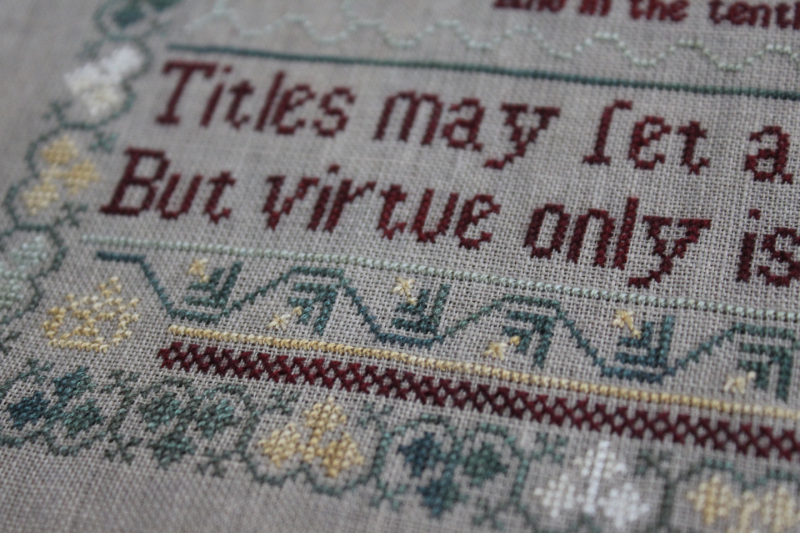
Despite having a modest-but-tantalizing list of new sampler charts at my elbow, I dug out my poor half-worked "Floral Sampler" the other day, and my bundle of potential thread substitutions, and began the onerous task of picking it all out a band at a time, from the ribbonwork that seemed the best place to start, then on upwards. I've now re-started the large floral band, and re-worked the red Montenegrin-stitch divider and the last line of the motto in the new colors. Queen stitch is a bit of a pain to work, but it's rather hellish to pick out, I must say — I am not looking forward to that little floral band about a third of the way down from the top, but I like the "Charlotte's Pink" miles better than the bubble-gum "Victorian Pink," so I'll just have to get on with it.
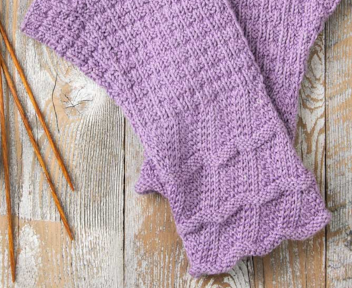
Well, the new issue of "Piecework" has a rather handsome pair of knitted mitts from a 1909 Weldon's magazine, and I must say that I'm tempted to dig out some needles and see if I have a suitable wool —
I wanted some comfort reading last week, and so as I was heading out the door I went to my shelf of D.E. Stevensons and chose one of my favorites, Fletchers End. I like the main character, Bel (Lamington in her eponymous earlier story, now Brownlee and happily newly-wed) but I love stories about houses, and Fletchers End charmingly combines both. Fletchers End is a cottage in a small village somewhere in the Cotswolds, which has been in the Lestrange family for generations but has been left by the late owner to her nephew, a navy man away in foreign parts who, being chronically short of funds, has not only neglected the cottage but wants to get it off his hands as soon as possible. Louise Armstrong, one of Stevenson's characters who reappears in other novels, comes to see Fletchers End, looking for a house for Bel and her husband.
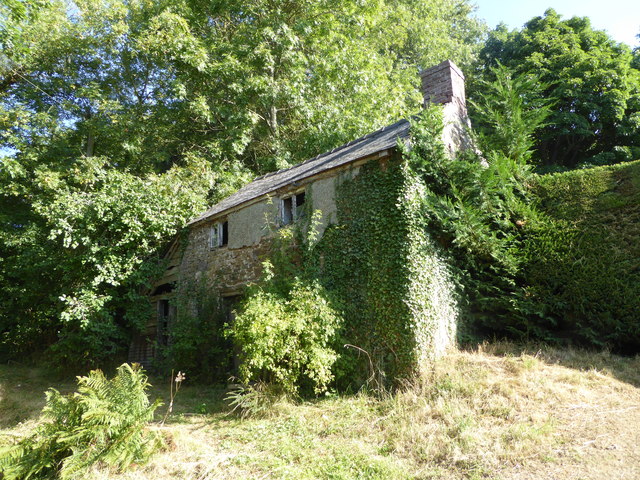 An abandoned cottage on the outskirts of Aston-on-Clun, Shropshire, 2018 (Jeremy Bolwell, Geograph.org.uk, CC BY-SA 2.0).
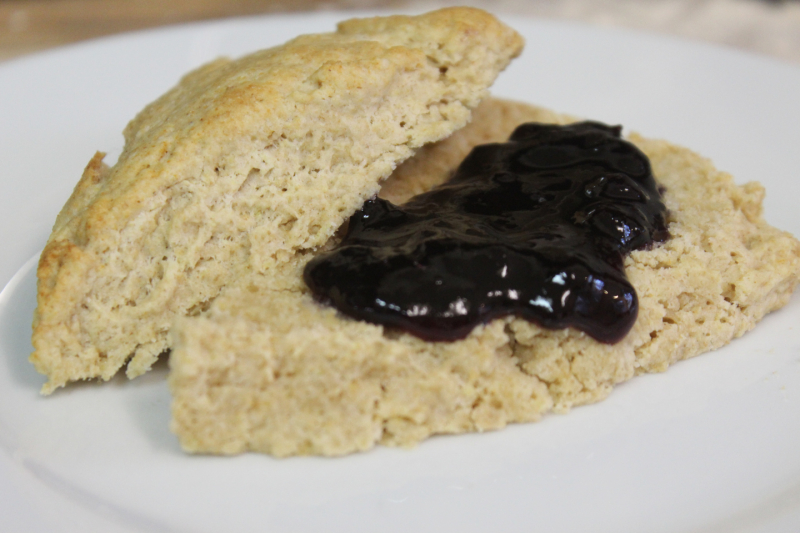
Mrs. Warmer, a local woman who has been looking after Fletchers End during the long absence of the new owner, has grown unexpectedly fond of the house during her six years there, finding herself strangely reluctant to show the house to prospective buyers — though of course she does, honestly and dutifully, but she is secretly relieved when they go away again and don't come back — and it soon becomes an indicator in the story of her approval of a certain few of these prospective buyers that she offers them tea, which includes freshly-baked whole-meal scones. Now, being a reader who also appreciates good food in books, and better still being able to make something very like that good food myself, I had a go at some whole-meal scones. These are my own bash of a couple of different recipes — not quite up to Mrs. Warmer's yet, I expect, but not bad, even without clotted cream —
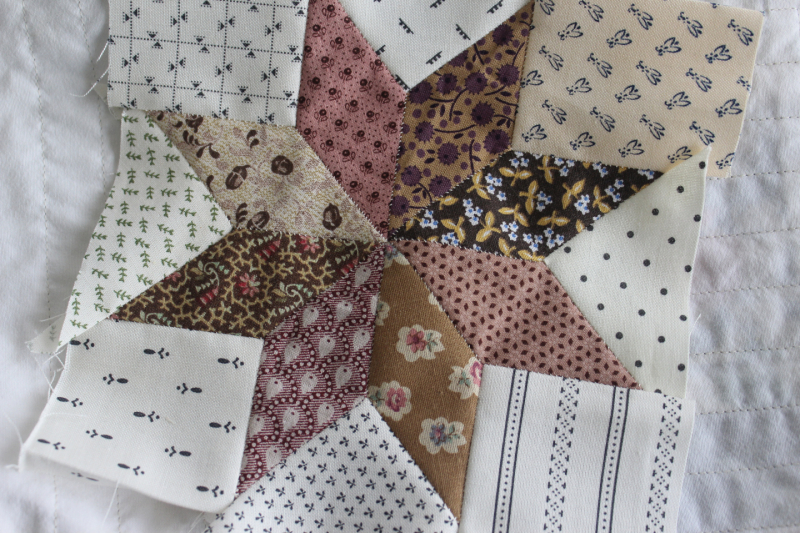
And for something completely different, a Lemoyne Star block auditioning for a 1:12 quilt, with some small-pattern fabrics I picked up on Etsy (the brown ones). I think this turned out well, so I will throw a backing on it and see how it goes —
-
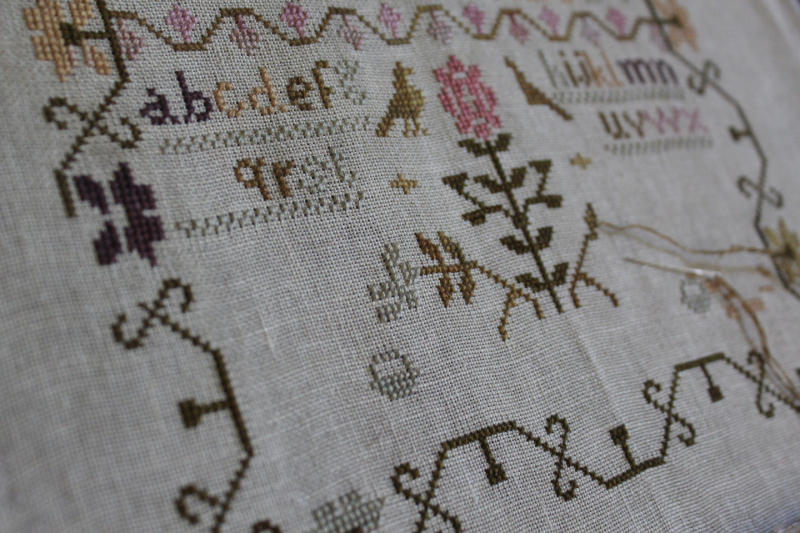
I took this photo the other day to write a progress post, and I turned around and the thing was done! It is, of course, the "Pink Sparrow Sampler" by Brenda Gervais of With Thy Needle & Thread.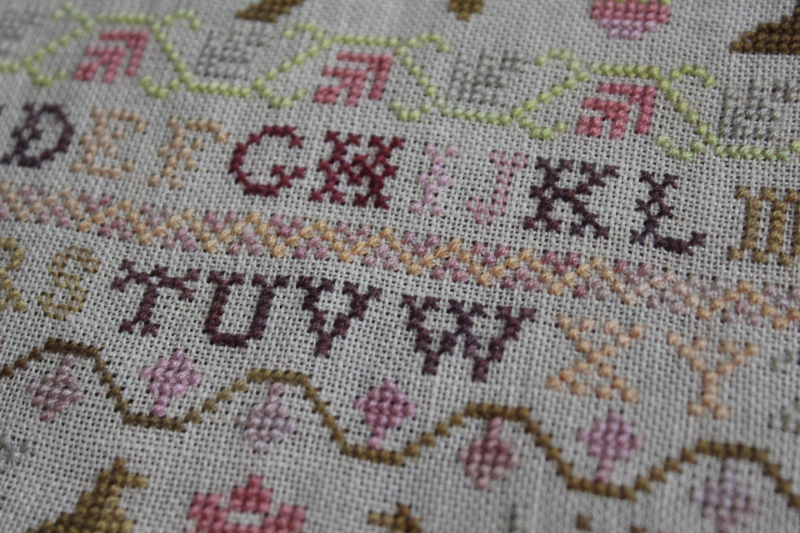
I substituted "Gingersnap" for "Burnt Orange" before I'd even started, as it looked awfully vivid even in my shopping cart. It wasn't until I started stitching with "Pumpkin Patch" that it, too, did not impress me overmuch — it looked exactly like orange sherbet. I've nothing against orange sherbet per se, you know, but it just didn't seem to go with the rest of the colors — and so I overdyed it with some black tea. I think I could have left it in the tea a bit longer, but at least it isn't quite as sherbet-y as it was. I left the "X Y" I'd done pre-tea, and a good portion of the zig-zag just above it, but everything else is over-overdyed (as it were) — the "E F" in the above photo is the tea-dyed batch. "Gingersnap" is actually a rather lovely auburn — it's the flower at bottom right —
There is no signature on this sampler, although it is said to be an antique, and I don't always sign my reproduction pieces, but I decided to sneak my initials in there this time, and did the capital J and S in four-sided stitch. They don't show up particularly loudly, but that's alright with me.
It wasn't until I had finished the lower-case alphabet and was working my way around the lower field that I realized there is no y or z! I suppose the original stitcher felt there wasn't enough room. It is a bit well-populated, I guess, but it seemed a bit harsh to leave off y and z simply because they're at the end and "there wasn't room," and so I tucked them in, one on each side, in one of the quieter colors ("Raspberry Frost") — before (above) and after (below).
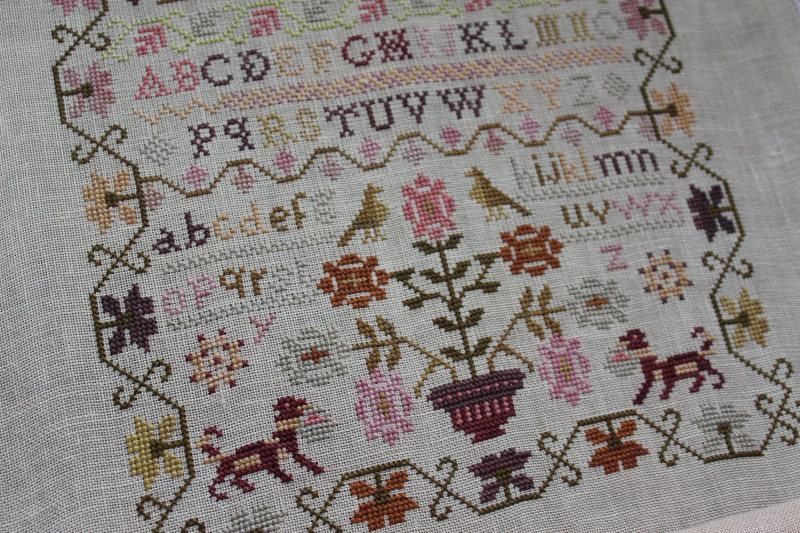
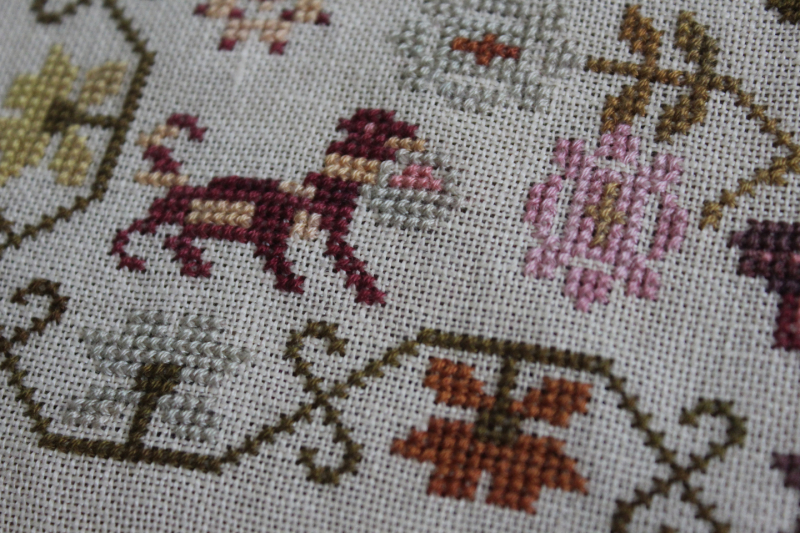
The eponymous pink sparrow, although to be honest it isn't very pink. I'm pretty sure it isn't a sparrow, either, but there it is — I'm still quietly pleased with the effect.
-
The downside — one of the downsides, I guess — to not blogging for a while is that you end up with a half-dozen or so posts coming down the pike, and you wonder, should I post them one-by-one or all at once?! And of course you forget things, or end up with a photo that you can't remember why you took, &c. &c. &c. All of the above.Here is the "Pink Sparrow" sampler by Brenda Gervais of With Thy Needle & Thread. Unlike "Philadelphia Vine," which sang to me joyfully at once, metaphorically speaking, the "Pink Sparrow" whispered softly, and I thought about it a number of times as I kept coming across it on various journeys around the interwebs, and eventually succumbed to its quiet charms. Started, I admit, the same day that I finished "Philadelphia Vine" …
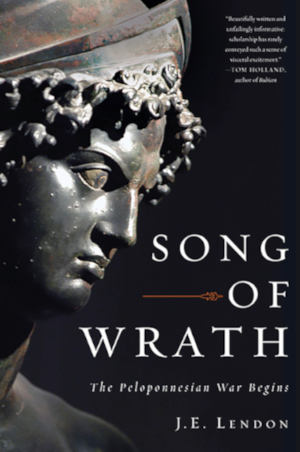
This has been on my to-be-read list for quite some time — since it was new, I guess. I couldn't find the book I wanted to start, which was Stalky & Co., and so for a complete non sequitur — no, not really, it was just nearby on the shelf where Stalky should have been — I started this. It's very dense, and I'm afraid that Greek names still puzzle me more than a little, so that it's hard to keep everything straight. My only quibble with the book from an editorial perspective is the maps — there are many, but they are pretty clearly cropped down from some antique map so that often there is a great deal of extraneous detail, when one is hoping to focus on the particular episode at hand — the Peleponnesian War was ten years long, so a very great deal happened — but worse, there is no highlighting of what we are supposed to be looking at. If a map is called "The Corcyrean Revolution," say, and it has just a vaguely topographic map with Corcyrea in one corner, I still have no idea what is going on! But Lendon writes wonderfully, and sometimes he slips into Homeric mode and we get sentences like this, on the very first page: "A few days later unfolded the thousands-strong procession from Athens to holy Eleusis, when the initiates carried branches of myrtle tied with wool and bellowed as they marched the sacred roar Iaccho! Iacche!" That is certainly not a stuffy-academic sentence! I can almost forgive him the grating ones that start with "For," when he gives me sentences like that.
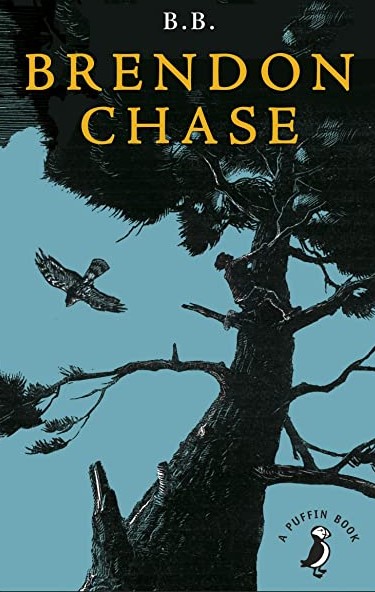
I came across Brendon Chase after reading about the "Swallows and Amazons" series — I don't remember now quite why it piqued my interest, but I managed to get hold of a second-hand copy, and began reading it a week or so ago, as a bit of light relief from the Peleponnesian War. I suppose I can see the connection to Ransome's books, in that it centers around children off on their own in the countryside for weeks on end, but certainly the Walkers are doing so with the full permission and approval (because the children are seasoned sailors and campers, mind you) of their parents, whereas the three brothers in Brendon Chase have run away from what is called somewhat sneeringly, about a third of the way along the story, "petticoat government." Perhaps it is because I am now a parent, but it seems to me that the boys — whose parents are in India, so they are staying with a spinster aunt, apparently somewhat elderly — don't have a particularly onerous life with their aunt (certainly not an Oliver-Twist existence), but just have a thing for Thoreau and Tom Sawyer and Robin Hood, and I can't help feeling quite a lot of sympathy for Aunt Ellen, who naturally is worried about them and very cross indeed.
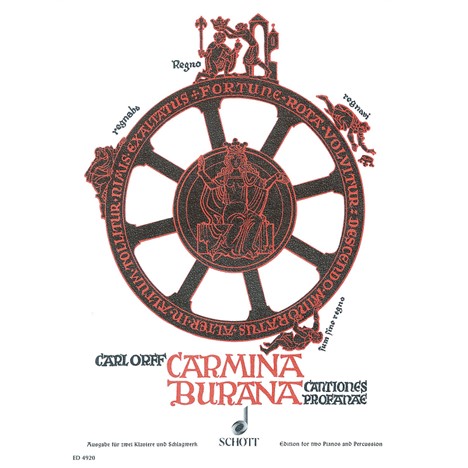
I must have been crazy to agree, as there are a ton of rehearsals and at a considerable distance, but my choir was asked for volunteers to join up with another for a grand-scale production of "Carmina Burana," and I was one of the dozen or so who said yes. It's a weird piece, and challenging, and loud, but wow, is it ever fun to sing! I spent a whole semester on it in college, and then have done it at least twice since then, so luckily for me I know it pretty well, and got to jump right in. I still have some post-pandemic creepies about singing and therefore wear a mask, which is a bit of a downer, but there it is (I am in the minority in the very large group) — it's not so much about me as about the possibility of my passing something all unknowingly along to someone else. Well, on the lighter subject — after years of venturing to suggest to my director that I be freed from the first-soprano section after a decade, back to my beloved first-alto, it was at last agreed that I may do so, and I am happily back where I feel most at home. The soprano section is a nice place to visit, but, no, I don't want to live there! And in the "Carmina" theme, here is a clip of one of my favorite bits — I've chosen one of the more spirited versions on YouTube! —
-
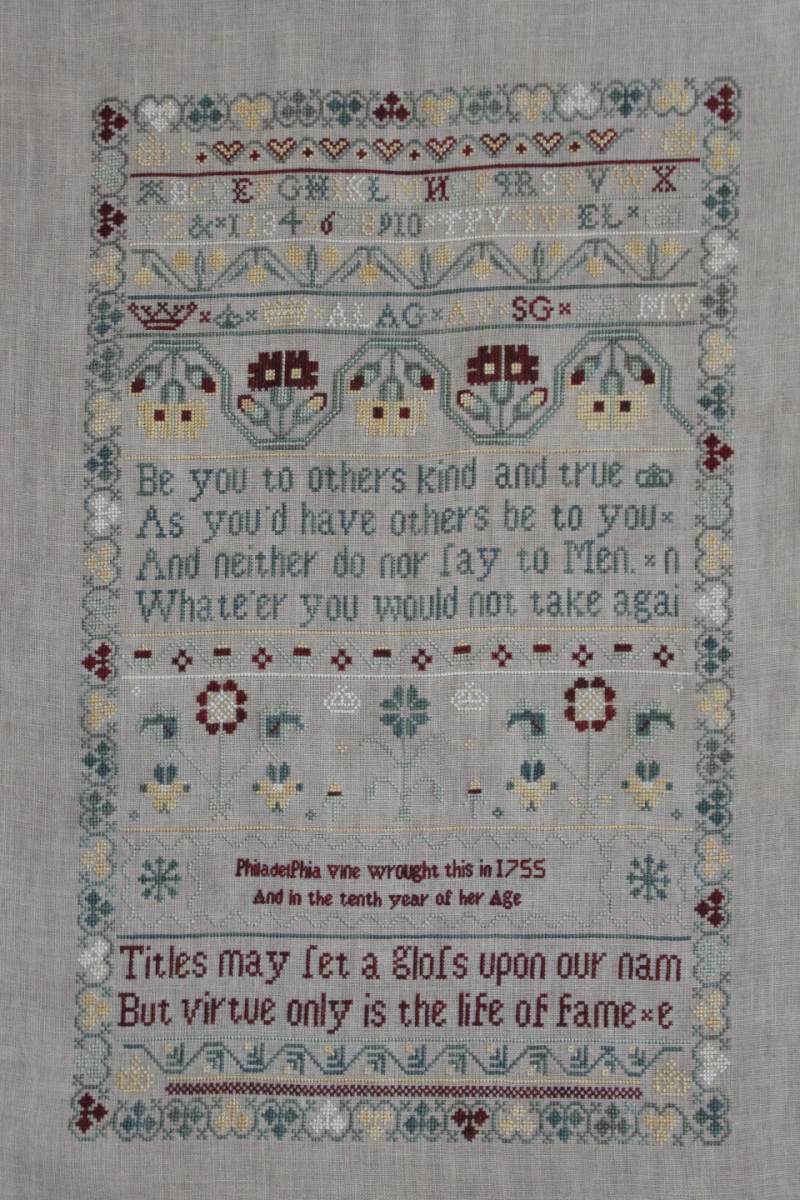
The "Philadelphia Vine, 1755" sampler from The Scarlett House. I fell head over heels for this the moment I saw it. The colors! the silks with each other, and the silks on the grey-brown linen! the neatly-turned corners! Oh my. Being more than a little late to the reproduction-samplers party, I was surprised to see that this is a nearly-brand-new chart, since so many of the ones I've fancied have been long out-of-print and required combing through second-hand sales to find!
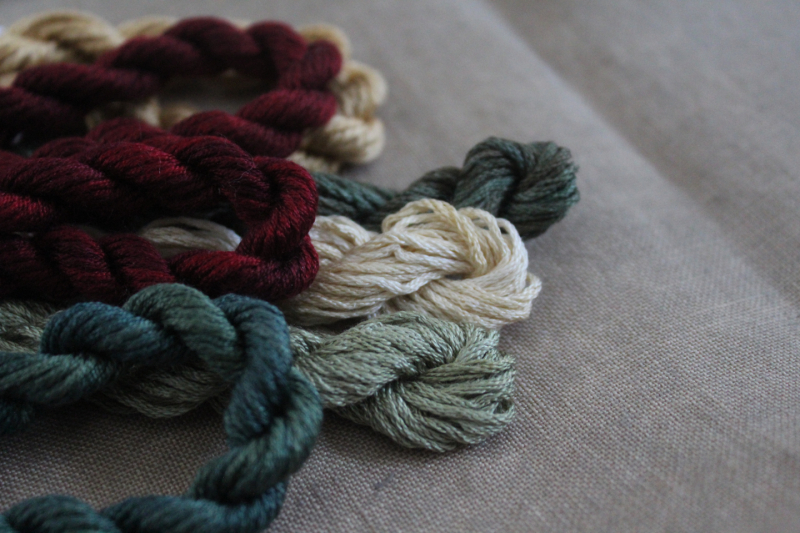
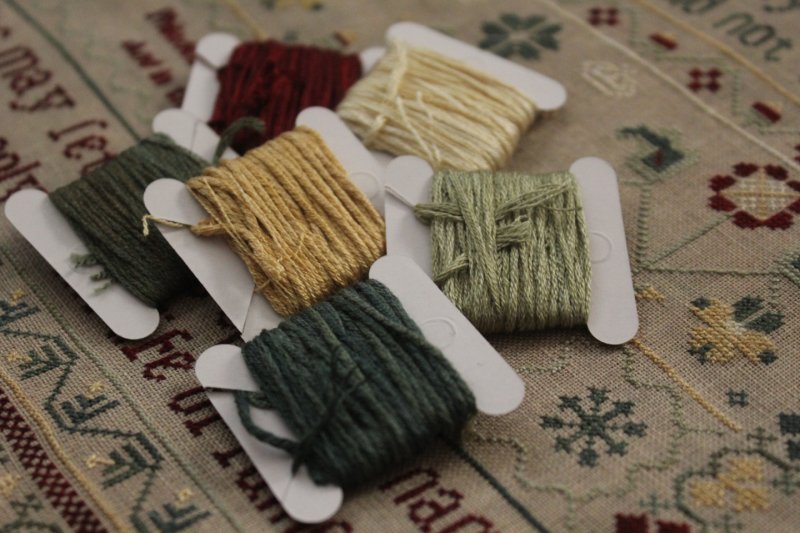
Surprisingly, I had no trouble getting the same fabric as recommended, though that was after I discovered that Weeks Dye Works' "Confederate Grey" is now called simply "Grey". The harder part was getting the silks. Since the colors were what caught me in the first place, I wanted to not substitute for any of them — but fate was against me. The three Dinky Dye silks were quite easy, but Gloriana "Summer Gold" was in short supply, and I could not find "Evergreen" for love or money, and I even came to the point of figuring out DMC substitutions, but then I decided that "Evergreen Dark" seems actually pretty close. Gloriana's "Old Red Barn" was another problem, as it looked quite, well, barn-ish in the pictures I saw, and so when I found a shop in Michigan that had the "Evergreen Dark" and the two other Gloriana reds I figured were most beautiful, I nearly jumped with joy. The colors above are Dinky Dye's "Cottesloe" (the creamy-white), "Saltbush" (light green), and "Seagrass" (dark green), and Gloriana's "Summer Gold," "Evergreen Dark" (dark blue-green), and the two deep reds, "Rosewood" and "Cranberry."
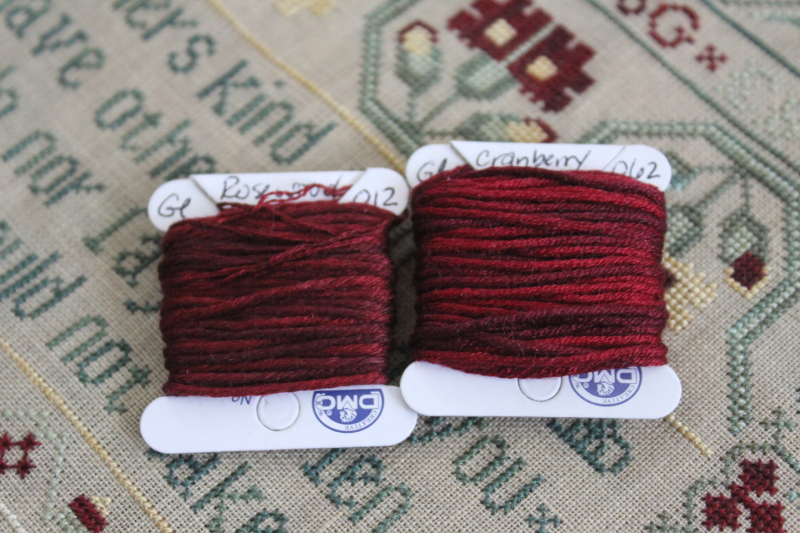
These last are very similar, and probably could easily be substituted for one another without much problem. This skein of "Rosewood" seemed a little deeper to me, and didn't have quite as much variation as the "Cranberry," wh. I now have a full skein of for another project (!).
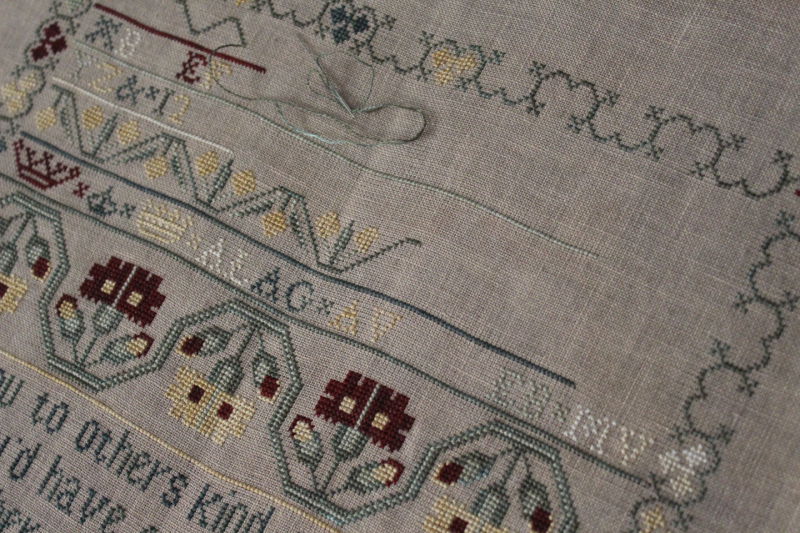
And after that, this was a pleasure to stitch. I almost wish that I'd had longer to enjoy the process!
The chart is clear and easy-to-read, and aside from those little gold "plusses" in the lower floral border being red on the model and gold on the chart there were no inconsistencies.
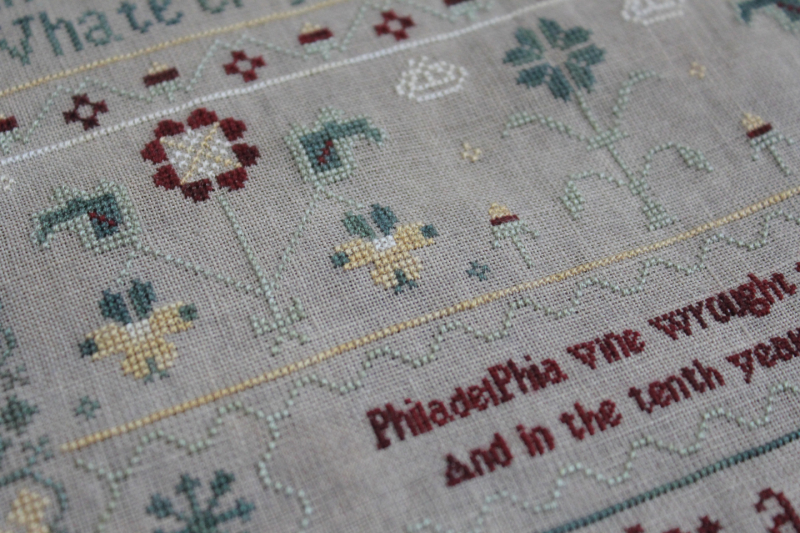
The over-one section looks much more cramped on mine than on the model in Scarlett House's photo — I remember seeing somewhere the recommended fabric being 30- or 35-count, not the 40 that is on the chart now, so perhaps the model was worked at a slightly larger scale?
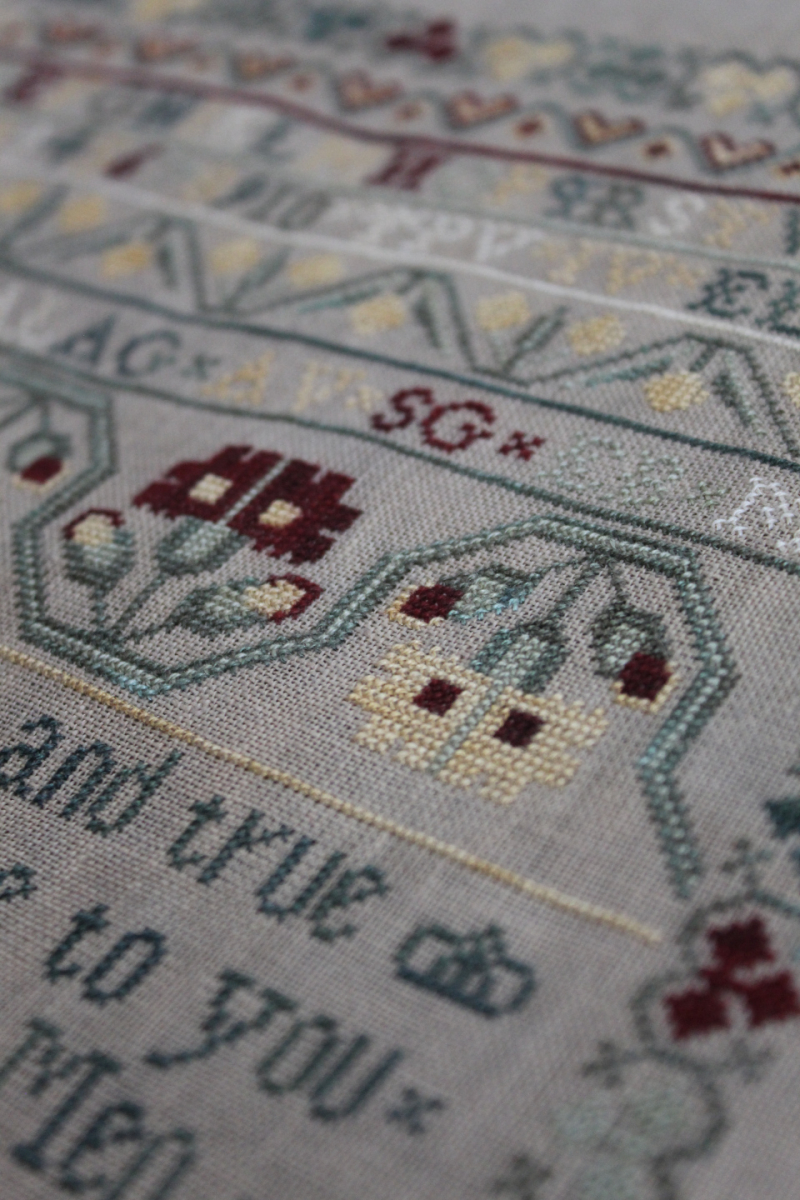
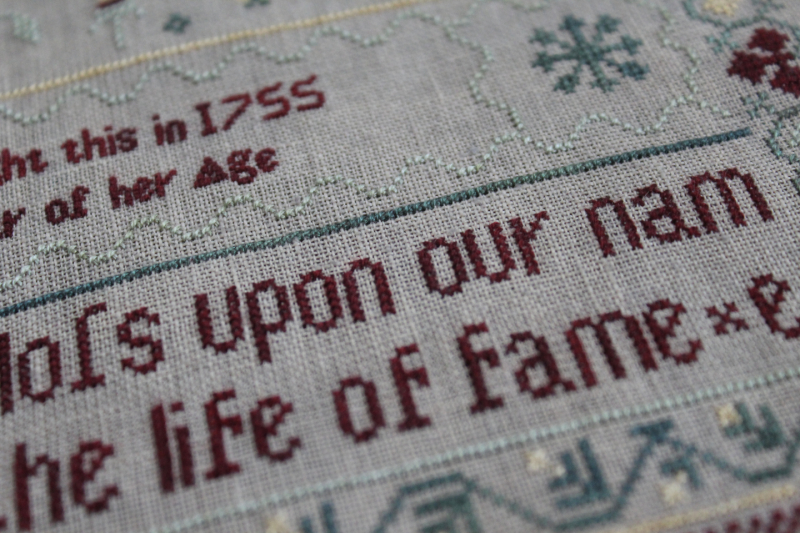
Curiously, considering the trouble that I had in getting hold of it, there was quite a lot of the silk floss left over — maybe even enough to do the whole thing again. (I did not, by the way, have any issue with the silk being wound on a paper bobbin this way — no creases, dents, etc. I suppose that the end closest to the center will have some creases on it when I get there, but I've never found that to be an issue with my cotton floss, as once it's worked on the fabric, it smooths itself out. I do usually wet-block my pieces in cotton floss, though I suppose I won't risk it with the silk here.)
-
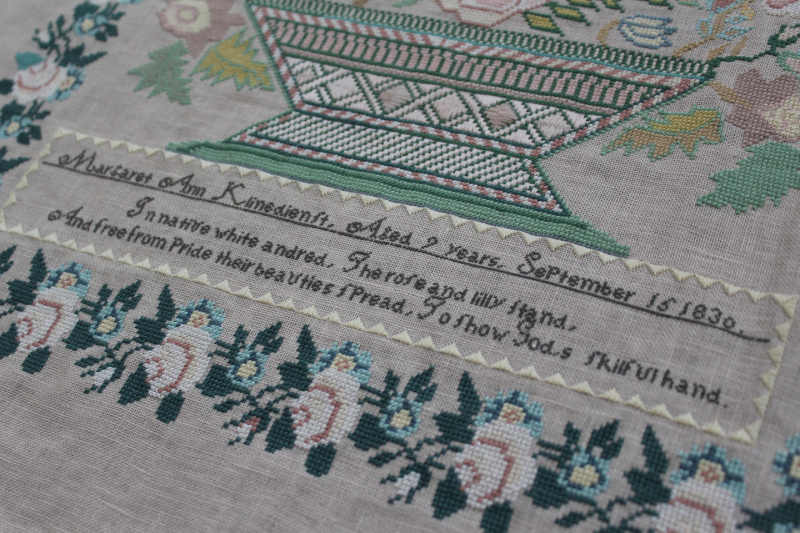
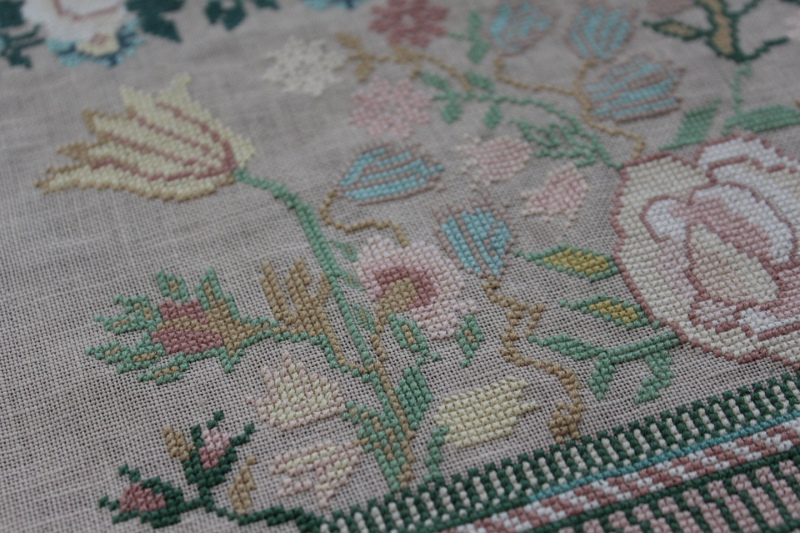
"Margaret Ann Klinedienst" sampler by Queenstown Designs. This was certainly a challenging piece. Some of the inconsistencies are mine, such as the slightly-yellowed flower in the top border, when I must have picked up the wrong bobbin and didn't notice until quite some time afterwards, but most of them are Margaret's — the occasional pale leaf in the border, the wobbly corners, the not-quite-centered basket patterns. The border motif looks like it repeats, but in fact many are just slightly different from the previous one, which I suspect means that Margaret was not working from a chart or sample, but by looking at what she'd done previously — or not looking carefully (!). And of course the delightfully wacky flowers hardly ever go where you'd expect them to. These require constant reference to the chart, of course — always time-consuming. My re-color of the chart I've already talked about; the revised colors can be found in the Needlework album on the sidebar. I did also find the chart difficult to read because it doesn't have an overlap — and trimming and taping together the twelve pages as the designer suggested is an unappealingly cumbersome alternative.
But there it is. What drew me to it in the first place — the quirkiness, the extravagance, the pale-yellow sawtooth border around the inscription — is all still there.

I did make a few changes from Margaret's original. That chopped-off leaf in the border bothered me no end, so I added a row of five stitches near the outside point to make it a bit less so, and the bottom-left corner of the border was so awkward, once I came to it, that I ended up re-charting it, tweaking it just enough to retain the air of the original yet keep me from looking at it for the rest of my life and thinking, "uff, that bit bugs me!"
I can't deny that I got a bit tired of it now and then — there is a lot of border, and I mentally kicked myself more than once for leaving most of it to the end! But that is all behind me, and I am very pleased with the finished piece!
-
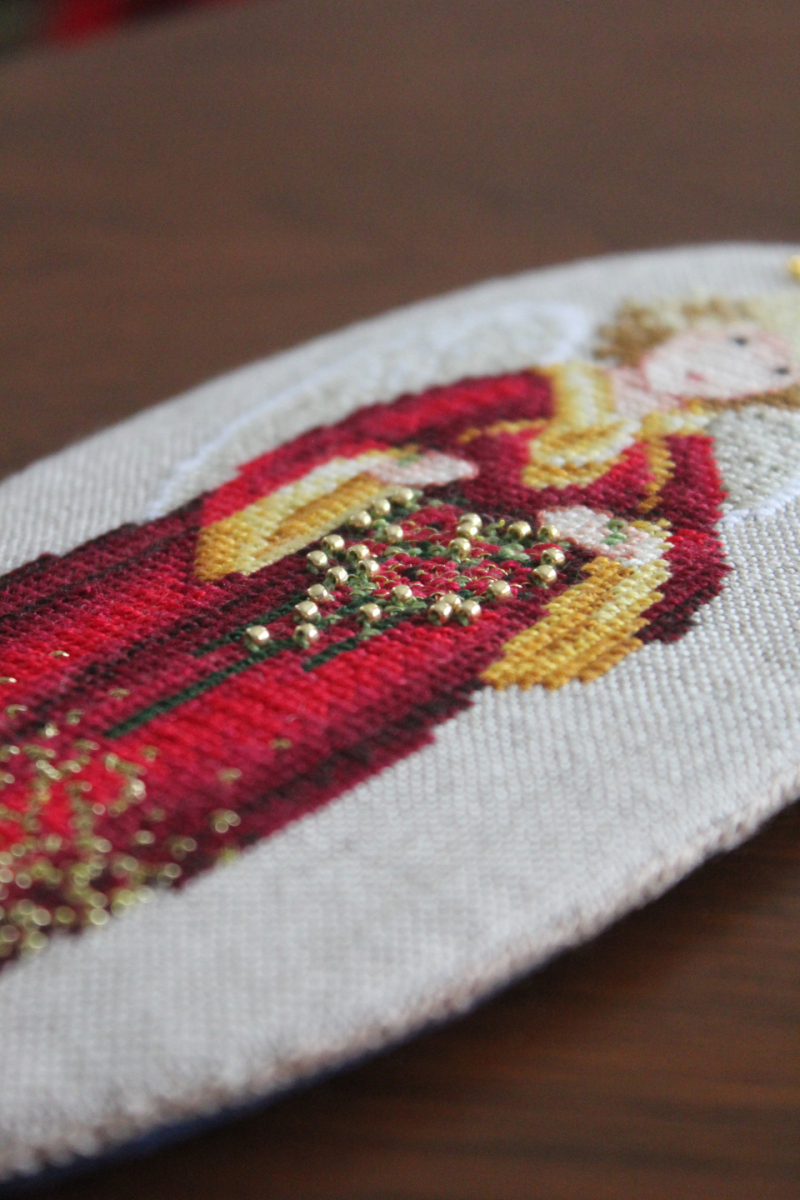
I had had this piece finished for some time, but waited to post it as it was a gift! then blog ennui happened and now it's March. Heigh-ho.Anyway, it's the "Christmas Angel 1997", a free chart by Marilyn Leavitt-Imblum of Lavender & Lace. I'm very impressed with the shading details in this piece, which are quite lovely and effective. My mother-in-law collects angels, so I thought this would make a good gift for her.
I confess that I started this quite a number of years ago, and got lost on the wings, certain that I'd made a mistake somewhere but unable to tell among all of the shades of white and off-white where I'd gone wrong. After re-starting (and finishing!) the decades-delayed "English Cottage," I felt a bit guilty that I'd left this so long — it's a much smaller project, after all! — so I just picked it up and finished it, not worrying overmuch about flecks of white in semi-random places! and the main stitching was done in one long evening.
I didn't want to buy the braids and filaments — four things! of which I'd need only a small amount — and so I sort of "unvented" a bit of sparkle by blending a strand of floss plus a strand of the metallic gold thread I already had bought for the hem of the gown. Here I used DMC 304 floss plus metallic 5282 for the red braid, and 3347 floss plus the same gold metallic for the chartreuse braid. I did "splurge" on the Mill Hill beads, partly because I'm also hoping to do the companion angel some other time!
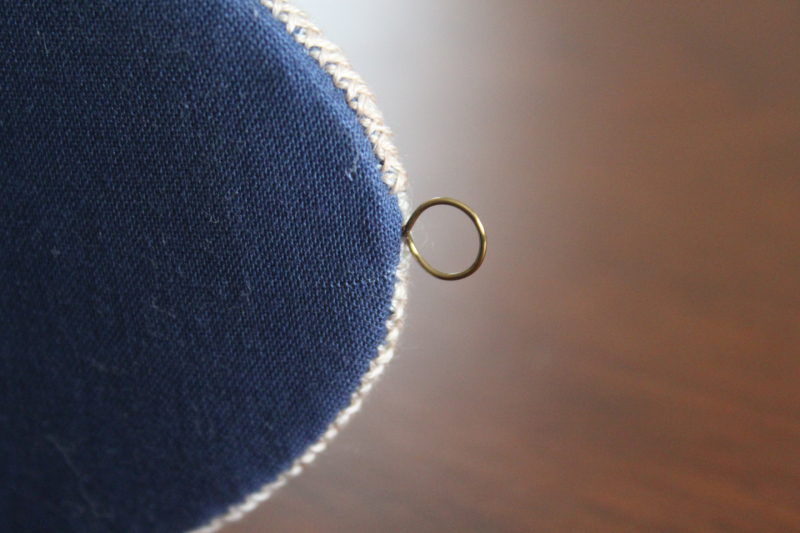
I mounted this more-or-less the same way as in this video, attaching the fabric to pieces of mat board by way of gathering stitches, and whip-stitching the front and back together. My whip-stitching was a bit, um, erratic, and so I went over it again with some floss in long-armed cross stitch (in lieu of ribbon). The hanger is a piece of heavy-ish beading wire that I had on hand, twisted into a clothes-hanger shape with a loop instead of a hook, I mean with "shoulders" inside to help distribute the weight of the ornament.
All in all, quite successful! It's still hanging up at my in-laws' house, months after Christmas, so I'm happy that she likes it. With luck, the 2005 angel won't take me as long …
-
I am still knitting, though there is little sign of it here, as there isn't much progress visible, I'm afraid — the "Camptown Races" cowl is still making a grandmother's-footsteps advance towards the finish line, five rows forward, one back, seven forward, two back — the ski balaclava for David was far too big, ripped back to the beginning, slightly too big, ripped back to the neck, and is heading upwards yet again — the "Rae" slipover for Julia got abandoned in summer heat and my utter dread of purling with two colors, but I have now decided to throw my period-knitting technique (partial technique, to be honest, as said dread already made me work the bottom half in the round …), and after double-checking by blocking it still on the needles and making sure that it fits, I've decided to steek the armholes and neck opening.
And I have a post nearly ready to put up about my second 1:12 shop but am puzzled and confused by the sudden enormity of the images in my last post — TypePad or me, I don't know. Certainly I am still struggling with the new-to-me photo-editing program — but I thought I had made them all the same size as previously.
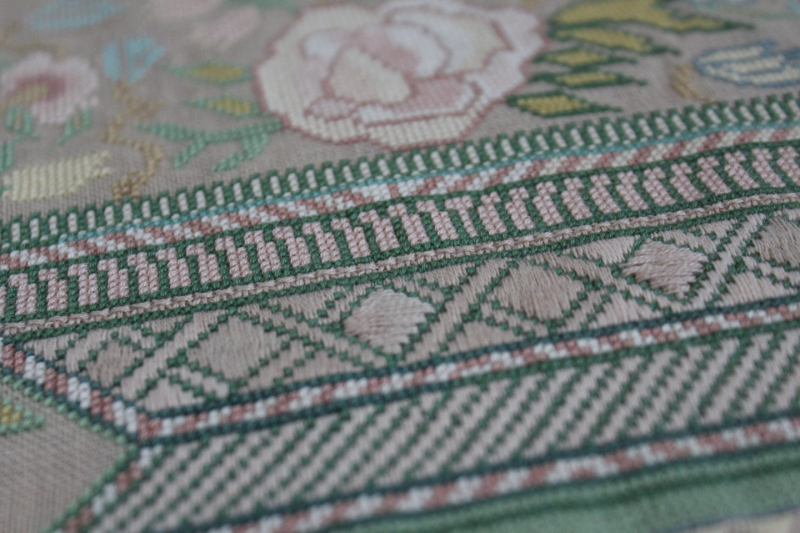
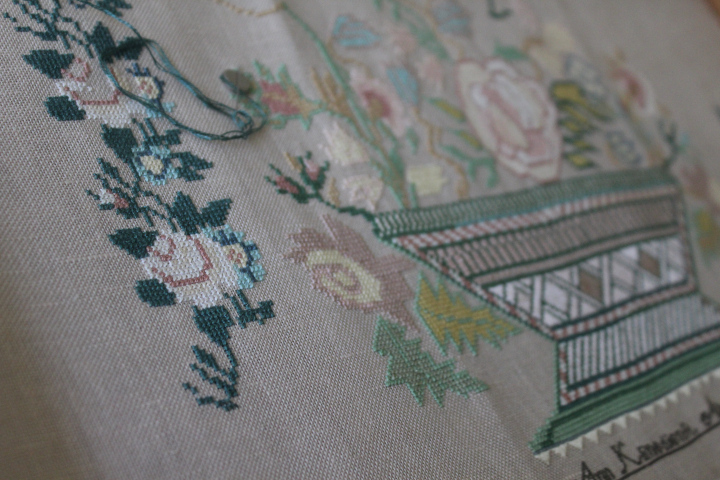
(I did, by the way, realize that I mis-read the "Margaret Ann Klinedienst" chart, and I was supposed to interlace the satin stitches on the large diamonds along the basket, not butt them up against each other down the middle of each diamond as I'd tried to do earlier. They are all actually the same thread, but those two that look dark are worked horizontally, while the others are vertical, and the light catches them very differently here!)
But, yes, I am still deep into my fascination with historical samplers and reproductions thereof, and I admit freely that they are absorbing much of my time, though I am also making an effort to read more, and am about halfway through my third re-read this year of the "Swallows and Amazons" series — just closed the cover at the end of Coot Club this morning, with a great deal of satisfaction at how everything turns out! (How did I never know of these?!)
More anon —
-
I was dismayed for more than one reason recently to find that my local needlework shop — who had a wonderful assortment of threads — closed its doors with a thwack of finality and no notice whatsoever. I had been hoping to go and compare in person the threads I’d bought for the “Floral Sampler” with some alternatives — but, obviously, no joy. I extended my sphere by quite a few miles, but nobody seems to carry Gentle Arts or Weeks Dye Works, and so I ended up choosing a selection from online photos in order to have them in my hands. Since choosing colors online can be something of a gamble, and because I really appreciate those Etsy sellers who photograph not just a specific color but a selection of shades together, so that we can at least tell, for example, which red is darker or lighter than another, I decided to photograph everything I have and post it here in case it’s helpful to others trying to make a similar decision. Some of these are the original ones for the “Floral” (so are partially used skeins!), some are the selection I bought as potential replacements, and some are from my stash that are similar shades, though not actually in contention for this particular piece.
With any of these threads, of course — Gentle Arts, Weeks Dye Works, Crescent Colors, and Classic Colorworks — any given color may vary considerably from dye lot to dye lot. And they can all look noticeably different when stitched than they do in the skein.
In the photo at the top is Gentle Art’s “Victorian Pink” (the original for the “Floral”), Weeks Dye Works’ “Charlotte’s Pink”, and Gentle Art’s Simply Shaker “Tea Rose.” The “Victorian” is by far the most vivid and clear of the three.
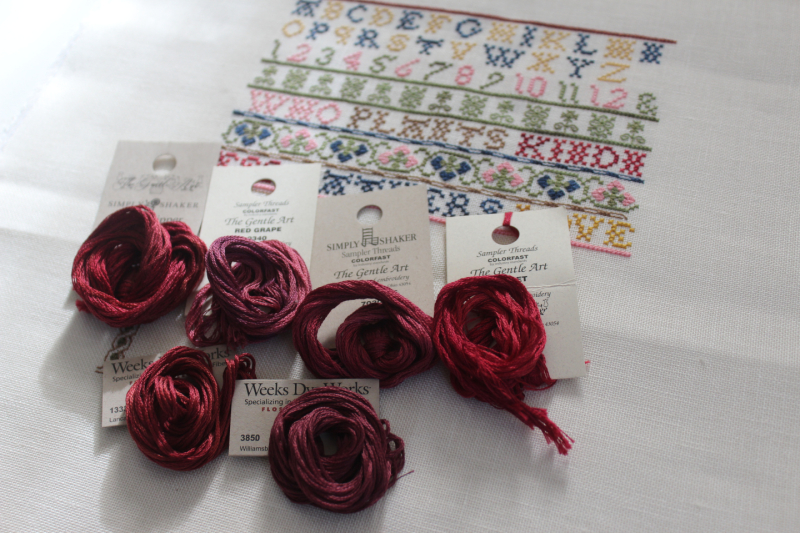
GA Simply Shaker’s “Ruby Slipper,” Gentle Art’s “Red Grape,” Simply Shaker’s “Briar Rose,” “Claret” (the original), and below, Weeks Dye Works’ “Lancaster Red” and “Williamsburg Red.” “Williamsburg” has more purple in it than “Lancaster”. “Claret” seems more of a blood-red than “Ruby Slipper”.
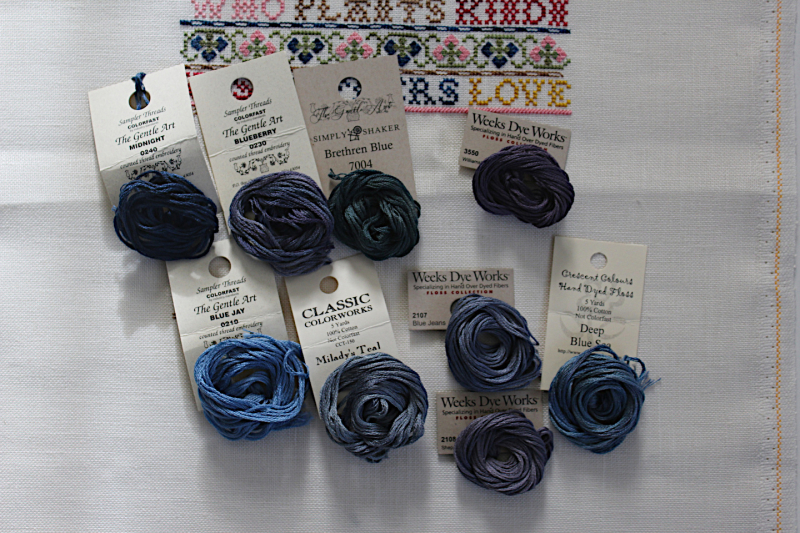
Gentle Art’s “Midnight” (the original dark blue for the “Floral”) and “Blueberry,” Simply Shaker’s “Brethren Blue,” Weeks Dye Works’ “Williamsburg Blue,” Gentle Art’s “Blue Jay” (the original medium-blue), Classic Colorworks’ “Milady’s Teal,” Weeks Dye Works’ “Blue Jeans” and “Shepard’s Blue,” and Crescent Colors’ “Deep Blue Sea.” “Shepard’s Blue” is quite on the grey side of blue; “Milady’s Teal” has very little green in it to be called teal. “Blueberry,” perhaps unsurprisingly, has a touch of purple in it. “Midnight” is not a blackish-blue, but a very deep but clear blue.
Gentle Art’s “Gold Leaf” (the original darker golden-brown), Weeks Dye Works’ “Schneckley,” Gentle Art’s “Brandy” (the original lighter gold/golden-brown), and GA Simply Shaker’s “Wheat Fields.” I wondered to myself as I made out my list if I might use “Gold Leaf” for “Brandy,” and use a darker gold for “Gold Leaf” ….
Gentle Art’s “Sable” (the original lighter golden-brown), Weeks’ Dye Works’ “Schneckley” again (in contention for one or the other of O’Steen’s browns), Gentle Art’s “Walnut,” and at the bottom, Weeks’ “Mocha”.
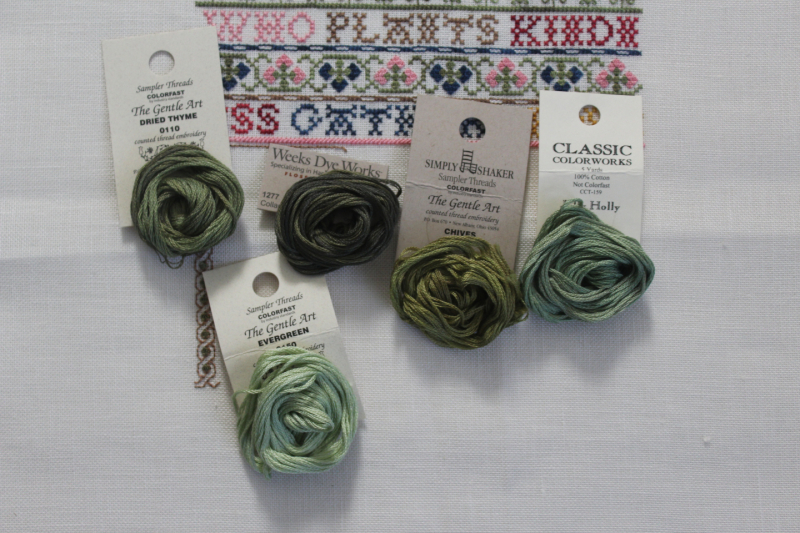
Gentle Art’s “Dried Thyme” (the original medium-green), Weeks Dye Works’ “Collards,” GA Simply Shaker’s “Chives”, Classic Colorworks’ “Jolly Holly,” and Gentle Art’s “Evergreen” (the original light green). “Collards” is pretty much exactly the color of boiled spinach, but don’t let that put you off as it is a gorgeous dark green with just a touch of black.
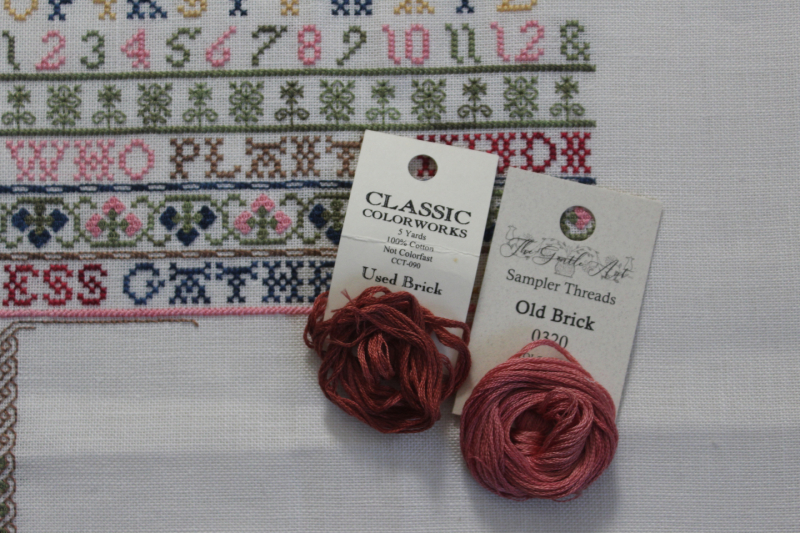
Classic Colorworks’ “Used Brick” and Gentle Art’s “Old Brick.” “Old Brick” seems to me more of a salmon color than a brick one, but that I suppose is taking exception more to the name of the color than the color itself!
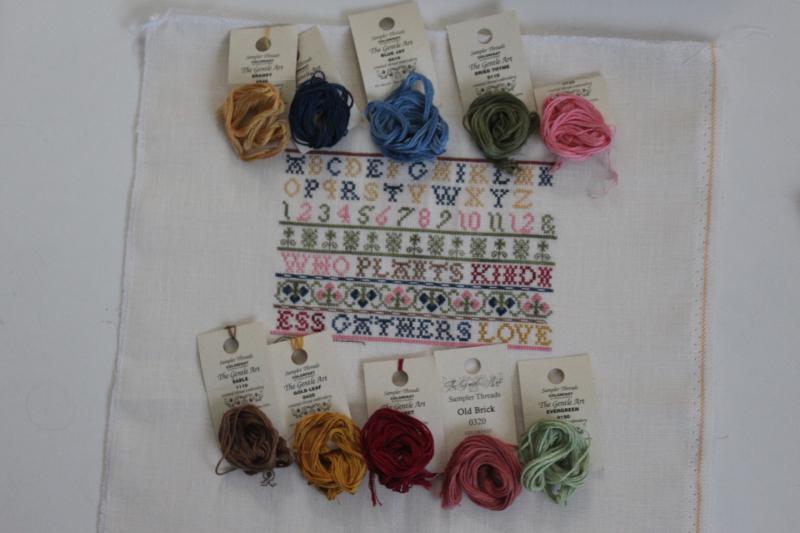
Above, these are O’Steen’s original colors for the sampler, all from The Gentle Art: “Brandy,” “Midnight,” “Blue Jay,” ” Dried Thyme,” “Victorian Pink,” “Sable,” “Gold Leaf,” “Claret,” “Old Brick,” and “Evergreen.” And below is my tentative selection, in the same order: “Schneckley,” “Williamsburg Blue,” either “Blue Jeans” or “Shepard’s Blue,” “Collards,” “Charlotte’s Pink,” “Mocha,” “Wheat Fields,” “Ruby Slipper” or “Briar Rose,” “Used Brick,” and “Dried Thyme”.