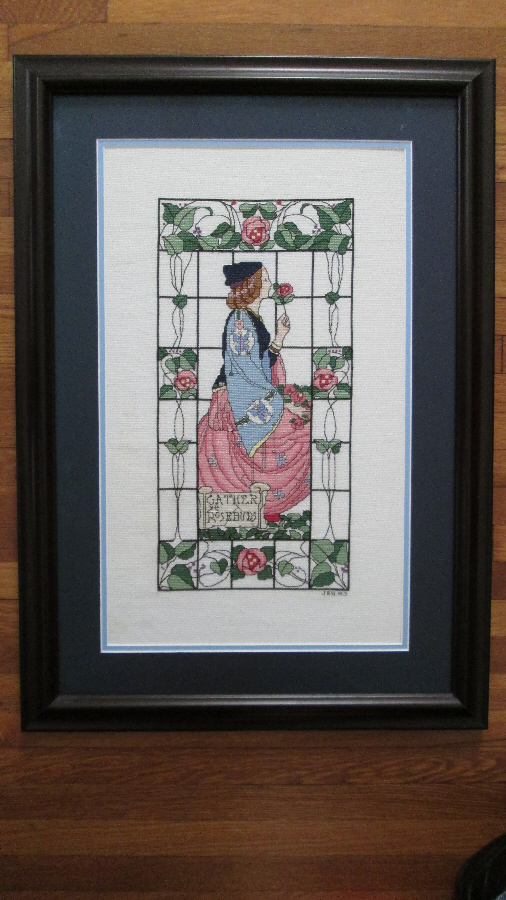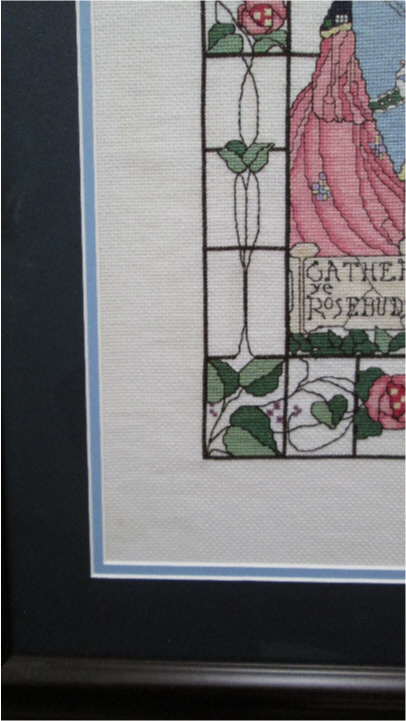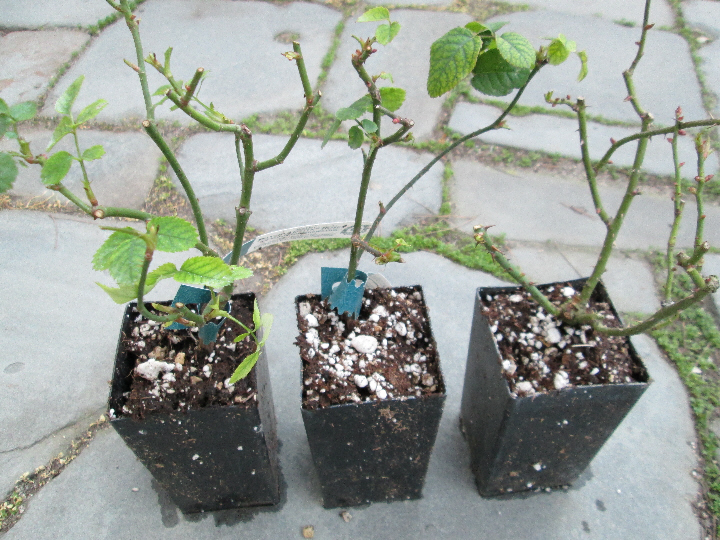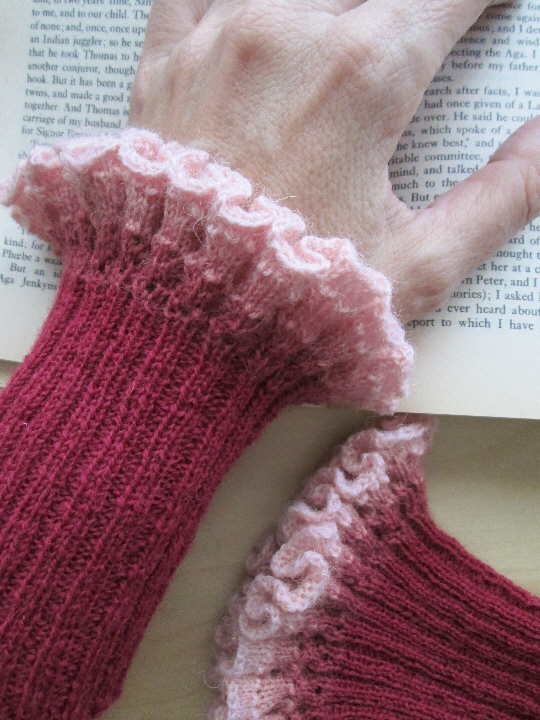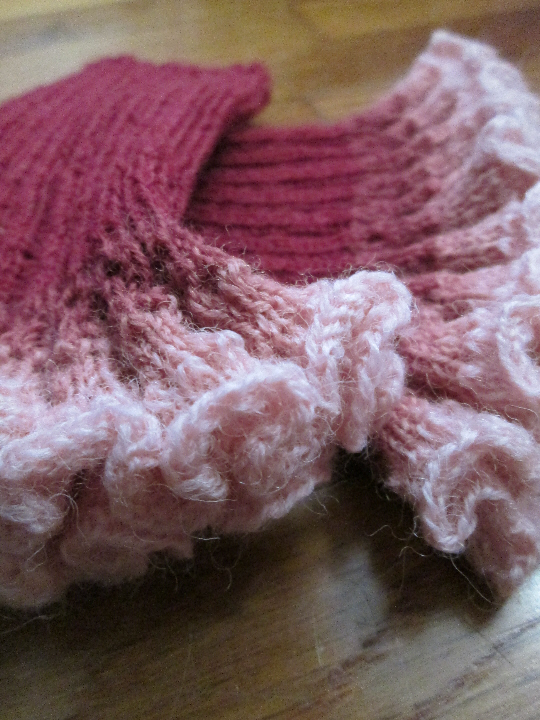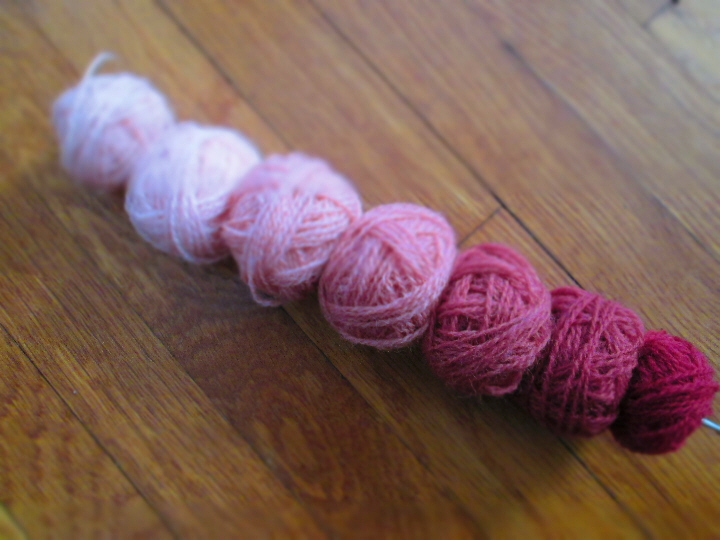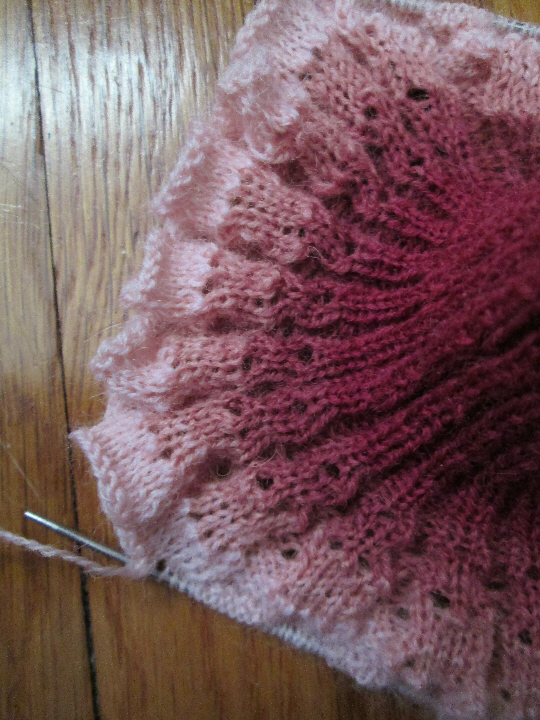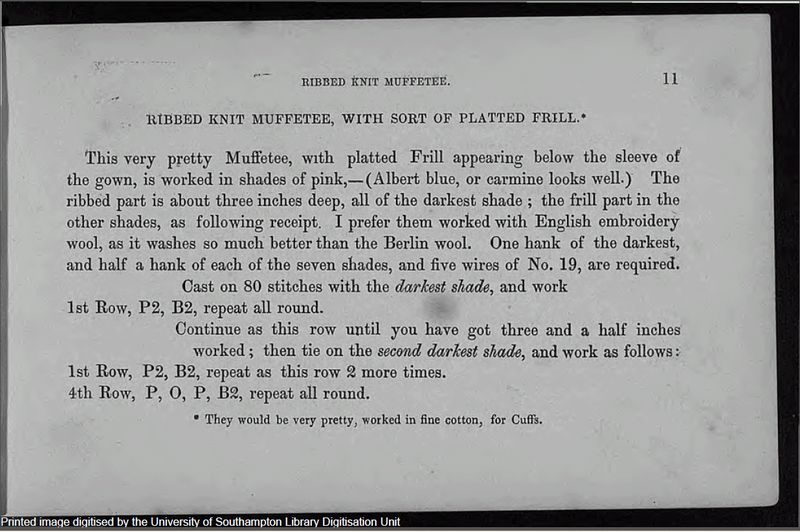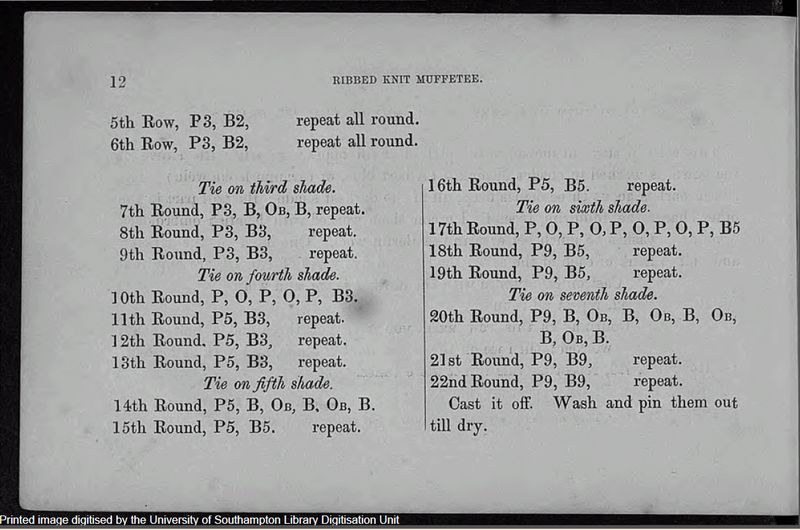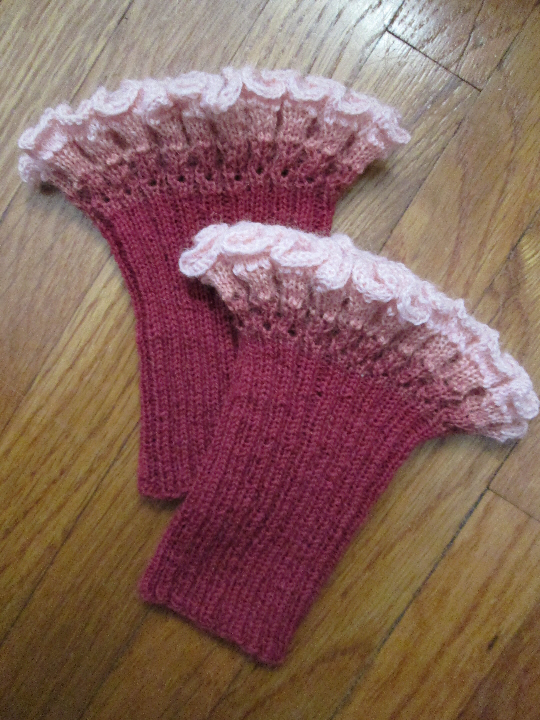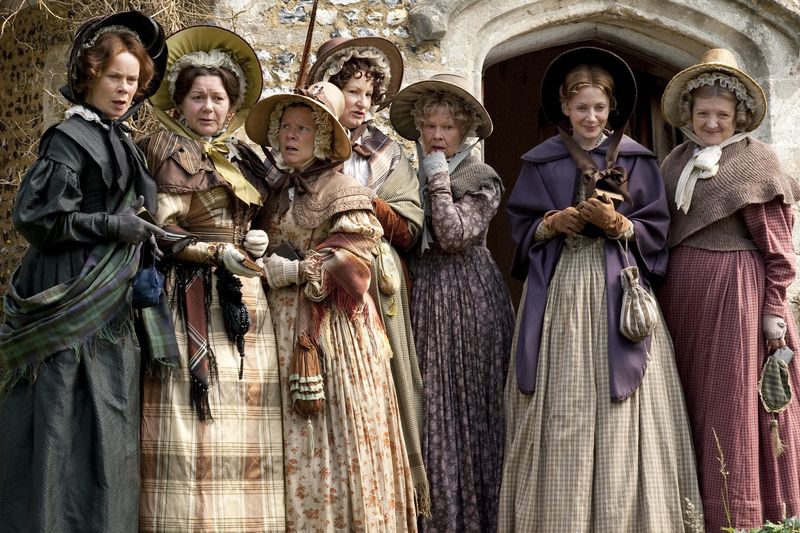
From the cool folks at Scout Regalia here in Echo Park.
-
-

A Parisian fashion plate from 1810. The caption, Google Translate assures me, reads, "Bonnet trimmed with tulle. Fichu on the shoulders." It looks as though there is a kind of overlayer of tulle on her cap, or perhaps it is just around the edges — interesting.Those are some massive knitting needles — and she looks pretty smug about it, too! A blanket, I wonder? What else could it be at that scale?
-
Zombie Barbie Cake.
Julia got a flyer in her weekly announcements envelope a month or so ago, and said, "Oh, I want to decorate a cake for the Harvest Festival competition!" The theme this year is "Monsters," so I said, "What about one of those Barbie cakes, but make her a zombie?"
I baked the cakes and assembled them, using a batch and a half of Martha Stewart's One-Bowl Chocolate Cake, with two batches of her Swiss meringue buttercream, most of that its natural color and some colored with black or brown decorating gel, and bits of torn white fondant. The flowers are done with bought frosting tubes. Julia did most of the decorating, with kibbitzing and a bit of help from me and a little more help from Laura, who couldn't resist the dripping blood.
Barbie's eyes are blanked out with white decorating gel; the blood is red gel, and the grime is cocoa powder. Her bodice is first aid gauze.
To be honest, I was tempted to title this post "How to Ruin Multiple Batches of Swiss Meringue Buttercream", but that was too depressing. The first time I made it, for Julia's first birthday, it came together absolutely perfectly, but this afternoon I made a number of stupid mistakes, exacerbated by desperation as the clock ticked away.
Here are my tips, then:
Don't rush. The sugar really does need to be fully dissolved, the meringue mixture does need to be beaten thoroughly, it does need to cool down before you start adding the butter, etc.
Make sure you've copied all the steps in the recipe. Enough said, I think.
You can warm the butter up in the microwave, but, yeah, be sure not to enter 10 minutes instead of 1. (Bangs head against microwave door.) Seriously, though, you don't want the butter too warm, or it doesn't incorporate properly. It should be softened but not warm, certainly no where near melting.
Some people use the mixer bowl for both the bain marie part and the beating part, which is certainly convenient but I suspect that this was one of my problems, and so the cough–third–time around I used a big Pyrex mixing bowl, and after the sugar was dissolved, I emptied it into the mixer bowl. I think that the stainless steel mixer bowl took too long to cool down; that's my theory, anyway, and I'm sticking with it. An added benefit to this method was that the Pyrex bowl was much wider and shallower than my KitchenAid mixer's bowl, so that the sugar dissolved more quickly and didn't get really hot.
The mixture does need to be quite cool before you start adding the butter; otherwise the butter will simply melt, and the buttercream will never set.
Be patient. It takes almost until the very last few tablespoons of butter before it starts to look like frosting instead of glop. (It actually seems to curdle at this point, and you think "oh no!" but this is absolutely right, so don't panic. Changing from the whisk to the paddle attachment smooths out the mixture wonderfully.)
If it really doesn't turn, put the mixture in the fridge for about 15 minutes, then beat a few minutes more. Try adding a few more tablespoons of butter. I'll keep my fingers crossed for you.
Rosie at Sweetapolita has done a lovely tutorial with lots of photos, very calming, and with some other advice on what you can try if it doesn't work.
-
We went to see the ballet of "Alice's Adventures in Wonderland" done by the National Ballet of Canada, at the Music Center yesterday afternoon. It was absolutely fabulous, and I highly recommend it.
There had been a couple of preview articles about the production in the Sunday Los Angeles Times recently, and it sounded so clever and charming that I thought, "right!" — something for everyone, with ballet and humor and technical derring-do. We splurged, so that instead of the nose-bleed section we were in the heart-attack section of the Dorothy Chandler, but it was worth it, since there was so much to see that we surely would have missed much up in the balconies.
And there was a great lot to see. This might be my only complaint, if you can call it that, that you might have to see it four or five times to find everything going on in some of the scenes!
It was all just really satisfyingly clever, bits of Balanchine and Busby Berkeley, much gnashing of scenery, laugh-out-loud choreography (Alice getting stuck in the tiny doorway, for one), inspired costumes and sets, with a great deal of wit and good spirit shining through the whole thing. Absolutely fantastic!
-
My choir concert, upon us this weekend, includes a setting of four poems by Christina Rossetti. I am not overly enamored of the settings, I must admit, finding them curiously antagonistic to the poetry, but I find that this has made me look a little closer at the poems, at Rossetti's choice of words and the rhythm of her lines, as well as the images she evokes.
The concert also includes a number of Brahms part-songs, so that the whole hour seems full of longing. This is certainly a significant characteristic of Rossetti, though my first thought in trying to describe her poems — defending the unusual rhyme scheme in "A Birthday" — was that she can be kooky, but she is a very meticulous craftswoman. This is, I realize, a rather flippant characterization — remembering perhaps only a rather warm and enervating afternoon spent in a lecture on "Goblin Market" — for much of her poetry is simple only deceptively, and as someone said, she “speaks more obliquely the more she has to say”.
May
I cannot tell you how it was,
But this I know: it came to pass
Upon a bright and sunny day
When May was young; ah, pleasant May!
As yet the poppies were not born
Between the blades of tender corn;
The last egg had not hatched as yet,
Nor any bird foregone its mate.I cannot tell you what it was,
But this I know: it did but pass.
It passed away with sunny May,
Like all sweet things it passed away,
And left me old, and cold, and gray.Song (When I am
dead, my dearest)When I am dead, my dearest,
Sing no sad songs for me;
Plant thou no roses at my head,
Nor shady cypress tree:
Be the green grass above me
With showers and dewdrops
wet;
And if thou wilt, remember,
And if thou wilt, forget.I shall not see the shadows,
I shall not feel the
rain;
I shall not hear the nightingale
Sing on, as if in pain:
And dreaming through the twilight
That doth not rise nor
set,
Haply I may remember,
And haply may forget.Echo
Come to me in the silence of the night;
Come in the speaking silence of a dream;
Come with soft rounded cheeks and eyes as bright
As sunlight on a stream;
Come back in tears,
O memory of hope, love of finished years.
Oh dream how sweet, too sweet, too bitter sweet,
Whose waking should have been in Paradise,
Where souls brimfull of love abide and meet;
Where thirsting longing eyes
Watch the slow door
That opening, letting in, lets out no more.
Yet come to me in dreams, that I may live
My life again tho’ cold in death:
Come back to me in dreams, that I may give
Pulse for pulse, breath for breath:
Speak low, lean low,
As long ago, my love, how long ago.Virginia Woolf, after a typically Woolfian arch and witty beginning to her essay on Rossetti in the second Common Reader, was amazed at the variety of scholarly opinions of Rossetti's poetry ("what very different impressions they seem to gather from the same works —
by what different standards they judge!"), then got, I think, right to the heart of Rossetti —"It would appear, then, that there are at least three schools of criticism: the refluent sea-music school; the line-irregularity school, and the school that bids one not criticise but cry. This is confusing; if we follow them all we shall only come to grief. Better perhaps read for oneself, expose the mind bare to the poem, and transcribe in all its haste and imperfection whatever may be the result of the impact. In this case it might run something as follows: O Christina Rossetti, I have humbly to confess that though I know many of your poems by heart, I have not read your works from cover to cover. I have not followed your course and traced your development. I doubt indeed that you developed very much. You were an instinctive poet. You saw the world from the same angle always. Years and the traffic of the mind with men and books did not affect you in the least. You carefully ignored any book that could shake your faith or any human being who could trouble your instincts. You were wise perhaps. Your instinct was so sure, so direct, so intense that it produced poems that sing like music in one’s ears — like a melody by Mozart or an air by Gluck. Yet for all its symmetry, yours was a complex song. When you struck your harp many strings sounded together. Like all instinctives you had a keen sense of the visual beauty of the world. Your poems are full of gold dust and “sweet geraniums’ varied brightness”; your eye noted incessantly how rushes are “velvet-headed”, and lizards have a “strange metallic mail”– your eye, indeed, observed with a sensual pre-Raphaelite intensity that must have surprised Christina the Anglo-Catholic. But to her you owed perhaps the fixity and sadness of your muse. The pressure of a tremendous faith circles and clamps together these little songs. Perhaps they owe to it their solidity. Certainly they owe to it their sadness — your God was a harsh God, your heavenly crown was set with thorns. No sooner have you feasted on beauty with your eyes than your mind tells you that beauty is vain and beauty passes. Death, oblivion, and rest lap round your songs with their dark wave. And then, incongruously, a sound of scurrying and laughter is heard. There is the patter of animals’ feet and the odd guttural notes of rooks and the snufflings of obtuse furry animals grunting and nosing. For you were not a pure saint by any means. You pulled legs; you tweaked noses. You were at war with all humbug and pretence. Modest as you were, still you were drastic, sure of your gift, convinced of your vision. A firm hand pruned your lines; a sharp ear tested their music. Nothing soft, otiose, irrelevant cumbered your pages. In a word, you were an artist. And thus was kept open, even when you wrote idly, tinkling bells for your own diversion, a pathway for the descent of that fiery visitant who came now and then and fused your lines into that indissoluble connection which no hand can put asunder:
But bring me poppies brimmed with sleepy death
And ivy choking what it garlandeth
And primroses that open to the moon." -
Because not all Danish church-books are as beautiful as this one —
I have been making a list of words helpful to me as I transcribe records, and in honor of Family History Month, I am posting it here in case it might be useful to others.
This list began with those found at FamilySearch and Statens Arkiver, and continued with Norman Madsen's very helpful dictionary and Rudy's List of Archaic Medical Terms. My list differs in including abbreviations and phrases found in register entries.
Since my concentration is almost exclusively on Thisted amt (county), I have also included place names, with old and modern spellings, culled from various sources such as FamilySearch and the work of others.
I have split up the list into three sections, so that it is a little easier to manage. The parts of the alphabet can be found, each on a separate page, here:
Held og lykke — good luck!
-
This list is a
collection over time of words found in Danish church books, as an aid in
transcribing and translating those genealogical records. It consists mostly of
the older spellings of Danish words, and for the most part does not include the
simpler words (from, on, town, his, year, farmer, and so on), nor words that
are obviously very similar in English (blind, familie).If there are two
spellings in an entry, the first is usually the older.Examples of a word’s
usage are given where helpful or interesting; these are in italics, and are
indented under the definition of the main word.Plurals and definite
article forms are indicated in parentheses following the English.The letters æ, ø and å are distinct letters, and are filed in that order after z. Note that “aa” is usually the same as “å”,
and thus is filed after z.If you don’t find a word in the list
alphabetically, try the “search” tool on your keyboard, as adjectives etc. may
be defined under the noun it modifies.
(See, for example, the definitions under kundskab.)Also included are place names for Thisted
amt (county), including spelling variations, though mostly for Vestervig parish.Please feel free to offer corrections,
alternative translations, elaborations, etc. in the comments at the end of each
section!*********
Rachbye = place in
Hassing district (modern spelling: Rakkeby)Randrup = village in Vestervig parish
rebslager = ropemaker
Refs = civil district (herred) in Thisted amt
rigsdaler = a Danish
coin, between mark and kroneRiiskierhuus = place
in Hassing district (modern spelling: Riskjærhus)Roddenbjærg = village in Vestervig parish
roede hunde = rubella, German measles
rullerske = woman who takes in
linen for manglingRævbjærg = village in Vestervig parish
Røjkær =
village in Vestervig parishRønhede = village in Vestervig parish
Rønhede
Plantage = village in Vestervig parishrådmand =
aldermansadelmager
= saddler, occasionally upholstererscorbut,
skoerbug = scurvy, scorbutusSeierslef = place in
Hassing district (modern spelling: Sejerslev)Sejersbøl = village in Vestervig parish
sekstende,
16de = sixteenthsekund, 2d = second
selveier, selvejer = owner
Sinderup = place in Hassing district
(modern spelling: Sindrup)Siørring = place in Hassing district
(modern spelling: Sjørring)sjette, 6te = sixth
Skadbjærg = village in Vestervig parish
skarlagensfeber, scarlatina = scarlet
fever, scarlatinaskiftebrev
= probate letter (skiftebrevet, the probate letter)skilling,
sk. = a Danish coin, between
penning and markskilt =
divorcedskoldkopper
= chicken pox, varicellaskolelærer,
skoleholder = schoolmaster, teacherskolemester
= schoolmasterskomager
= shoemakerskovfoged
= foresterskrædder
= tailorSkyum = parish in Thisted
Skårup = village in Vestervig parish
slagter = butcher
slægt = family
slægtning = relative
slægtsforskning = genealogy
slægtsnavn = family name
snedker = joiner, carpenter
snedkersvend = journeyman
joinerSnedsted = parish in Thisted
Snedstrup = place in
Hassing district (modern spelling: Snejstrup)sogn = parish (sogne, parishes)
“begge sogne,” both parishes
sognefoged = parish executive officer
Spangberg = place in Hassing
district (modern spelling: Spangsbjerg)spinderske = spinner
Spolum = village in Vestervig parish
Stagstrup = parish in Thisted
stand, civilstand = status, civil status
staseoedem = congestive
dropsyStauersbøl = village in Vestervig parish
sted = place
“sst., samme sted,” (in the) same place
stedbarn = stepchild (stedbørn, foster
children)stedfader, stiffader = stepfather
stedsøn = stepson
stenhugger = stone cutter
stilling = employment, occupation
stolemager = chair maker
stuepige = parlormaid
styrmand = mate (on a ship)
svaghed = weakness
-svend = journeyman
svigerinde, svogerske = sister-in-law
svoger = brother-in-law (svogeren, the
brother-in-law)svulst = tumor
Swankier = place in
Hassing district (modern spelling: Svankær)syerske = seamstress
Syndergaard = place in
Hassing district (modern spelling: Søndergaard)syndssyg = mentally
illsyttende,
17de = seventeenthsyvende,
7de = seventhsøgeresultat
= search resultsømand =
seamansøn = son (sønen, the
son; sønner, sons)Sønberg = place in
Hassing district (modern spelling: Sønbjerg)sønder = southern
Sønderdahlgaard =
place in Hassing district (modern spelling: Sønderdalgaard)Sønderhaae = place in
Hassing district (modern spelling: Sønderhaa)Sønderhå = parish in Thisted
søskende =
siblingsøskendebarn
= sibling’s child (søskendebørn, sibling’s children)søster =
sister (søstre, sisters)saaret, såret =
woundedtambur =
drummerteglbrænder
= tile makerTeglgaarden = village in Vestervig parish
teglværksejer
= brickyard ownerThorsted = place in
Hassing district (modern spelling: Torsted)tiende,
10de = tenthtienende
= serves“tjenende
Hr.,” serves Mr.tiener i,
tjener i = serves (works) intienestedreng, tjenestedreng = farmer’s
(hired) boytienestefolk, tjenestefolk = servants
tienestekarl,
tjenestekarl = farmhand, farm laborertienestepige,
tjenestepige = hired girl, maidtilgangsliste = list
of those people coming into the parishtobaksspinder = tobacco spinner
toldbetjent = customs officer
tolvte,
12te = twelfthToppenbjærg = village in Vestervig parish
Touberg = place in
Hassing district (modern spelling: Tovborg)Trankær = village in Vestervig parish
tredje,
3de = thirdtrettende, 13de = thirteenth
Trinitatis, Trinit. = Trinity
“20d Søndag efter Trinitatis,” 20th
Sunday after Trinitytrolovede = engagement/banns
“Trolovede
og Viede,” engagements/banns and marriages“Trolovede og
Copulerende,” engagements/banns and marriages“Trolovede og
Ægteviede,” engagements/banns and marriagestrolovelse = betrothal
trolovet = betrothed
træskomager = clog maker
Tvollum = place in
Hassing district (modern spelling: Tvolm)Tygstrup = village in Vestervig parish
Tygstrup Vang = village in Vestervig parish
tyvende, 20de = twentieth
tæring, tuberculose = tuberculosis,
consumptiontømrer, tømmermand = carpenter
tømrermester, tømrerm. = master carpenter
Tøtterup = place in
Hassing district (modern spelling: Tøttrup)Taabel, Tåbel = a village in Vestervig parish
Taabelbjærg, Tåbelbjærg = village in
Vestervig parishTaabeldrag, Tåbeldrag = village in
Vestervig parishudbygger = tenant farmer
udøbt = unbaptized
udlagt = alleged, designated
udlagt fader = the
man alleged by the mother to be the father of a child born out of wedlock“udlagt
barnefader Tjenestekarl Laurs Henrichsen”udlandet = gone to a foreign country
udvandre = emigrate
uge = week (uger, weeks)
Ugelew = place in
Hassing district (modern spelling: Uglev)Ulnits = place in
Hassing district (modern spelling: Ulnitz)Ulsted = village in Vestervig parish
umyndige
= minor (child under 18)ungkarl,
ungk. = bachelorungsvend,
ungs. = bachelorurmager = watchmaker
urtekræmmer = grocer
uægte barn = illegitimate child
vagtmester = principal officer
vanfør = disabled
Vanghuse = village in Vestervig parish
vaskekone = washerwoman, laundress
vattersot = dropsy, edema
ved = at, near, by
Vejlegaard = village in Vestervig parish
vester, vestre, v., vstr. = western
Vester Han = civil district (herred) in Thisted
Vesterby = village in Vestervig parish
Vestervig = parish in Thisted
Vestervig = town in Vestervig parish
vidner = witness (vidnere, witnesses)
viede = marriages (see also copulerende and
ægteviede)vielse = marriage
“Han blev ægteviet til hende,” he was married to her
Villerslev = parish in Thisted
Villerup = village in Vestervig parish
Visby = parish in Thisted
vognmand = carrier/teamster, coachman
Vogntoft = village in Vestervig parish
vægter = watchman
værge = guardian
All minors
(umyndige) were appointed a guardian, after a parent’s death, to represent them
throughout the probate process; the guardian appointed was typically the
father’s eldest brother (if the father had died), or the father himself (if the
mother had died). By law, the guardian must be from the father’s side unless
there were no living male relatives of the father, in which case the guardian
would be from the mother’s male relatives.værtshusholder = licensed victualler
væver = weaver
væverske = weaver (female)
Wejerslef = place in
Hassing district (modern spelling: Vejerslev)Westen Aae = place in
Hassing district (modern spelling: Vesten Aa)Willerslef = place in
Hassing district (modern spelling: Villerslev)Ydbye = place in Hassing district (modern
spelling: Ydby)ægtefælle = spouse
ægteskab = marriage
ægteviede, ægteviet = married (see
also viede and copulerende)“Han blev ægteviet til hende,” he was
married to herøde = deserted
øre = a Danish coin
Ørum = parish in Thisted
øvrige = remainder
-
This list is a
collection over time of words found in Danish church books, as an aid in
transcribing and translating those genealogical records. It consists mostly of
the older spellings of Danish words, and for the most part does not include the
simpler words (from, on, town, his, year, farmer, and so on), nor words that
are obviously very similar in English (blind, familie).If there are two
spellings in an entry, the first is usually the older.Examples of a word’s
usage are given where helpful or interesting; these are in italics, and are
indented under the definition of the main word.Plurals and definite
article forms are indicated in parentheses following the English.The letters æ, ø and å are distinct letters, and are filed in that order after z. Note that “aa” is usually the same as “å”,
and thus is filed after z.If you don’t find a word in the list
alphabetically, try the “search” tool on your keyboard, as adjectives etc. may
be defined under the noun it modifies.
(See, for example, the definitions under kundskab.)Also included are place names for Thisted
amt (county), including spelling variations, though mostly for Vestervig parish.Please feel free to offer corrections,
alternative translations, elaborations, etc. in the comments at the end of each
section!*********
Habech = place in
Hassing district (modern spelling: Habæk)handelsbetjent = shop assistant
Handrup = village in Vestervig parish
Harring = parish in Thisted
Hassing = district in Thisted
Hassing = parish in Thisted
Hedehuse = village in Vestervig parish
Hellerøe = place in
Hassing district (modern spelling: Hellerød)hendes = her
herred = civil district
Hesselberg = place in
Hassing district (modern spelling: Hesselbjerg)Hillerslev = civil civil district (herred) in Thisted
hjemmedøbt = home baptism
this was done in
case of emergency, such as when the child was not expected to live, or
sometimes if the weather made it impossible to get to the church; it had to be
confirmed later in the churchhjertefejl = heart disease
hjulmand = wheelwright
Horsfeld = place in
Hassing district (modern spelling: Horsfelt)hoste = cough
hovedgaard,
hovedgård = manorHugom = place in
Hassing district (modern spelling: Hygum)Hundborg = civil civil district (herred) in Thisted
Hundskier = place in
Hassing district (modern spelling: Hundskær)huusbond, husbond = husband
huuseier, husejer = houseowner
huusfader, husfader = head of household,
husband“Huusfaderens
søster, som er blind, og af ham forsørges,” the head of household’s sister, who is blind,
and is supported/provided for by himhuusholderske,
husholderske = housekeeperhuusiomfrue, husjomfru = housekeeper
huusmand, husmand, hmd. = small-holder,
cotter“jordløs
husmand,” small-holder without land of his ownhusstand = household
hustru, hust., hs., hstr. = wife
Hvidberg = parish in Thisted (modern spelling: Hvidbjerg)
hyrde = herdsman
høker = small shopkeeper
Hørdum = parish in Thisted
Hørsted = parish in Thisted
haandarbeide, håndarbejde = needlework
haandværker, håndværker = craftsman, artisan, workman
ikterus =
jaundice, icterusinderste = lodger in a house, tenant
indsidder = tenant farmer, renter, lodger
in a room at a farmindsidderske
= tenant farmer, renter (female)Ingesbjerg Høj = village in Vestervig
parishintroduceret =
“Konen samme dag introduceret”, The woman
[mother of the child] “introduced” at church the same dayJandrup = place in
Hassing district (modern spelling: Janderup)jomfru = maiden, Miss (not used of
peasants)jord = land
jordemoder = midwife
jordlod = land, plot
jordløs = landless
jordseddel, muldseddel = a certificate or confirmation from the probate authorities to the priest
of the deceased’s parish, that they had received notification and registered
the death; the priest was not allowed to bury the dead until the probate
authorities had received such notificationkaldet = called
Kalkær = village in Vestervig parish
kammager = comb
makerKappelgade = village in Vestervig parish
karetmager = coach builder
karl = farmhand
katar = catarrh
Kiallerup = place in Hassing district
(modern spelling: Kjallerup)kighoste, tussis
convulsiva = whooping cough, pertussiskirkebetjent = sexton
kirkebog, KB. = parish register
“i KB”, written in the parish register
kirkegang = churching, the reintroduction to church and blessing of
a mother after the birth of her child“Samme Dag holdt Konen sin
Kirkegang,” on the same day the mother had her churchingkirkegaard,
kirkegård = church-yard, cemeterykirkeværge = verger, church-warden
klodsmager
= block makerklorose =
chlorosisKloster Mølle = village in Vestervig parish
kludesamler
= ragmankobbersmed
= coppersmithkokkepige = cook (lit. “cooking-girl”)
koldbrand
= gangrene, cold gangrene, foot gangrene, necrosiskone =
wife, woman“forriges
kone,” previous wifekontorist
= clerkkopper, børnekopper = smallpox
“har haft de naturlige Børnekopper,”
has had the natural smallpox (as a child)kopper-indpodnings attest = smallpox
inoculation certificatekornmåler = corn measurer
korporal = corporal
Kortegaard = village in Vestervig parish
krampetrækning = convulsions
Krik = village in Vestervig parish
Krik Vig = village in Vestervig parish
krone = a Danish coin, the highest in value
kræft = cancer
kundskab = religious knowledge, catechism (kundskaben,
the knowledge)“Udmærket
af Kundskab og Opførsel,” excellent in knowledge and behavior“God Kundskab og Opførsel,”
good knowledge and behavior“maadelig Kundskab, god Opførsel,”
mediocre knowledge, good behavior“Meget god saavel i Kundskab som
Opførsel,” very good both in knowledge and behavior“M.G. i begge Henseende,” very
good in both terms“Temelig god i Kundskaben,
udmærket god i Opførsel,” fairly good in knowledge, excellent in behaviorkurvemager = basket maker
kusine =
female cousinkvinde, qvinde = woman, wife
kvindekiøn, quindekiøn = female gender
kvæle = choke
Kærgaarden = village in Vestervig parish
købmand = storekeeper
købstad = provincial town
lammelse = paralysis
lazareth, lazaret = military field hospital
lavværge, lv. = widow’s spokesman
lavværge or
lauværge = a widow’s guardian who would be present with her during her deceased
husband’s probate; widows had the privilege of choosing their own guardian, which was usually one of her brothersLeegaard = place in
Hassing districtLemhøjvang
= village in Vestervig parishlever af
= living by (also: ernærer sig ved)“Lever
af sine Hænders Gjerninger”ligeledes
= likewise, dittolinnedvæver = linen weaver
lod = portion, share
Lodahl = place in
Hassing district (modern spelling: Lodal)Lodbjerg = parish in Thisted
logerende = lodger, paying guest
lungebetændelse = pneumonia
lysning = banns
læge = doctor
lærling = pupil, apprentice
løbenummer, lbn. =
løjtnant = lieutnant
mand = man,
husband (manden, the man; mænd, men)mark = a Danish coin, between skilling and
rigsdalermatros = sailor
mavekneb, kolik = colic, gripes
mavekræft = stomach
cancermavesyge = stomach
complaint, diarrhea-mester = master
mindreaarige, mindreårige
= under agemoder = mother
(moderen, the mother; mødre, mothers)morbroder = maternal uncle, lit. “mother’s
brother”morfader, morfar = maternal grandfather,
lit. “mother’s father”mormoder, mormor = maternal grandmother,
lit. “mother’s mother”Morsø Nørre = civil civil district (herred) in Thisted
Morsø Sønder = civil district (herred) in
Thistedmoster = aunt, lit. “mother’s sister”
murer = bricklayer, mason
myndig, myndige,
myndigheds alderen = of legal agemyndigesluttet =
myndling = under the
age of majoritymæslinger,
meslinger, morbilli = measlesmølle =
millmøller = miller
Møllerhuset = in Vestervig parish
måned = month (måneder, months)
“mdr.,”
monthsnemlig = namely
nevø = nephew
niece = niece
niende,
9de = ninthnittende,
19de = nineteenthnuhavende, nuværende = present [at an occasion]
nummer,
nr. = numberNytaarsdag = New Year’s Day
Nørbo = village in Vestervig parish
Nørhaae = place in
Hassing district (modern spelling: Nørhaa)nørre,
nr. = northernnålemager
= needle makeroldefader =
great-grandfather (generic)oldemoder =
great-grandmother (generic)område =
regionopførsel
= behavior, manners (see examples under kundskab)ophold,
opholdssted = residenceopsidder
= farm managerottende,
8de = eighthoverformynderiet = guardianship records
Oksenbøl = village in Vestervig parish
opholdskone = pensioner upon her own farm;
retired from work, pensioner (female/wife)opholdsmand = pensioner upon his own farm;
retired from work, pensionerparalysering = paralysis
pen = pen (for writing with)
“m.f.P., med ført Pen,” with guided pen.
This abbreviation usually appears under the signatures of those witnessing the
probate, who either could not write or just needed help with writing.“m.p.P., med påholden Pen,” with guided
penpenning = the smallest Danish coin
pest = plague
pige = girl (pigen, the girl; en pige, a girl; pigene, the girls)
used for female children and
unmarried girls“gl.
pigen,” spinster (lit. “the old girl”)pigebarn = girl baby
pleiebarn,
plejebarn = foster child (plejebørn, foster children)pleiedatter,
plejedatter = foster daughterpleiesøn,
plejesøn = foster sonpottemager
= potterpræst =
priestpræstegaard, præstegård = parsonage
Paaske, Påske = Easter
-
This list is a
collection over time of words found in Danish church books, as an aid in
transcribing and translating those genealogical records. It consists mostly of
the older spellings of Danish words, and for the most part does not include the
simpler words (from, on, town, his, year, farmer, and so on), nor words that
are obviously very similar in English (blind, familie).If there are two
spellings in an entry, the first is usually the older.Examples of a word’s
usage are given where helpful or interesting; these are in italics, and are
indented under the definition of the main word.Plurals and definite
article forms are indicated in parentheses following the English.The letters æ, ø and å are distinct letters, and are filed in that order after z. Note that “aa” is usually the same as “å”,
and thus is filed after z.If you don’t find a word in the list
alphabetically, try the “search” tool on your keyboard, as adjectives etc. may
be defined under the noun it modifies.
(See, for example, the definitions under kundskab.)Also included are place names for Thisted
amt (county), including spelling variations, though mostly for Vestervig parish.Please feel free to offer corrections,
alternative translations, elaborations, etc. in the comments at the end of each
section!*********
Adbøl = village in Vestervig parish
afdøde, afd. = deceased
afgangen, afg. = deceased, lit. “gone away,
departed”afgangsliste = list of those people leaving
the parishaftægtskone, aftg. = female pensioner; a retiree or pensioner, specifically someone
dependent on the care of othersaftægtsmand, aftg. =
male pensioner; a
retiree or pensioner, specifically someone dependent on the care of othersalderdomssvaghed = weakness of old age
almisse = alms
almisselem = pauper
amme = nurse
amt = county
anden, 2den = the second
“anden gang,” the second time
anfald = seizures
anført = mentioned
“ikke anført,” not mentioned
apopleksi = apoplexy, stroke
apoteker = pharmacist
arbejdsmand = unskilled labourer
arving, arvinger, a. = heir (arvinger,
heirs)Ashøje = village in Vestervig parish
Astrup = village in Vestervig parish
Astrup Mark = village in Vestervig parish
attende, 19de = eighteenth
attest = certificate
bager = baker
barn, b. = child (barnet, the child; børn, children)
barselseng = childbirth, lit., “childbed”
beboere = residents
bedsteforældre = grandparents
Bedsted = parish in Thisted
begravet = buried
betler = beggar
blegsot =
chlorosisblodgang
= dysenterybo, boet,
boede = resideboel = small farm
boelsmand
= small-holderboende =
residingbopæl = residence
borgmester
= mayorbroder,
bror = brother (brødre, brothers)broderdatter = niece,
lit. ”brother’s daughter”brodersøn = nephew, lit. “brother’s son”
brok = hernia
brud =
bride (bruden, the bride)brudevielse = married
bryllup, brøllup = wedding
brudgom =
bridegroombrygger =
brewerBraagaard = place in
Hassing district (modern spelling: Brogaard)Bubbel Mark = village in Vestervig parish
buntmager
= furrierbygning =
buildingbyld = abscess
byskriver = town clerk
bødker = cooper
børnebørn = grandchildren (generic)
børstenbinder
= brushmakerbøssemager = gunsmith
baaret = carried (see frembaaret)
civilstand = marital status
confirmand, konfirmand = confirmant
(confirmanden, the confirmant)confirmerede, konfirmerede = confirmations
copulerede, kopulerede = marriages (see
also viende and ægteviede)dagleier,
daglejer = day laborerdagleierske,
daglejerske = day laborer (female)datter = daughter (døtre, daughters)
degn = parish clerk
diarrhoe, diaré =
diarrheaDield = place in
Hassing district (modern spelling: Djeld)difteri, difteritis = diptheria
domkirke = cathedral
dragon = dragoon
drejer = turner
dreng = boy; used for
male children and unmarried youthsdrengbarn
= boy babydruknet = drowned
dræbt = killed
dødfødt = stillborn
dødsårsag = cause of death
døv = deaf
daab, dåb = baptism/christening
“Daaben i Kirken confirmeret,” baptism
confirmed in the church (used after a home baptism)daabsattest, dåbsattest = certificate of baptism
efter =
afterefterlevende = deceased’s surviving kin,
lit. “[those who] live after”efternavn =
surname-eier, -ejer =
ownerejusd = Latin “ejusdem”, of the same
ellevte, 11te =
eleventhengelsk syge =
richitis, rickets, vitamin D deficiencyenke, e.,
en. = widowenkemand, enkm. = widower
enkestand = widowhood
eodem Die, Eod. die = L. “the same day”
erhverv = business, occupation, trade
“uden bestemt Erhverv,” without specific
occupation/tradeEttrup = in Vestervig parish?
fadder = sponsor at christening (faddere,
sponsors; faddernes, the sponsors)fader, far = father (fædre, fathers)
falde = fall; killed in war
farbroder = paternal
uncle, lit. ”father’s brother”farfader = paternal
grandfather, lit. “father’s father”farmoder = paternal
grandmother, lit. “father’s mother”faster = paternal
aunt, lit. “father’s sister”farver =
dyerfattig =
poor, indigentfattiggaard,
fattiggård = poorhousefattighus
= poorhousefattiglem
= pauperfeber =
ague, feverfeltskærer
= barber-surgeonfemte,
5te = fifthfemtende,
15de = fifteenthfisker =
fishermanfjerde,
4de = fourthfjortende,
14de = fourteenthFladskier = place in
Hassing district (modern spelling: Fladskær)Floule = place in Hassing district
(modern spelling: Flovlev)Foldbjerg Høj = village in Vestervig parish
folketælling, F.T. = census
forblødning = bleeding to death
forhen = formerly, previously
forlover = witness at a wedding, best man
(forlovere, witnesses)formynder,
f.m., fm = tutorfornavn =
first nameforrette
= (to) perform“Vielsen
forrettet i Ingstrup Kirke,” wedding performed in Ingstrup churchforriges kone = previous wife
forstoppelse = constipation
forsørges af = provided by
forældre = parents (forældrene = the
parents)fosterbarn = fosterchild
fraskilt
= divorcedfrembaaren = borne by (at a christening)
“frembaaren af,” borne by [the
godparent(s)]“frembaaren til Daaben af,” borne to the
christening by [the godparent(s)]frue = Mrs. (not used of peasant women)
fruentimmer = lady or young woman (fruentimmeret, the young woman),
often an unwed mother“offentlig(e) fruentimmer,” prostitute
Frydendal = village in Vestervig parish
frøken, frk. = Miss (title)
fæstebrev, f.b., fb =
fæstegård = copyhold (farm)
-fæster =
secure tenant (e.g. gaardfæster, gårdfæster = tenant farmer)fætter = male cousin
fød, *
= born (fødte, was born)The star or asterisk symbol is often found on gravestones and stands
for “born”, while the cross or plus stands for “died”født, f. = born, née
fødesogn = native parish (“birth-parish”)
fødeby = native town (“birth-town”)
første,
1ste = firstfaaresyge = mumps
galle = tumor
gangræna = gangrene
gartner = gardener
garver = tanner
geworbne = enlisted
Giersbøl = place in
Hassing district (modern spelling: Gjersbøl)Giettrup = place in
Hassing district (modern spelling: Gettrup)gift = married
“gift med, g.m.,” married to
“første gang gift,” first time married,
in first marriagegigt = rheumatism,
goutGinderup = place in
Hassing district (modern spelling: Ginnerup)Gjærup, Gjerup = place
in Hassing district (modern spelling: Gærup)glarmester = glazier
Gramstrup = village in Vestervig parish
Grurup = parish in Thisted
Grøndtoft = place in
Hassing district (modern spelling: Grøntoft)Gudenis = place in
Hassing district (modern spelling: Gudnæs)guldsmed = goldsmith
gulsot = jaundice,
icterus, chlorosisGydkær = village in Vestervig parish
gæstgiver = innkeeper
gørtler = brass moulder
gaard, gård = farm
“driver Gaarden,” runs the farm
gaardeier, gårdejer, gdjr., grd. = farm
ownergaardejerske
= farm owner (female)gaardfæster, gårdfæster = tenant farmer
Gaardhusmølle = village in Vestervig parish
gaardkone, gårdkone = farmer’s wife
gaardmand, gårdmand, gmd. = farmer
(gaardmændene = the farmers) -
That was Jane Austen, in a letter to her sister of 18th September 1796. I suppose, though, that to Miss Jane “dreadful Hot” was not what we’ve been having the past month or so — I am reminded of that headline of some years ago, “England Swelters in 75-Degree Heat”. Hah! I used to dream of 75-degree heat!
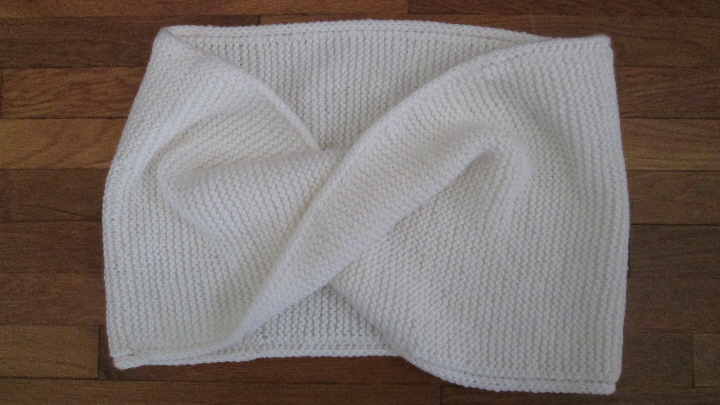
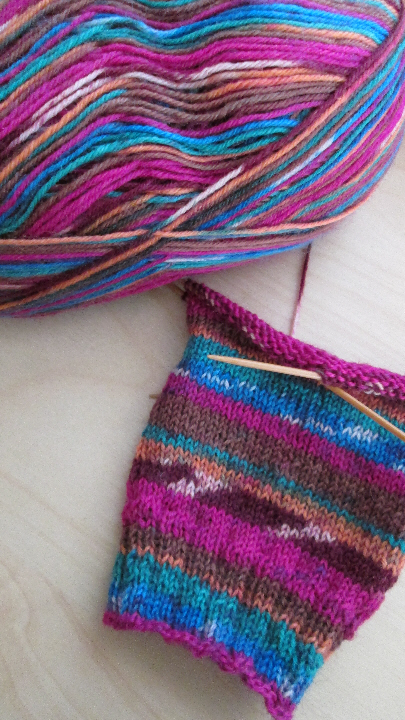
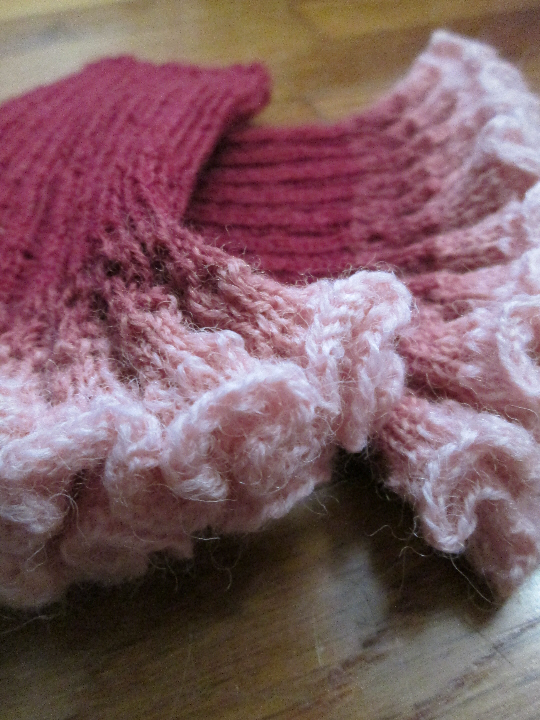
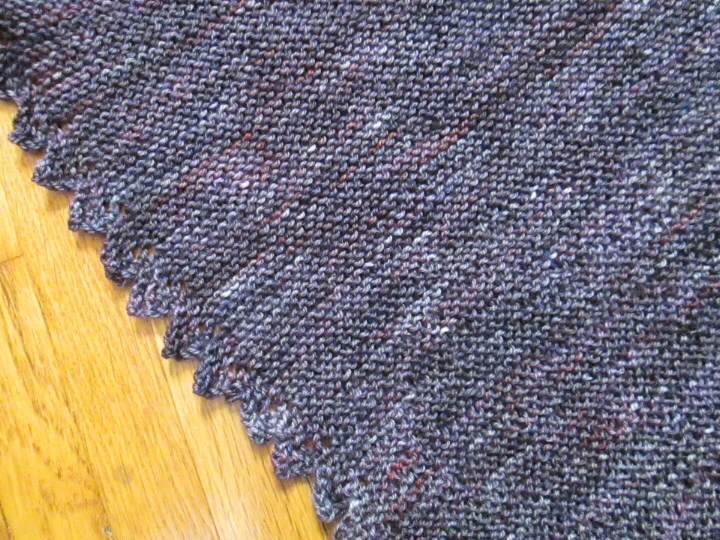
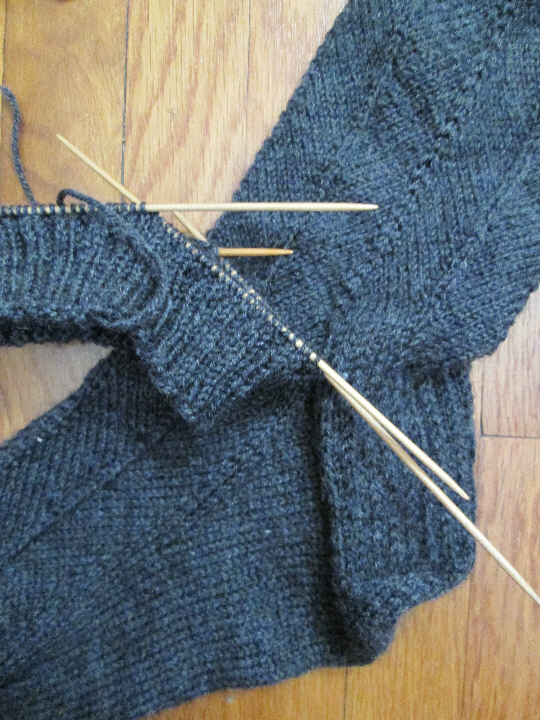
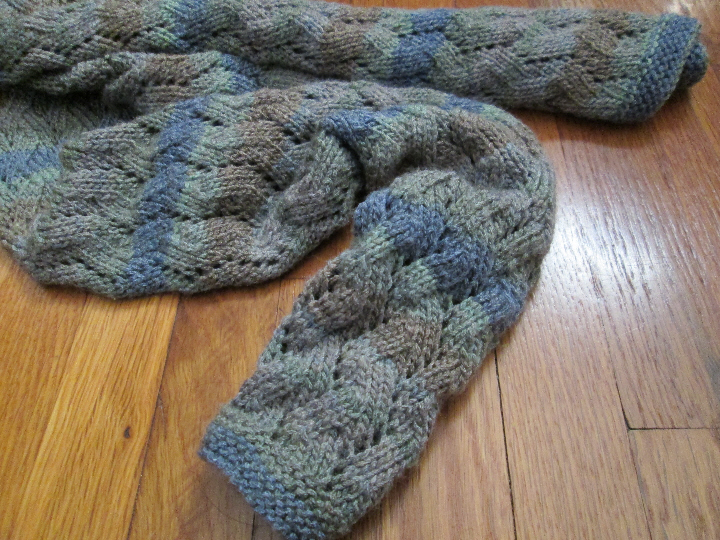
So this is my knitting lately, then,
Pathetic, really. This one is a little better,
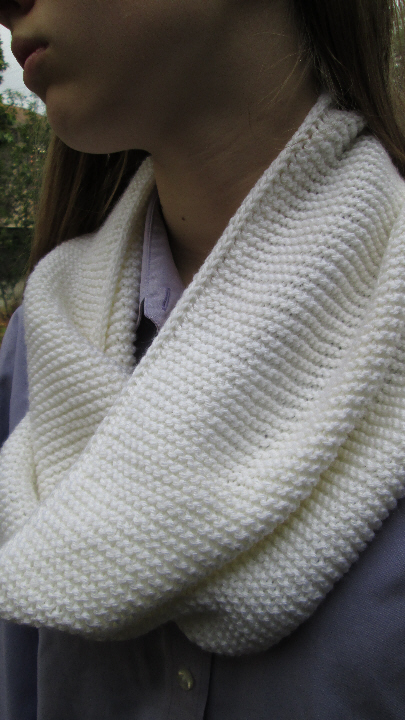
but not much. A cowl-scarf thing, for an easy Christmas present, and a doll cardy. Not yet, anyway.
Today was a day off of school, so we all watched the tree service as they swarmed over our giant stone pine in the back yard.
There are in fact three men in the tree in this picture, some thirty feet up (9 meters?) into a fifty-some-foot tree. It was fascinating to watch them, actually — they couldn’t get any machinery to the back yard, so they climbed the old-fashioned way, with ropes.
About half-way through the morning, we thought, “let’s go see the shuttle!” David had heard that it was going to fly over Disneyland, so we thought we’d get a good view from the top of the big parking structure. We were not the only ones with this idea.
The whole top of the structure was like this. But although there were a lot of people, it is very big, and away from the main escalators, it was not such a crowd. The nice thing was that everyone was excited to be there, so those with radio or internet access were giving updates to those without. Around 11:20, we got the news that it was over the Rose Bowl in Pasadena, so those of us who were sitting on the shadier stairwells came up, and not long afterwards the hum of the crowd could be heard. “There it is! I see it!”
The 747 flew literally over our heads. There were two military escorts — you can see one not quite in a direct line from the wing on the left, and the other escort about the same distance again, towards the bottom left.
David didn’t take any photos of it directly overhead — he said later, “well, there was a point at which I thought I’d rather be watching it with my own eyes.”
It was rather amazing, really. You think you’re getting all blasé about stuff like this, but then it’s right over your head, and you think, “wow.” It’s been in space. Amazing.