• This is the first of three posts about my adventures in making a first set of Renaissance Faire garb for my family.  David said a few months ago, "Who wants to dress up for the Faire this year?" and the girls both shouted "Me!" so I pulled out my copy of The Tudor Tailor and got to work.  I had already made the kirtle and waistcoat described below, thinking that only David and I would be up for it, but the girls actually got excited.
    The_tudor_tailor

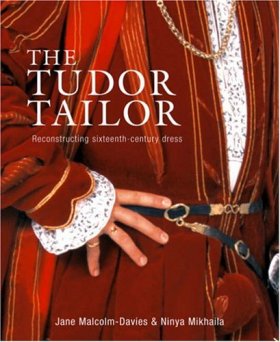
    The Tudor Tailor, by Jane Malcolm-Davies and Ninya Mikhaila, is thrilling and dangerous and daunting all at once.  The photographs are beautiful, and the erudition impressive, but you must scale up and draft the patterns yourself.  I bought the book a few years ago at the Renaissance Pleasure Faire,
    in anticipation of sewing my own gown, on the reassurances of the woman
    running the stall that the patterns were relatively easy to draft and
    sew oneself. Well, it is not for the faint-hearted, to be sure.  If you are stubborn enough, though, you might get through all right.

    (Yes, the Tudor Tailor website now offers full-size patterns.  I had already spent some $35 on the book; I didn't feel I could justify the expense of a rather pricy pattern in addition to fabric, notions, etc.)

    The instructions are pretty basic, and assume a goodish amount of sewing experience.  There is no advice in the book about where boning should go, for instance, so I had to kind of make it up, with reference to a few pictures cobbled together from various sources on the internet.  I'm sure it is different for different women, but a few guidelines would have been helpful.
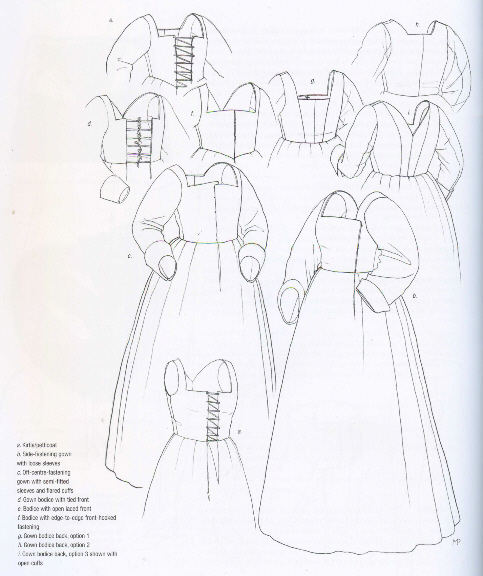
    Kirtles

    I made things more difficult for myself by falling in love with the side-opening bodice, which turned out to be quite a trial.  How deep do you make the overlap?  If it is only an inch or two, where do you put the boning?  How do you accommodate the skirt opening?  Etc. etc. etc.  Lots of trials with self-fitting a bodice (not easy to do, but most of my sewing was done while the girls were at school) and stupid mistakes like attaching the boned interlining the wrong way round so that the bones were curving away from my body!  But my mom and David were both on hand for the last tweaking of the pattern, and I managed to solve or disguise most of the problems, and get a wearable kirtle.
    0389

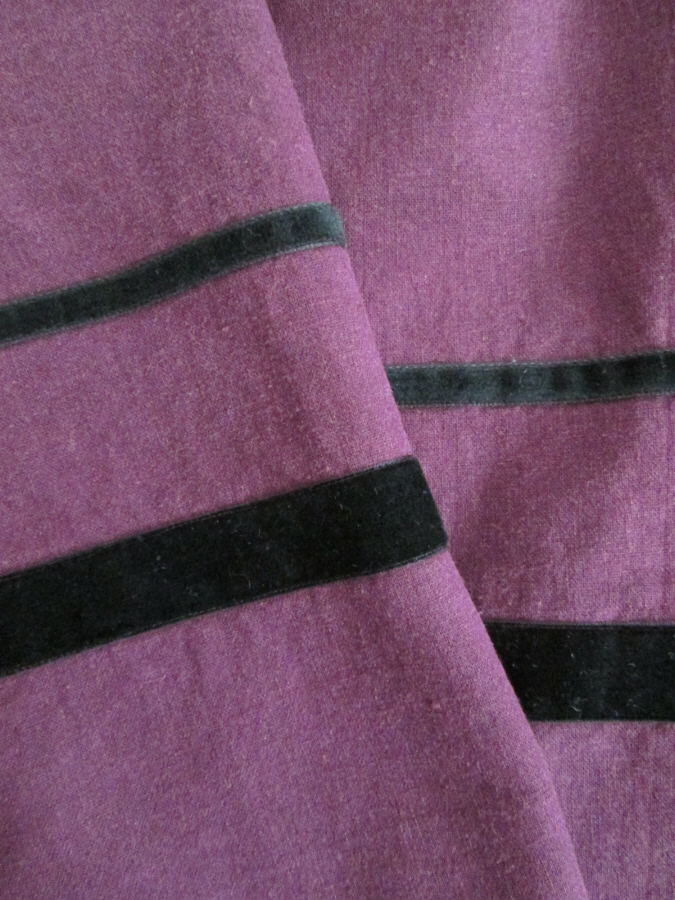
    The fabric is Sew Classics Linen-Look from Jo-Ann's, in, I regret to say, "Potent Purple".  This name does not do it justice at all.  It is, I fancy, what the Elizabethans called murrey (mulberry), a rich reddish purple.  Quite lovely, especially with a touch of black velvet ribbon trim, one narrow, one wide.

    (The boning, I regret to say, does not hold up my bosom as well as I had hoped.  This, I gather, is a common problem as many historical costumers refer to "slippage", which describes the effect perfectly.)
    0392

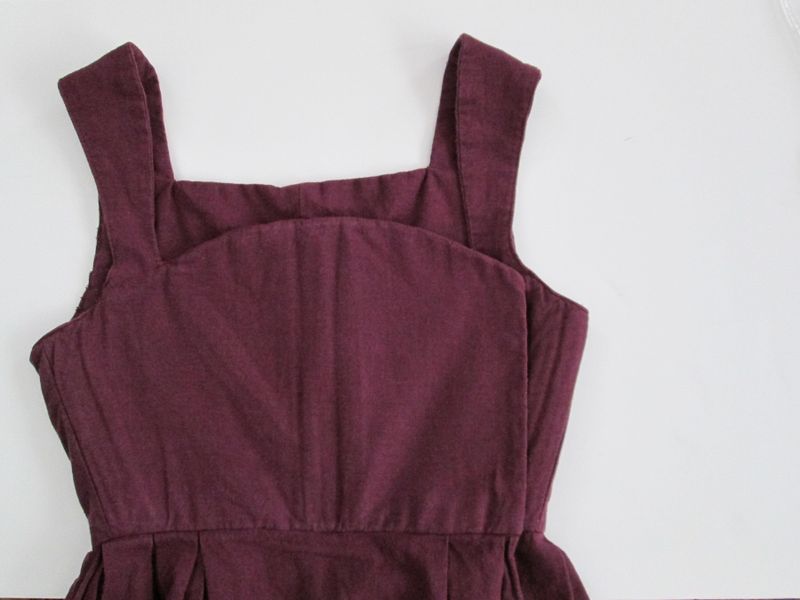
    The bodice is self-lined with muslin interlining, and drill inter-interlining on the fronts only.  I attached the skirts with box pleats, which I know now to be much more of a chore than knife pleats, but there was so much fabric, since I used three widths of fabric on my skirts, that I'm not sure knife pleats would have worked.  Anyway, it looks really nice.

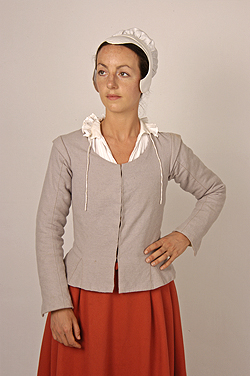
    I also very much admired this waistcoat in the Tudor Tailor book —
    1560s kentwell 1 - ninya mikhaila

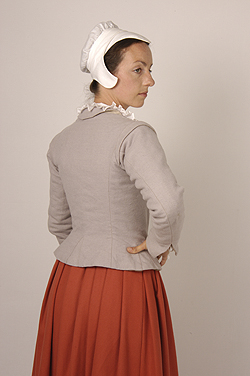
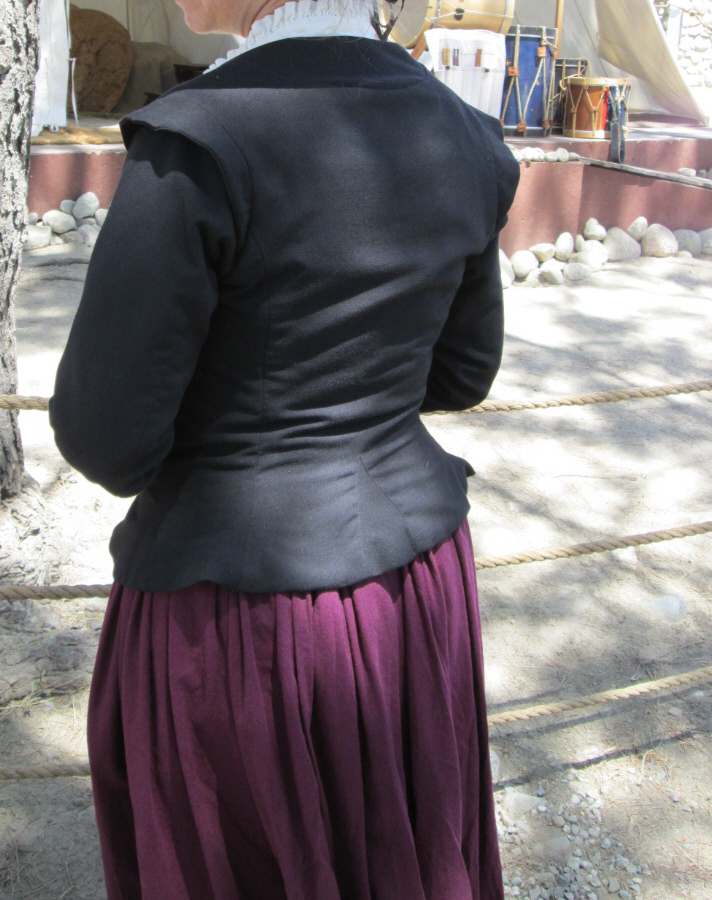
    this is a front view of it, from Ninya Mikhaila's website — so I chose that to go over my kirtle, and used a black midweight cotton/poly blend, and a light black cotton lining.  After the kirtle, this seemed a walk in the park.  The godets went in very nicely with only a little bit of fuss at first, and I really like the effect — here is another view of the Tudor Tailor one, since the black of mine is difficult to photograph —
    1560s kentwell 2 - ninya mikhaila

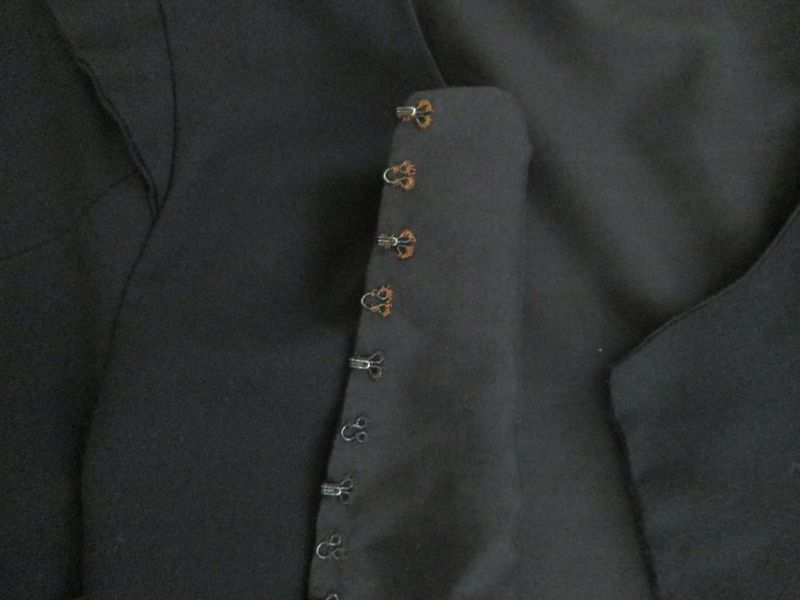
    The part that took the longest was in fact sewing the 21,748 pairs of hooks and eyes along the front of the waistcoat.  No, I exaggerate a little — but I really dislike sewing hooks and eyes, and although I really like the look, I will think twice about making something with this many again — and not with black thread on black fabric in a hurry, either — although I "cheated" sometimes and used brown thread so that I could see it!  I probably could have got away with a smaller number of hooks-and-eyes, but there was little indication in the book about quantities, and the only photo of a finished one is this back view, so I wasn't to know.  It took me from last midsummer to March to do them all!
    0387

    But I am really enormously pleased with it.  I like the wings and the godets, and the way that the collar of my smock shows above the lower rounded collar of the waistcoat, and the weirdly charming buttonless sleeve cuffs.  It seems to suit my figure too, so that's definitely all right!
    0344

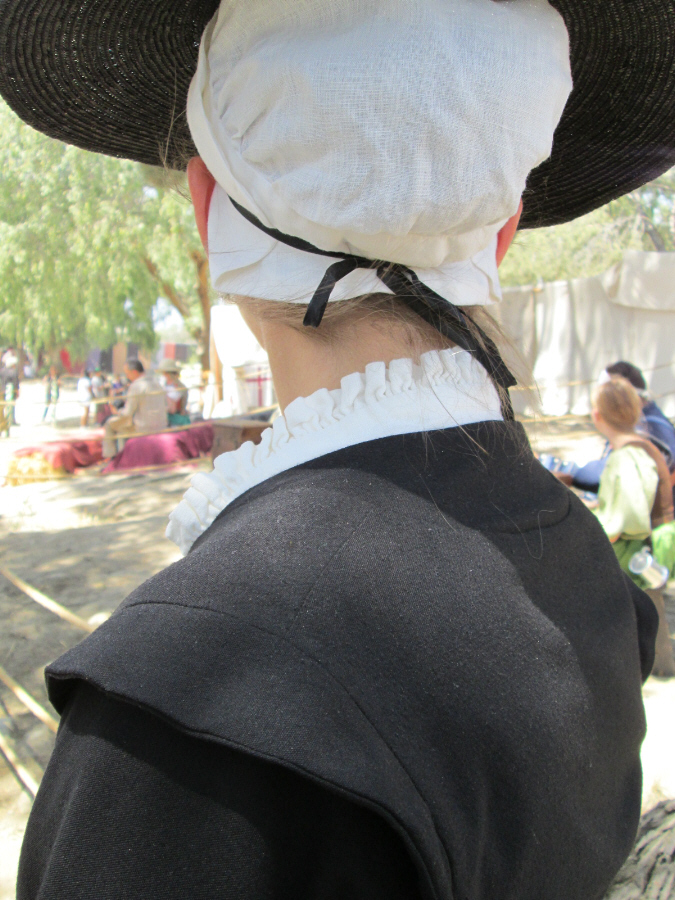
    I also made a "Henrician brimmed coif", with the IL020 handkerchief-weight linen from Fabrics-Store.com.  I suppose that the shaped-brim one would be more flattering, but I figured that this one would be better with the hat I had bought at the Faire when I first thought "I can sew myself a Ren-Faire costume!" 
    0348

    The hat is one of the more sober ones from Cora Hendershott of Wheat Goddesses, who has a booth at the Faire.
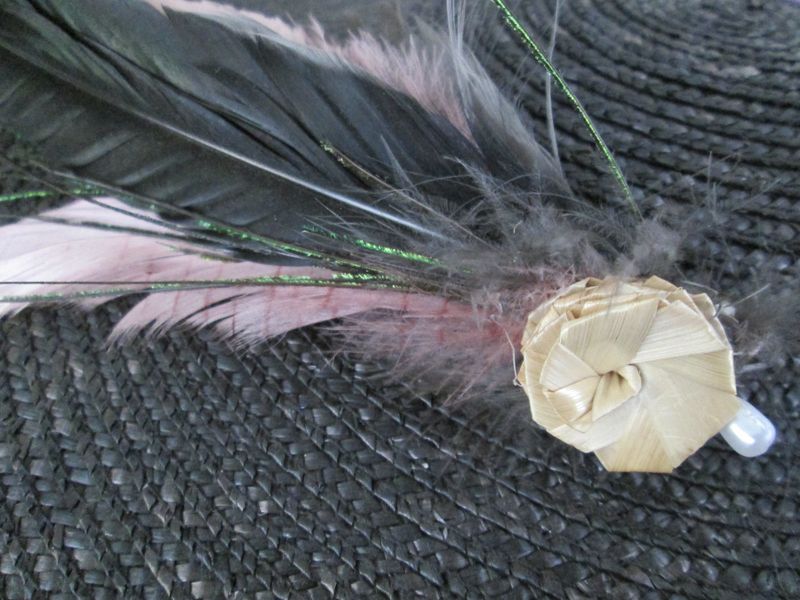
    0388

    More kirtles to come …
  • 0339

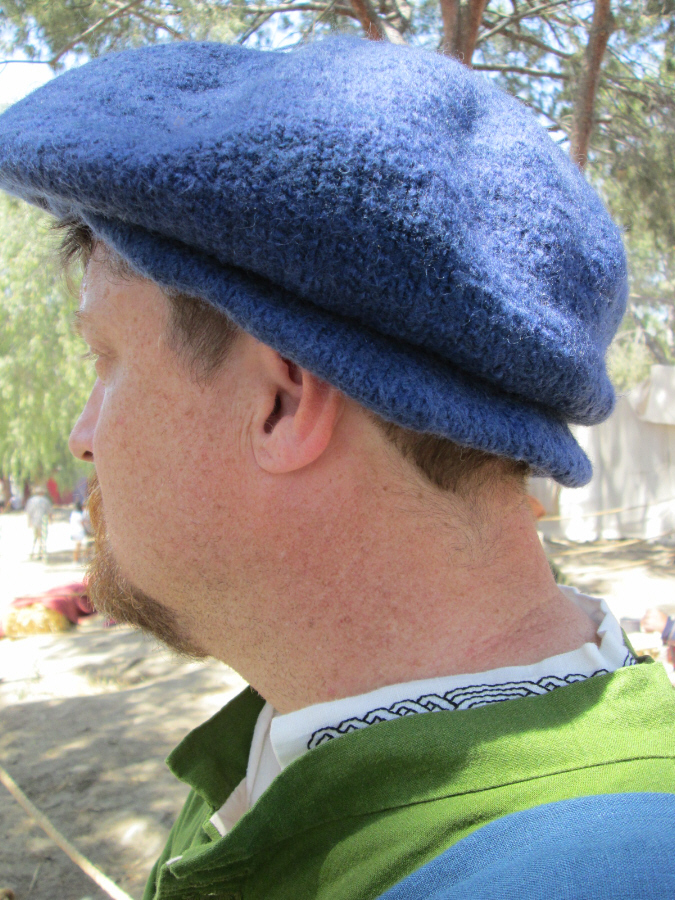
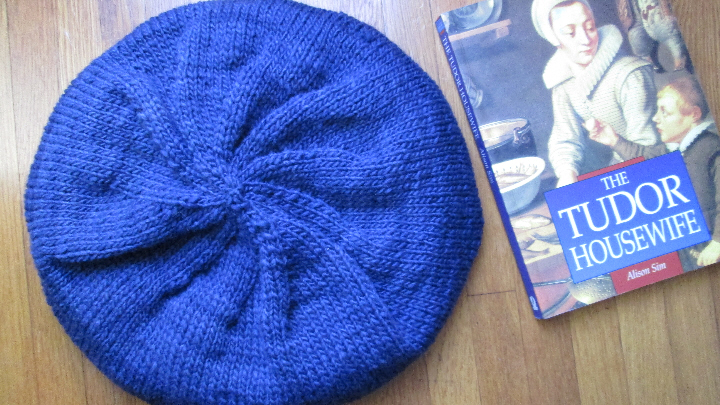
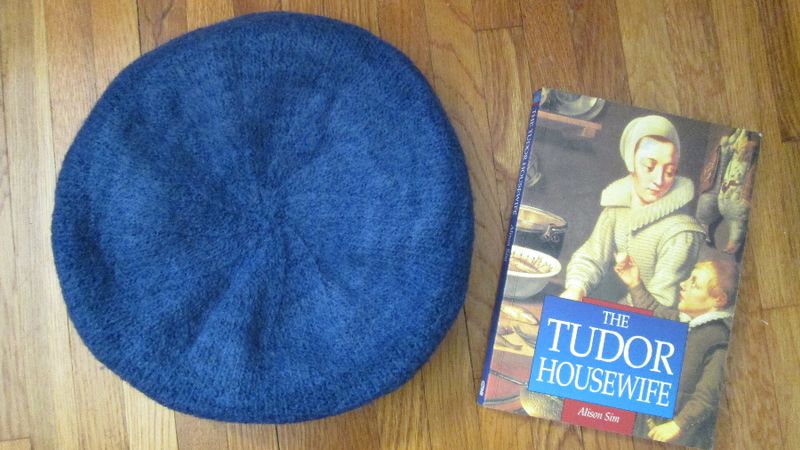
    Part of David's Renaisssance Faire garb for this year — for I wasn't the only one this year who wanted to dress for it, so I am at the moment sewing like a madwoman — is to include what is generally known as a Tudor or Elizabethan flat cap.  Of course I had seen the July/August 2012 issue of Piecework with the "Good Dame Eve's Cap" pattern written up by Joanne Watson, "inspired by a Tudor cap from Wollaton Hall in Nottingham, England".  I promptly sent off for two skeins of the Manos del Uruguay Clasica, and began to knit.  Unfortunately, as I've said elsewhere, I got to the end of the wool before I got to the end of the hat: I then shook my fist and ordered another skein from Jimmy Beans, wh. arrived within a few days, and the hat was done the next afternoon. 

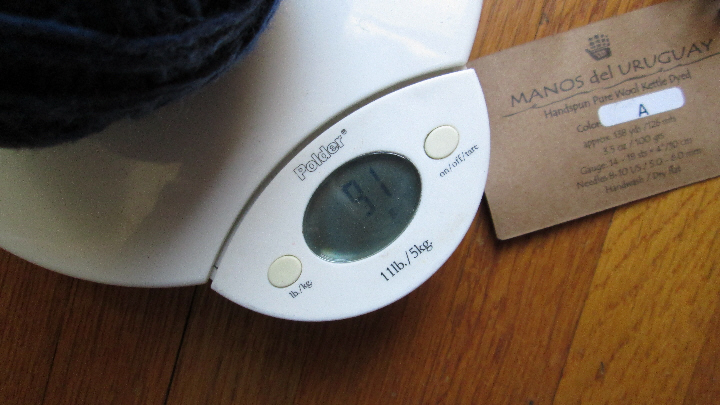
    I suspect now that this is why I ran short —

    0158

    I weighed the new skein just out of curiosity — glad I did now.  So as it turned out, the finished hat weighed before felting 193g — which not coincidentally would be 2 skeins' worth if the skeins had actually weighed 100g, so it's not the pattern — I used 26g of the third skein, which by my calculations makes the first two skeins more or less 83.5g each.  I used every bit of wool in the first two skeins, as well — spliced the joins and wove in the ends — so it's all there.

    When the new skein arrived and had been balled up and ready to go, I realized that I didn't much like the narrow-on-one-side, wide-on-the-other brim in the magazine photograph,

    Dame%202.jpg-500x375

    which doesn't really show up if you only look at it and think "Tudor hat, great!" like I did, and don't examine it carefully — so I worked the alternate version of the pattern, the folded-brim one.

    The only modification I made was to use a three-needle bind-off, instead of binding off and sewing down the turned edge.  Since I already had put in a "life line" at the beginning of the brim, picking up a row of stitches at that point was fairly simple.  I don't know much about the period accuracy of a three-needle bind-off in this manner, but there it is.  It makes a lovely sharp crease there, just where one is wanted.  I might have put a purl row at the point where the hat part goes from increasing to decreasing, if I'd felt more devil-may-care about authenticity, actually.

    0157

    0168

    IMG_0161

    (Notice the color difference between the skeins of the Clasica.  Pity the lighter one wasn't the third skein.  Oh well.)

    The shape of the finished hat is a little irregular, due to the straight section
    at the start (just above the brim).  This gives it a sort of mushroom-y
    shape, not with the sharp increase-section/decrease-section look that
    you see in some paintings — more like the third hat in the paintings below than the
    second one.

    0170

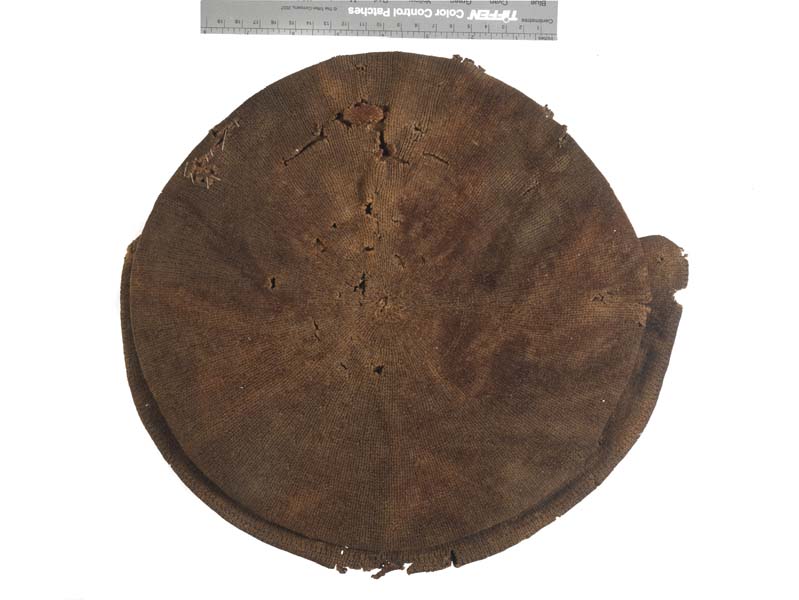
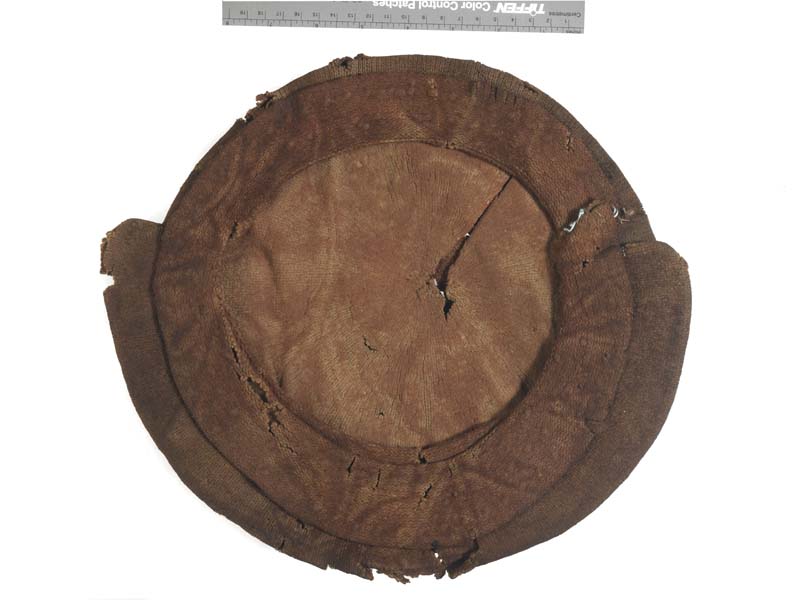
    I pressed and steamed it like anything to try and get it to lie flatter on the top than the spiral decreases really wanted to do, as I'd had in mind something rather flatter, more I guess like this one from the Museum of London —

    Cap 5005 top - museum of london

    Cap 5005 underside - museum of london

    but the Good Dame Eve's Cap is a quick knit (with enough wool …) and makes a good choice for impulsive Ren-Faire garb.

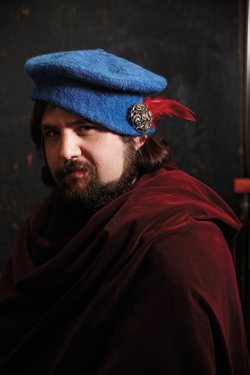
    Notice in the Museum of London hat that the brim is split, which to my eye makes a very fetching hat.  I can't help looking at this one and thinking, "hmm, finer wool of course, irregularly-spaced decreases at the crown," and wondering what I've got in my stash that I could tinker with.  There are probably dozens of flat hats like this in the Museum of London alone, many photographed like this one, and of course the flat hat appears again and again in paintings.  One of the reasons for its popularity was, I suspect, the ease with which the style lends itself to variations.  Here are a few I've found —

    Ludger_tom_Ring_d._J._001

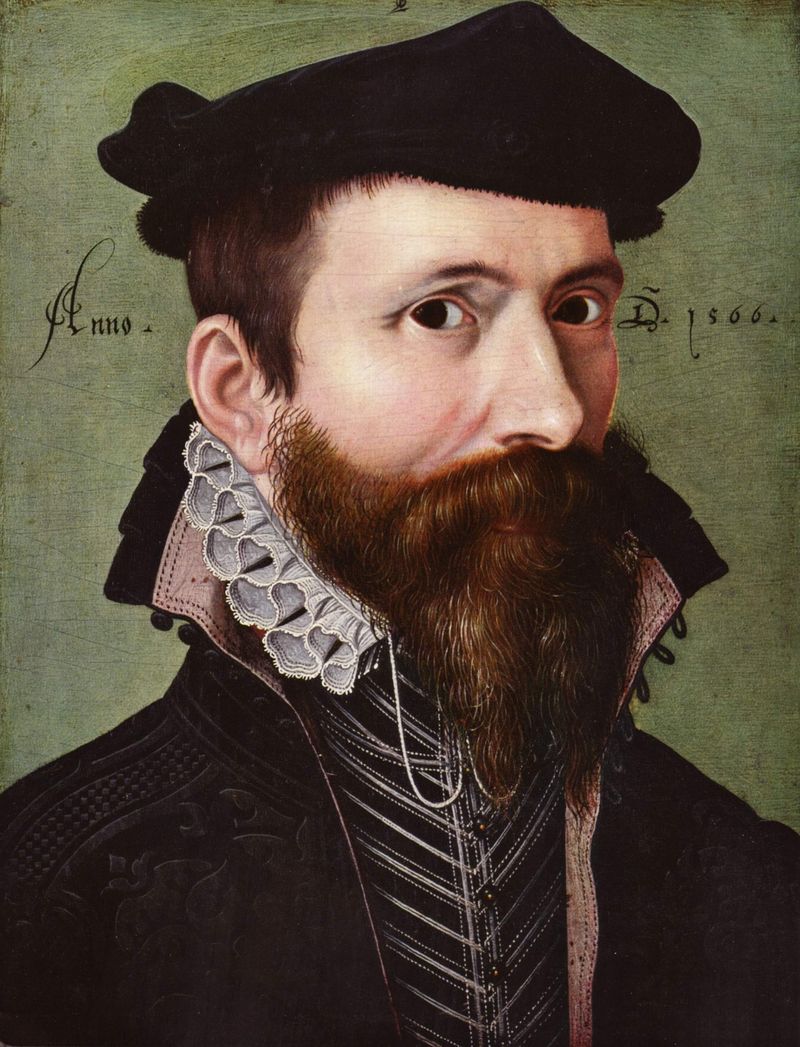
    Ludger tom Ring, "Portrait of a Man" (1566). Interesting that part of the cap seems to have been painted out.  It looks like the brim is fur and the top is not — velvet, perhaps? and thus eminently scrunchable, as this man seems to have done.  (I am fascinated by the detail in this portrait: the button loops, the lines of silver embroidery on the doublet, the visible stitching on the white lining of the jacket.)

    Oh, here is the artist, in fact —

    Ludger_tom_Ring_d._J._Selbstbildnis

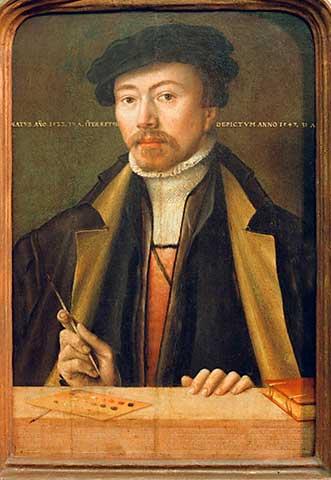
    Ludger tom Ring (German, not Dutch as I'd suspected) in a 1547 self-portrait.  Isn't it interesting how you find faces that seem to cross the centuries.  This is partly his looking straight at the viewer, I think — it gives the portrait a modern directness.

    Bettes_An_Unknown_Man_in_a_Black_Cap_1545

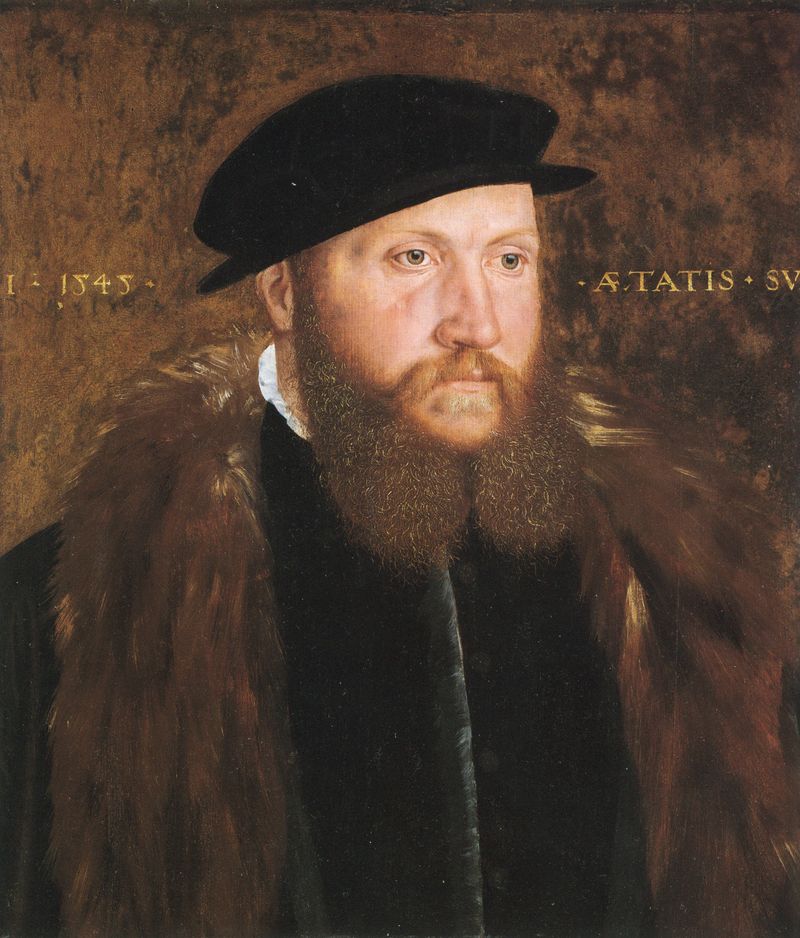
    John Bettes, "Portrait of a Man" (1545).  This man wears his cap much lower on his head than the first two men.

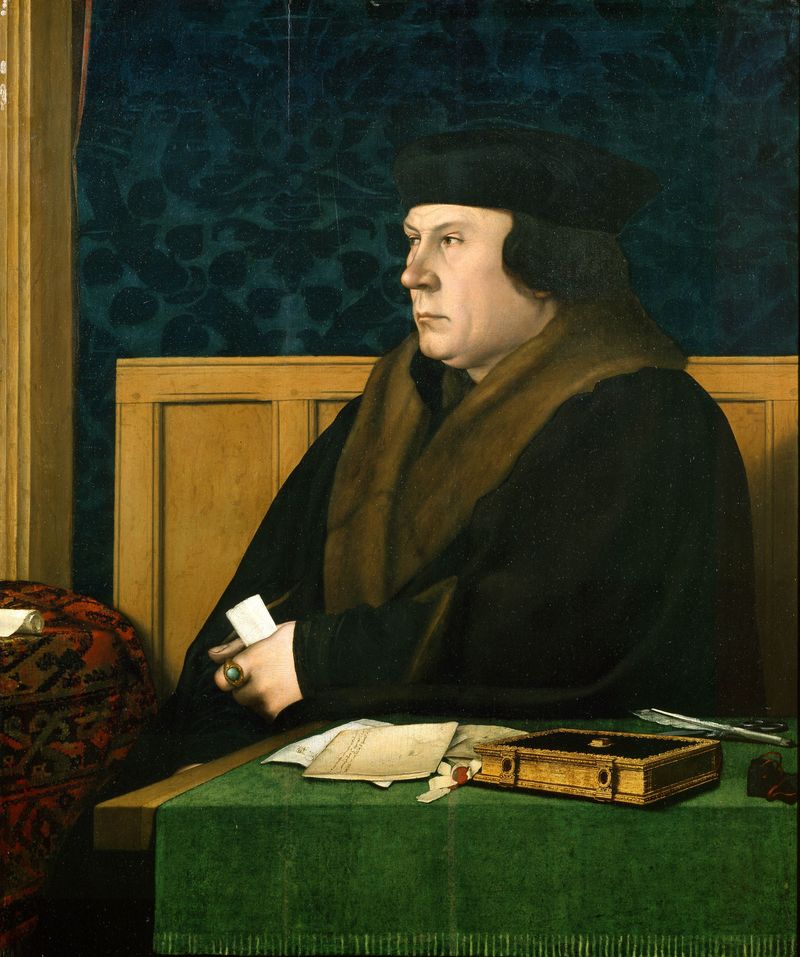
    Cromwell,Thomas(1EEssex)01

    Hans Holbein the Younger, "Portrait of Thomas Cromwell" (1532-33).  Difficult to see, with the black against a dark background, but I suspect it is the same type of flat hat, worn pulled down low over his forehead.

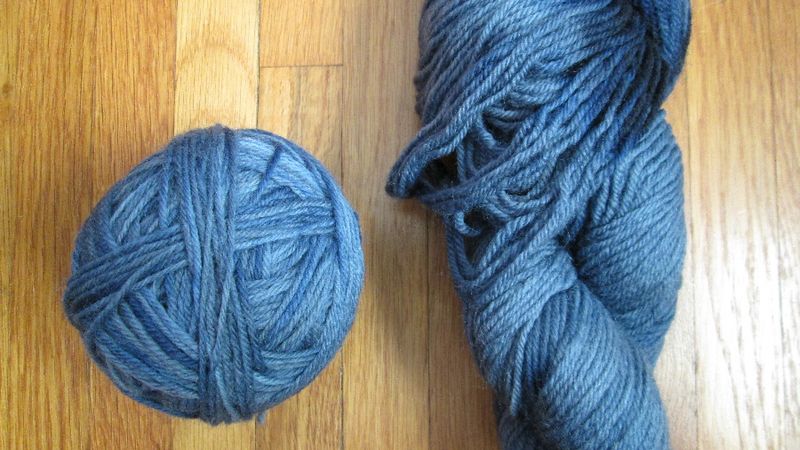
  • Araucania nature wool 36 blue

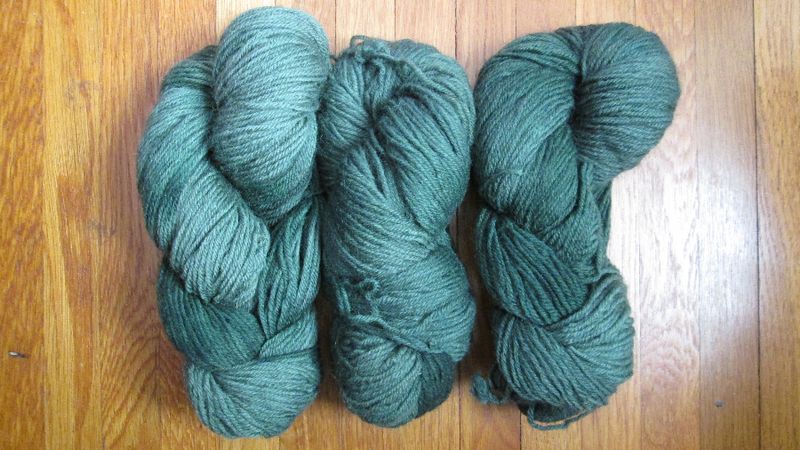
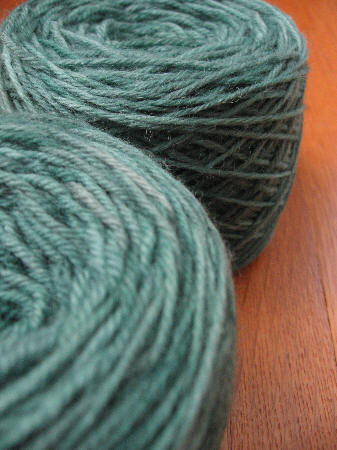
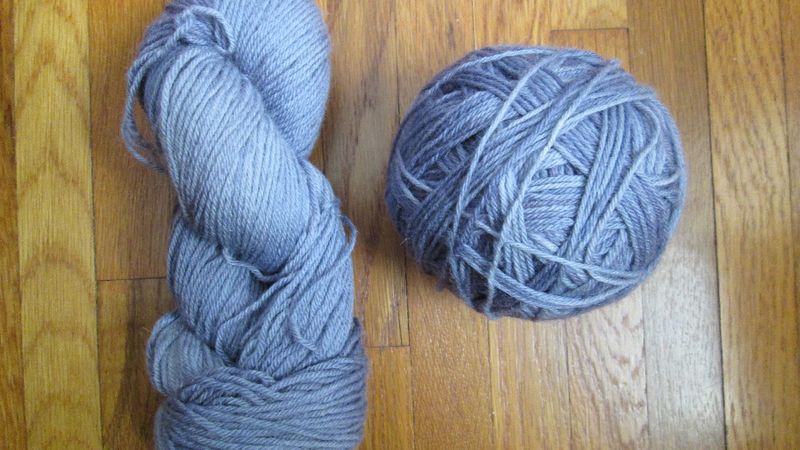
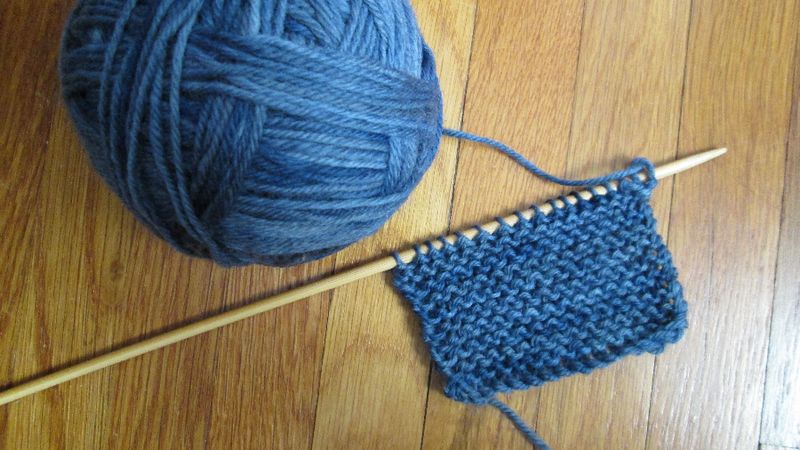
    I ended up somehow with a drawer-full of this lovely stuff, Araucania Nature Wool, a dozen skeins or so in four colors — the old Tall Mouse craft store in Yorba Linda used to every so often have sock yarn or something else that wasn't a novelty yarn, and I picked up one of these skeins in amazement one day, and then every few months bought another, because nobody else did, until the supply was gone.

    Araucania nature wool 16 green

    Araucania blue swatch

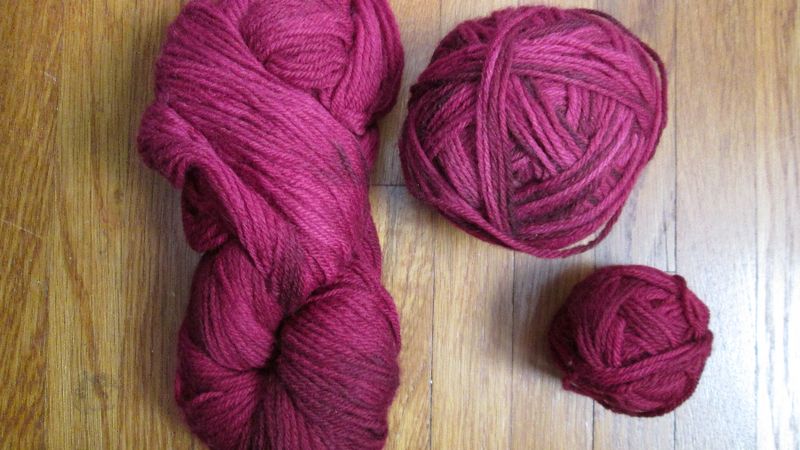
    The colors are rich and varied, as you would expect from kettle-dyed skeins, the red especially vivid.

    Araucania nature wool 34 red

    The wool has a slightly rough softness to it, so that you know you're wearing wool but you like it.

    Naturewool1

    Araucania nature wool 45 purple

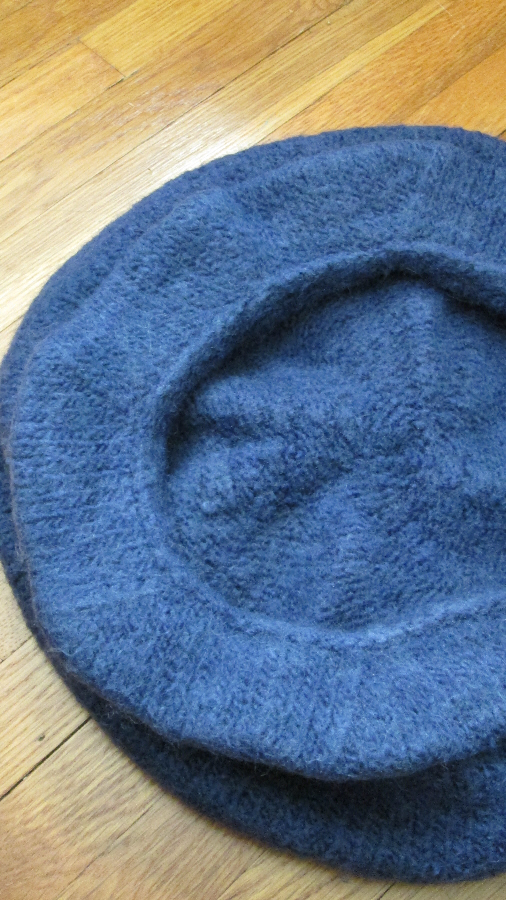
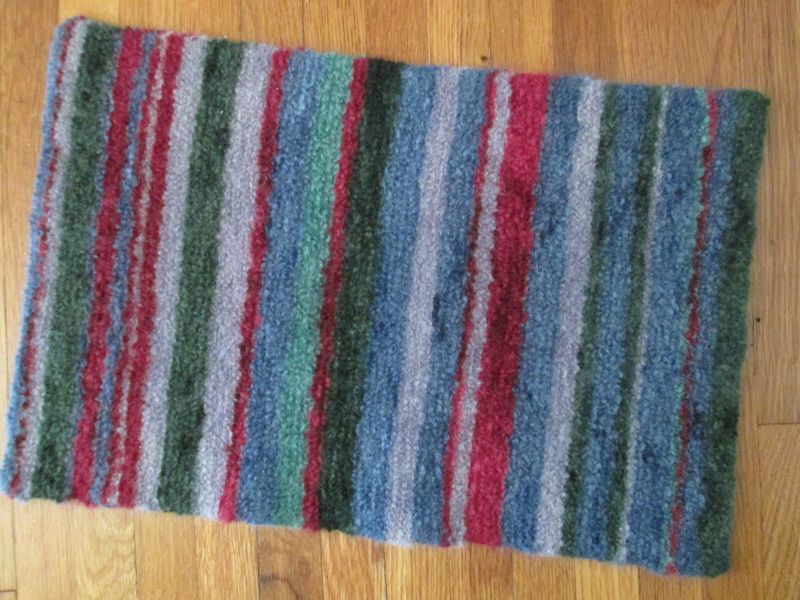
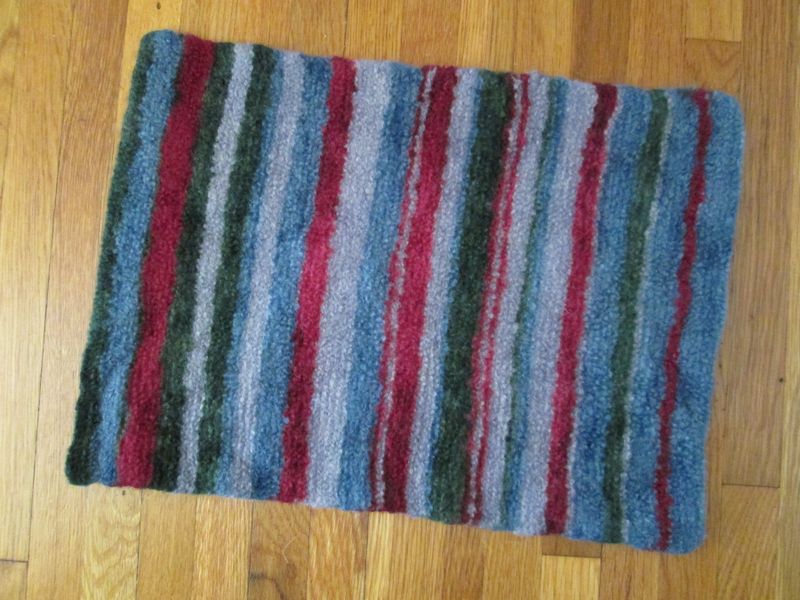
    Alas, both Tall Mouse and Nature Wool are no more.  What to do with my drawer-full of wool?  It felts beautifully, I heard, and so I decided to make placemats in a random-stripe pattern.  Here are the first two —

    Mat 1

    Mat 2

  • Big camping weekend

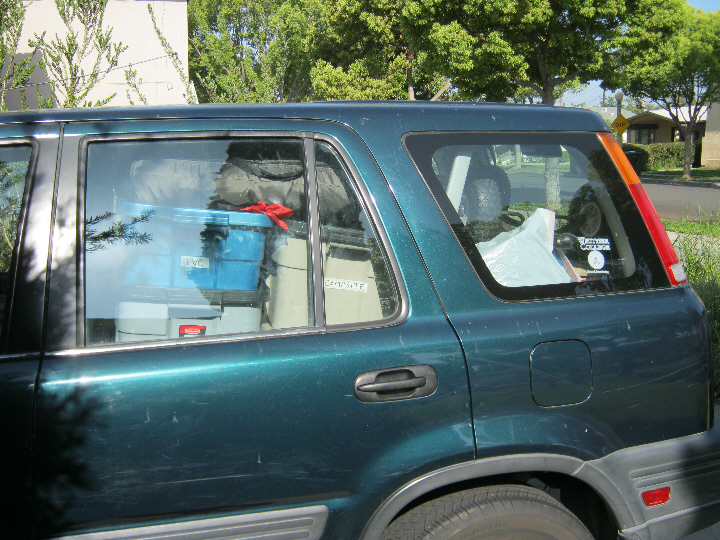
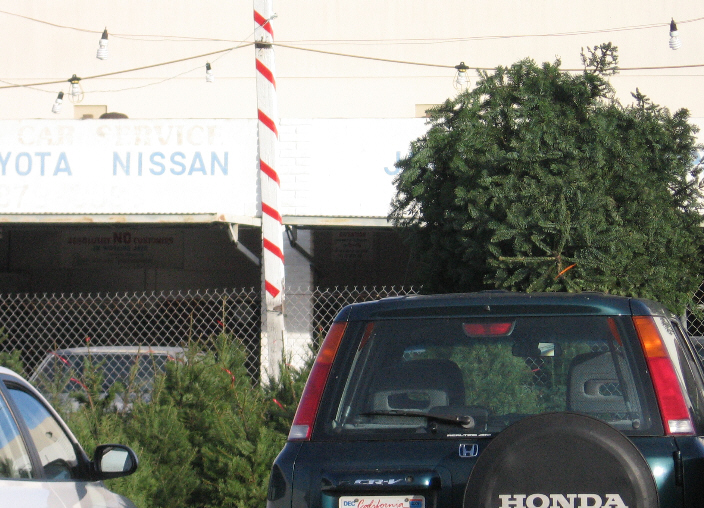
    We were rear-ended last week on the way home Wednesday evening.  It was a fairly gentle bump, as car bumps go, and I thought, "Oh nuts" as I got out and went to see what had happened.  I had been slowing down for a traffic light, and the driver behind me did not.  Although the other car's front end looked fairly serious, the air bag had not deployed; the rear gate on my CR-V looked to be a write-off, as well as the rear bumper and of course the spare tire, which was mounted on the gate and bore the brunt of the impact.  It would definitely be in the shop for a few weeks, I thought.  Everything went very smoothly with AAA, the report of the accident and the initial processing of the claim starting even after business hours, it was a bother but we'd have it back before long, but then I got a phone call from the collision center on Friday morning to say that the pan underneath the cargo area was also a loss, which put the repair estimate some $500 over the value of the car.

    Dec 19 2009

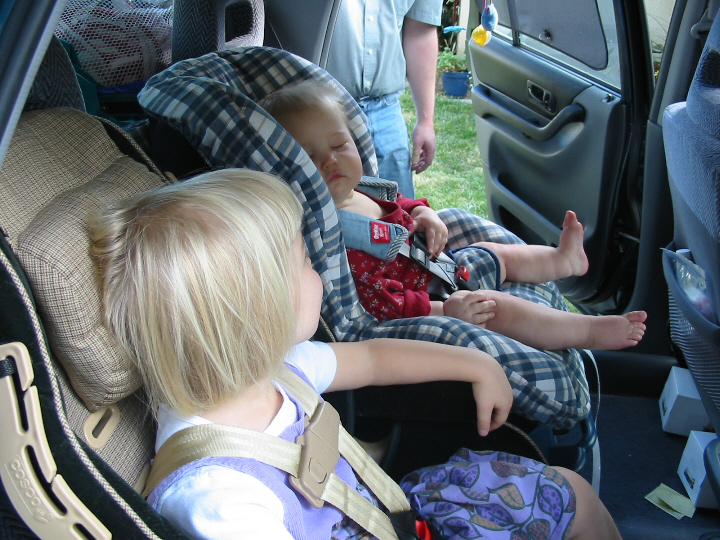
    It's a little embarrassing how much like real grief this is.  I can feel myself going through the very same stages — denial/disbelief, anger, sadness, acceptance, sometimes a combination of all of them.  We are all right, it's just a car.  We were going to teach our daughters to drive in this car.  How can they say only it's worth $4500? being a 1997 it's old as cars go, with the little and not-so-little things that begin to need replacing, but it's never given us a speck of trouble, not once left us stranded or even vexed by any malfunctions.  We've had it longer than we've had Julia.  I didn't realize it until I got out the paperwork this past weekend, but we bought it on March 2, 2002, eleven years almost to the day.

    29 nov 2002

    It was a good car, and it kept us safe from harm last Wednesday.  I think
    that's part of why I feel as though I'm abandoning it, why when I saw it
    afterwards at the collision-center, over to one side of the huge parking lot all by
    itself, I felt like it was waiting for me to take it home.  I admit
    that there were tears running down my face as I cleaned it out, at the same time that I was laughing at all of the pencils I found under the seats.

    IMG_2548 small

    I couldn't help noticing as I was looking through the last decade's photos, how few pictures I took of the car as a car,
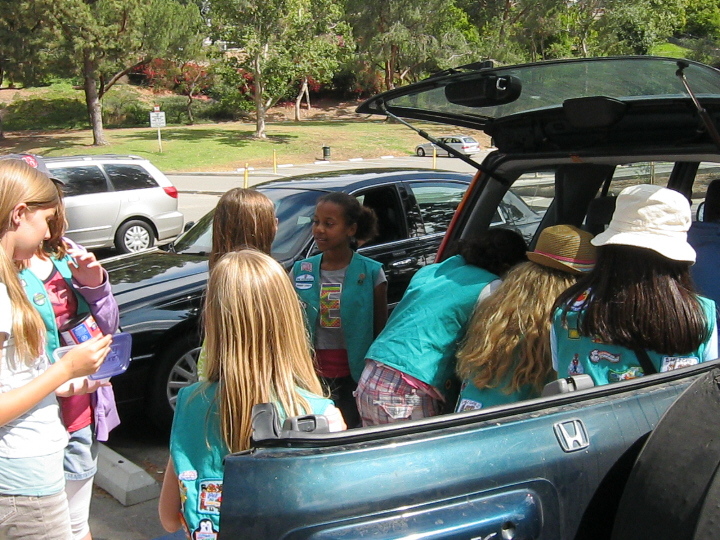
    you know the slick-pavement glamour shots, but instead how often it appeared in our everyday family adventures, camping trips, going to Grandma's for
    Thanksgiving, bringing home the Christmas tree, Girl Scout outings.  You can just see in this photo the big blob of orange paint that came off of someone's Thinking Day craft as I loaded up the car after a Girl Scout meeting years ago, just in the middle where the center brake light is, that I couldn't manage to clean off.

    There are a number of extraordinarily similar late-1990s CR-Vs around town, even
    a green one that belongs to neighbors on the next block.  The girls and I used
    to laugh when we saw one drive past — "There we go!" — like it was
    some car doppelgänger.  We still do, but it's bittersweet.

  • Sockhead hat

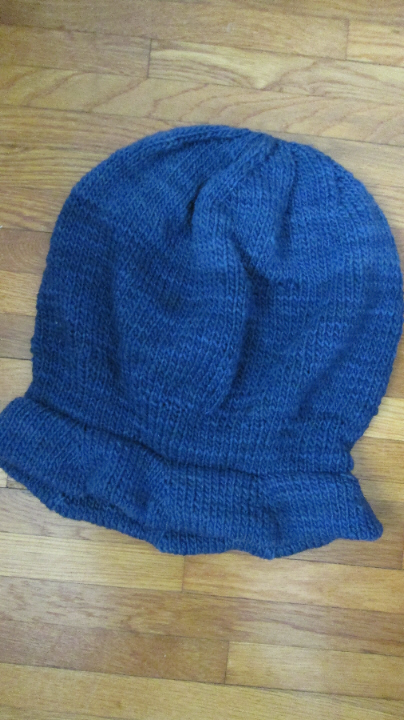
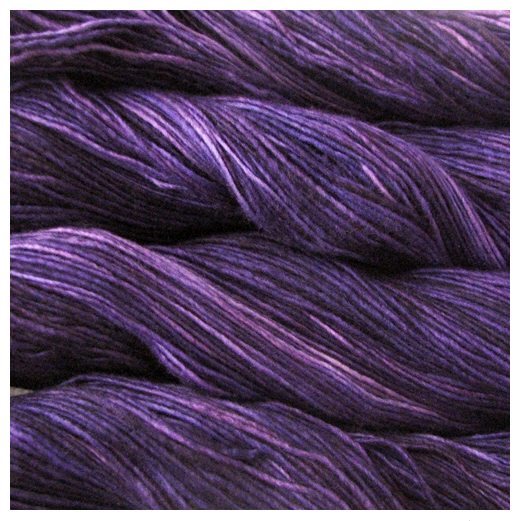
    I realized just now that I haven't written about this yet, the Sockhead Hat from Kelly McClure at bohoknits, which I made for Laura's birthday in December.  This was a very pleasant knit, a classically simple slouchy hat knitted in wonderful, silky-soft Malabrigo Sock wool.  A perfect combination — pity that Laura hasn't worn it yet at all except for this photo.  Sigh.

    I couldn't get the color to come true with my camera, which, unlike Laura, hates purple.  It is really more like this, which comes from the Malabrigo website —
    Malabrigo sock 141 dewberry

  • Chocolate hedgehog

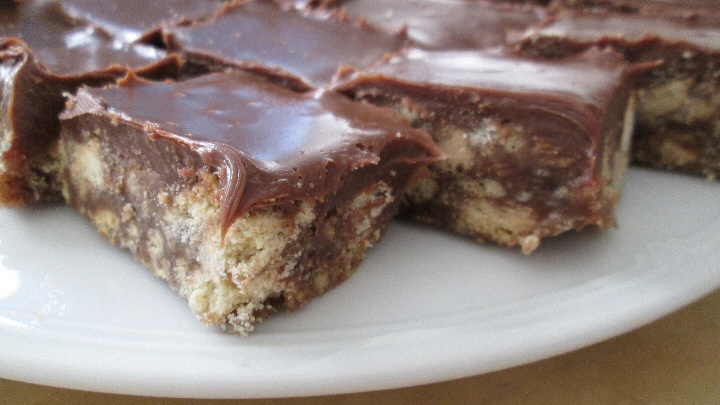
    So if, as sometimes turns out, you have too many Shortbreads/Trefoils left over at the end of your Girl Scout troop's cookie sale, you start to wonder, "What can I make with these?"  I respectfully suggest Chocolate Hedgehog.

    I think Hedgehog is an Australian invention, in which case we have yet another reason to be thankful for Australians.  This version was sent to me by friends in Melbourne; I had to substitute margarine for the Copha, but the ingredients list is otherwise unchanged.  I've modified the preparation a bit.

    Chocolate Hedgehog

    4 oz butter
    4 oz margarine or butter-flavored spread
    8 oz sugar
    1/2 teaspoon vanilla extract
    2 eggs
    2 tablespoons cocoa powder
    1 lb. plain cookies, such as Girl Scout Trefoils/Shortbreads
    chocolate icing or frosting

    (Note: You can also use Thanks-a-Lots or Thin Mints, in which case the cocoa powder is optional.  The ones in the photograph were made with Thanks-a-Lots and no cocoa powder.  Peanut Butter Sandwiches/Do-Si-Dos would probably be good too.)

    Grease or butter a 9×13 inch baking dish.  Put the cookies into a sealable plastic bag and break into smallish pieces.  Break the eggs into a small bowl and beat gently.

    In a large saucepan, combine the butter and margarine.  Melt slowly, then add the sugar and vanilla, stirring.

    Add about half a cup of the melted butter mixture to the beaten eggs, whisking with a fork to combine.  Pour this back into the rest of the butter mixture in the saucepan, stirring.  You may see some streaks of egg white, but don't worry.  Add the cocoa powder, if using.

    Return the pan to the heat until it begins to bubble around the edges, stirring occasionally.  Remove from heat and stir in the broken cookies.  Press into the prepared dish, and cool.  Refrigerate for at least 1/2 hour before icing.

    Make a chocolate frosting or icing of your choice, and spread on the top of the hedgehog.  Cut into pieces.

    0178 small

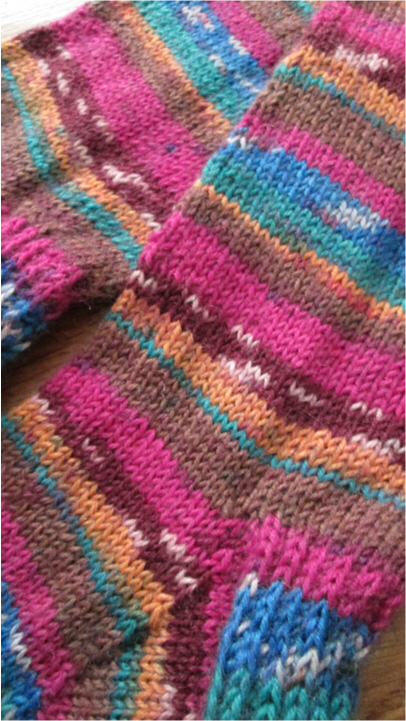
    I'm calling these my "cookie booth" socks — in one skein of Wisdom Yarns' Marathon Socks Seattle, in "Seattle Fifth" — plain socks with a wedge toe, knitted for the most part while chaperoning booth sales.  It seems a fairly sturdy yarn, a bit rough to the touch but with no flaws along the way.

    Truffles

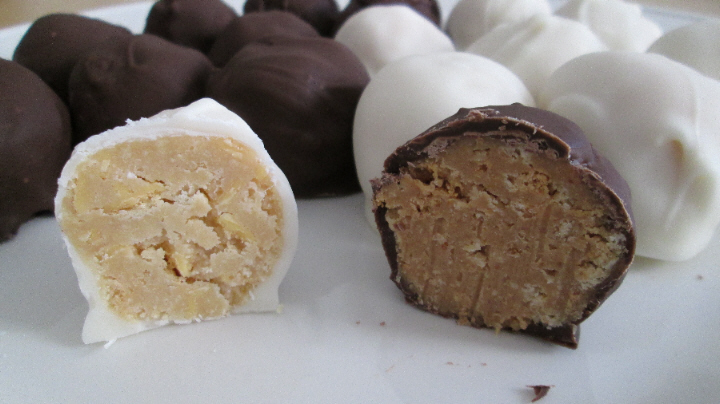
    I also had the idea of using up some of the extra Girl Scout cookies in that Oreo Truffles recipe that's been around for a few years.  These are made with Lemonades, on the left — they taste rather deliciously like lemon cheesecake — and Peanut Butter Sandwiches (Do-Si-Dos).  They are easy enough that the troop can make a batch or two themselves as part of a meeting …

  • Famous Knitters

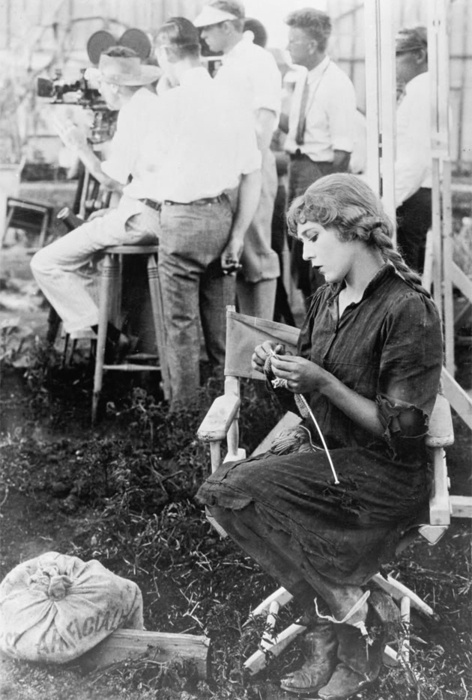
    Mary pickford during filming sparrow 1926 for disabled vets

    Mary Pickford during a break in the filming of "Sparrows" (1926), knitting for disabled veterans.

  • 56508

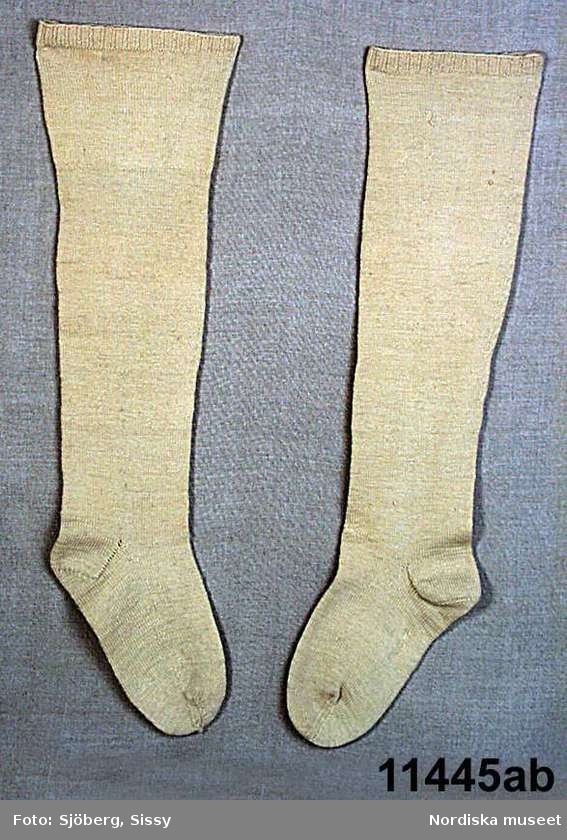
    A pair of knitted stockings (strumpor), dated apparently before 1876, when they were acquired by Nordiska Museet in Stockholm.  This particular pair are from Orsa parish, in what was then known as Kopparberg, now called Dalarna.  Quite a few generations of David's family were from this parish.  Very plain, serviceable stockings, with what may be a variation on the round heel, though little or no gusset, it looks like.

  • Hat fail

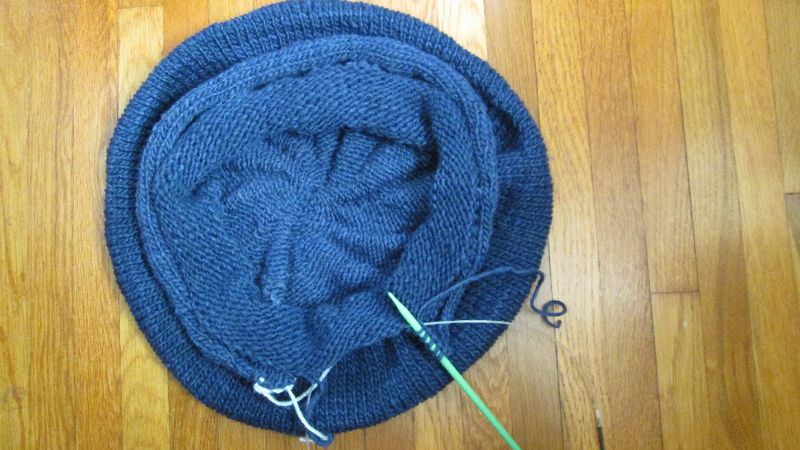
    This is the "Good Dame Eve's Cap" from the July/August 2012 Piecework.  Well, it's supposed to be, anyway.  As you can see, the amount of yarn listed in the instructions is not enough, by at least a hand-span, for the stitches on the dpn to dash over and meet the provisional cast-on of the brim.  And it is the recommended yarn.  Very annoying.

    The hat is to be part of David's Renaissance Faire costume.  (Mine is finished except for sewing the hooks and eyes on the jacket, but yet to be photographed.)  Was thinking I'd make something along the lines of a contemporary Swedish soldier, and David is game for that, good man,

    Alsatian man

    or something like this Alsatian man's garb, which picture I snagged some time ago from Jen at Festive Attyre, although the description and all but one of the images of her version seem to have disappeared.

    I Googled the "Good Dame Eve's" pattern to see if anyone else had this problem, but could not find that anyone has finished one.  (Same with the muffatees!  How is it that I am the only one on the internet to be making these projects?  Is my taste that bizarre? — actually, don't answer that, please.)

    The ironic thing is that I have been working on another Piecework pattern, the Civil-War era sontag, but trying to adapt the pattern to fit myself (since it is written for a size S women's, and I am not — small, I mean), and to fit the gauge of the wool I've got, and I'm just having an unconscionable amount of trouble.  You'd think I could figure out a simple rate of increase, but it's been wrong twice already, and I was getting frustrated.  I thought, "what about that Tudor hat, then — I've got the recommended wool, it's bound to be right!"  Gaah.

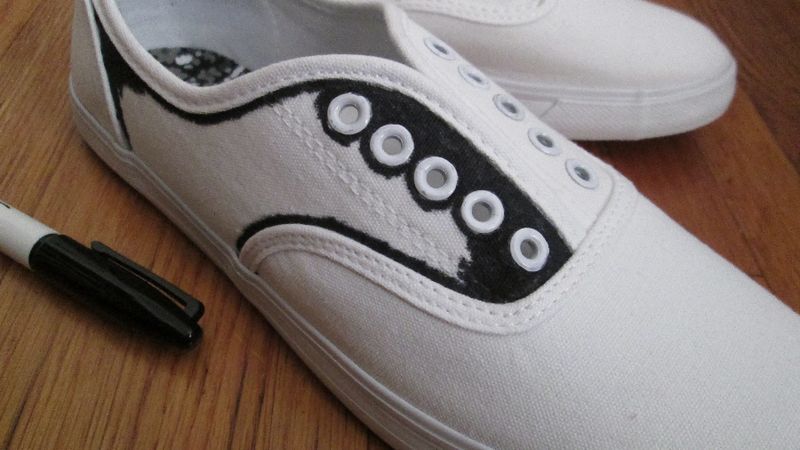
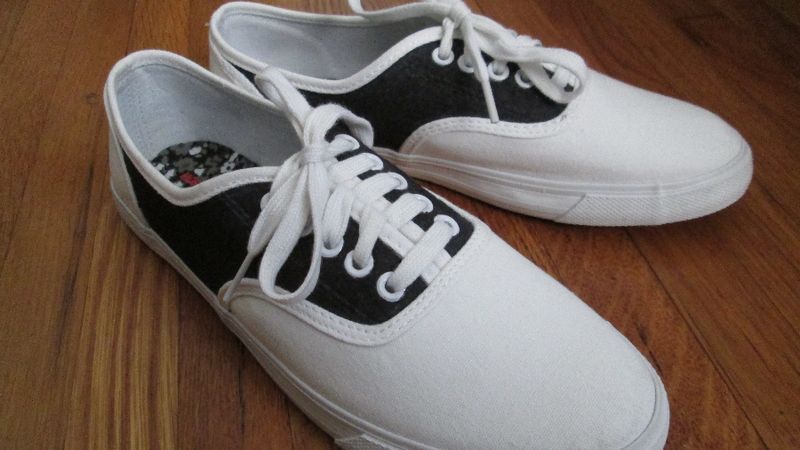
    I have had a recent success, although not in knitting — Julia is in the 5th-6th grade play this spring, which is "Bye Bye Birdie" and the kids were asked to get saddle shoes.  I had, after my wedding-shoe-shopping ordeal late last summer, ended up with an $86 credit at Zappo's, so I thought, "oh well," and ordered Julia a  pair of Bass saddle shoes.  These proved to be too big, and they didn't have the next size down, so I sent them back and decided to find a pair of cheap canvas sneakers and convert them.  I don't know if this was my own idea or had been floating around in the back of my mind for a while after seeing it somewhere, but there are a number of crafty people on the internet who've done this.  I was planning to go to Michael's and get some fabric paint, but then I thought, "heck, laundry marker!" and did that instead.

    Sneaker saddles 1

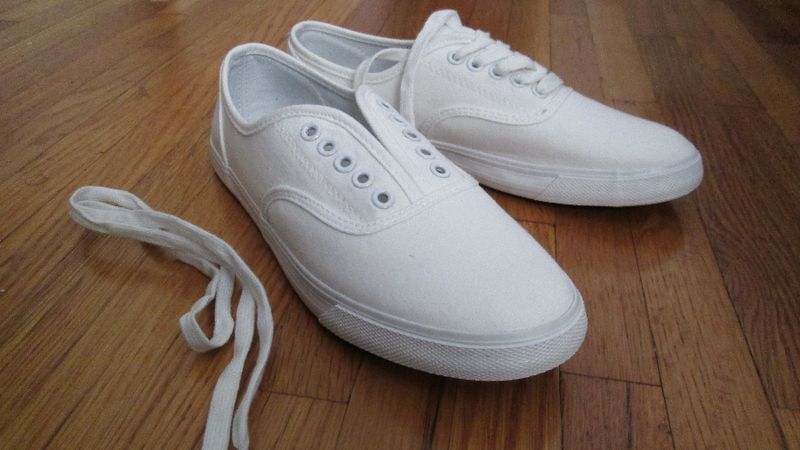
    These are the Mossimo canvas sneakers from Target, $14.99 the pair.  They also have the Circo brand, but there were no white ones in Julia's size.

    Sneaker saddles 2

    I used Sharpie Rub-a-Dub laundry marker, in case we need to wash the shoes.  The marker does stain the grommets, so care should be taken at that spot.  Other than that, it was only a matter of folding the canvas a little at the seams, in order to get the colored part right underneath and look really smooth, and then filling it all in.

    I've always liked coloring, so this was rather fun.  I remembered as I was doing this that all of my finished pictures had really dark outlines then lighter in the middle where I colored them in!

    I did two "coats" on the shoes as the marker was a bit irregular in strong light, but this took only a few hours altogether.  I think that marker would generally be much easier than paint — plus no masking necessary! — although it does depend on the color you choose.  Laura looked at these and said, "I want some … maybe purple!"
    Sneaker saddles 3

  • Apollo

    I came across this again after many years, and thought it's too good to keep to myself:

    Some Lesser-Known Greek Gods (by way of Merl Reagle of the Los Angeles Times)

    Manacles, god of bondage

    Envelope, goddess of mail

    Millipedes, god of crawly things

    Telephone, goddess of gabbing

    Gametes, god of new beginnings

    Receptacles, god of trash control

    Amperes, god of electricity

    Cellophanes, god of freshness

    Erudite, goddess of learning

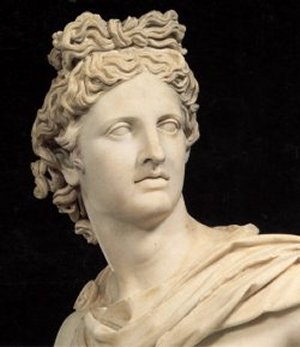
    Follicles, god of good hair days (surely the one in the picture above!)

    Vestibules, god of passageways

    Limeades, god of tangy drinks

    Tomatocrates, god of truck-farmers

    Antibias, god of equal opportunity