• Booking Through Thursday asks this week,

    "What’s your guilty pleasure, reading-wise?"

    Well, it has been a very long time since I took part in the BTT meme — so long that "meme" actually has a different meaning than it did then.  Good heavens!  (It used to have, of course, more the "activity" part of Wikipedia's definition, questions that would get passed along from blogger to blogger (or the platform's equivalent), whereas now my fourteen-year-old rolls her eyes when I use the word in that sense, since to her it means something like the infamous "what are those?" video.  This makes me feel quite decrepit.  Sheesh, it was only, what, less than ten years ago!  But I digress.)  I got distracted from the regular Thursday question, and skipped a few, then I fell out of the habit, then … who knows?  But I thought of it again this morning, and it's still going on — hurray, Deb! — so I'll try to get back into taking part regularly.

    Guilty pleasures?  I'm afraid that reading itself has been my guilty pleasure the last few years.  I should be doing housework, gardening, exercising, spending quality time with my rapidly-growing-independent children, etc. etc. etc., and however much I laugh and say, "oh, goodness, yes, I'd rather be reading than doing housework any day!" it still does make me feel guilty when I do.  Just this morning, I was lingering over breakfast and The Return of the King — Merry is wandering around an evening camp of the Rohirrim feeling useless, and lonely without Pippin — instead of addressing Christmas cards or starting a load of laundry or picking out yet more of that dratted false garlic from our so-called garden, with the excuse that I was still sitting at the breakfast table and that means I'm still having breakfast, right?!

    But I have the feeling that this wasn't quite what the question meant, so —

    Vanish with the rose

    When I had lots of time to read whatever I liked, and thus the luxury to "waste" time on guilty pleasures, I think that Barbara Michaels was one of my chief purveyors of such.  I know she isn't as trashy as some — well, not by a long shot! — but I have given up sticking with a badly-written book, so my definition of "trash" is now more along the lines of the plotline or degree of melodrama!  Michaels wrote well, of course, and had an excellent ear for dialogue, so her books are unquestionably intelligent and readable — it's just perhaps the glee with which she spins off reams of gothic suspense and supernatural elements and romance and glamorous international settings (or murky domestic ones!) that makes her books so enjoyable and yet so firmly in the "guilty pleasures" category!

  • 5787

    On your mark …

    5790

    get set …

    5899

    go!

  • 5779

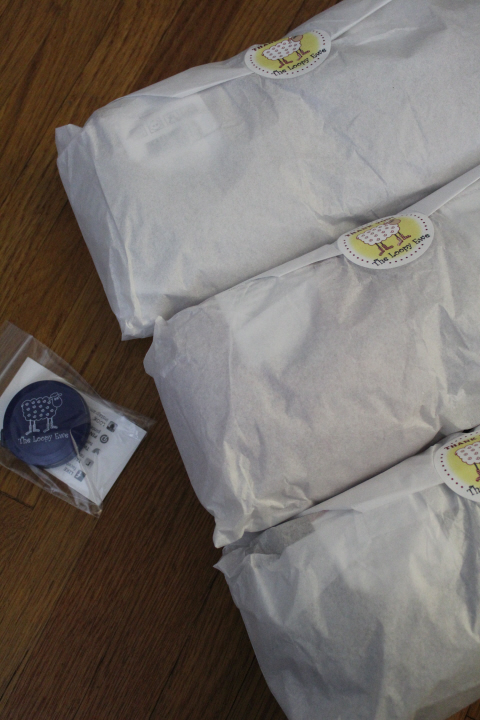
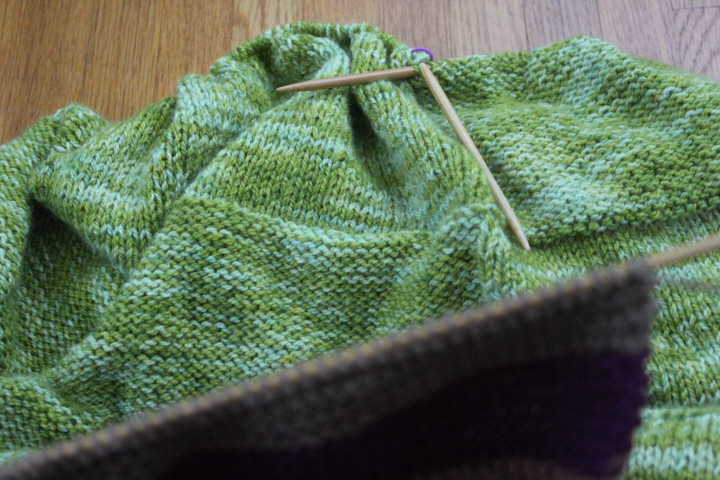
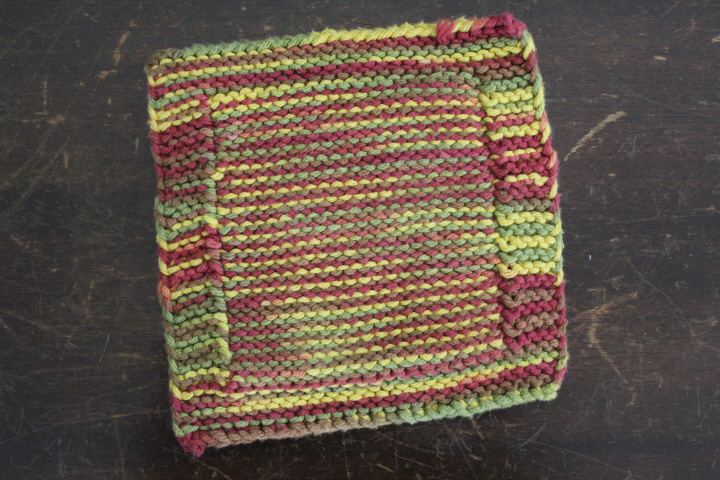
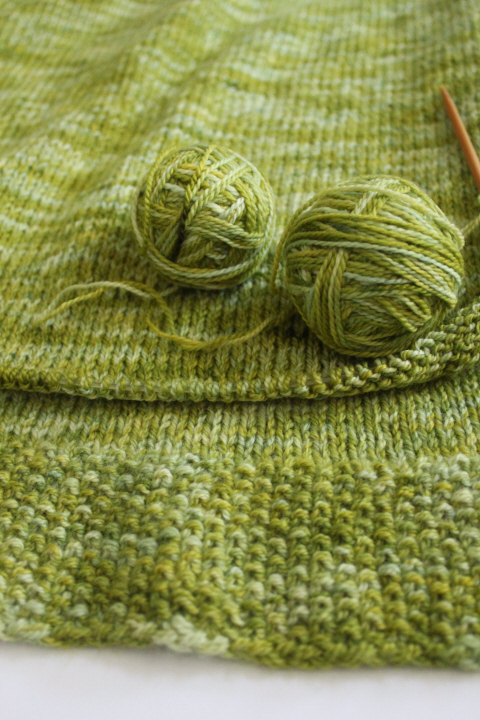
    Some time ago, I decided to make an afghan as a house-warming/Christmas gift for my brother-in-law and his wife, who have recently moved into their first house.  Being an architect, I thought she would appreciate the simple-yet-effective structure of the Big Bad Baby Blanket, and so after no little subterfuge and maneuvering, I found that an olive or a pistachio green would be most appreciated.  I was willing to splurge on Koigu, which is the yarn the blanket was designed for, but there really aren't that many of the quieter colorways, and surprisingly few greens, and so I began to look for alternatives.  Thanks to the very handy list at Yarnsub.com, I found that Blue Moon's Gaea fingering weight is highly recommended as an alternative, and because of the great yardage, I would need only two skeins instead of eight of the Koigu!  This last seemed so astonishing that I did the math four or five times, and came up with the same answer every time —

    5777

    but they really are enormous, and so I ordered two skeins of Jade.  Unfortunately, it was back-ordered for some weeks, and arrived only yesterday evening.  It's a little more lime than jade, to my eye, but there it is, I am feeling optimistic.  So now I must drop everything and knit like a madwoman to have it ready by Christmas — that's,

    5781

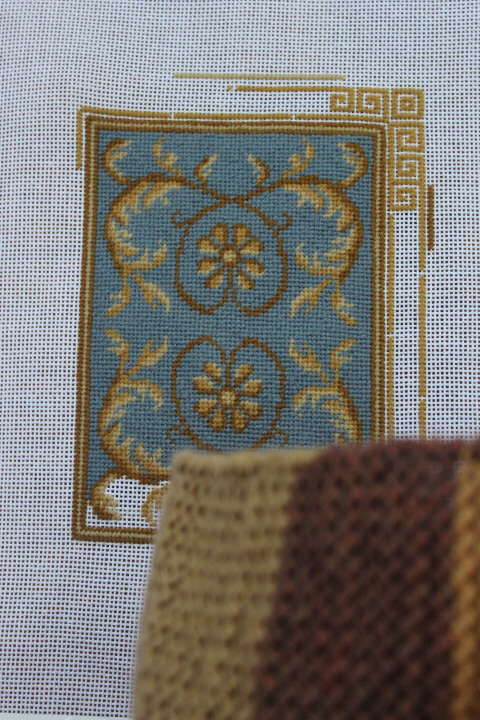
    another miniature carpet, this one the "Greek-Style Georgian" from Sue Hawkins' book Dolls House DIY : Carpets and Rugs, the wool for which I ordered when I had to get another skein of red for the Memling Bergama, so as not to waste six dollars of shipping fees on one two-dollar skein of crewel wool, and what do you know, the blue is not nearly going to be enough, even though I am working at exactly the same gauge and with the same brand and quantity of wool listed in the book, gaah! (I should have bought a hank, not a skein, I knew it …) — and,

    5769

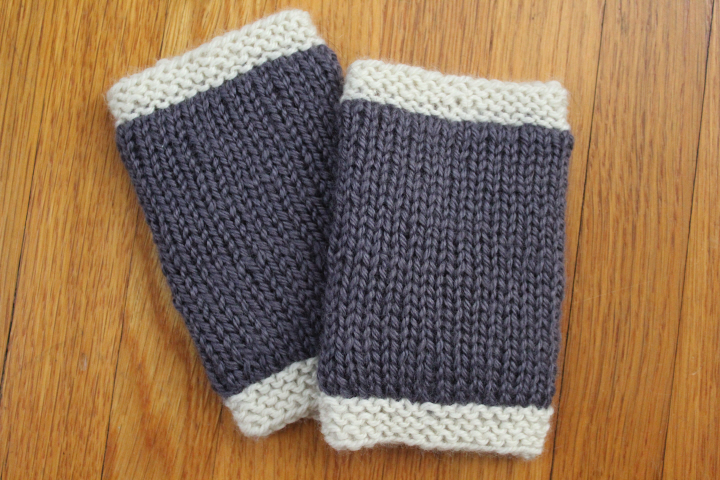
    a wristwarmer in the Blue-faced Leicester I scored at Tuesday Morning some time ago, which is now in its fourth or fifth incarnation since I haven't been pleased enough with the gauge/hand/pattern/fit of what I've tried so far — and,

    His-bloody-project

    His Bloody Project, of which I read a review in the LA Times book section on Sunday.  I tend to stay away from the more sordid, grim stories lately — there is enough of that in real life — but the review made it sound very intriguing, and lo and behold, the public library not only had it but it was actually on the shelf, so it only cost me the trouble of walking a block and a half.  I think I will not completely drop the book in favor of the blanket, of course, since I have to return the book fairly promptly, and I am in fact almost two-thirds along already, so it's moving at a terrible clip, though as the reader already knows that there is a multiple murder and that the young man who narrates much of the book is the one who committed it, it is not unlike watching a train heading for a washed-out bridge, just waiting for it all to come inevitably crashing down.

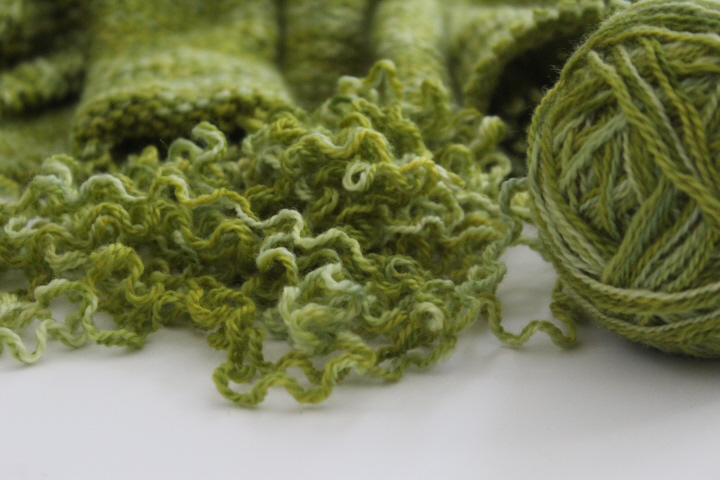
    Yes, the Gaea skein is really 1024 m.  That's two and a half times around a sports track.  That's three circuits of a baseball diamond.  That's almost fifteen times the wingspan of a 747.  Not a single knot, either.  It's deliciously soft, and that's a very good thing, as it took me hours and hours to wind one skein — or so it felt — and by the time I was not even close to the end of winding, I could barely hold the ball, it was so big.  I was thinking as I wound of taking photos with various ordinary objects for scale, and I was even tempted to go to the market for a head of cabbage or iceberg lettuce, since it's just about the same size and color — really! — but here's just one to give you an idea!

    5782

  • Turning a Shirt Collar

    5764

    A post from completely cauchy partly about handwork and enjoying the experience of the process of making — cooking, needlework, sewing — made me remember the shirts hanging on the back of our bedroom door, waiting for me to turn the collars.  David is rather hard on his shirts, his work “with computers” being only partly a desk job — often he is instead out in the field, crawling behind hardware racks, up ladders, under dolly track, &c. &c. &c.  Sometimes he’ll come home and say, “Sorry, honey,” with a tear in the middle of his (new!!) shirt, but more often it’s just the collar that gets worn down over time.  For a while, I was just saying “oh well!” and cutting the perfectly-good remaining fabric into squares for a quilt-to-be, but then I realized that I could turn the collars, as women have done for decades if not longer, to extend the lives of their menfolks’ shirts.  (Now, I realize that this might make me sound like one of those ultra-conservative wife-stays-at-home women, and I’m actually quite liberal and feminist, but I also happen to be one of those lucky ones who can still afford to stay home with the kids, and so I think it’s only fair that I economize where I can.  It also doesn’t come quite naturally to me to do so, to be honest, but that’s all the more reason to reassure anyone who stops by here that it isn’t difficult to turn a shirt collar, and why not take half an hour to save yourself twenty bucks, and reduce your carbon footprint while you’re at it?!)

    I hadn’t done this for a while, so I looked up a tutorial or two the other day, and was saddened to find a number of comments on boards and whatnot saying, “it’s too hard!” or “ugh, I just buy a new shirt”.  It’s not hard at all — and I am still what I consider to be an advanced beginner at sewing, or maybe a beginning intermediate, so if I think it’s easy, it really is.  For some reason, I find this a lot less trouble than setting a collar in a new shirt — maybe the fact that the fabric is already used to being a collar, as it were — so if that’s putting you off, don’t let it.  The only thing you really do need is a sewing machine, as while it certainly can be done without one, I wouldn’t call it a simple matter then, unless perhaps you’re a re-enactor! and used to stitching miles and miles of seams by hand.

    I haven’t seen the extra step of pinning both sides of the collar in other tutorials or instructions, but I’ve found it very helpful, myself.

    How to Turn a Shirt Collar

    You can’t turn collars with sewn-in stays or with pockets on the underside for removable stays, but you can certainly turn plain ones that look the same on front and back, including button-down collars. Some higher-end shirts draft the collar with a slightly narrower piece of fabric on the underside, so that the collar curves subtly around the neck when worn, but most mid-range dress shirts can certainly have their collars turned with good results. It is not difficult, even for a determined beginner, and takes less than a half-hour!

    You can also turn worn sleeve cuffs the same way, but you will have to do both cuffs, and switch the left and right cuffs when you turn them inside out, so that the buttons and holes will be facing the “right” way!

    5738

    5739

    Carefully pick out the existing stitches, using a seam ripper. Start at least an inch or so from the end of the collar, and work on the outside of the collar stand, the part that is covered when the collar is folded, and aiming the ripper towards the stand, so that if the ripper slips, the right-side-to-be of the collar doesn’t get damaged.

    There may be two lines of original stitching, the seam and a line of top-stitching — don’t try to pick out the top-stitching first, as this is crazy-making.  Just winkle out a stitch or two from the seam itself — once you get an inch or so open, it will go much easier.  If it helps, go ahead and pick out some of the top-stitching first.

    5741

    There will probably be a line of basting stitches, which you can see in this photo, basting together the two sides of the collar and its interfacing — leave these in place.  You don’t need to worry about accidentally picking them out, as they are usually far enough away from the seam you are ripping.

    5743

    Once you have ripped out a good section, work back in the other direction until you just release the end of the collar from the stand.  Having this point still secured will help you to center the flipped collar back into the stand evenly.

    5744

    5745

    Clean off any remaining loose threads, and flip over the collar so that the worn part will be underneath when the collar is folded down.

    5746

    5747

    Pin the collar back into place, between the two sides of the stand, matching up the original line of stitches. Start with a pin at each end, then another pin at each end, working your way towards the center back, making sure that the collar is completely flat and smooth in the stand.  Pin through just the side of the stand facing you, and the collar, with the pins about 1 1/2 to 2 inches apart.

    5749

    Now turn the shirt over and pin the other side, again catching just the side of the stand facing you and the collar, with a pin between the pins on the other side — this will help keep everything in place as you sew, without bunching up multiple layers of fabric and interfacing in every pin.

    5753

    Sew along the original line of stitching, taking your time, and making sure to catch all three layers – inner band, collar, and outer band. Back stitch at each end, where the stress on the collar is greatest.

    5754

    Press thoroughly with lots of steam.

    The turned collar may not lie exactly the same as it did before for a while, because the fabric on the original underside has been curved in one direction for the life of the shirt, and now you are curving it in the other direction, but it will settle down, certainly after a few washings.  The wrinkles in the original underside, which you can see in the above photo, will smooth out now that the underside is the new outside (and, yes, the new underside will probably develop some wrinkles of its own now!).

    5755

    5756

    Enjoy the extended life of your shirt!

    5759

  • 5710

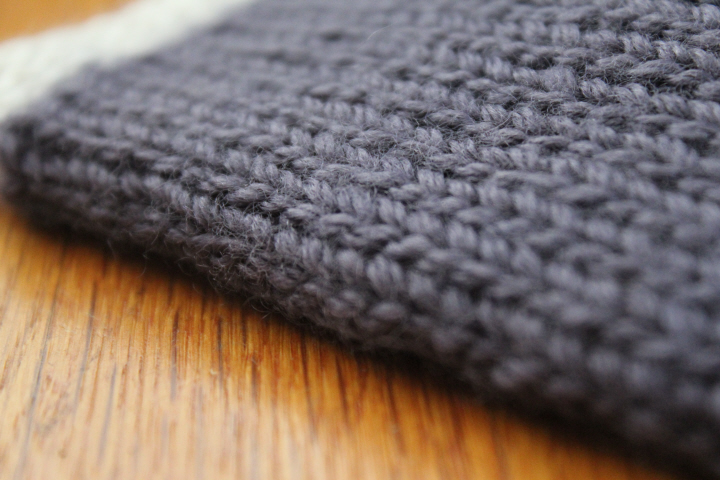
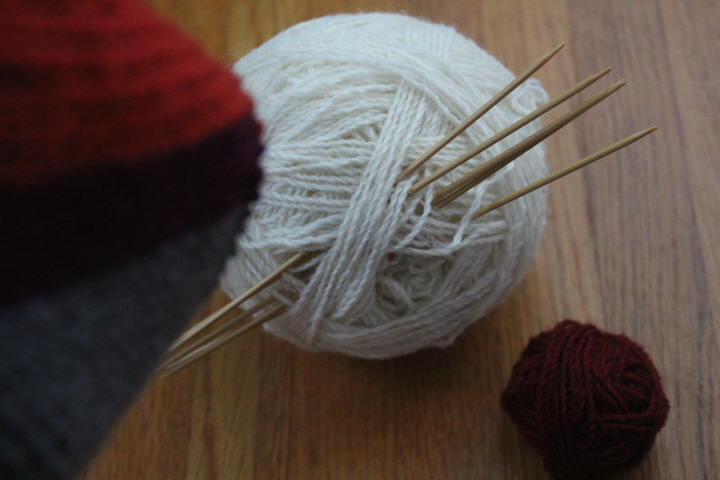
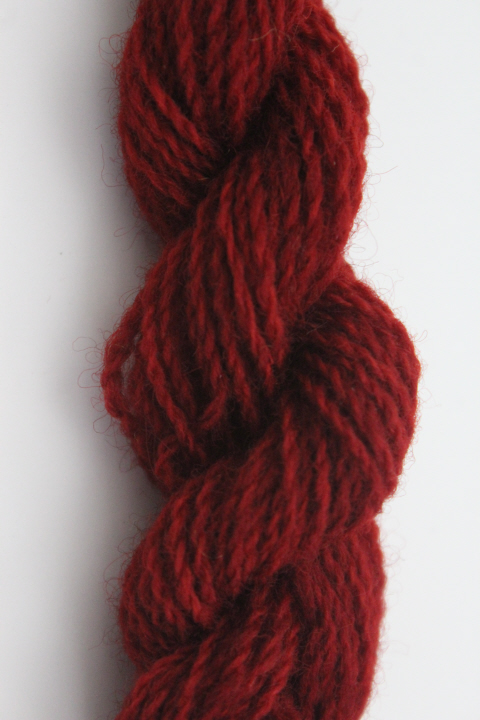
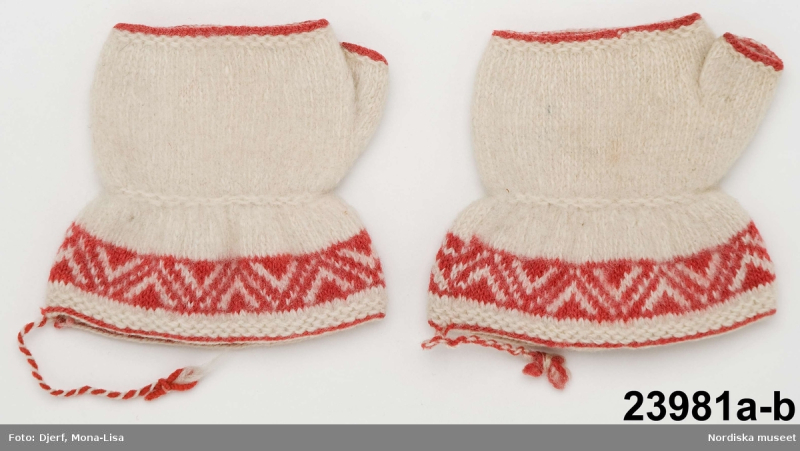
    Just in time for a cold snap — and some rain! — the two-end knitting practice that turned into wrist-warmers (muddar in Swedish).

    5711

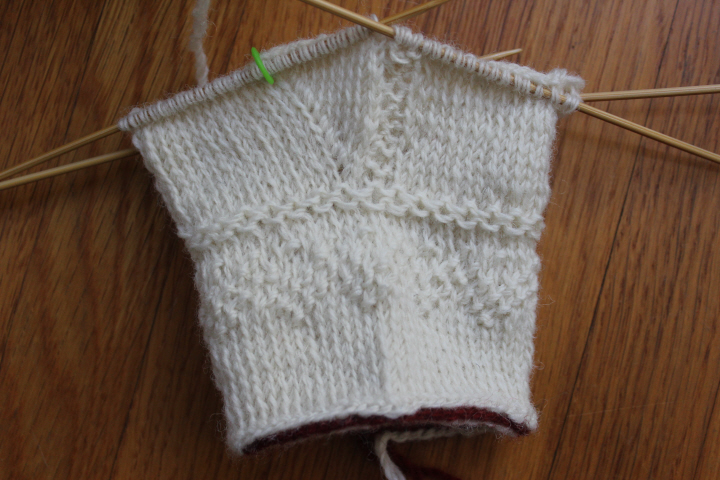
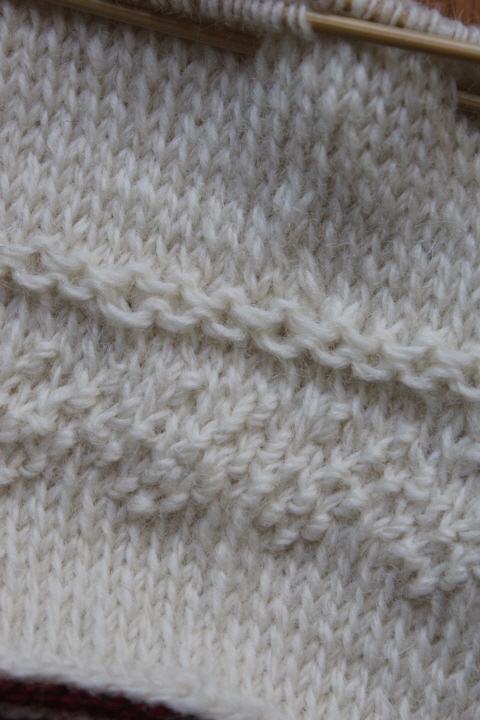
    The "sampler" stitches are a three-strand cast-on, 1 round plain, 2 rounds P, 9 rounds with a crook-stitch diagonal (worked in the other direction on the second mitt because it amused me), 2 rounds P, 20 rounds plain, 2 rounds P, 1 round plain, a "chain path" (2 rounds crook sts), 1 round plain, 2 rounds P, 1 round plain, 1 round P, bind off purl-wise.  The only thing that didn't turn out well was that the chain path doesn't quite stand out enough, with the compression of the purl chains above and below it.

    5712

    There is definitely a "jog" at the beginning of the rounds — the spiral effect is quite clear on the purl rounds!

    5713

    5715

    The Cashmore is wonderfully soft and warm, so wristwarmers were a happy accident.  I might make another pair with just the purl rounds, as the carried-across yarn makes it feel almost silky.

    We've had a nice bit of rain this week-end — I'm sure the garden is just as appreciative as I am —

    5727

    Siberian iris.

    5735

    Bladderpod, or California cleome (Peritoma arborea, formerly Isomeris arborea) — part of my new California-natives bed.

    5731

    Arrow-shaped echeveria (E. setosa).

  • 5716

    This is the "Memling Bergama" from Frank Cooper's Oriental Carpets in Miniature. This chart and finished carpet echo very strongly my feelings about the Shirvan 1 I worked this past summer from the same book — the chart is tiny and does not include the very-helpful bold on every tenth line that many do nowadays, and some of the symbols are easily confused for a similar symbol which refers to a similar shade (e.g. small dot = dark red, large dot equals light red — and this seems backwards to me, too, wouldn't dark red have a bigger dot?? gaaah) — but the finished piece is so charming that I can only shrug and say, "but it's worth it".

    5718

    I did make some changes in the materials — it is worked in Appleton's crewel wool on 28-count Monaco, to be in scale with the Holbein carpet I worked last summer, instead of Paternayan wool on 18-count as in the original.  It is not a particularly simple matter to convert one brand of crewel wool to another — various conversion charts I found online and in books gave me usually two and sometimes three possible choices, wh. really goes to show that each brand has fairly unique colors! and you can't quite get a true match if you convert to another brand.  But Paternayan is heavier enough than Appleton's to be impossible to work at 28-count, whereas I already knew, of course, that Appleton's would.

    Memling bergama - paternayan

    Memling bergama - appletons 1

    These are the shades I chose, though after working it I would recommend a different choice for the P643 than Ap343, as it doesn't quite contrast enough with the dark gold of the 911, and "disappears" quite a bit from the center crosses in the four outer medallions —

    P500 = Ap326
    P756 = Ap992
    P950 = Ap226
    P643 = Ap343
    P751 = Ap911
    P641 = Ap245
    P930 = Ap147

    The alternate conversion in the image below uses Ap566, Ap882, Ap226, Ap342, Ap911, Ap315, and Ap224, which looked much more "faded" to me and I wanted a newer-looking carpet.

    Memling bergama - appletons 2

    5529

    I was also a bit perplexed by the quantities of wool specified in the materials list: although it list calls for equal amounts of the two reds, the results are obviously skewed to using much more of the so-called "dark" red — so I used the other one for the overcast edging.  I ended up running out of this one by the time I got to the fringe, as it happened, so a good portion of that is the two reds mixed together, which you can see in a strong light but is otherwise more-or-less unnoticeable (she said hopefully).

    5531

    This is how much wool I had left — the 911 is what is left from the second skein —

    5606

    5533

    5722

    Cooper writes of his version, "There is no assurance that [the carpet in the painting] is a Bergama rug, but it meets the description given in several books, and rugs from this area [in Turkey] were being exported to Europe as early as the fourteenth century. Because the rug appears in a Memling painting, it is, perhaps, safer to call it a Memling Bergama"!  He is not the first one, I think, to notice Memling's fondness for a certain type of Bergama, as there is a long article here about Oriental carpets in Renaissance painting which devotes an entire section to Memling.

    1938.1.b

    Hans Memling "Flowers in a Jug" (ca.1485) now in the Museo Thyssen-Bornemisza, Madrid.  I think Cooper's is a very handsome re-creation, in fact!

    5721

  • Zorn stickande kulla

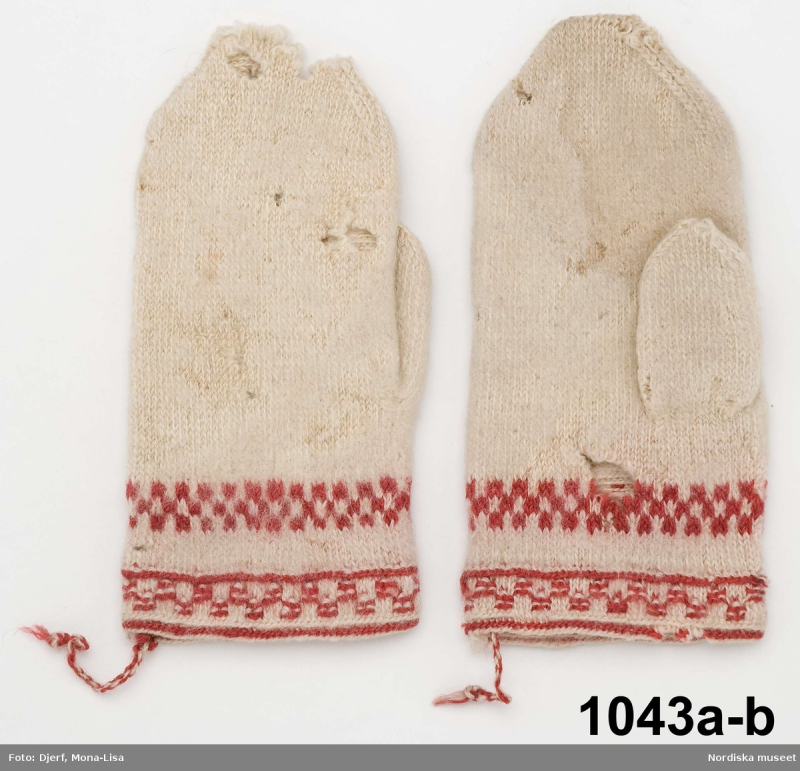
    Of course one can't be interested in the history of knitting, especially of Scandinavian knitting, without coming across tvåändsstickning, and I have seen it in my own books and here and there on the internet throughout the years, but I've always given a sort of not-for-me shrug and moved on.  There is a short section about it in Priscilla Gibson-Roberts' Knitting in the Old Way, and a rather longer one in Sheila McGregor's Complete Book of Traditional Scandinavian Knitting, to name just two on my shelf.  I don't know why I kept passing it by — perhaps because of the fact that both Roberts and McGregor imply, by saying that instead of working it the traditional way with the two yarns in one hand, they do with with one strand in each hand, that it's really difficult — but the other day I came across a photo on the internet, and, to coin a phrase, it had me at "Ormsta".  Something about it just made me think, I have to make that.

    (The painting above is "Stickande Kulle (Girl Knitting)" (1901) by Anders Zorn, Mora parish's favorite son.  This is one of the areas in Dalarna in central Sweden where many of David's Swedish ancestors are from, and so from that and having consequently spent quite a lot of time buried, as it were, in Mora church books, of course I feel a particular affinity with the place.  The young woman in the painting is wearing the distinctive Mora green jacket, with the traditional green or red apron with simple colored bands near the hem.  Apparently it is obvious to folk knitters that she is working two-end knitting by the way she is holding her right hand, especially the first two fingers.)

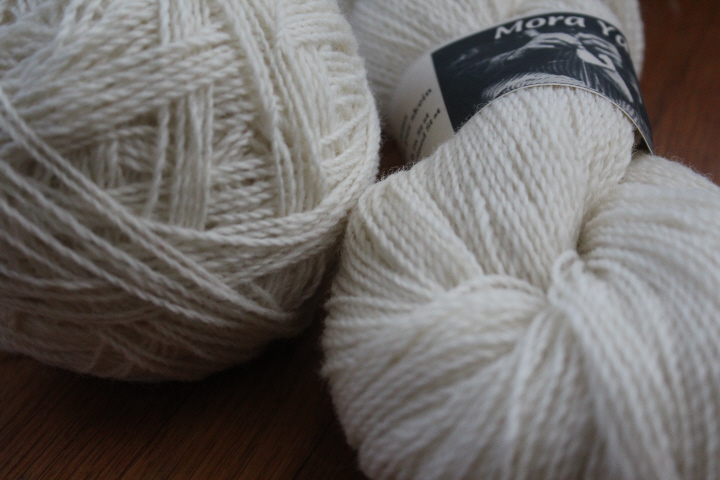
    I have a stash of wool that has been stuffed in a drawer for, I don't know, twenty-five years at least, which I bought with prize money from a rather gratifying first-place win in the county fair some time ago, but —

    5293

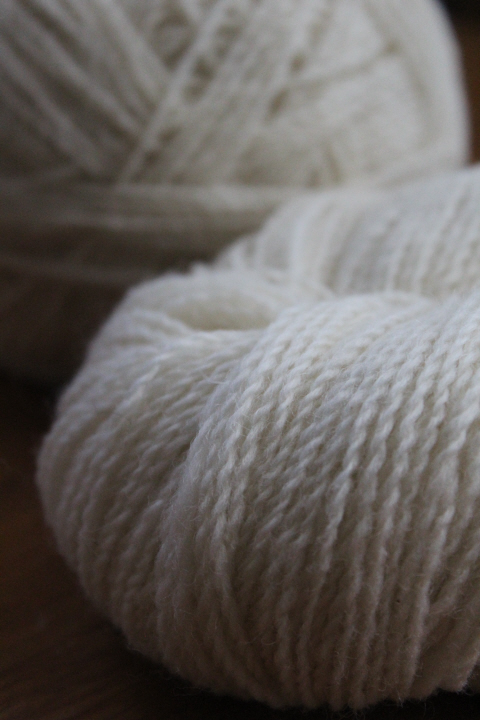
    it is in a parlous state, I'm sorry to say.  It is Trendsetter Yarns' Micro Cashmore [sic], a superfine merino and microfiber blend, baby-soft and in a lovely pale lavender with a hint of grey.  I loved it so much from the moment I saw it, that the project I would make with it had to be utterly perfect, and although I tried any number of times, it never was.  Of course the yarn was rather battered after being knitted and ripped out and knitted and ripped out, but when looked at in a hopeful light, it is still whisper-soft and a beautiful color, and would be very pleasing as a set of mitts which could be worn under coat sleeves so that no-one would know how badly I've treated it, but could still be fondled for its amazing softness.  And so, feeling so unsettled this past week that I just wanted to knit something and thinking of this long-buried stash of wool in the drawer, and seeing the Ormsta mitts, it all just came together like the tumblers of a lock quietly clicking into place.

    I do not, though, know a single person who can do this technique, so I turned perforce to the internet with a set of 2.5mm needles and a ball of the Cashmore in my hands.

    This is I think a fairly good introduction to the technique, starting with one of the simpler cast-ons, and no worries about not understanding Swedish because there isn't any audio at all.  (I sympathize, by the way, with the translation "twined knitting" because the two strands of yarn twine around each other as you work, like ivy vines, but I rather prefer the more literal translation of "two-end knitting".  The Swedish word is a bit of a tongue-twister for English speakers, but the pronunciation "tvoh-endts-stick-ning" isn't far off.)

    After a couple of attempts at using two balls of wool, by the way, I realized that it is much easier to untwist the two strands — which you will have to do regularly, there is no way around it — if you are working with a center-pull ball, because you can just hold either the ball or your knitting in the air and let it unspin itself, which is harder with two balls plus knitting.

    This method makes a nice, soft, center-pull ball, though after a while, when I wanted a second one and the first was still in use, I thought I might as well learn another Scandinavian technique while I'm at it, and try a nostepinne ("nohst-uh-pin-nuh").  I don't actually have one, but thought of a reasonable substitute borrowed from the girls —

    Accio nostepinne!

    I haven't got this technique at all yet, understanding it in principle — which is brilliantly simple — but not in practice.  My first ball is much more ovoid than anything I've seen come off a nostepinne in other people's hands, but I suspect it's really worth figuring out.

    I decided to work a beginning section on my first sampler with the yarns held one in each hand, so that I could see the difference between the two techniques, and I'm glad I did because it is quite clear.  This is the outside —

    5524

    and this the inside —

    5523

    I expect the wobbliness of the stranded portion would smooth out a bit with blocking, but even without you can see how much more firm and dense the twisted portion is.  There is also a distinctive slight angle to the fronts of the knit stitches, so I'm a bit puzzled by Roberts' and McGregor's assertions that you can work it stranded and have it come out "the same" — oh well.  McGregor says that she likes the fluffier (and thus theoretically warmer) texture of the two-handed version, which is fine and logical, of course, but I'm exploring the technique here, so wanted to try it the traditional way.

    Rather surprisingly, I could find little information about how to work the various stitches, only lots of examples of them.  One of the helpful places was spinnity's "Larus and Ardea" set of fingerless mitts on Knitty, which describes (in words only) the basic variations.  I also found this post helpful, from Rebecca at The Fiber Bug.

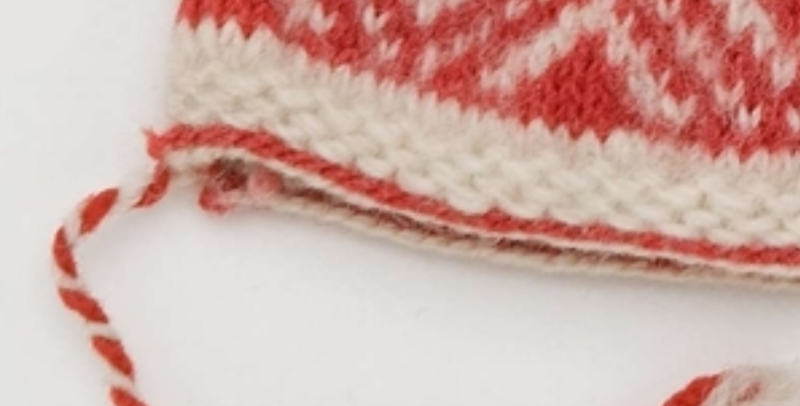
    When I decided that I wanted to try a three-strand cast-on, the only illustrated tutorial I found online was from Kitty at Knit Buddies, though I'm pretty sure I'm not doing it right, as mine looks quite different from hers —

    5522

    I don't know if I've "unvented" something or if I've just put the back side at the front, but it looks quite tidy at least, so I carried on.  It's firm and yet quite stretchy and it doesn't curl, though obviously I should also figure out the "real" method!

    So here is my sampler so far —

    5515

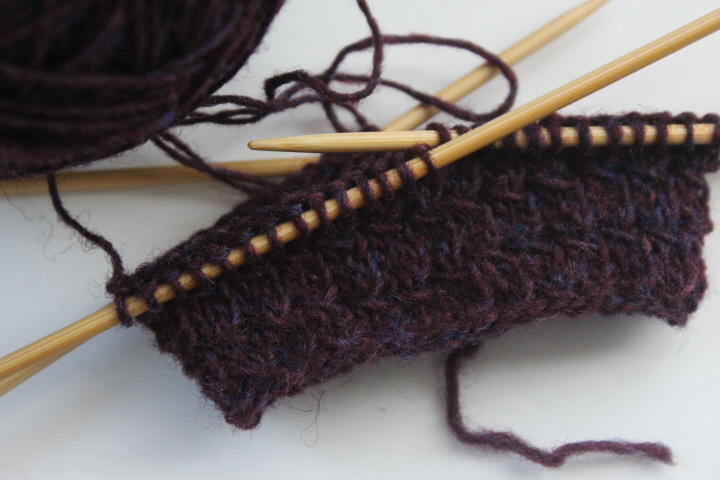
    with the “easy” two-end knitting (two-handed) for 10 rounds at the bottom and then 10 rounds of properly-twisted two-end (one-handed), then a twined purl round which makes a distinct braid-like line, then isolated crook stitches, a "chain path" of two rounds of crook stitches, and then what I thought I was doing with the isolated crook stitches, the little O's like in the Ormsta mitts, which is actually a two-round process, making the crook stitch (which is a P, K, P combination with the two yarns held on their respective sides of the fabric) in the first round, then a sort of reverse-crook (K, P, K, again with the yarns held on their respective sides). Yeah, it's a little complicated, but I think I'm getting the hang of it! though I can certainly imagine a quiet "Nej, min vän, garnet går det så här" if I were to knit in Swedish company! I felt confident enough last night to start another sampler, which I hope will actually be a wearable wrist-warmer before too long.

    5518

  • 5460

    Julia marched in her first parade this morning, our local annual Veterans' Day Parade.  It's pretty small, a color guard with a very big American flag, then local veterans of all kinds, a JROTC corps with all fifty state flags, and finishing with I think just about every JROTC corps in the area.  Short, but heartfelt.

    I think Julia is really enjoying marching band, I'm happy to say —

    5463

    5473

    5477

    5479

    5487

    5504

  • ,

    Juggling Balls

    5437

    Since juggling is an inherently cheerful thing, I decided to lighten the mood this week by making some balls for David, who has often expressed a wistful interest in learning to juggle.

    The tutorial is from Amiel Martin, a clever pattern that went together fairly easily out of four smallish strips of fabric, backed with fusible interfacing and filled with flax seed (wh. bought in bulk cost about a dollar and a half to fill all four balls).  It gets a little origami-like towards the end, as the "ball" begins to really become three-dimensional, but the photos in the tutorial are clear enough that with a little examination it's more fiddly than difficult.  I like the way the strips wrap around three sides of the cube!  The fabrics I used are two bright Kaffe Fassett prints, left over from a project which I will show after Christmas.  The shape and the flax seed filling help keep the balls from rolling away from you as you practice!

    5441

    Lest you think I'm getting good at sewing, I must offer this —

    5439

    all four are like this on the second side, so I would suggest that instead of carefully matching the first set of seams, just go ahead and do it without looking, and both Xs will be just a little off, instead of one being perfect and one really wonky!

    These ended up weighing a little over 150g each, and are about the size of a baseball.

    5444

  • True Success

    Dalai lama successful people