• 7559

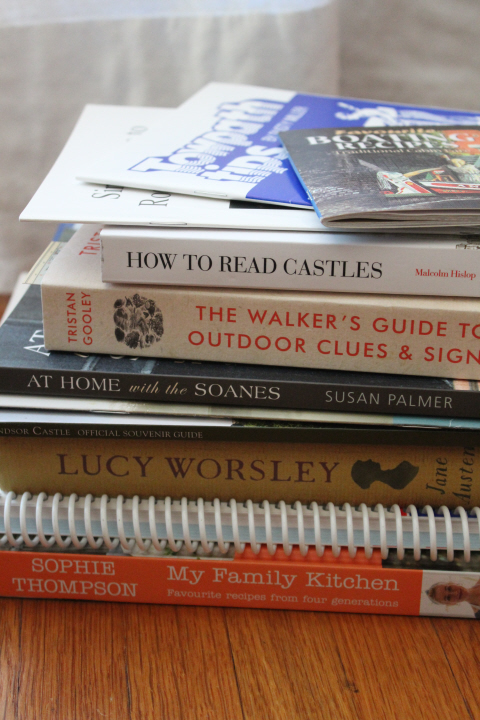
    Here is a brief photo-album-of-sorts of our trip, which like many things has had the rough edges gently bumped off in retrospect (four people in each other's company for three weeks, petty travel annoyances, lunatic weather, etc. etc. etc.) and can now only be described as wonderful.
    We'd been planning for months, with everyone noting down places to visit on index cards, then laying out the cards in a sort of geographical order, and deciding what could fit where — and, alas, what couldn't — so that we ended up with an itinerary that was quite busy, but we saw a great deal of London and southern England, and widely-ranging things at that.  It has not been a simple matter to winnow the photos down to a manageable number! but here is a "potted version" of our trip, and as it happens I am already planning additional posts specifically with photos of church needlework, and the British Museum's soi-disant "greatest hits", and of the garden at Sissinghurst — and a completely separate blog for narrowboating is already in the works, so sure are David and I that we want to repeat the experience!

    Wednesday, 21st : Windsor Castle.

    7545

    We'd just missed the Changing of the Guard when we arrived, but managed to see the retiring parade through the streets.  Needless to say, the band was excellent!

    7613

    This was the bonus of bonuses —

    https://mathomhouse.typepad.com/files/mvi_7627—copytrim.mp4

    Thursday, 22nd : Tower of London, Design Museum.

    7662

    7680

    7708

    7747

    Friday, 23rd : Natural History Museum, Victoria & Albert Museum.

    7756

    7863

    4854

    Two museums in one day is very ambitious when one of them is the V&A — indeed, it would be impossible, I think, to do justice to the latter even in a full day itself!

    Saturday, 24th : Hampton Court.

    7908

    7940

    Bells on one of the grace-and-favour apartments, which I discovered later to my astonishment continued to be occupied in the 1950s (Mrs. Kingsley Foster and Lady Peake), and Mrs. Baily was still in residence at the time of the 1986 fire.

    7942

    8002

    Sunday, 25th : British Museum, "The Play that Goes Wrong".

    8054

    Buskers on a Jubilee Line train.  We saw these fellows more than once — they were playing "When the Saints Go Marching In".

    8069

    8070

    8129

    One of my favorite little places in London, though alas it was not yet open when we passed by that morning.

    8138

    One of the big draws for David was the chance to see this play in full, which he had previously seen only in an extremely-truncated version in the video below.  The video is hilarious, but the full play is side-splittingly so, and numerous lines have now entered our family lexicon.  ("She's having one of her episodes …")  Highly recommended! and the theatre itself is a treat as well.
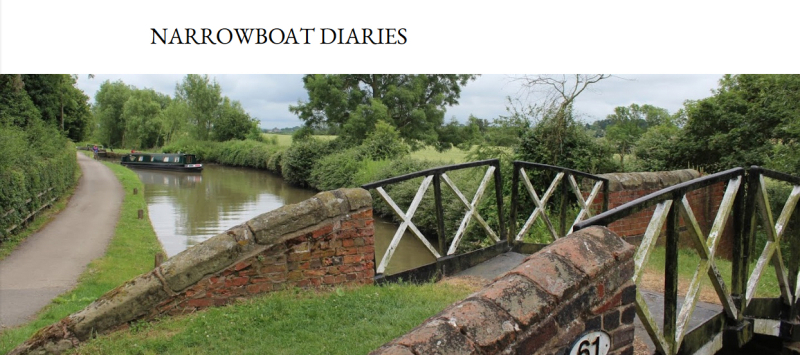
    Monday, 26th : Narrowboating.

    8196

    8241

    8336

    Yes, you pilot the narrowboat yourself!  Yes, you live aboard!  Yes, you man the locks!  Yes, it's really a lot of fun!

    Tuesday, 27th : Narrowboating, Mary Arden's Farm.

    8448

    8473

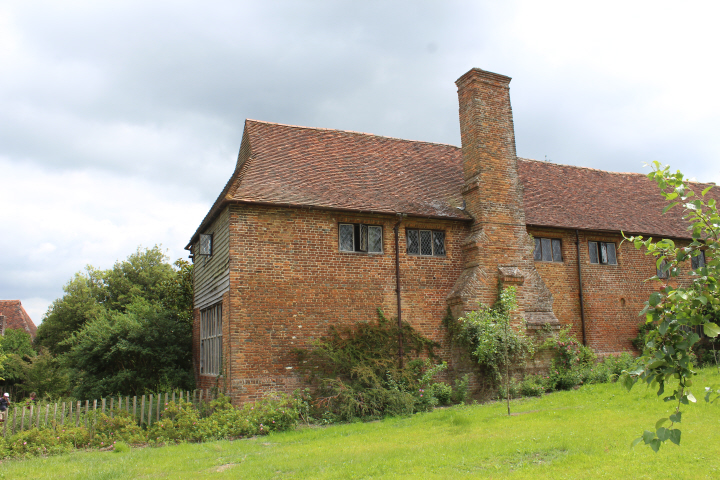
    The Palmer's Farm house.  That rosebush is as vivid in real life, I assure you.  This house was thought for decades to be the house of the Arden family, Shakespeare's maternal forebears, but it was discovered only in 2000 that it was actually the house of a neighbor, Adam Palmer, and the Arden farmhouse was the smaller and more modest house nearby.

    8480

    8572

    Mary Arden's farm house, also known as Glebe Farm — this is the house where Shakespeare's mother (properly Mary Shakespeare, of course) lived as a child.  Because it had been thought for so long not to be the Ardens' home, it was "updated" in Victorian times, but the wider effect of the collection of buildings and land here is surely that of a working Tudor-era farm.

    8705

    Coming through a lock, en route to Stratford from Wilmcote.

    Summer Holiday, 2017 (Part 2 of 3)

    Summer Holiday, 2017 (Part 3 of 3)

  • ,

    Vacation Sewing

    7509

    That is sewing for vacation, not while on — I am not quite up to that level yet! 

    I meant to have this post ready to go before we jetted off, but things got in the way, etc. etc. etc., and we have now just returned from three weeks in London and southern England, including a lovely stretch renting a narrowboat along the Stratford-upon-Avon canal. 

    I wanted the girls and myself to have hands-free bags in which to carry wallets, cameras, tickets, maps, etc. — all of the things one accumulates while traveling.  I also — since we had also spent rather a lot on new clothes, tending for the most part to be the kind of family who wears things out, and thus not always having the right things for a vacation — wanted to spend as little as possible on the bags, so I took a good deal of my preparation time scouring the internet for free patterns.  I managed to get everything out of fabric I had left over from other projects (thought I did have to piece a few things!), so for the most part the only things I had to buy were notions.

    My first project was my own bag, and although the pattern was not free, it is extremely reasonable, and a very good bargain.  This is the Summit Pack from Cloudsplitter Designs.  I read a number of reviews that said it's a great pattern, complex but not difficult for sewers with average experience — which I would say is about right although it would certainly help if you've made bags before, or have access to someone who has, as this was a completely new experience for me and I was a bit puzzled by a few things.  (Unfortunately, when I asked for help via the designer's website, I never did get a response, so I would recommend anyone else to try the direct e-mail address.  I had managed to come up with a solution on my own before resorting to that avenue.)  I did find this review by Rochelle of eSheep Designs extremely helpful, since not only does she recount her experience with making the bag, but she also included quite a lot more photos of her finished bag, so that I could tell what I was aiming at — which isn't always apparent in something this complex!

    7510

    7511

    7512

    7516

    7517

    I also took Rochelle's lead in adding a hanging loop at the top of the bag and a sunglasses loop, which I put just inside the big compartment.  If — no, probably when, since I'm really delighted with it — when I make another one, I might modify the card pocket, since I prefer a wallet for those, although I must say it was a real kick and confidence-builder to make this feature and have it turn out so well!

    7520

    So you can see that while I am by no means expert at making bags, even a determined novice can bring this off well enough to impress family and friends!  ("You made that?!" in disbelief …)  I would just recommend taking every step carefully, without rushing — and do pick out anything that isn't quite good enough!  I re-did some of the topstitching three or four times, but it was worth the trouble, since it really does look much better on the finished bag.

    Ready to go! —

    2621

    7502

    The second one was not as much of a success, but this was my fault as I tried to adapt it a little more than the pattern could really handle.  It is the "J Bag" by Nerissa, available at Sew Mama Sew.

    It didn't occur to me until far too late that adding inner pockets and fusible interfacing would make the inside of the already-small bag considerably smaller than the outside of the bag, which of course means that the lining doesn't lie flat inside, and that there is much less room inside.  I would certainly make this again, as it's a very cute bag, but I would either make it bigger to start with, or interface only some of the pieces, or make patch pockets that don't intrude on the side seams (which just added more bulk).

    I ended up pulling it back apart and restitching the two sides of the lining, then trimming it, though I can't really tell if that helped much.

    7504

    Julia, however, is quite satisfied with it, since she is not generally a purse-carrier anyway so has the bare minimum of requirements, and it certainly fills my two, which were having a cross-body strap and a zip closure.  She will also be able to slip a bottle of water into an outer pocket, or perhaps a guide-book, which I suspect will accommodate most of her needs!

    7505

    I made her a tissue pack as well, this one from Two Brown Birds.  It's very easy, and clever with the lining wrapping round to make an edging, but I think I would rather the opening be more snug.  Perhaps this will be the case once some of the tissues are taken out …

    7507

     For Laura, I managed to persuade her of this one's charms, "The Sling Bag" by Mrs. H.  She was not convinced by the slouchiness, as it happens, wh. I would suspect makes it easier to carry things of various sizes, since the foldover top will accommodate quite a lot of variety — although I will admit that the three-ring binder she was recently carrying made the snap impossible to close, but that was its only drawback! and quite understandable in those conditions.

    There are also some examples of pattern-testers' variations in Mrs. H's post here.

    7508

    The inside has a zippered pocket on one side and a partial-width slip pocket on the other, which I divided as per the pattern into two (pen and phone, perhaps?) — these fabrics are all various colors of Linen Look from Jo-Ann's, and I made the inner pocket with the natural cream color so that it would be a bit easier to see inside a rather dark interior.  (Sharp-eyed readers might remember these fabrics from our first set of Faire garb!)  The only change I might recommend in making this bag is to fold the strap tabs with the raw edges in the middle — I mean just folding a narrower strip than in the pattern so that the raw edges meet in the middle, edge-stitching the long sides, then folding it in half into the rectangle ring and catching it down as in the instructions — as the stack of four interfaced layers in the pattern's version was quite awkward to top-stitch cleanly.  The strap might not be quite long enough for cross-body wearing on taller people, so test it first.  Other than that, this pattern is simple, clear, and thorough, and the results are excellent, giving you a roomy, convenient bag in just a few hours!

    7515

    I am not usually the kind of person to match my accessories, but it just seemed right this time — and of course I had the fabric! — so I made a zippered pouch and another tissue holder for myself, these to tutorials at Skip to My Lou, here and here respectively.  I didn't have to buy anything for these, as the pink zipper was an ancient one in my box.  I'm glad I was able to use the little border on the fabric, as I think it adds a certain panache!

    7372

    Photos of the trip itself coming shortly! …

  • 7320

    My Parley was finished and worn exactly a month ago, to be honest, but it has been quite summery lately, really too warm to want a sweater, and I've been rather busy with other things as well, so haven't had the wherewithal to photograph it.  But the weather dropped about twenty degrees quite suddenly this past weekend — I kid you not, twenty degrees — and I wanted wool, so I am wearing the cardigan again today.  It is of course the Parley by Mary Lou Egan of Yarnerinas, from her book with Gale Zucker and Kirsten Kapur, Drop-Dead Easy Knits.  The book is full of good-looking knits that are fairly low on the concentration scale, which is great for those of us who tend to have — cough — numerous projects going at once.  This particular one comes in pullover and cardigan versions, with simple shaping and lots of stockinette, with a bit of twizzle at the edges to keep it interesting.

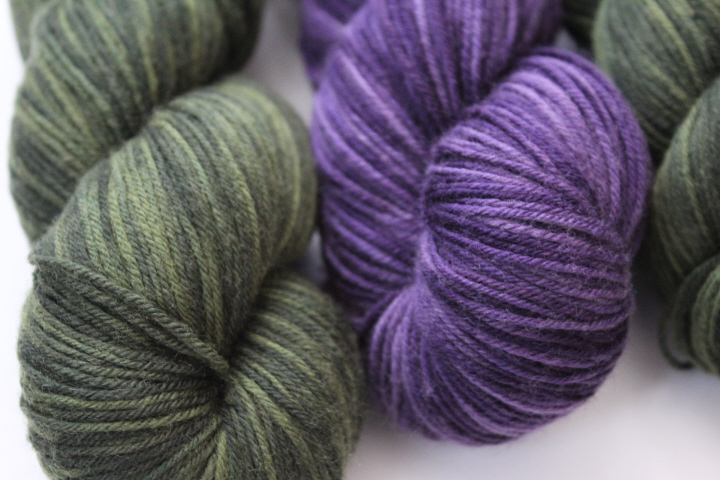
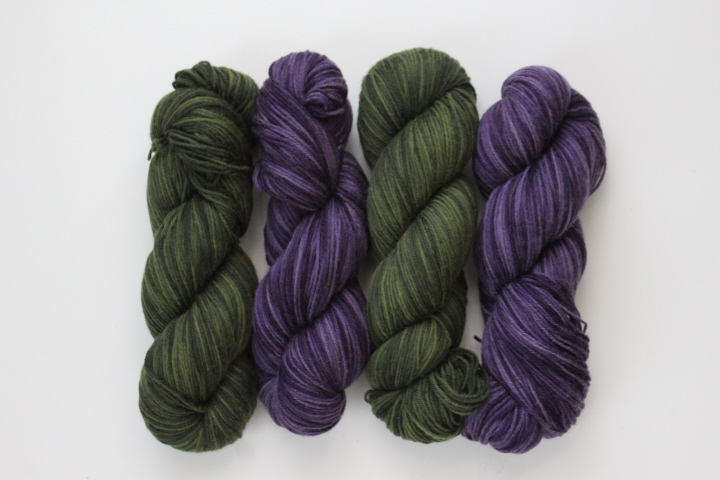
    This is just four skeins of Briggs & Little Sport in mulberry, which I got from Penelope Fibre Arts in British Columbia, as it's apparently a rather small line produced in Canada, and not many US shops carry it, even online — it's worth perusing the B&L website to see the "tour" section and how the wool is processed, from grading to shipping.  Mine is a lovely purply color, with hints of blue and red and black giving it a lively depth which is very difficult to capture with the camera!  The yardage on the Sport wool is quite impressive, as I still had a good-sized ball and another full skein left over — I bought five.  The wool is a single-ply, so tends to worm a little while winding and knitting, but not frustratingly so, although it doesn't feel particularly pleasant to knit with since it is rather rough in itself and perhaps it is that combined with the single-ness that makes it feel a little like wire when wrapped around my fingers.  Much of the roughness does wash out, though, and so now it has a sturdy wooliness to it and a light sheepy smell which is not atal unpleasant.  I am a little concerned about the alarmingly frequent thin places as I went along, two or three of which were such a hair's-breadth, literally, that I broke and spliced them on the spot.  I was tempted to weave in a bit of extra wool as a reinforcement in the less-alarming places, and had at least a dozen safety pins marking them as I went along, but in the end I didn't — although I do have so much wool left that at least there is enough for repairs if that does become necessary later on!

    The buttons are La Mode no.214 (eleven, not ten, since the buttonhole band came out with that many, as it happened).

    The purple is generally a bit darker than I could get in these photos —

    7333

    7335

    7324

    The sizing is quite generous, and I probably could have made the next size down instead of the 42 for my US12 figure, but there it is — it's a great no-fuss cardigan, and in this yarn is good for nicely-cool days, not too light, not too heavy.  It probably does look its best with a scoop neck underneath, not a collared shirt, to play up the slightly-rolled neck, which has a gracefully curving line to it that I really like.

    7179

    We had a good bit of rain this past winter, much to everyone's relief.  The down-side is that all of the weed seeds that have been lying dormant for the past three or four years of drought have apparently all decided to sprout and grow now.  Our backyard, which has a gigantic pine tree in it and therefore little else, has been since February or so a veritable sea of stinging nettles and crabgrass, which I have been digging up — with a shovel, mind, not one of those mild-mannered forks — an hour or so every morning, filling usually two trash cans a week. 

    Unfortunately for the butterflies, some of whose caterpillars subsist pretty much exclusively on stinging nettles, this is not good.  I fully expect the nettles to come back again next year (she said, weeping quietly into her tea), but this year for the bees and other insects in our little patch of wilderness in the middle of suburbia, I scattered around a packet of California wildflower seeds in the few spots that get any sun, and a packet of shade flowers for the more woodsy corners.  The photo above is the very first bloom, which is a baby blue eyes (Nemophila maculata).  It looks like a little bit of everything in the sunny packet has come up so far — I am quite looking forward to the mountain garlands and the lupines!

    7168

    This is something else that has been keeping me busy, albeit indoors — a pair of Elizabethan venetians (which are sort of ur-trousers) for David's Renaissance Faire garb.  These have been a real pain in the neck, to be honest, but I am on the home stretch at last, and only need to do buttonholes and lacing eyelets now, which will mean that — huzzah! — David will for the first time have a complete period outfit, bar the shoes of course.  More photos to come.

    7295

    We took the afternoon Saturday to go and see the "Dressing Downton" exhibit at Muzeo in Anaheim.  I have rather mixed feelings about "Downton Abbey", not as keen in the later seasons as I was at the beginning — but from start to finish, the clothes are pretty wonderful.  This suit of Lady Sybil's, from season 1, is probably what I would choose if they were to say, "Yes, you may have one!" although Mary's red suit from the same season would run a close second.  Cora's court dress from season 4 would be my favorite of the fancier ones, I think, but, goodness, how often would I get to wear it?!  More photos later of this, as well …

    7327

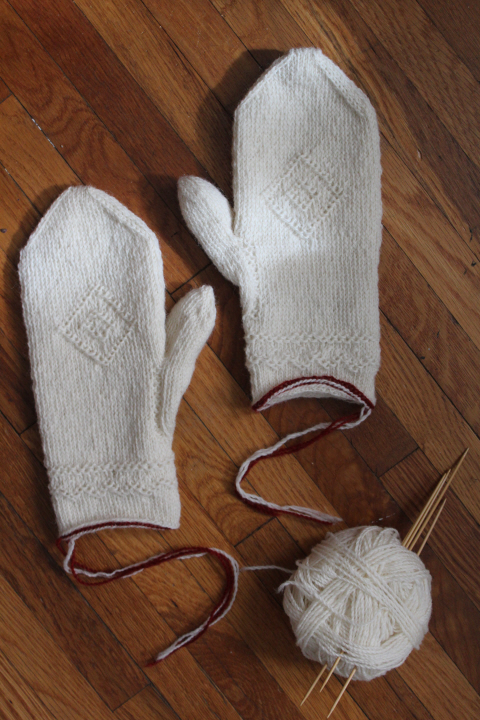
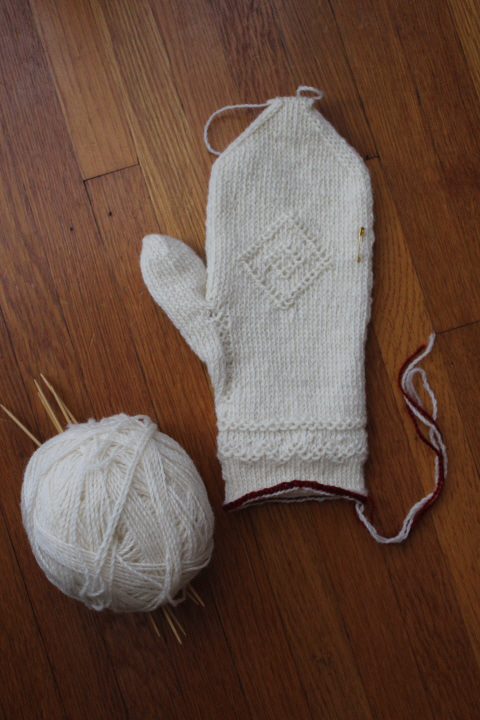
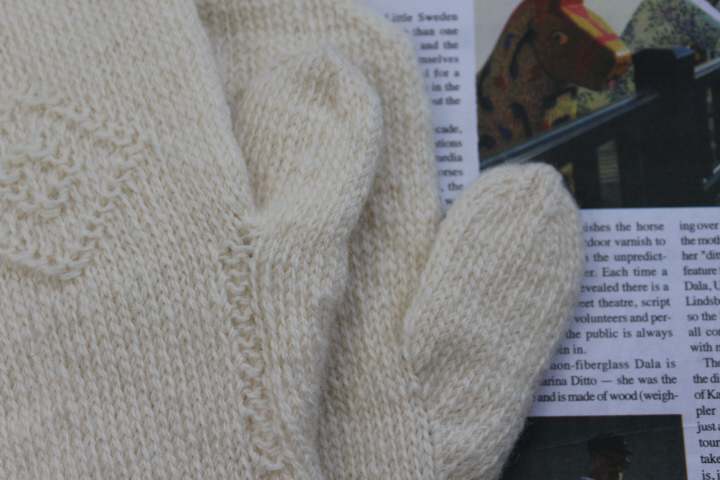
    The weather has been cool enough too, this past weekend, for me to enjoy again the feeling of wool running through my fingers, so last night when I had three hours in front of the television (new episodes of "Call the Midwife" and "Home Fires", and a repeat of "Wolf Hall"), I managed to get the rhythm going and finished the thumb gusset and worked over half of the medallion of the first two-end mitten.  It puzzles me why this cast-on doesn't lie as smoothly as the first one, but I tried a different technique, so I guess it just does.  V. glad that these fit well, to be sure!

    7329

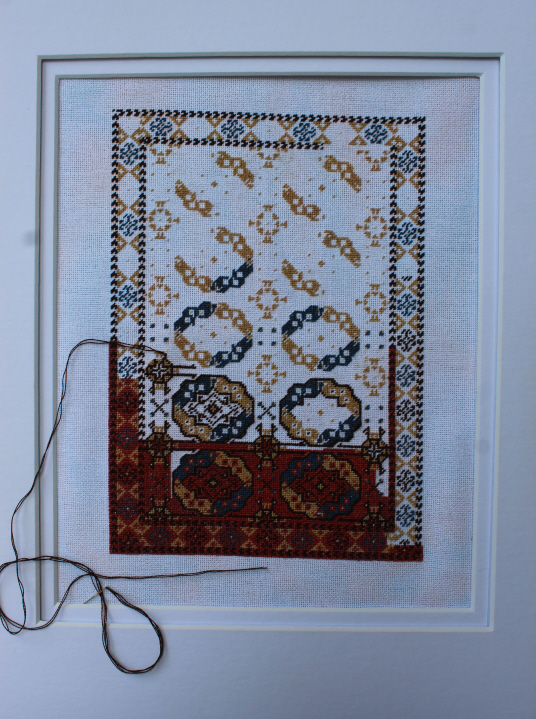
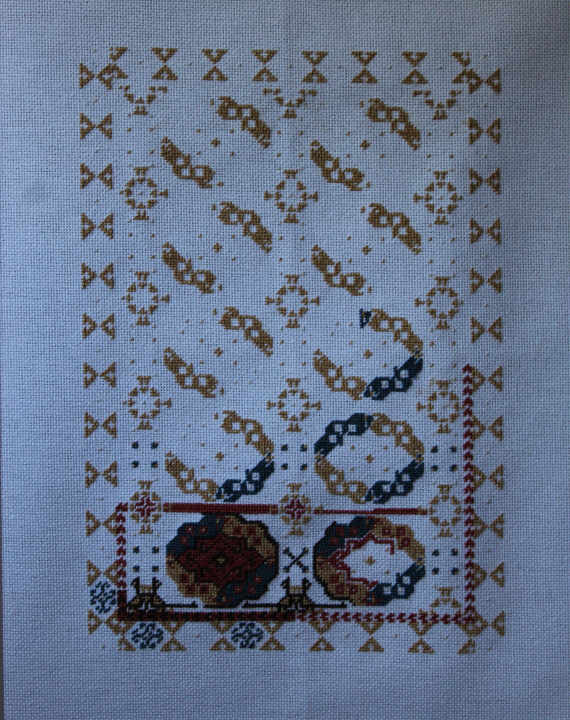
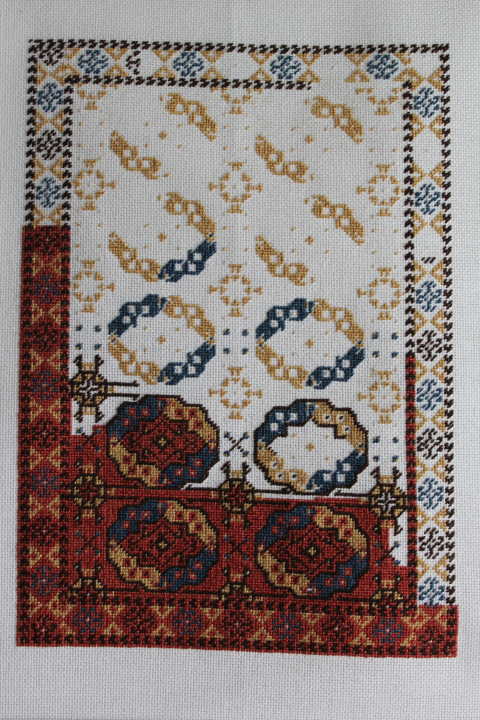
    And, yes, there is a new petit-point carpet!  It's spring, how could I resist?  This one is the Flower Trellis by Sue Bakker from Venus Dodge's Dolls' House Needlecrafts.  I haven't yet worked a Bakker chart that was free of significant errors and this one is no exception, I'm sorry to say, and in fact has some real doozies.  The chart gives symbols for "red, light red, green, gold" etc. with the materials list specifying which colors of DMC floss are used, either by themselves or in combination with similar shades — but although there are symbols for "blue" and "yellow" there are no indications in the materials list that you need any blue or yellow at all.  I had to just choose shades I thought went well with the other colors.  The chart has the full border and the "trellis" in the main field, but only one each of the flowers inside each medallion, so the stitcher must decide where to put what — this is perhaps not a serious drawback for a more experienced stitcher, but a beginner may not appreciate this, nor the fact that one long edge of the "vine" is clearly marked with the symbol for yellow, not green. 

    But, yes, it's a very pretty carpet now that it's finished, I must say!  I worked out before I started the flowers which one I wanted where, and whether or not I would reverse it (just to make each medallion a little different).  I also reversed the light and medium pink blends here and there, for the same reason.  I used a partial chart for the half-medallions, leaving a one-stitch edge between them and the gold border, to match the trellis-work — some have worked it differently, I find from poking around the internet.  Mine is kind of busy as a result, but in an ordered sort of way — quite garden-like.

    7337

    I used the following shades of DMC floss (3 strands, on 22-count mono canvas) —

    • dark gold = 680 and 420 (1 + 2 strands)
    • yellow = 745 and 3078
    • blue = 931 and 932
    • pale pink = 223 and 224 (2 + 1)
    • medium pink = 223 and 3372 (1 + 2)
    • red = 356
    • pale green = 3347
    • medium green = 3347 and 3052 (2 + 1)
    • grey = 646
    • background = 3033 (instead of ecru)

    Note that I needed 3 skeins of the background color, not 2 as on the materials list, and that the number of red stitches (the "tulip" stamens) is a mere six per medallion, so if you have a bit of a pretty red already, you really needn't buy a new skein!

  • ,

    Making Music

    7174

    These are for my contribution to the door-prize table at my miniatures club meeting, since I won one last month — Irving Berlin's "Alexander's Ragtime Band", four Christmas carols, "The Birds are Gone to Rest" from "La Traviata", and Beethoven's "Für Elise".  Each piece of sheet music is complete (from out-of-copyright sheet music available online), and probably playable if you could read that small. 

    In theory, the process of making these is quite simple, though in practice any anomaly looms large so they are a bit fiddly.  I cut the first batch with scissors, but little wobbles or slight deviations left white edges here or there, so I had to print them again.  I had also laid out a copy of "Peg O' My Heart" but discovered after I'd cut and folded it that I set the pages in the wrong order! and I didn't want to print the whole sheet again just for one piece, so I hope the recipient won't feel skimped.

    7173

    Obviously I should have a piano in Hardy House …!

  • 6777

    I am halfway up the second sleeve of the Parley cardigan, with the first sleeve and body waiting to be joined together.  To be honest, I would have probably finished it by now were it not for this —

    6757

    which I was completely smitten with from the moment I saw it last summer, the Heriz carpet by Sue Bakker, in an old post at Open House Miniatures.  Fortunately I was able to get hold of this chart as well as a few others of Bakker's, wh. pleases me greatly.  I did find a number of errors here, both in the chart and the list of floss colors — astonishingly, things like leaving off a digit — but, yes, I am so pleased with the finished piece that I am willing to overlook them. 

    I fairly careened through this piece in my joy — just a little over two weeks from start to finish — so I did make quite a lot of mistakes, most of which I noticed before long, some of which have now become permanent, but I admit that this bothers me not a whit.  I also made some deliberate variations in the serrations of the "leaves" in the border, just because I felt like it. I had noticed in the original photo that sometimes the edges around the lighter-red figures appeared to have a sort of golden shimmer to them, and so I theorized — since I was already aware that the photo and the chart didn't always match, eh-hem — that Bakker may have added a touch of gold to the edges, and so I tried that with the first pair of the little "flame" figures at the narrow end of the center panel, but this was more than a bit of bother, so I decided to skip it on the pair at the other end; as it happened, once the carpet was finished, I could see that in some lights the light-red figures seemed to have a golden edge to them even when I knew very well that they didn't, so apparently it is due to the surrounding colors, presumably reflections on the stitches causing an illusion of color bleed.  Interesting!  I did, though, shade the four blue "leaves" in the corners of the red medallion with the charted medium-blue blend around the edges, and an unblended (slightly lighter) blue in the middle, also an experiment in color shading — very subtle, to be sure, and I'm not sure if it is really noticeable at all, though I suppose if I were making a museum piece (!) it would be worth it!

    6759

    6764

    The colors are just gorgeous, really rich.

    6765

    This actually looks a bit less messy in the photo than it does to me in real life, which I suppose is a good thing.  Some petit-pointers can make the backs of their work look nearly as good as the front, but this is something I think I can only admire from a distance.  I find it much easier to make the backs neater in wool, because of its "stickiness", though it is possible that I am too doubting and therefore leave the floss ends a bit long unnecessarily.  I don't want to think that I can't be bothered to make it neater, either — what good is it to improve one's skills on a craft if one's dedication goes only halfway? — but on the other hand, it is the back of the piece, after all, and in a room setting will make not a jot of difference as long as the miniature carpet lies flat like a real one.

    This carpet, by the way, is worked in half-cross stitch, which Bakker insists is better for miniature carpets than continental stitch, which as I already know is what other designers insist is best — I suspect that this may have something to do with both the fiber being worked (wool or floss or silk), as Bakker seems to work entirely in floss, or on the individual stitcher, for surely just like with knitting each of us has a slightly different tension and way of working the individual stitches.  I also didn't bother with basketweave stitch on the backgrounds here — for one, yes there is a lot of background but it doesn't come in large patches, only in little fiddly bits, which doesn't seem to me to utilize the speed and  non-warping property of basketweave much, and for another, I just didn't, no reason why, really.

    6766

    This particular canvas is obviously heavily starched, as when I washed the piece most of the starch came out and it is now quite limp — which is great for displaying as it lies very flat, but makes it tricky to fringe and hem, especially since it also means that the threads of the canvas don't adhere to each other at the crossing points any more, as they did while I was stitching — you can see how they distort a bit at the points of the herringbone hem — but on the bright side, it mitered just about perfectly!  The long-legged cross-stitch edging has that nice habit of making the canvas fold along that line, so happily I didn't have to pull the hemming stitches very tight at all to get the turning to lie smoothly.

    6795

    I also decided to let this carpet be a little more realistic than I have done with previous ones, and not block it with pins and a straight-edge.  As you might expect from reading this blog the past year or so, I've been looking at images of real antique carpets quite a lot, as well as the miniature re-creations, and it is increasingly obvious to me that real ones can be pretty wonky.

    Misc antique carpets 2

    Of course, I completely understand that some stitchers may far prefer the straight edges, and that is absolutely fine and admirable, of course.  I would just like this house to look lived-in, and to be honest, in my own house that would certainly include things like wobbly carpet edges.

    6785

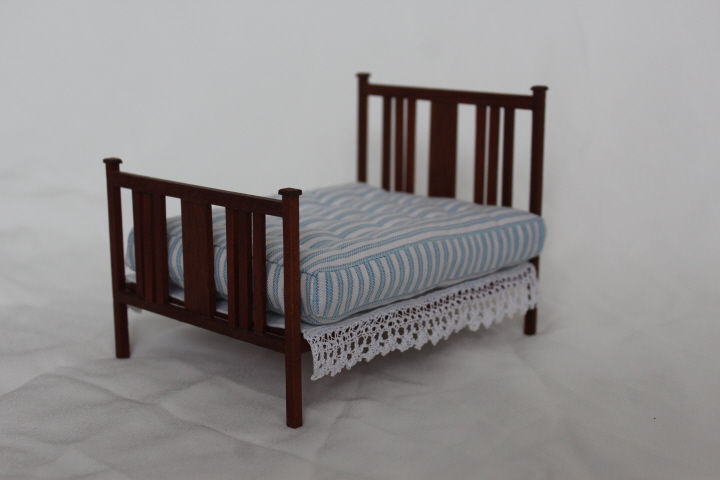
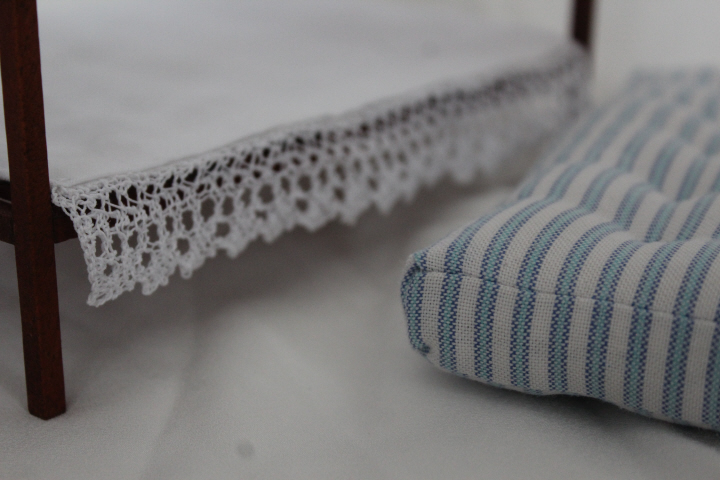
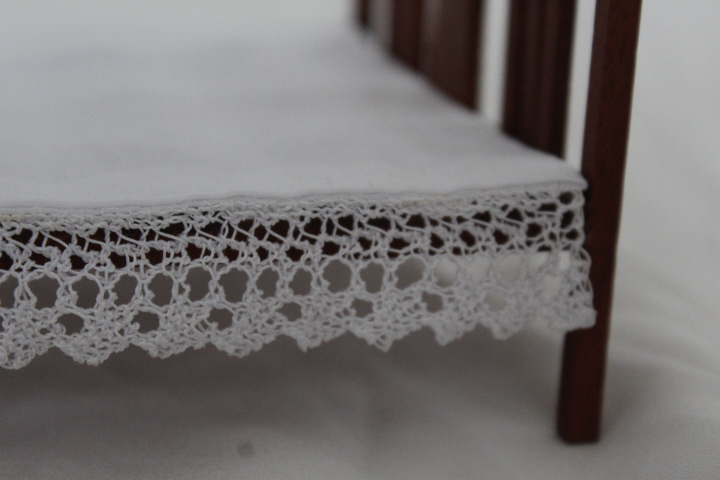
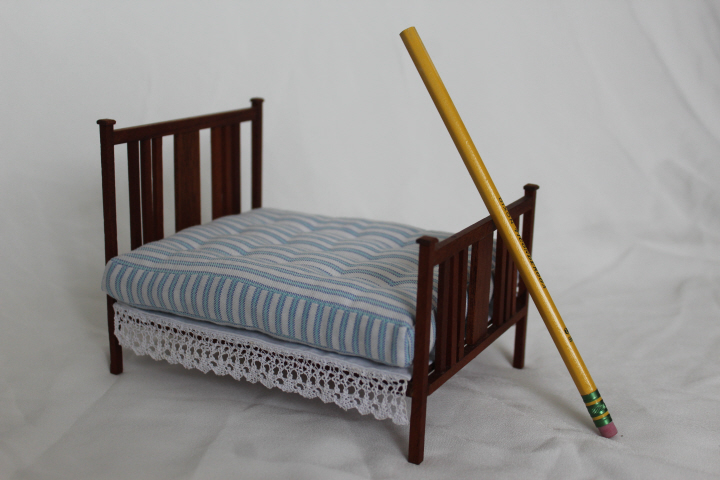
    Here also is my first piece of homemade furniture for Hardy House — the Arts & Crafts bed from Jane Harrop's Edwardian Era Miniatures in 1:12 Scale.  David cut the wood for me, after I cut a few pieces and realized that I was kind of making a mess of it.  I like to think I would have stuck with it if the wood were bass or something ordinary, but this is mahogany, said with that rather awestruck tone one reserves for things like diamonds or Lauren Bacall.  You just don't want to mess up mahogany!  But I did glue the whole thing myself, and its handsomeness is pretty much entirely due to the simplicity of the original piece and the well-designed miniature.  Luckily the glue splodges are mostly on the back of the headboard; I still have a tendency to use too much glue, but as it happens, even though this is just Aleene's Tacky Glue it worked marvelously, so I will trust it a little more next time.  The only "change" I made was to lightly sand all four upper edges of the post caps, which I think gives it a subtle realism.

    The book recommended for this particular project to finish it with a simple beeswax, but while we were at Rockler for the wood, I found Tried & True's Original Finish, which is a blend of linseed oil and beeswax, and came highly recommended by the salesclerk.  I used three coats here, letting it cure gently for a few days between each coat and buffing it well with a piece of old cloth.  The third time I used 4/0 steel wool, which was also suggested by the finish instructions, but the steel wool shed so much that although I was willing to add a few more coats, I didn't know if I'd be leaving steel wool fibers behind to get stuck in the next coat, so I stopped.  I think it looks pretty good even with "just" three coats, and it's wonderfully silky.

    I didn't finish the mattress slats, not at all sure how long it will take for the finish to stop being just a little oily — wh. I can't imagine would be good for the mattress or the bedclothes! — but I couldn't help getting some finish on the slats anyway.

    6783

    It occurred to me as I was putting this together that for a double bed it's a bit on the narrow side, but then again, the room is pretty small!

    6756

  • 6683

    I finished the Big Bad Baby Blanket the other day — finally!  This is two skeins in the Jade colorway of Blue Moon's Gaea fingering weight, which according to my numerous calculations and recalculations — the increasingly-desperate later ones on the fly — would make a blanket about 45" square.  When I cast off, it measured 42" across and 39" high, but blocked, without my really intending it to, to just about 45" x 45" (114 cm).  I added 36 sts to the original number cast on, and also used a crochet cast-on, slip-stitch edge, and K1, P1 cast-off so that the edge is uniform all of the way around.

    The pattern is of course by Lisa Shobhana Mason, and is in the first Stitch 'n Bitch book (2004).

    6690

    6686

    The Gaea is very pleasant to knit with, though only in a few salient characteristics such as gauge is it much like the pattern's original Koigu KPPPM. The Koigu is dense and solid, where the Gaea is almost fluffy, quite cloud-like in comparison.  This I think will make a much lighter throw than would eight skeins of Koigu, so that is an added benefit in addition to the noticeable savings in price.  I'm a little disappointed in the color I chose, expecting from the name something like jade, where what I got is realistically more of a celery, but there it is.  I hope the recipients will enjoy it, and congratulations on their new home!

    6689

    Five grams left!

    6692

  • 6371

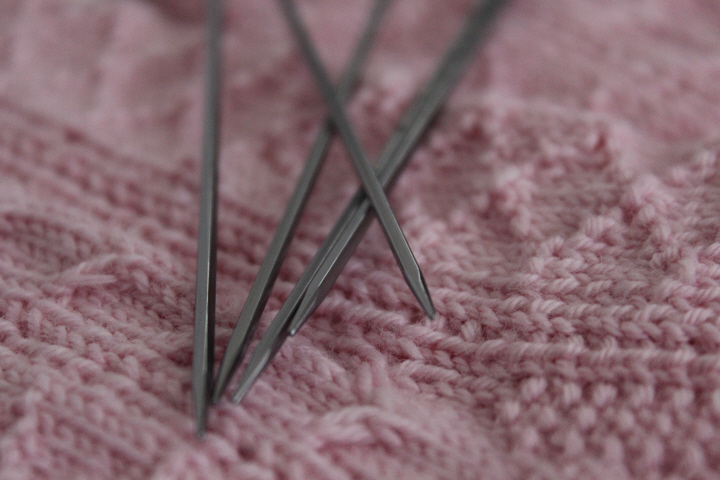
    4/0 dpns from Lacis, via Jo-ann's (online only).

    6374

  • 6680

    Big Bad beginning of the end!

  • Grange house ryton on dunsmore 3

    A recent post on the D.E. Stevenson list about this farmhouse reminded me that I've had these pictures sitting in a draft post for ages.  Some time ago, I came across a newspaper story online about a farmhouse in England where the brother and sister who had lived there since the 1940s had kept things pretty much exactly the way they were since then.  The brother and sister were quiet and reserved, and neither ever married, and when they recently died, the house and contents were sold off.

    I was more than a bit dismayed by a comment on the article from someone who had viewed the house and thought that it was "creepy and sinister", because I find it anything but — a little sad, perhaps, thinking of the people who had lived there, quietly and uneventfully, and are now gone, but also fascinated by this insight into the 1940s and 50s which we usually only get to see in bits and pieces.  Perhaps the person who found it creepy was thinking of those reclusive hoarders who barricade themselves from the world behind piles of newspapers and dirty dishes and filth, but it is said of Grange Farm that it was "spick and span" and the auctioneers had hardly any cleaning to do before the auction, just re-arranging things for the inventory.  (Nor were the brother and sister recluses by any means, to judge not only by the stories from neighbors of regular musical evenings and the delight they took in amateur theatricals, but also by the number of spare rooms ready for guests!)

    Grange house ryton on dunsmore 2

    Grange house ryton on dunsmore 4

    Grange house ryton on dunsmore 7

    Grange house ryton on dunsmore 8

    Grange house ryton on dunsmore 9

    I am not an utter Luddite by any means — I have a blog, for one! — but I am a little hobbitish, perhaps, or like Treebeard the Ent, who says, "I do not like worrying about the future" because like his trees he is so deeply rooted in the past, in the earth and rock and forest itself.  I mistrust change for the sake of change, and I must admit that I find this farmhouse utterly fascinating, not just the wooden tennis rackets, the packets of soap flakes, the patterned linoleum, the rather saggy armchairs, the things we don't have any more, but also how all of these things are interesting and beautiful in their own way, the way things get somehow when they have been cherished and used for decades.  It gives one a sense that although time is passing, it is also standing still.  I have always been intrigued by time-travel stories — Tom's Midnight Garden, "The Love Letter" by Jack Finney, the Narnia stories, Diana Gabaldon's "Outlander" series to some extent (although she seems to have lost interest in the time-travel aspect as such, more interested in the characters themselves and the historical events that surround them).  These houses are rather like that, opening a gate or door and finding yourself in another world.

    There are two other places like this that I know well (I mean from having been fascinated for years with them, and read about them) — Bonnettstown Hall, in County Kilkenny, Ireland, and 18 Stafford Terrace in Kensington (the Linley Sambourne House).  I don't meant re-creations, interesting and valuable as those might be — I mean places where the people who lived there simply saw no reason to change things.

    Bonnettstown 1

    In the early 1980s, American photographer Andrew Bush was hitchhiking around Ireland, when he met and was befriended by an elderly aristocrat living in a rather frayed early-18th-century house called Bonnettstown Hall with three companions, also in their eighties.  Bush, rather desperate, as he wrote later, "to soak up as much as I could before it was gone" began to photograph the house.  His book of these photographs was published in 1989, and the ones below are all from there.

    It is almost impossible, even without knowing that the house would soon afterwards be cleared out and sold, to see these photographs and not feel that they are an elegy, but even so the photos are deeply nostalgic yet unsentimental.

    Bonnettstown 2

    Bonnettstown 3

    Bonnettstown 4

    Bonnettstown 5

    Number 18, Stafford Terrace was the Kensington home of artist Linley Sambourne, a frequent contributor to the humor magazine "Punch", who moved into the house with his wife and two children in 1875, and redecorated it in the new Aesthetic style, which drew on the aesthetic value of things (objects, literature, music) and not their political or social values, with the ideal that one's response to all of this this beauty, this "art for art's sake", was a spiritual improvement in itself.

    The Sambournes were not a static family by any means, and they did change their house now and then — the drawing-room, for one, is papered in a William Morris design from some decades after they arrived — but when Sambourne died in 1910, and his wife Marion a few years later in 1914, their son, the bachelor Roy, made few changes of his own, and the house remained virtually the same as it had at the turn of the century, until his death in 1946, when it passed to his married sister.  Already having a house of her own by then, she kept it but like her brother had, unchanged, and eventually the house passed to her daughter, who by then had become the Countess of Rosse, and had the foresight and determination — as well as a great love for the house and its contents — to found the Victorian Society in 1957, partly in order to ensure the survival and upkeep of the house and to be able to open it to the public — which, to the fascination of those like myself who find it a way to make time-travel really happen, it still is.

    (Sharp-eyed viewers may recognize the Stafford Terrace drawing-room as the home of Cecil Vyse and his mother in the 1985 film of "A Room With a View", and the dining-room as that of Aunt Agatha in the Granada "Jeeves and Wooster" series.)

    Linley sambourne house 1

    Linley sambourne house 2

    Linley sambourne house 3

    Stafford terrace dining room

    Linley sambourne house 4

  • 6546

    I've been cleaning the new-to-me doll's house the past few weeks, starting with wiping it down inside and out with a damp cloth.  It was pretty dusty.

    6548

    This is all the stuff that was in the main room, except for the "full-size" suits of armor.  Inside the box with cotton wadding are some rather nice little pewter tankards.  The little star-shaped object is a lid for something long-gone.

    6554

    Maybe it isn't quite as obvious in the photo as in real life, but the left side of the roof has been wiped with a damp cloth and dried, and the right side is as-is.  The improvement is remarkable.

    6556

    Teeny-tiny light bulb on the ceiling beam.

    6558

    You don't often get to see a dusty fire, but this is what one looks like.

    6560

    There are a few more things broken or bumped off than I realized, but so far nothing that can't be fixed, and I think I rather like the idea of a house that looks as though it has been lived in for a hundred years or so.

    6600

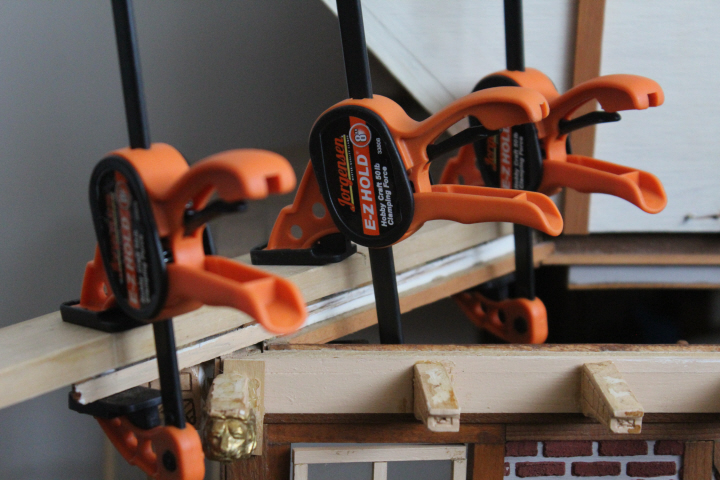
    Someone on the Greenleaf miniatures board suggested that I see if the roof on the left side could be made to hinge or lift off, so David had a go at it.  The blue masking tape is things that need to be repaired.

    6616

    The back bar, cleared off, dusted, and replaced — luckily the things weren't glued, only museum-puttied.  The house will be an old inn that has been converted into a family home, so this part will remain as a reminder of its "old coaching days".

    6617

    I managed to squeeze the camera inside the front door space, with a flashlight behind aimed at the ceiling, to get this photo — interesting, since I hadn't been able to get a good look at the staircase before!

    6565

    The contact paper was buckling and rather poorly laid up in the attic, so I've pulled it out — it came up very easily, with just a few fiddly bits left in the corners that I had to remove with tweezers.

    6567

    This is just past the door that had the faux tapestry on it, looking towards the front window.  The medallions are in fact a selection of old metal buttons with the shanks removed — clever.

    6582

    I discovered to my dismay that the original builder laid contact paper throughout the whole house.  Someone in the interim laid down the various wood floorings, on top of the contact paper.  This one is lifting up just a little bit, though on the bright side, so far it's the only one.

    6591

    I rather liked this "wallpaper" (actually fabric glued to paper), but as I waved the duster around, the loose edges started raveling and peeling up, so I resolved to take it off.

    6592

    Teeny-tiny crane in the fireplace in the old kitchen.

    6594

    This is the room upstairs-left, from the back of the house.  The piece of wallpaper on that jutting corner just popped right off, and the other is quite loose — I'm not sure yet if I will re-paste it or remove it.

    6618

    The biggest surprise has been the solution to the Mystery of the Superfluous Chimney Pot.  This was unfortunately not solved by my powers of deduction but by bashing away at the raw paneling with a paint scraper.  On the bright side, I don't feel guilty any more about "remodeling" since the house is clearly not in its original condition anyway!

    I've pretty much decided to rename it Hardy House — imagine the confusion of living in a house called The Inn!  "Hello, is that the inn?"  "Yes.  Well, no!" etc. etc. etc.  Hardy House has I think a pleasing euphoniousness without being saccharine, and is of course a nod to Hardy's of Redlands.  I foresee a few little inn-jokes by the current occupants in reference to its history (see what I did there?!).

    6671