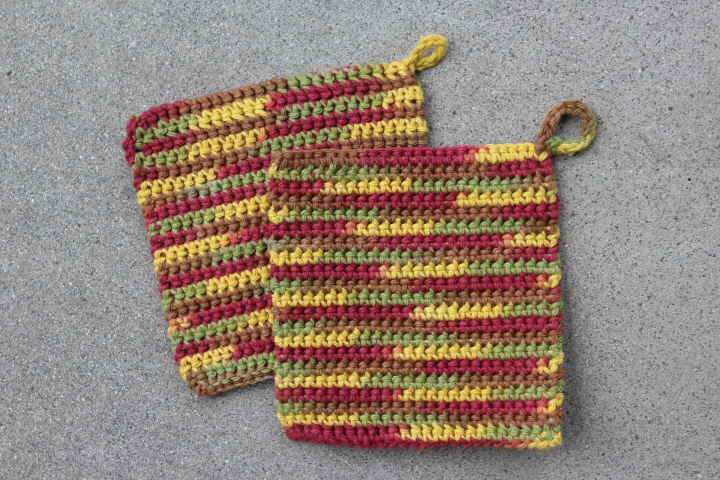
• ,

    A Day to Remember

    0556

    Good heavens, I've just realized that I forgot to write here about going to see the Rose Parade this year.  I have lived here all my life, and never seen the Parade in person!  But we had an especially-good reason to go this year, as our Julia was marching in it, as a member of the Pasadena City College (PCC) Honor Band.  Our buttons were busting, I can tell you!  She was one of the (very) many high-schoolers who auditioned, and one of the (relatively) few chosen to swell the numbers of the college marching band.  This entailed a great many drives to Pasadena and back for rehearsals, and a very early morning on New Year's Day for an eight o'clock step-off, but it was worth it for everyone concerned, I think!

    We had pretty good seats for watching the Parade, in a grandstand about halfway along the route, but not so great for taking photos, as what seemed to be a small palm tree and a distant street sign turned out to be quite often right in the middle of where I wanted to take a picture, so I was especially glad that the band had also got to march down Main Street at Disneyland a few days earlier, for which I had an excellent view through a telephoto lens — my photos are from that day —

    0600
    0556
    0634
    0648
    0660
    0690

    And the band in the Parade on January 1st —

  • 1573
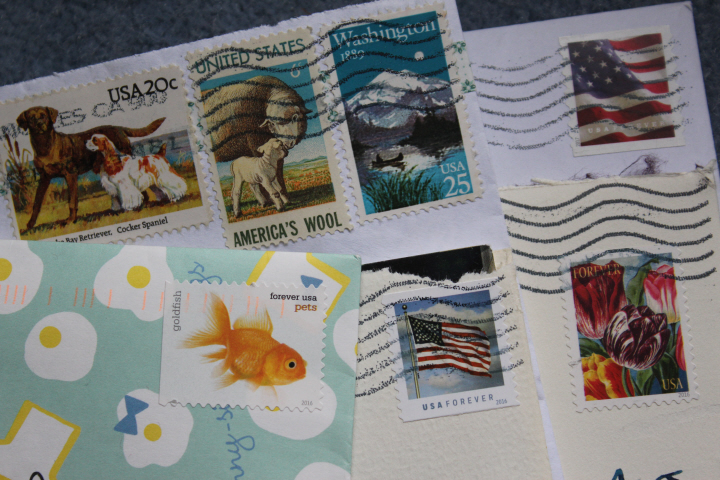
    Just discovered, via the Postcrossing blog, that February is the Month of Letters.  This would be a pleasant idea even if it were only to try and write more letters than one usually does, but there is another more active participation level as well.  The challenge part is two-fold — first, to mail at least one item every (postal service) day of the month, and second, to write back (by mail, mind) to everyone who writes to you.  I joined Postcrossing a few months ago, as I said before, because I miss not just the delight of finding something personal in the mailbox, but because I also miss the pleasure of sitting down and writing by hand, of thinking — if even just for a few minutes at a time — of the person I'm writing to, the reality of them, and the feeling of connection to that person, and thus the world, that that brings.

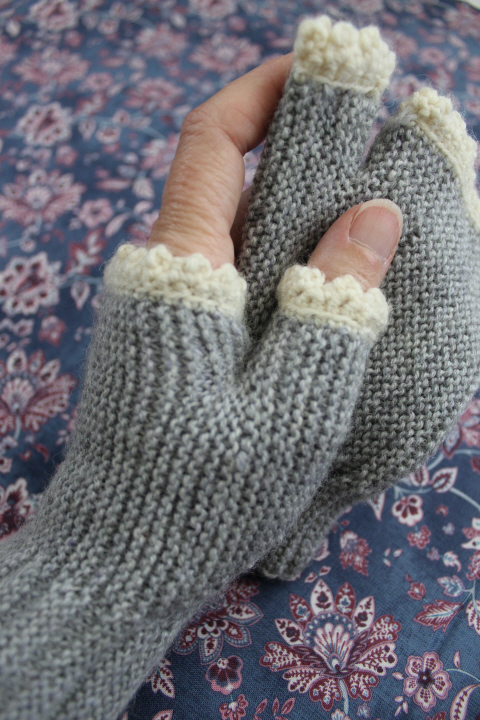
    Obviously, I've missed the calendar beginning of the challenge, but I am not far behind, and have already today inadvertently made it to 2 postcards sent, having woken up wide awake in the dead of night and half an hour later thinking, "well, I might as well get up and write a postcard, eh?!" and I wrote two, one for Postcrossing and one half-forgotten Christmas thank-you.

    I am not participating officially, as a signed-up member of the Month of Letters group I mean, but I am certainly going to take the challenge!  If anyone would like to help me reach the "letters sent" goal, feel free to leave a comment including your e-mail in the box provided on the comments form, and I'll reply off-blog so that you don't have to leave your address in public view.

    2018-LetterMoBlueSm

  • Cloughmills-crochet-knitting-image-hooks-village
    Three cheers for the ladies of Cloughmills Crochet Club in Co. Antrim! who have recreated their village in crocheted and knitted miniature.  This looks like it was a lot of fun!

  • Mini Friday

    1542

    I've been fiddling with miniatures this past week, making little things for the regular "raffle" swap at our meetings — if you win something, you bring something to be raffled the next time (so usually everyone brings something!). There is usually an extended theme or project for the group, and the one we've just started is "nautical" — not sure what that means, as I missed last month's meeting, presumably a room-box of some sort — not that one has to bring swaps that go with the theme, but I wanted to practice my picture-making (since needless to say I have great plans for my own rooms, and happily I am not limited by silly things like money or somebody else owning an Old Master I like!), and so of course I thought, "I'll make some framed seascapes!"

    My mitered corners are still a bit rough — I said to David the other evening, "I'm having a bit of trouble getting the miters true — and clean — what's the secret?" and he looked heavenwards and said, "If you find out, let me know," so I guess I'm not the only one.  And of course slight deviations that aren't really noticeable at full-size are really wonky at 1:12, but there it is.  These didn't turn out too badly, despite my wobbliness, so on the whole I'm quite pleased, and I really like the pictures, all copyright-free so I can give them away with a clear conscience.  On the left is "Maine Seascape" (1930-45) by the Russian-American impressionist Constantin Alexandrovitch Westchiloff, at top right is an untitled painting by the enigmatic Ken E. who has posted quite a lot of his paintings at PublicDomainPictures.net, and at bottom right is "Rolling Breakers" (1913) by the American realist George Bellows.

    I laid out the pictures to a pleasing 1:12 size on a page in Publisher, then printed them at "normal" quality onto thickish smooth drawing paper.  I have found that sometimes my printer kicks quite a lot at printing on anything other than regular paper, but this piece went through quite easily — I've also found that "normal" is the best setting, as "best" tends to add too much black, and while a lot of old paintings are darker than they should be because of age, when they get shrunk down to 1:12 scale, they can lose too much detail, so I think the sacrifice in "realism" is worth being able to see what the picture is!  I laid a coat of artist's gloss medium over the pictures, both to seal them and to add a bit of texture — I tried to make the gloss look like it could be "brushstrokes" too.
    1528

    The frames are experiments, frankly, but I think ones that turned out pretty well.  The Westchiloff is in some generic molding from HouseWorks, stained with two coats of Dark Walnut from a Minwax pen (two coats was definitely better than one) — luckily for me the dark frame pretty much completely disguises that one of the miters meets for only about half of its length….  The lighthouse is in just some plain 3/8" lumber from a scrap bag I bought years ago, painted with an undercoat of off-white and then two coats of gold craft paint.  The Bellows is in off-cuts of mahogany from when David was practicing cutting that for the Arts & Crafts bed, wiped just once with the oily cloth I was using to apply linseed-and-beeswax finish to my NAME-Day armoire — so I was pleased that not only does it work well with the painting, but it was thrifty and doesn't look it at all!

    1540

    This charmer is the trestle stand (kit no.40072) from House of Miniatures.  All the while the kit was sitting in my cupboard, I had pictured the finished piece in my mind as a dark wood, but when I looked online for images, I found that many trestle tables were a pretty golden sort of maple, so I thought I'd finish it with just the Tried & True, but after one coat thought it needed to be a bit darker, so it ended up having two coats of Danish oil in "Golden Oak" and then three more coats of Tried & True.

    I also banged it up a bit on purpose, to make it look more like it has been around since "ca.1770-1790" — this was surprisingly difficult to bring myself to do!  But I softened the edges quite a bit with sandpaper (unevenly), then took a key to the top —

    1542

    And after some weeks of working steadily at it, then a month or so with it sitting while I tried to decide what to do about the hardware — I finished the NAME-Day armoire!

    1549r
    1549r
    1549r

    I didn't much care for the knobs and handles that came with the kit, and I didn't mind at all making my armoire a little different from everyone else's, so I changed out all four for a set of "brass doorknobs" from Houseworks.  This involved quite a bit of fuss — gluing a strip behind the drawer holes because otherwise they weren't nearly deep enough, and filling the door holes with wood filler and re-drilling holes the right shape.  I didn't get the latter placed quite right, and I'm not sure any of them is quite sturdy enough — one of the drawer knobs popped out after I had put the finish on, and I had to scrape the old glue out of the hole before I could reglue it — but I do like the look of them.

    1551
    1551

    The finish is three coats (just one on the inside) of Tried and True.  This was a real pain to apply, with all of the nooks and crannies, and it seems to take a long time to stop feeling ever-so-slightly oily, but I think the results are worth the bother, and I really like the idea of using the traditional finish.

    1564

    The inside of the wardrobe is something else! Look at all that detail!  This is certainly the most fiddly kit I have ever done to date, and I had some problems with the kit itself (some unclear instructions, the shelves holding the three internal drawers not being wide enough) and some of my own doing (right angles not quite true, inexperience in thinking ahead, etc.), but I managed to either figure it out or come up with a solution that worked.  If I had it to do over again, I would certainly center the two doors more by eye than by distance.

    I'm not sure I really like the laser-cut kits unequivocally — obviously, the amount of detail possible can be had at a much lower cost, but on the other hand, sanding off the scorch marks along every laser-cut edge is not only tedious but risky if one sands too much.  (The door spacing might have been due to this, that the instructions didn't allow enough for removing the scorch marks? I don't know.)

    1564
    1564

    The wood is very pretty — I chose maple, and it has a lovely grain, which the finish really brings out.  I could wish that the different pieces of the kit were matched a little better, as the frames on the doors are a slightly more silvery maple than the golden of the panels and the lower drawer, but there it is.  The drawer front is an exceptionally pretty piece!

    The paper in the background is a vintage wallpaper miniaturized and available free from Jennifer's Printables. After taking most of the photos, I lined the drawers with it! —

    1564

  • 1504

    I happened on the November/December issue of Piecework not long ago, and quite fell in love with their colorwork tea cozy.  Alas, after much poking through my stash, and realizing that the most suitable wool I have — as it happens, the green and purple Queensland Rustic Merino Sport I was only recently using — was not at all the right gauge, and that my 4-cup Brown Betty would clearly get lost in a cozy some 3+ inches bigger all over, I resigned myself to adding the colorwork cozy to my perpetual To-Do list.  But I kept thinking about the skein each of Lamb's Pride Worsted and Brown Sheep Handpaint Originals I've had for yonks — made a rather pretty pair of mittens out of them, worked alternated in a simple all-over check, but the mohair in the Handpaint especially was so scratchy, even on my fairly-durable hands, that I ripped them out and rewound the wool and put it away.  Well, all of that wool and fuzz knitted together would be very well-insulating, though, wouldn't it ….

    1482

    My cozy is a mash-up of a pattern by Keren from Tea by the Sea, which she worked up from an existing cozy knitted by her granny, and Paton's "classic cozy", which produces a very similar result. (If you have a slightly different gauge of yarn, or a different-sized pot, here is yet another version, also modeled on her grandmother's cozy, by Yasmin of Knit, Shear Bliss!.)

    1503

    1503

    The stitch is theoretically easy, but a bit of a pain to work — okay, it's a real pain — you simply pull the floats snugly, to get the "pleated" effect.  Paton's suggest drawing up each float to about an inch, but I found that after a few rows, everything relaxed so much that it just looked bumpy, not pleated, so I ended up pulling the floats quite tightly, and that combined with a tighter-than-usual gauge made the knitting a bit onerous.  Luckily, there isn't really much of it, size-wise, so even feeling like I was working hard, it came together quickly.

    These two yarns do not really go together, being a clearly-different gauge, but they were together in a bag I inherited fifth- or sixth-hand from a local yarn shop that had closed, and the colors are really made for each other (M23 Fuchsia and HP-50 English Garden respectively).  With this particular stitch and at this gauge, you'd hardly know they are really like this! —

    1512

    — and it's a tea cozy, gauge schmage, eh?!

    1482

    The texture on the back is really fascinating with those long, regular floats, and the color shifts are very pretty.  The fabric is I kid you not about an inch thick (2.5 cm), so I expect my tea to stay quite warm.

    1482

    Instead of a pompom, I knitted a piece of i-cord and made a sort of flower for the top.

    1503

    So all in all, I'm quite pleased, and looking forward to a nice cup of tea!

    1510

    1498

  • 1517

    I'm not particularly sorry to see the end of 2017, so here's to good things in 2018!  Above is a stash of hand-me-down RYC Cashsoft in "Mist", headed towards Purl Soho's Foxglove Vest.

    1491

    With the money from my Christmas stocking, I bought something I've had on my miniatures wishlist for a long time, and tossed in a few little "filler" items to qualify for free shipping — these are for the kitchen area of my Elizabethan house-to-be.  On the left is a pair of carboys, which is a vessel for fermenting beer or other beverages.  Not sure I would have bought these particular ones if I had known that they are wood, but there it is — I do really like the color.  (I am not entirely sure that this shape is correct for the period, but the research is part of the fun!)  On the right is a stoneware jug, v. handsome in its serviceable plainness.

    1491

    A pair of "Staffordshire" dogs, I confess because I have a hankering for the real thing!  But these are charming too, and I love the way that they each have their own personality.

    1491

    And this, the sine qua non as it were, a Biedermeier commode kit from Mini Mundus, which will go in the dining-room at Hardy House, with its myriad of curious nooks and crannies, all of them small — so not much room for large furniture!

    While waiting around for Julia at band rehearsals the past few weeks, David and I had the chance to go to more than one of the monthly flea markets, and at the last one I came across this charmer —

    1522

    And I am well into reading a stack of new books!

    1522

    Wishing you a happy new year of lovely woolly things, lots to read, little pleasures, and happy discoveries!

  • 0440

    No, I haven't fallen off the face of the earth — just got busy with things, then busier, and busier — crikey.  I finished both of these knits ages ago, don't even remember when, but it was too warm to wear them.

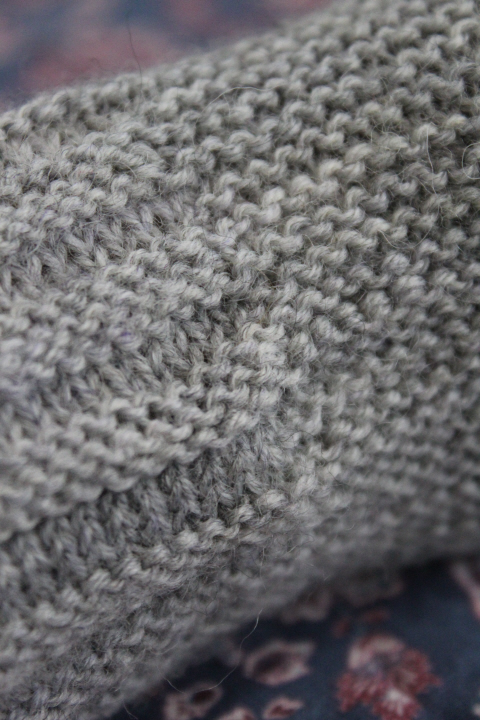
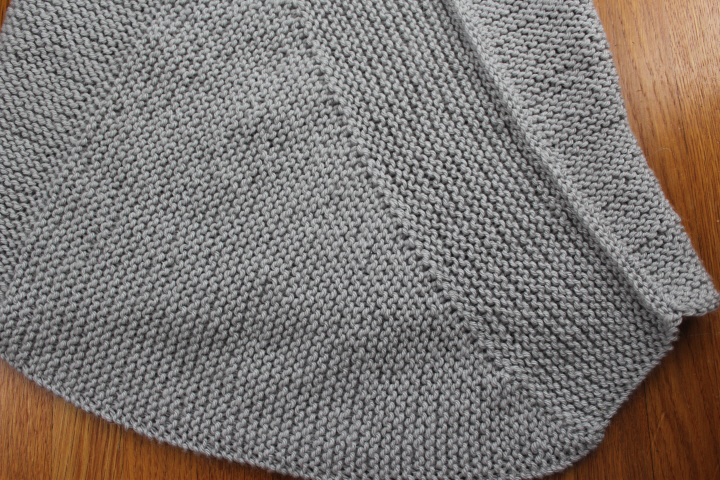
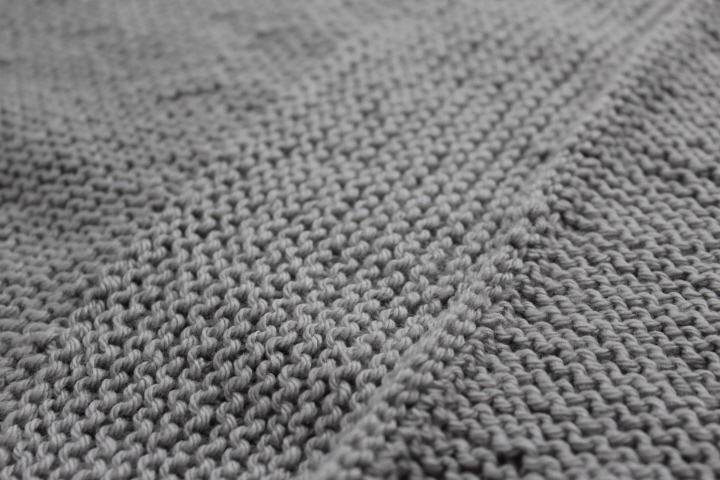
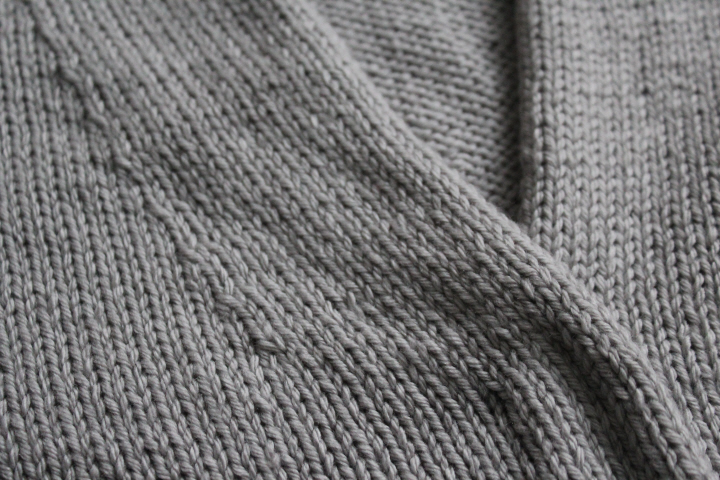
    Both of these are of course in the Queensland Rustic Merino Sport I scored at Tuesday Morning, so they seem to go together.  First is the Nurmilintu scarf/shoulder shawl by Heidi Alander, which is an obtuse triangle knitted on the bias in garter stitch with regular bursts of an easy eyelet lace.  It's very clever and simple, with the added benefit of the bias making the ends swirl all by themselves into really charming shapes, rather like a French curve.

    The wool is a bit rough for a merino, but then you kind of expect that with something called "Rustic", and it's not quite as soft when knitted up as it is in the skein.  It is very nice to knit with, though, with a pleasing springiness to it, and both of the colors I got are rich and deep.  I had a factory-splice in the purple which I tidied up and then ignored, and it is pretty much invisible in the fabric now.  I guess from the lack of availability on the internet that Rustic Merino is discontinued, but if you see it on close-out, it might be worth snatching up!

    0440
    0440
    0440

    I did decide that two skeins really weren't enough, and so I ran back to Tuesday morning and got some more — of both colors! — luckily it was still there.  The Nurmilintu used I think two and a half.

    0440

    The second is the Regina Marie shoulder shawl by Sara Burch.  I've already mentioned my troubles getting used to the lace border, wh. took me an excessively long time, but in my defense it is a 16-row repeat of true lace, different every single row.  It did turn out very pretty, though, once I got the hang of it!  I might recommend perhaps a double YO instead of a single one just to the right of the cable (on the inner side, as it were) as it doesn't stand out as much on the right edge as it does on the left, for some reason — you would just drop the extra YO on the next (WS) row, because heaven knows you don't want to mess up your stitch count, trust me!

    I also tried something a little different, in that instead of just casting loosely for the border, casting off ditto, then at the end working an I-cord bind off across the top of the shawl, I did a provisional cast-on, kept the top edge of the border on a stitch holder, and then worked the I-cord all of the way across, including both the original start and end of the lace border — although it doesn't make an entirely straight edge, because of the difference in angle between the border and the body, it does make a nice uniform sweep of I-cord across the whole upper edge, and was only slightly fiddly.

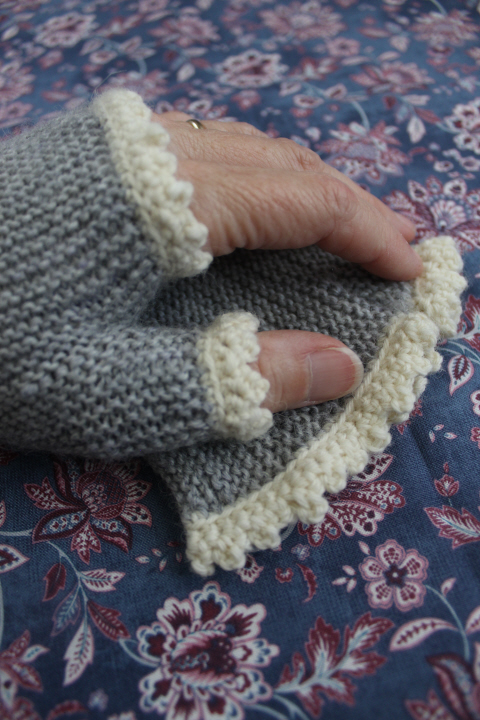
    So I'm very pleased with the little shawls, in themselves and because the yarn was a happy bargain — and now I have enough left for something else, maybe some wrist-warmers …!

    0440
    0440

  • Anders andersson ore husf AI2 image 64 page 60
    This list is a collection over time of words found in Swedish church books, as an aid in transcribing and translating those genealogical records. Examples of a word’s usage are given where helpful or interesting.
    If there are two spellings in an entry, the first is usually the older.

    Plurals and definite article forms are indicated in parentheses following the English.

    The letters å, ä, and ö are distinct letters, and are filed in that order after z.  Note that “aa” is a variant of “å”, and thus is filed after z.

    If you don’t find a word in the list alphabetically, try the “search” tool on your keyboard, as an adjective etc. may be defined under the noun it modifies.

    Please feel free to offer corrections, alternative translations, elaborations, etc. in the comments at the end of each section!

    I have included links to my sources for the more-obscure or difficult definitions and/or to fuller definitions.  Thanks also to members of the SWEDEN list at RootsWeb for their help!

    — Jeanne Smith


    Links to the other parts of the word list:

    A-G

    H-Q

    R-Ö

    *****

    Updated 21 December 2017

    halss-fluss, halsfluss, halssvulst = tonsillitis

                see also strypsjuka

    halsröta = diphtheria

    halssiuka, halssjuka = diphtheria

    hammarsmed = blacksmith working at a large hammer
    handelsidkare = tradesman

    handtverkare = craftsmen (tailors, shoemakers, etc.)

    hemmansbruk =

    hemmansbrukare, tenant farmer [lit. “farm user”]

    hemmanseg, hemmansägare, H. äg. = a person who owns a homestead or farm

    hetsig feber, hetsig siukdom, hetsig sjukdom = high fever

    hetsvulst = inflammated abscess

                see also rosen, kallbrand

    hjärnblödning = intracranial haemorrhage, stroke

    hjärnfeber, hjernfeber, hjärnhinneinflammation = meningitis (meningitis cerebralis)

    hjerninflammation, hjärninflammation = encephalitis (inflammation of the brain)

    hjärnhinneinflammation”, brain inflammation

    hjärtförlamning = heart failure

    hjärtlidande = heart problems (“suffering”)

    hjärtsprång hos barn = fever and convulsions or epilepsy in an infant

                see also tandsprickning, magref, maskar

    hosta = cough

    hufudsot, huvudsot = meningitis

    hufvudwärck = headache

    hujus, huius = Latin, of this (the same, e.g. month)

    hunger = starvation

    husman = cottager, crofter, tenant

    hustru = wife

    Bägga Hustruarnas namn var Carin Jonsdotter”, both [of his] wives were named Carin Jonsdotter

    håll och styng = stinging chest pain as in pneumonia

                see also bröstfeber

    hård mage = constipation

                see also älta, magtorsk, trånsjuka hos barn

    hängt sig = hanged himself

    höftsjuka = usually a tuberculotic hip injury

    Häradsskrifvaren = deputy clerk

    inhyses = lodger

    jordfästningen = burial

    jordfästningen författad av undertecknad”, the burial [was] authorized by the undersigned

    kallbrand = gangrene

                see also kräfveten, hetsvulst, rosen, kallbrand, bulnader, rötbölder, sår

    kamrerare = treasurer (kamreraren, the treasurer)

    kikhosta = whooping cough

    klensmed = smith making small things

    knippsmed = a smith producing knippjärn, iron or steel bars, used as raw material, e.g. for tool manufacturing

    kolare = charcoal-burner (kolaren, the charcoal-burner)

    kolos = carbon monoxide (kolmonoxidförgiftning, carbon monoxide poisoning)

    könstnar = painter (artistic)

                see also målare, painter (of houses, etc.)

    koppor = smallpox

    kramp = convulsion

    kröger = publican (krögerska, female publican; krögerskan, the female publican)

    kronobonde = tenant farmer on crown lands

    krossade = crushed to death

                “krossade af träd i skogen”, crushed by a tree in the forest

                “krossade i grufwor”, crushed to death in the mines

    krossning = to be crushed

                see also benbrott, friska sår

    kräfta = cancer

    kräfveten  = cancer

                see also kallbrand

    krämpor = ailments

    kröger = publican (krögerska, female publican)

    kvinperson see qvinperson

    kyrkoherde = vicar

    kyrktagning = “churching”, the ceremony blessing a woman after recovering from childbirth

    Kyrkvaktmästare, kyrkovaktmästare, kyrkvaktare, kyrkväktare = sexton

    landbonde = tenant farmer, leasing the land from someone else

    lefwarna = conduct of life

    lifsjuka, livsjuka = diarrhea

    likmask = ulcerative stomatitis

                see also barnkräfta

    luckor = gaps

                “med luckor”, with gaps (in the record, etc.)

    lungemfysem, emfysem = emphysema

    lungsot = tuberculosis, consumption

    lägerplats = burial place

    lägerställe = military campsite, or place where a person could lay down to sleep

    Och Herrens molnsky svävade över dem om dagen, när de bröto upp från sitt lägerställe” = “Then a cloud covered the tent of the congregation, and the glory of the Lord filled the tabernacle” (Exodus 40:34).

    länsman = sheriff

    lärare = teacher

    lärling = apprentice (lärlingen = the apprentice)

    lönskaläge = extramarital sexual relations, in this case between unmarried persons; this usually could be proven only by pregnancy.  The penalty was a fine, usually ten riksdaler for the man and five for the woman.

    lösa = loose, can also be used in regard to a person without employment contract

    magflen = gastritis

                see also andtäppa, gulsot, bukref, colik, förstoppning

    mage-ref, magsjuka = stomach disease

    magsvårighet = stomach trouble

    magtorsk =

                see also hård mage, trånsjuka hos barn

    maka = spouse

                ”och dess k. Maka

    marasmus senilis (Mar. senil.) = progressive atrophy of the tissues due to old age (not necessarily senility of the mind)

    maskar = worms

                see also hjärtsprång hos barn, tandsprickning, magref

    medfödd svaghet = congenital weakness.

    mjält-sjuka = disease of spleen, usually pains in the upper abdominal region and left rib.

    also “hypochondria” mental illness (that is, with men; the same symptoms with women were considered as “hysteria”)

    mjölkkastning = lit. “milk-casting, -throwing”, a sickly state affecting some post-partum women; it was thought that sometimes when lactation ceased (for whatever reason) the milk was “cast” instead onto the woman’s internal organs, causing sickliness and sometimes death.

    mjölnare = miller

    moder = a union of two (or more) parishes has a moder (mother) parish, and one or more annex or “inferior” parishes

    morgongåva = a gift often given by the groom to the bride the morning after the wedding.

    myndig, myndige = of age

    mässling, messling = measles

    mästersven = master’s apprentice

    målare = painter (of houses, etc.)

                see also könstnar, artistic painter

    mördade = murdered

    nerffeber, nervfeber = typhoid fever

    niur- och blåsesten = kidney and bladder stone

    njurinflammation = pyelonephritis (renal inflammation/infection)

    non bona nota = (Latin)

    Novembris, 9bris = (Latin) November

    nykter = sober, non-drinker

    nämndeman, nemdeman = juryman, lay judge

    närvarande = present, not absent

    nöddöp = emergency baptism, often performed at home if the child was not expected to live, or sometimes if the weather prevented taking the child to church; an official “confirmation” (bekräftas) of the baptism was expected to follow

    oangifven sjukdom = unstated illness

    obefintlig = absent, whereabouts unknown

    obekant = (cause of death) unknown

    obestämd, obest. = unknown, undetermined

                “Obest. ort”, [in an] unknown place

    Octobris, 8bris = (Latin) October

    oklanderlig = impeccable

    oklandradt, oklandrad = faithful

    olyckshändelse = accident

    oppsättare, uppsättare = possibly a worker setting up a furnace or blast oven for use

    organiskt hjertfel, hjärtfel = organic heart disease (an overall term that refers to any type of heart disease where the heart itself is affected, and doesn’t function as it should, due to a physiological problem, such as a deformity or inflammation)

    orkeslös = decrepit, infirm

    Pasato =

    Karin jonsdotter - dod 1757 nasby

    Näsby (T) OIa:1 (1614-1862) Image 250 / page 407 (AID: v63908.b250.s407, NAD: SE/ULA/11161)

    blef död d. 19 Pasato“, perhaps “passed”? as in “the 19th just passed”?

    penningar = money

    utlagt penningar

    piltebarn = boy-child

    see also flickabarn, girl-child

    plåtsmed = tinsmith

    precis, precist = exactly

                “24 år précis”, 24 years exactly [usually meaning “to the day”]

    puddlare = one who handles the furnace for puddling, a method for converting pig iron into wrought iron (puddlaren, the man who, etc.)

                “puddelugn”, the furnace itself

                “puddeljärn”, the iron/material

    qvinsperson, quinsperson, kvinsperson = a woman who had given birth to an illegitimate child (usually, though not always, used in reference to a woman who had more than one illegitimate child)

                “qvinsp. Lisa Mattsdr.

                “Qv. P. Inh. Maria Greta Hammarström

    Note that this usage was not official or universal, and that in some parishes a woman with only one illegitimate child could still be called “piga”.

    qväfde af mödrar, kväft af modret = suffocated to death under (the) mother; though accidental suffocation certainly could and still does happen, sadly the death of an infant was often blamed on the mother in this way when there was no other visible explanation (e.g. genetic disorder, heart problems, hidden infection, SIDS, all more easily diagnosed today)

                “qväfde af ammor”, suffocated under the (wet-)nurse

                “förqväfd af modern

    qväfning, kväfning = suffocation

  • Eric michelsson - fodde 1681 -  Ore C1 (1670-1735) Image 21 - page 16

    This list is a collection over time of words found in Swedish church books, as an aid in transcribing and translating those genealogical records. Examples of a word’s usage are given where helpful or interesting.

    If there are two spellings in an entry, the first is usually the older.

    Plurals and definite article forms are indicated in parentheses following the English.

    The letters å, ä, and ö are distinct letters, and are filed in that order after z.  Note that “aa” is a variant of “å”, and thus is filed after z.

    If you don’t find a word in the list alphabetically, try the “search” tool on your keyboard, as an adjective etc. may be defined under the noun it modifies.

    Please feel free to offer corrections, alternative translations, elaborations, etc. in the comments at the end of each section!

    I have included links to my sources for the more-obscure or difficult definitions and/or to fuller definitions.  Thanks also to members of the SWEDEN list at RootsWeb for their help!

    — Jeanne Smith


    Links to the other parts of the word list:

    A-G

    H-Q

    R-Ö

    *****

    Updated 21 December 2017

    anno, a:o, a. = year (Latin)

    absens, abs. = absent (Latin)

    absolvera, abs. = (to) absolve (Latin) the penance for the illegitimate birth was performed

    admitterad, adm. = admitted                                        

    afgång, afg. = decease, depart to, departure                

                afgådt, also used sometimes for “resigned”

    afliden, avliden, afl., avl. = (to) expire, die (afliden, the deceased)

                “afl. utan confirm”, death not confirmed

    afskedade, afsk. = discharged, resigned

    afskrift, afskr. = transcript

    afvittring, avvittring = assignment (of an inheritance); the division of inheritance had to be done before a widow or widower could re-marry

    caverar för afwittningen“, “cavera” (from Latin “cavere” = bail, surety) to guarantee, in this case the division of inheritance, by putting up bail money

    andra, 2dra = second

    andtäppa = dyspnea, difficulty in breathing

    angafs = alleged, accused (reported to be)

                “barnfader angafs Jan Persson”, (the) child’s father is reported to be Jan Persson

    ante nuptius, a.n. = before marriage (Latin), usually referring to an illegitimate child

    anmärkning, anm. = remark, annotation

    anständigt = respectable

    arbetare, arb. = worker, laborer (arbetaren = the worker/laborer)

    arbetskarl = laborer, journeyman

    arbetsbetyg, arb. bet. = work permit (certificate allowing looking for work in another parish)

    arf, arv = inheritance, patrimony

    arfvinge, arvinge = heir

    arfskifte, arvskifte = distribution of inheritance

    arrendator, arrend. = tenant farmer, leaseholder

    attest = certificate, testimony, attestation

                “utan attest”, without a certificate (e.g., a moving-out certificate)

    avtyning = languish

    avvitring

                “caverar för afwittningen”

    backstugesittare, backst. = person in a rural area who lived on someone else’s land, at the landowner’s discretion, or on the commons in a small cottage or hut

                compare torpare, who had a lease agreement to use a plot of land

    barn = child, children

    barnhus = orphanage

                “barnhusflicka”, girl from the orphanage

                “barnhusgossen”, the boy from the orphanage

    barnkräfta = ulcerative stomatitis, “child cancer”

                see also likmask

    barnsbörd = childbirth

    i följd af Barnbörd” , [in] consequence of childbirth

    barnsbörd convulsioner = convulsions as a result of childbirth

    barnsbörd förblödning = bleeding as a result of childbirth

    barns hiertsprång = children’s epilepsy, convulsions

    barnsjuka = children’s disease

                “okänd barnsjuka”, unknown children’s disease

    barnsäng = childbirth (lit. “child-bed”)

                “modren dog uti sin barnsäng”, the mother died in [her] childbirth

                “följd af Barnsäng”, [in] consequence of childbed

    begravd = buried

    begrofs i tysthet”, buried in silence (quietly, without ceremony): this usually signifies a burial without ceremony or bell-tolls, after sunset, and in a remote part of the church-yard or in some cases outside the church-yard. This kind of ignominious burial was for suicides (either actual suicides or those who the local priest decided had lived an unchristian life thereby squandering the opportunity for heavenly redemption) or for criminals.

    behållning = remainder, balance

    bekräftas = confirmation of an emergency baptism (see nöddöp)

    bekräftadt af Lundqvist 27/8”, confirmed by Lundqvist 27 August

    benbrott = fracture

    benröts-skador = osteomyelitis

    bergmästare = mine master or foreman

    bergslag = region abounding in mines; mountain district

    bergsman = miner

    berömligt = commendable

    besittningsrätt = right of possession

    beskedligt = modest, unassuming

    betyg = certificate

    bevis = proof, testimony; certificate, attest; confirmation; voucher

    bevistat (läs)förhör = present at household examination (clerical survey)

    bifall = permission

                skriftligt bifall, written permission

                närvarande bifallet, the permission given in person

    bitning = bitten by an animal

    bland annat, bl. a. = among other things

    blifoande = to come, to be

                blifoande hustru, wife-to-be

    blodbrist = anemia

    blodflöd = hemorrhage

    blodhostning = hemoptysis

                see also förblödning

    blodsot = dysentery

    see also rödsot

    blodstörtning = pulmonary hemorrhage

    blodsår = bleeding sore

    blåsesten = bladder stone

    blåsutslag = erysipelas

    bokförare = bookkeeper, clerk

    bokhållare = bookkeeper

    bomärke, bumerke = house-sign

    bonde, bond., b. = farmer, peasant (bonden = the farmer)

                see also frälsebonde, kronobonde, landbonde, skattebonde

    bonddräng = farm-hand

    borgerligt äktenskap = civil marriage

    broder, bror = brother

    brock, bråck = hernia

                “inspärrat brock”, obstructed/blocked hernia (inspärrade = locked in, confined)

    brud = bride (bruden, the bride)

    brudgum = bridegroom (brudgummen, the bridegroom)

    brukare, br. = user, employer; farmer, tenant

    bruksegare = factory manager; factory inspector

    brukspatron(en), bruks patron = the manager, and usually owner, of a forge or blast furnace for the processing of iron

    bråddöd = sudden death

    bräcklighet = frailty

                “ålderdoms bräcklighet”, the frailty of old age

    brännsiuka, brännsjuka, brännesiuka, brännesjuka = high fever

                “hetsig siukdom och brännsiuka”, sudden illness and high fever

                “hetsig feber, brännesiuka”, sudden fever, high fever

    brännskada = burns

    svår brännskada”, severe burns

    brännsår = burn

    bröstfeber = pneumonia

                see also håll och styng, lungsot

    bröstplågor = chest/breast pains

    bröstsiuka, bröstsjuka = pneumonia

    buk-ref, bukref = stomach complaint

                see also colik och förstoppning, magflen, magsjuka, magsvårighet

    bulnader = abscess

                see also bölder, rötbölder, rosen, kallbrand, sår

    byggmästare = builder

    bölder = abscess

                see also sår, bulnader, bölder, rosen, kallbrand

    bänklängd = pew lists

    bär barnet, b. b. = carried the child at christening

                susc., susceptor/susceptrix, the godparent who held the child at christening

    cantor = organist, choir director

    cautionister, caut. = witness, co-signer

    charta belopp, chartæ-belopp = stamp amount, a tax paid at each marriage, ostensibly a fee for the stamped paper used for the banns

    charta sigillata = lit. “stamp paper” (Latin), a tax paid at each marriage, as a fee for the stamped paper used for the banns

    cholera asiatica, kolera asiatica = Asiatic cholera

    cholera nostras = “domestic cholera”, usually a typhoid fever or another disease caused by bacteria salmonella 

    Christendomen = Christian knowledge

                “oförståndig i Christendomen”, unwise (unlearned?) in Christian knowledge

    Christeligt, kristlig = Christian

    cognatus = related (Latin)

    colique, colik = colic

                see also bukref, förstoppning, magflen

    conjugata = married (Latin)

    convulsioner = convulsions and cramps of limbs

                see also fallandesot

    copulatus, cop. = married, marriage (Latin)

    copulerad, cop. = married

    crono, cr. = pertaining to the Crown

    crono hem, cr.h. = Crown-owned home

    Decembris, 10bris = (Latin) December

    derstädes = in this place

    som föddes derstädes” = who [was] born in this place

    diarrhé, diarrhoea = diarrhea

                see also utsot, rödsot, durklopp

    Dopförrättare = baptismal officiants

    Dopsedel = baptismal certificate

    also dopattest

    dotter = daughter

    dragsiuka, dragsjuka = ergot poisoning causing cramps and convulsion

    drunknade = drowned

    drunkning = (a) drowning

    durklopp = diarrhea

                see also utsot, rödsot

    döde = died

                “döde af okänd händelse”, died of an unknown cause/event

                “döde af starka drycker”, died of strong drink

                “fundne döde på marken”, found dead on the ground

    dödfunnen = found dead

    döpa = to baptize (döptes, past tense passive; döp, simple past tense)

    ejusdem = of the same (Latin)

    eldvakta = fire guard, one who looks after the fire

    enfaldig = simple, stupid (not usually in a judgemental way, but as in mentally disabled)

    något enfaldig”, somewhat simple

    högst enfaldig”, exceedingly stupid

    enke = widow (enken, the widow)

                “då varande Enkan”, the present widow

    fallandesot = epilepsy (lit. falling sickness)

    feber = fever

    febrar af alla slag”, fever of all kinds

    fistlar = fistula

    fjerdingsman = under-bailiff of a härad (hundred, an administrative district)

    flussfeber = catarrhic fever, inflammation of  the respiratory canals

    fläckfeber, fläcktyfus = typhus

    folio = (Latin for “leaf”) refers to a “spread”, i.e. the left and right sides having the same pagination (page numbers)

    “page” or “sida” usually refers to that number in the same volume; “folio” usually means that number in another book in the same time period (e.g. “f.214” in book AI:16C leads to page 214 in book AI:16B)

    framlidne = (the) late

    framl. Anders Andersson”, the late Anders Andersson

    frälsebonde = tenant farmer on the land of a member of the nobility

    fråssa, frossa = malaria

    see also älta

    frusen till döds = frozen to death

    furirskytt = [senior] corporal rifleman

    fältfeber, fältsjuka = “battlefield fever”, “battlefield disease”, usually typhus

    fästehjonen = the betrothed people (i.e., couple)

    föddes på nyt = born again, i.e., baptized

    födelse = birth (födelsen, the birth)

    dog omedelbart efter födelsen” = died immediately after the birth

    födelselängd = birth record

                “födelselängden svårläst”, birth record difficult to read

                “födelselängden saknas”, birth record missing

    förblödning = bleeding to death

    see also blodhostning

    fördelstagare = generally, an elderly person or couple who handed over his/their farm to an adult child, making up a contract for the benefits etc. that the child would give the parent(s) in compensation

    note that the meaning differed in different areas of the country

    Förenta Stater = United States (Förenta Staterna = the United States)

    förgiftning = poisoning

    förlamning = paralysation

    förqväfd = see qväfd

    förre = former (den förre, the former)

    f.d. [före detta] Hammarsmed

    Den förre bl. Enkl. i 1843 Febr. och den sedn. Ea. 1842 13/5

    förstoppning = constipation

                see also bukref, colik, magflen

    försvarligt = justifiable

    gemensamma = joint, (in) common

    Gemensamma Dotter Johanna Maria,” their daughter together, Johanna Maria (i.e., the husband’s and wife’s daughter as distinct from their own children from previous marriages)

    gesäll = journeyman

    gickt, gikt, gigt = gout

    giftoman = the person responsible for the bride (the one who “gives her away”)

    Brudens vägnar närvarande Husbond Mr. Eric Kvarnström vid Nedre Nyhammar. Ingen närmare giftoman”, no closer guardian

    gjuteri arbetare = foundry worker

    godkänt, godkändt = approved

    grufarbetare, gruvarbetare = miner (grufarbetaren, the miner)

    gudfruktigt = God-fearing

    gul-sot, gulsot = jaundice (lit. “gold/yellow sickness”)

    gången = time

    första gången”, the first time

    andra gången, 2dra gången”, the second time

  • Ambrosius qvarnstrom dod 12 jan 1822 orsa FI5 AD image 97

    This list is a collection over time of words found in Swedish church books, as an aid in transcribing and translating those genealogical records. Examples of a word’s usage are given where helpful or interesting.

    If there are two spellings in an entry, the first is usually the older.

    Plurals and definite article forms are indicated in parentheses following the English.

    The letters å, ä, and ö are distinct letters, and are filed in that order after z.  Note that “aa” is a variant of “å”, and thus is filed after z.

    If you don’t find a word in the list alphabetically, try the “search” tool on your keyboard, as an adjective etc. may be defined under the noun it modifies.

    Please feel free to offer corrections, alternative translations, elaborations, etc. in the comments at the end of each section!

    I have included links to my sources for the more-obscure or difficult definitions and/or to fuller definitions.  Thanks also to members of the SWEDEN list at RootsWeb for their help!

    — Jeanne Smith


    Links to the other parts of the word list:

    A-G

    H-Q

    R-Ö

    *******


    ref = pain, difficulty

    risen = rickets

    rosen = erysipelas

    rothjon = pauper

    rus = drunkenness

    rusthållare = cavalry-providing farmer (a title), one who provided the army with a cavalry soldier plus horse and equipment

    rustmästare = an underofficer (non-commissioned officer) responsible for the care of the armory, weaponry, and ammunition within a company

    ryckningar = convulsions

    rättare = a foreman on a large farm

    rödsot = dysentery

                see also diarrhé, utsot

    rötfeber = high fever with symptoms of bodily decay

                see also fläckfeber

    rötsår = rankling sore

    sammastäd = same place

                “der sammastädet”, of the same place

    senare, sednare [?] = latter (den senare, the latter)

    Den förre bl. Enkl. i 1843 Febr. och den sedn. Ea. 1842 13/5”, the former was widowered in February 1843, and the latter widowed 13 May 1842

    Septembris, 7bris = (Latin) September

    septimanas = (Latin) weeks

                “ætas 2 menses 3 septiman: 2 dies.”, aged 2 months, 3 weeks, 1 day

    sjelf-mördare, sielfmördare, sjelfmördare = suicide (lit., “self-murder”)

    sjuksvard = one who cares for the sick, nurse

                “sjukvårdskorpral i flottan,” pharmacist’s mate in the navy

    skarlakansfeber, scharlakansfeber = scarlet fever

    skattebonde = farmer who owned his land and paid tax to the crown (similar to yeoman farmer)

    skogvaktare = forester, gamekeeper

    skrifta = shrive, confess

    skriftlig och samtyckt = written and consented

    skräddare = tailor

    skörbjugg = scurvy

                see also vattensot, andtäppa, gulsot

    slag = stroke

                sometimes any sudden death where the cause could not be determined, esp. in the case of an infant

    slagne af åskan, slag af åska = killed by a lightning strike

    slagt = kindred

                “Ej slagt”, not related, not kindred (on a marriage record)

    slut = end

    slutet af Socknen, Socknens slut, Socknens ,  literally “the end of the parish”, an area were poor people were allowed to have cottages

    smittkoppor = smallpox

    smittosam sjuka = infectious disease

    snickare = carpenter

    spiksmed = nailsmith

    spågumme = seer, clairvoyant, fortune-teller (female)

                “spågubbe”, (male) fortune-teller

    spögubbe = sexton; depending on context, this could mean either the sexton of a church, who sometimes during services carried a rod with which to prod sleeping church-goers, or a provost whose task was to carry out floggings.  (Språkdata, University of Gothenburg: “Spögubbe a) kyrkvaktare, som hade till uppgift att i kyrkan med ett spö väcka sovande åhörare, b) profoss med uppgift att verkställa spöstraff”.)

    stalldräng = groom, stableman

    statdräng = labourer paid partly in money and partly in kind (lodging, grains, milk, etc.)

    stenplåga, sten-passion = pain caused by stones

    stickfluss = choking catarrh, accidental choking caused by a cardiac or pulmonary disease

    stryplungsot, struplungsot = laryngeal tuberculosis

    struptuberkulos

    not the same as strypsjuka (diphtheria)

    strypsiuka, strypsjuka = diphtheria

    stryptvinsot = tuberculosis in larynx

    styng = sharp pain in chest, sting

    studios, studiosus = student, academic

    stämma = constipation

    ställmakare = one who manufactures the chassis or underbody of a wagon on which wheels and wagon body were attached; it can also have a more general meaning of wagon-maker

                “ställningsmakare” [might be a variation or something different?]

    susceptor = Latin, the godparent who held the child at christening (susceptor = masculine, susceptrix = feminine)

    svaghet = frailty

                “ålderdoms svaghet”, the frailty of old age

    svagsint = feeble-minded, insane

    svåger = brother-in-law

    svägerska = sister-in-law

    svällnad, svullnad = lit. “swelling”, abscess, tumor, edema

    svärdotter = daughter-in-law

    svärfader, svärfar = father-in-law

    svärföräldrar = parents-in-law

    svärson = son-in-law

    sår-halssjuka = diphtheria

    såsom, ss = as

    sängeliggande, sängliggande = bedridden

                “sängliggande i sistlidne”, bedridden at the last (i.e., at the end of his life)

    särknamn = farm-name (särknamnet, the farm-name)

    in much of rural Sweden, the farm-name was placed at the end of a person’s names (Anders i Backen, Kerstin Bengstdotter vid Dammen, etc.), but in Dalarna and surrounding areas, the farm-name was placed before the forename (Anniko Lars Andersson, etc.)

    also gårdsnamn

    tandplågor = toothache

    tandsprickning = teething

                see also hjärtsprång hos barn, tandsprickning, magref, maskar

    tarmtvinsot = intestinal tuberculosis

    tillstånds Bevis = certificate of permission

    och Compagnie Chefens tillstånds Bevis”, here probably a soldier who had his company commander’s written permission to marry

    timmerman = carpenter

                also snickare

    tjenst, tjänst = service (employment as a servant/helper)

                “Man nu i tjänst på”, [he is] now in service at …

    torpare = crofter

    torsk = thrush (candidiasis)

    troligen = probably

    trånsjuka = languishing

    tvinsot = consumption (tuberculosis)

                see also mjält-sjuka, trånsiuka

    tyfus, typhus = typhus until the end of 19th century, after that typhoid fever

    upplöst = dissolved

    upplöst hjonelag, upl. hjon”, a marriage dissolved [ended] by the death of one of the spouses

    uppgiven fader = declared father (regarding an illegitimate birth)

    upnått = met

    uppsättare, oppsättare =  one who fills up the blast furnace (masugn)

    urinsot = diabetes

    utfattig = penniless, destitute (not able to pay taxes)

    utsot = diarrhea

    valsverksarbetare = rolling-mill worker

    vansinnighet = insanity

    vatten i hjernan = water in the head (of children)

    vatten-kräfta = necrosis in facial tissue (noma) caused by an inflammation on an unhealthy baby child

                see also liksot

    vattenstämma, vattustämma = urinary retention, anuria

    vattusot, wattusot, vattensot, vattensvullnad = edema

                see also andtäppa, gulsot, skjörbugg

    venerisk sjukdom = veneral disease, usually syphilis

    vita communis = Latin, way of living, usual lifestyle, character (lit. “common/everyday life”): a description of someone’s (usually a deceased person’s) character

    vita communis: gudfruktig stilla och sachtmodig”, vita communis: [he was] godly, quiet, and gentle

    våda, vådeligen, döde af vådelige tillfällen, vådelig händelse = killed in an accident

                “af våda skadat sig sielfva till döds”, mortally injured in an accident

    vådeligen dödade af andra”, killed in an accident by other people

    döde af egen eller andras våda”, killed in an accident caused by themselves or by other people

    döde af våda”, killed in an accident

    vällsignat, välsignat = blessed

                “är Vällsignat med 4 Barn”, was blessed with 4 children

    värk = pain

    wargerning, vargering = reserve

    wargerningskarl, vargeringskarl“, reserve soldier

    värnplikts-förhållanden = conscription circumstances

    as värnpliktiga förhållanden, in a column heading in some 1900s parish books

    åderförkalkning = arteriosclerosis

    allmän åderförkalkning, general arteriosclerosis

    ålderdomskrämpor = ailments of old age

    ålderdomssvag = infirmities of old age (ålderdomssvaghet, the infirmities of old age)

    årbart = honorable, virtuous

    ägtenskap, äktenskap = marriage

                “träda i ägtenskap med”, enter into marriage with (träder, trädt)

                “trädde han i ägtenskap med”, he took in marriage (with)

    borgerligt äktenskap = civil marriage

    Upplöst äktenskap = dissolved marriage. Note that this does not generally mean that the husband and wife were divorced, only that the marriage itself was no longer in existence, due to the death of one of the spouses

    äkta säng, ägta säng, egta säng = of legitimate birth

    ängelska siukan, engelska sjukan = rickets (lit., the English sickness)

                see also risan