• Broken

    I said, "Well, them's the breaks" to Julia not long ago about something or other, and she said in disbelief, "What??"  So if you're curious, here is a bit about the history of the phrase.

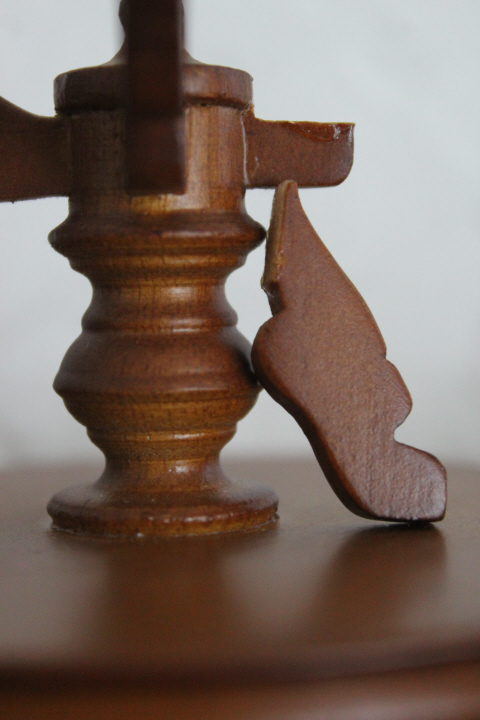
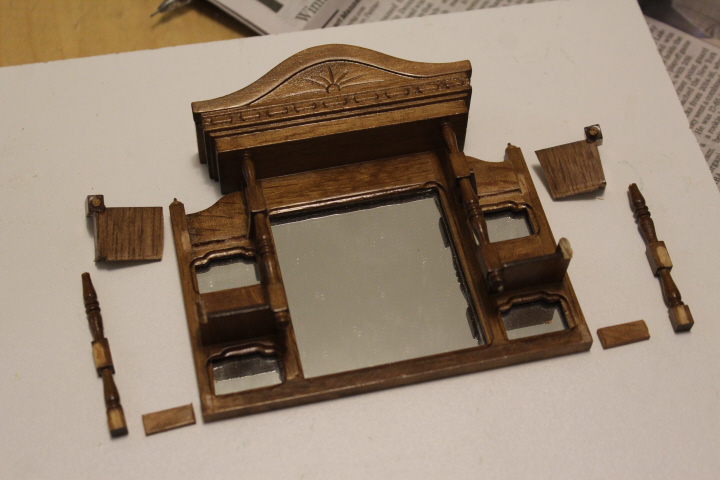
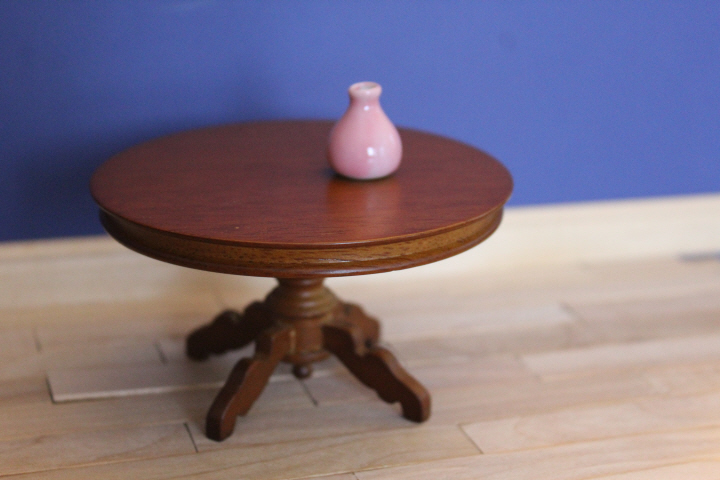
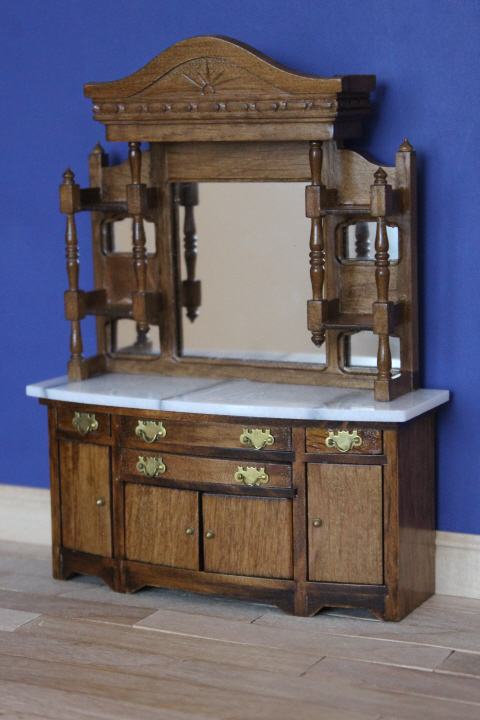
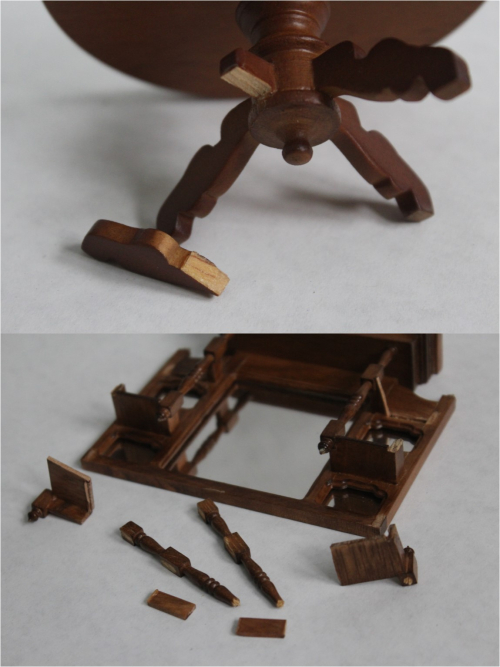
    Sadly, I have a more literal use for the phrase at the moment, since these two miniatures I debated with myself about and saved up my laundry-day nickels and dimes for arrived broken, in the sideboard's case with an alarming six pieces rattling loose in the box.  The seller ("No Returns") was quick enough to offer a partial refund, since I said I would repair them — and so though I was not particularly pleased with the transaction, the pieces themselves are both still quite perfect for my intentions, so there it is.

    4848

    This was clearly an old break, with glue blobs remaining on all surfaces.

    4853

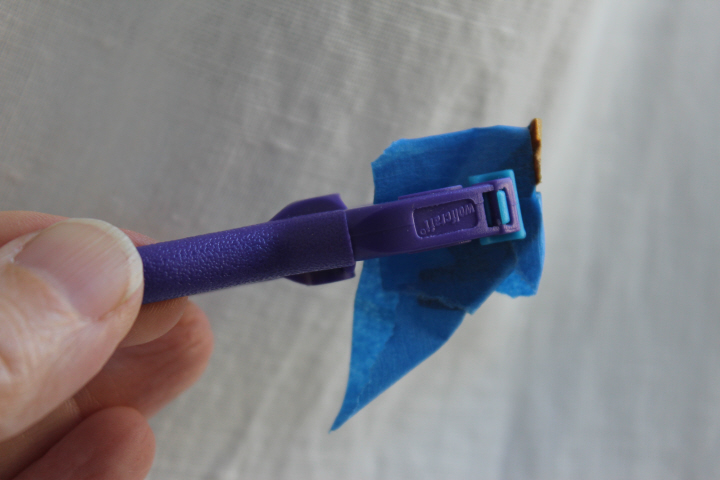
    After some research about repairing wooden miniatures (and full-sized wooden furniture), I decided to start with acetone to try and remove the old glue.  I masked off the rest of each piece, so as not to damage any more of the finish, and carefully dabbed acetone on the dried glue with a brush, and let it sit.  The glue dulled almost immediately, which is probably enough to disguise it — ideally, the acetone softens the glue enough that it can be scraped off. Unfortunately, when I scratched at the leg piece with my thumbnail to see if it was working, a chunk of the old glue chipped right off, so I decided not to push my luck, and just glue the two pieces back together, because I can always position the table with the repair towards the back — and certainly a few chairs around it will help distract attention.

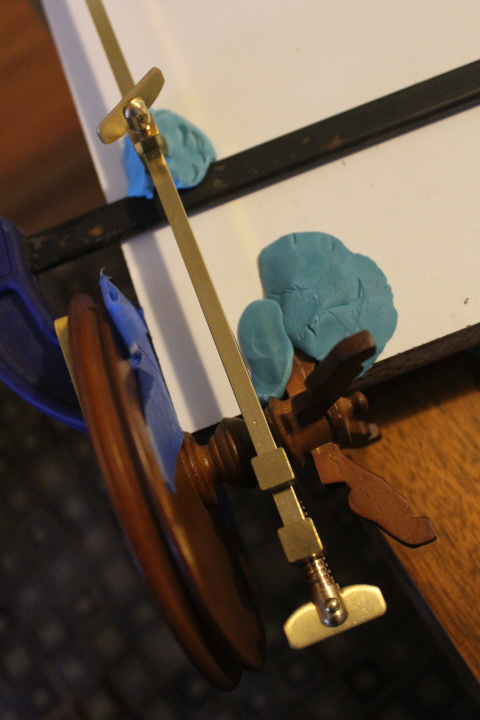
    This brought us to the problem of how to clamp it while the wood glue dried.  (I didn't want to risk superglue, not being sure that at this scale I could get the pieces lined up correctly in time.  Superglue is notoriously unforgiving.)  The straight part at the top of the leg was an ideal place for my little "clothes pin" clamps, but that curve at the underside makes it pretty much impossible to clamp it, either on the leg itself or on the whole piece.  David had bought for me a mini-vise with a rotating and tilting top, so he sat for a quarter of an hour or so, trying to get both pieces to line up securely (it looked like something out of Rube Goldberg, or a "Star Wars" medical droid!), but eventually we came to the realization that simpler was in this case better, and that plain old adhesive putty holds pretty well in lieu of a clamp —

    4858

     Alas, the wood glue did not stick at all, and I could see even as I was loosening the brass clamp that it hadn't worked.  So, superglue it was, after all.

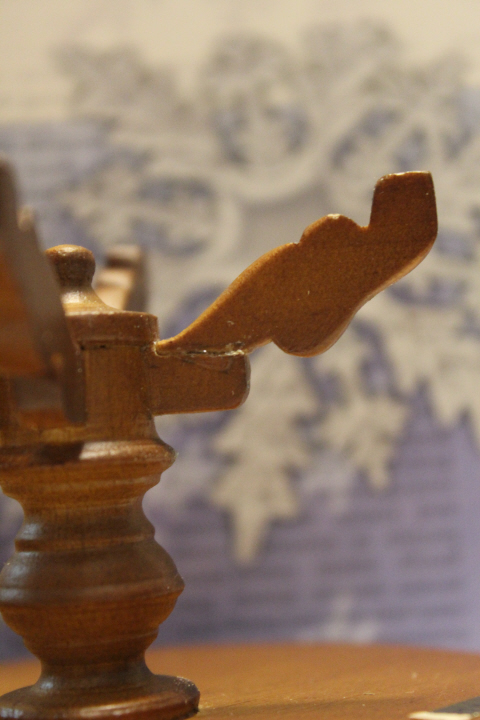
    I laid the table on my jig in much the same position as before, and practiced moving the broken piece into position a number of times, screwed up my courage, and jumped in.

    4885

    (It isn't snowing in my breakfast room, alas — I had to put a card just behind the table to get the camera to focus!)

    The pieces went together quite smoothly — or so it seemed — but either they didn't, or the prep we had done chipped away enough of the old glue or the finish that the join was now wonky.  The repair is fairly noticeable, certainly to the camera and to my contact-lens-free eye.  It is, however, nice and sturdy.  I'm not sure yet whether I will try to file it a little smoother, or just leave it be.

    4871

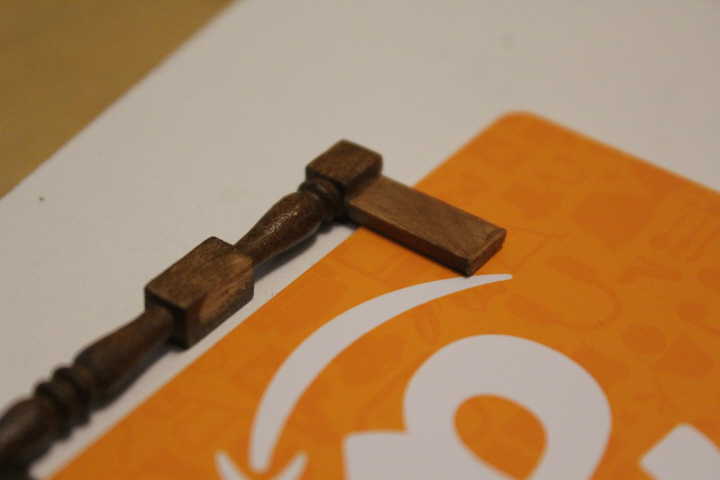
    This was actually my bigger worry — so many joins! such slender pieces!  I took a lot of time to make sure I knew exactly which piece went where — especially those two little side braces — and to lay everything out carefully.  I started with those, as it seemed the most logical first step.  The support was inset just slightly on the bottom block of the spindle, and so it seemed prudent to put something underneath to keep it at the right height as I brought the two pieces together — this was just the ticket! —

    4875

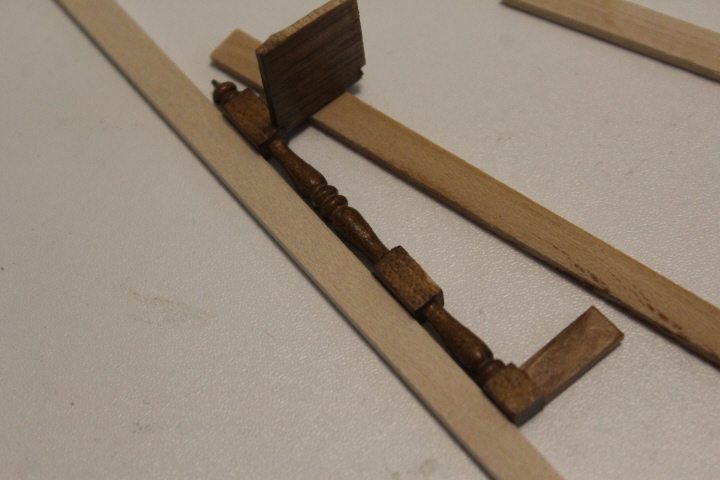
    After that I realized that yes, it would be better to get the splintered tops of the posts glued into place next, seeing as how those seemed to me the most risky and I wanted better access.

    The top shelf, of course, was inset a slightly different distance than the braces, so I hunted up some scraps of strip-wood and chose one to go under the shelf and hold it stable, and used another one as a straight edge to keep the two pieces of the spindle lined up.  This piece was my biggest worry, that I would mash the splintered edges irretrievably, but after I decided which piece went where, and in which direction, the two splintered ends meshed together quite smoothly, even more than once.  It was lucky, I think, that the break was relatively short, so that the splinters didn't have the opportunity to get bend or broken off.

    4878

    The last step was fiddlier, since it involved glue in three separate places – top shelf, middle shelf, bottom brace – and the top shelf needed glue on three sides, but the pieces went in smoothly, and it was surprisingly simple to position the top shelf snugly first, then make sure that the middle of the turned post was butted tightly against the middle shelf, then the same with the bottom brace.

    4881

    4877

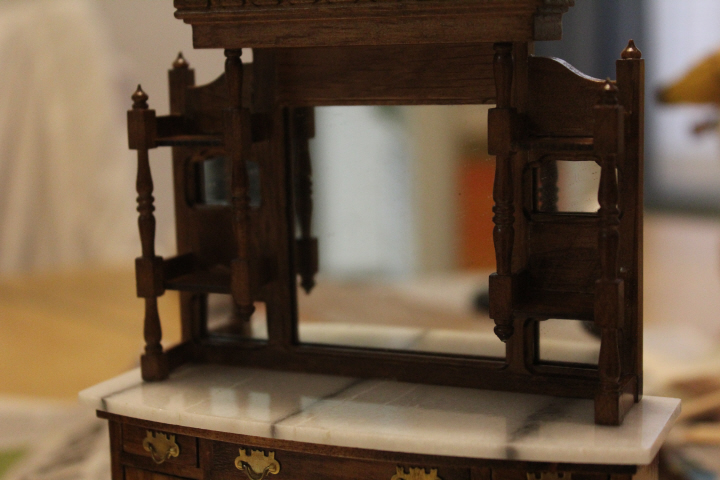
    One of the spindle breaks had some of the finish chipped off before it even got to me, as you can see, but this is facing left, not head-on, as you look at the sideboard from the front, so I think I can get away with just softening it with some felt-tip pen in a matching color — I don't want to push my luck, trying to fill it in!

    So there it is — I can't say "no harm done" about the purchase, more "sadder but wiser," but I am still really pleased with the pieces themselves.  The table is a lovely color and finish, and is I think a nice balance between economy and quality of scale, and I must say that I am really delighted with the sideboard, its handsome marble top and that gaudy Victorian more-is-more decoration that here I feel gets awfully close to the "ugly" tipping point but somehow doesn't quite spill over, and instead remains just cheerfully exuberant.

    4895

    4898

  • Craeft

    Okay, so I've had this post sitting in the drafts folder since February — which I suppose is perfectly appropriate for a post inspired by a book that I really want to read but keeps getting passed over for other ones, for a myriad of reasons and all of them probably quite good.  I have long enjoyed watching the "Historical Farms" series which Alex Langlands has done with Ruth Goodman and Peter Ginn, and of course traditional crafts are an ongoing interest of mine, so I was delighted to find this his book Cræft — which I understand is not a how-to book, but more of a why-did-they one.  I remember, alas, sitting down with it one afternoon, and the door-bell ringing or some other flimsy interruption, and there it still sits on the end table, floating upwards in the stack now and then (as it were) as other books come and go.
    Craeft

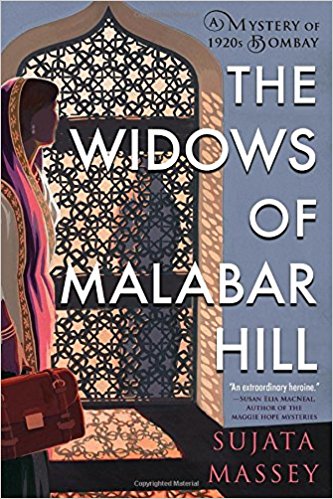
    This was on the new-books shelf at the public library — Sujata Massey's The Widows of Malabar Hill.  I am quite aware of my tendency towards "cosies" — and I think, the Wikipedia notwithstanding, that it should be spelled in the British manner, at least here since I certainly gravitate to the British ones far more often — and so I decided, standing there at the public library, that since the book sounded intriguing, I would not after all pass it over in favor of a long-put-off Agatha Christie reread, say (tempting though that is ….).  I enjoyed the book very much, as it happens, which just goes to show — and it apparently bears repeating, both to myself and to the world in general — that one should extend one's horizons at least now and then.  Massey's heroine approaches what I was just recently decrying, those characters in historical fiction who are anachronistically feminist/socialist/whatever-ist but to my relief and admiration does not seem out-of-place, because she is at that turning-point for young women in which the wider world lay before them thanks to higher education but society still resisted letting them enter.  The mystery itself is well-plotted and intriguing, and the setting of 1920s Bombay has that remarkable balance between exotic and familiar that goes such a long way towards making us realize that other cultures are really just a lot like ourselves.  My only complaint is one that I have had before with historical novels, with characters speaking in a more modern way than they really ought.  No one who spoke British English in the 1920s would say, for example, "rushed across the street" or "on Bruce Street" or "I will call her".  And perhaps more esoterically, I don't really think that people who are rich enough to drive a Silver Ghost — old-school English people, I mean — would actually refer to it as a Silver Ghost.  To my ear, they would just say "the Rolls" or even more casually, "the motor", and only parvenus would be any more particular than that.  But certainly I just feel that if a writer is interested enough in a particular time period to set a novel in it, it should be little trouble to expend a little effort to find out how they behaved and how they spoke.

    Prairie fires

    I don't actually get to go to Vroman's a lot any more, but when I do, it's almost always far more than worth the journey. I saw Caroline Fraser's Prairie Fires there over the (last Christmas!) holidays, and of course was intrigued — read the first few pages there, and bought the book.  (I have learned to be rather skeptical of the usual unstinting praise on a dust jacket — "an instant classic", "riveting", "a new voice in fiction" — but the three on the back of Fraser's book are not only considerably longer than the usual Twitter-friendly bite, but all three came from authors I have read and appreciate in varying degrees, and Elaine Showalter was in fact the subject of my senior thesis.)  Fraser's is an excellent book, well-written and perceptive, objective yet clearly regarding the Little House books – and thus Laura Ingalls Wilder – with great respect. I never really took to Rose — she always seemed to have an air of condescension about her, even from the first time I heard her voice, in On the Way Home – but I remember reading The Ghost in the Little House and feeling sympathetic to her as a person, though still more than a bit resistant to the notion that Rose’s hand in the books was so thorough as to tip the percentage so much in her favor as Holtz describes. Who is right? I wonder if it is possible to tell — I wonder if Laura and Rose really knew themselves. I think that Fraser really does try to be objective, because she rationalizes much of Rose’s behavior, her peremptoriness, the incessant house-making and “adoptions”, by offering possible reasons, though towards the end it’s clearly very difficult. (Another writer, from "The New Yorker", offers this: “By the time that Laura published her first book, Rose was a frumpish, middle-aged divorcée, who was tormented by rotten teeth and suffered from bouts of suicidal depression, which she diagnosed in her journal, with more insight than many doctors of the era, as a mental illness.”) And conversely, Fraser tries to explain Laura’s need to smooth out the difficulties of her life, making the book feel that much more careful and objective. On a side note, I was flabbergasted — there is no other word, really — to find that Almanzo had written in Laura’s autograph book circa 1883, “Friend Laura No Pearl ever lay under Oman’s Green water more pure in its shell than thy spirit in thee. Yours Truly, A. J. Wilder”. Here I am thinking of him as a laconic, unromantic farmer — unromantic, little-educated farmers don’t quote “Lalla Rookh”! How is it that I have never heard this story before??
    Down the garden path

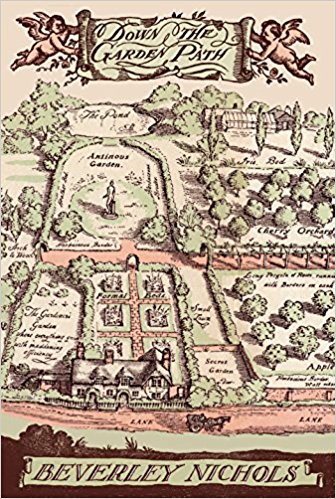
    I remember reading, many years ago, a number of books by Beverley Nichols about his house and garden deep in the English countryside, and being delighted with their wit — and then finding much later, when gardening itself began to interest me, that Nichols was apparently regarded by public librarians in general as outdated and not worth keeping — at least not in Southern California — for there was not a one left anywhere.  ("I live in a desart, sir, thow it paines me to saye it.")  I decided to add the first one, Down the Garden Path, to my wish list, duly received it for Christmas, and began to read.  Well, like the curate's egg parts of it are still excellent, but others … not so much, and I'm afraid that this also became for me one of those books that sat around half-read for months — though as it happened Julia read it and says she enjoyed it, but she has a more sarcastic sense of humor than I do, so perhaps she didn't really notice Nichols's frequent cattiness.  I didn't realize, in my naive youth I guess, how camp he could get, either.  It is entirely possible, of course, that he didn't really hit his stride until later in his writing career — this was the first of some dozen books on gardening, and he was equally prolific in a number of other genres — and so I will recommend it with, as they say, reservations.
    Word by word

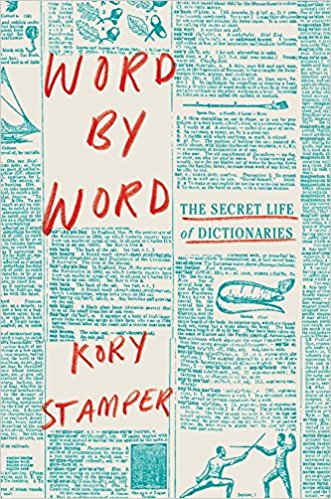
    A friend gave me Kory Stamper's Word by Word, knowing that I love words, their evolutions and etymologies, their solidity and liquescence. (!)  Stamper writes dictionaries — yes, somebody actually does that, sits down and researches what a word means, where it came from, when it was first used, whether its usage has changed or remained the same over the years, and then decides how best to distill all of that into a manageable "definition".  Stamper's enthusiasm for her wonderfully geeky job is infectious and engaging, as well as often hilarious, and I would recommend it without hesitation for word-lovers of all ages were it not that her writing is also pretty salty at times.  English is a richer language for the four-letter words, to be sure, but I still would rather they weren't sprinkled throughout everyday conversation when they are only modifiers, not topics of study themselves.  But that is my only beef with the book, to be sure!

    51IQFnQj-3L

    I picked this up at Vroman's too, caught by the Barbara Pym chapter — What She Ate by culinary historian Laura Shapiro, essays on six seemingly-disparate women throughout relatively-modern history, each of whom intrigued Shapiro by her connection with food, some positive, others not so much.  Pym, it turns out — whom friends have been telling me for years I should read, and whose diary I long ago galloped through, finding her no small kindred spirit — Pym used food in her novels as a way of showing character, that the meals her "quiet women" heroines ate or made for themselves were not the drab, lonely stereotypical white sauces and cold shapes that had already gone a long way to giving English cookery its bad reputation — or that those who do serve dry rissoles and "stringy cabbage" are, if not to be censured — for Pym I think rarely has villains per se — then certainly to be quietly pitied.  Shapiro spends some time looking at a particular meal, cold chicken in white sauce, because not only does it play a large part early in Pym's novel Some Tame Gazelle but is in remarkable contrast to one recalled with horror by Julia Child in the 1950s, and appears in a popular 1935 cookbook not the way Child describes it, but the way Pym does, with its "sharpness added by the slices of lemon".  I admit that I had not paid much attention to how novelists use food as a way of revealing character — if indeed they do at all — only perhaps the way that Laura Ingalls Wilder, used as she often was herself to hard times and making-do with little, contrasted to those her husband's boyhood meals where the table practically groaned with buckwheat cakes, oatmeal with cream and maple syrup, sausages and gravy, and pie, just for breakfast.  Shapiro is an excellent writer, and all of her essays are worth reading — the six women are Dorothy Wordsworth, Rosa Lewis (the inspiration for "The Duchess of Duke Street"), Eleanor Roosevelt, Eva Braun, and Helen Gurley Brown, some of whom admittedly I would not have given a second glance but whose stories have opened my eyes to a different way of looking at people and their relationships to food.
    9780525136408-us

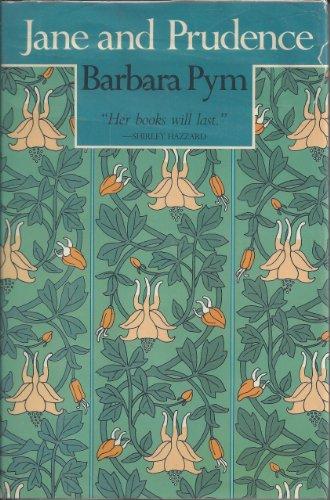
    I'm pleased to say that Shapiro's book also prompted me to dash over to the library, where I chose Jane and Prudence from the rather-appropriately few books left of Pym's, plain and easily-overlooked, entirely appropriate to what Shapiro calls Pym's "minor-key world located well back from fiction's cutting edge".  I enjoyed the book quite a lot, and the next one I chose, No Fond Return of Love, though I will say that it took a little while more for me to feel involved with the latter, but perhaps this is because I found the object of Dulcie's quiet obsession to be rather repulsive — though I suppose this can also be a credit to Pym, for who has not been either in that position or that of the friend looking on, who finds the passion incomprehensible?  I had the feeling even early on that Pym might be "Austen-like", as so many readers describe her, in no small part because it is in the re-readings where her humor blooms most fully, when one knows what is coming and savors the anticipation.

    51wOo0U4BNL._SX324_BO1 204 203 200_

    Penelope Lively's memoir A House Unlocked is one that I'm afraid got jumped over quite a lot, and it deserves better, though I suppose the format Lively chose allows the reader — unlike with, say, a mystery novel — to read a chapter and set it down and come back to it some time later without much difficulty, for instead of a traditional memoir, what she has done is to take objects and rooms from her grandmother's house, where Lively herself spent much of her childhood after moving back to England from Egypt at age twelve, and use these  not only to remember the family members and their way of life around the turn of the last century, but also to consider more sociological and philosophical aspects that the various objects lead her to think about.  This sounds rather dull on the face of it, but the effect is like having tea with a great-aunt — a widely-read and thoughtful great-aunt — and listening to her talk, ostensibly about her childhood, but leading from there, as so often does with thoughtful people, to all sorts of topics.  Her own bedroom at her grandmother's house, she begins in one chapter, had formerly been her late grandfather's dressing room, and this leads to ruminations about the domestic arrangements of middle-class marriages in her grandparents' day, and the differences between their marriage, with their almost-completely separate spheres, and Lively's own more modern one, and from there to the ways of raising children that her grandmother and her contemporaries espoused and the post-Freudian, post-Dr.-Spock way that we do now — and Lively is not judgmental here, either, for while she recognizes the benefits of modern marriage and parenthood, she regards the "old-fashioned" ways with a gentle if somewhat bemused tolerance.  (I wonder myself sometimes, if that post-Freudian, post-Dr.-Spock philosophy doesn't make us too selfish, that in a way our lack of self-control and consideration for others that so many decry now as "just 'manners'" leads people to believe that their own needs come first over anyone else's, from running red lights to shooting people one doesn't even know.  This is not to say, of course, that things were always better in the "old days," for intolerance and racism are not new inventions.)  The effect of Lively's style and format isn't really "chatty" — more discursive, I think, and somewhat elegiac, but fascinating if you don't mind rather slow-moving digressions and philosophical meditations, which I don't!

    Maybe I will get back to Cræft soon …!
  • 651

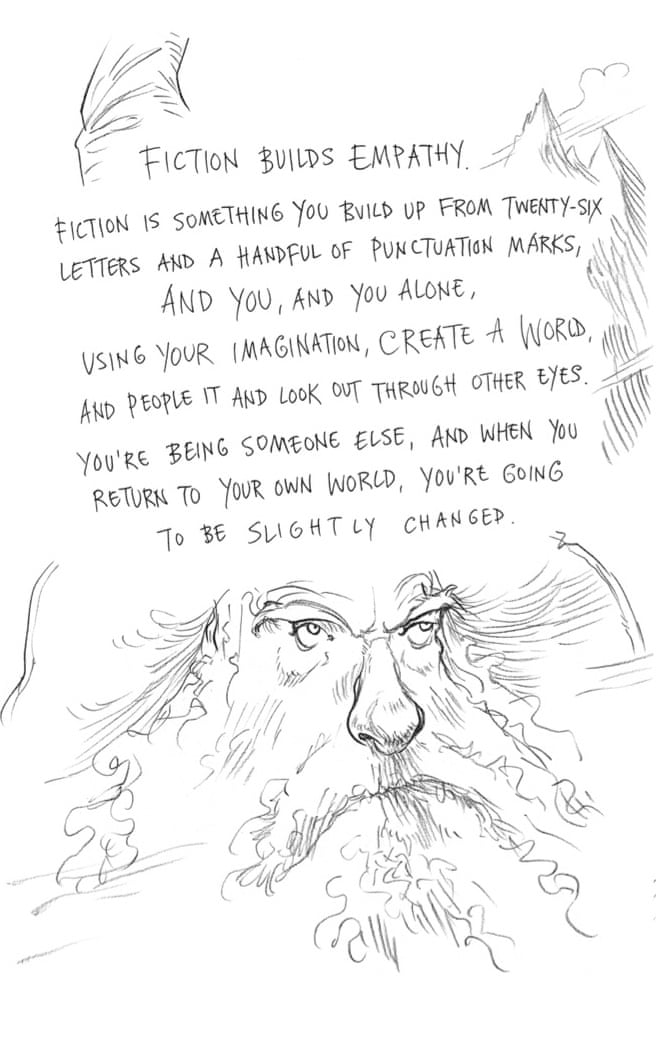
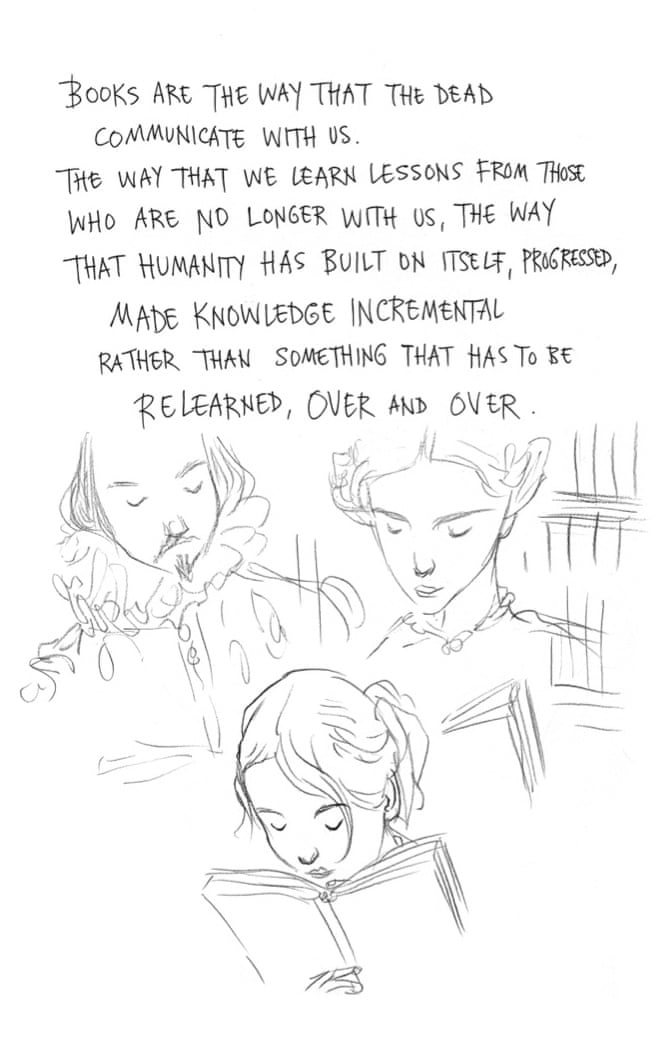
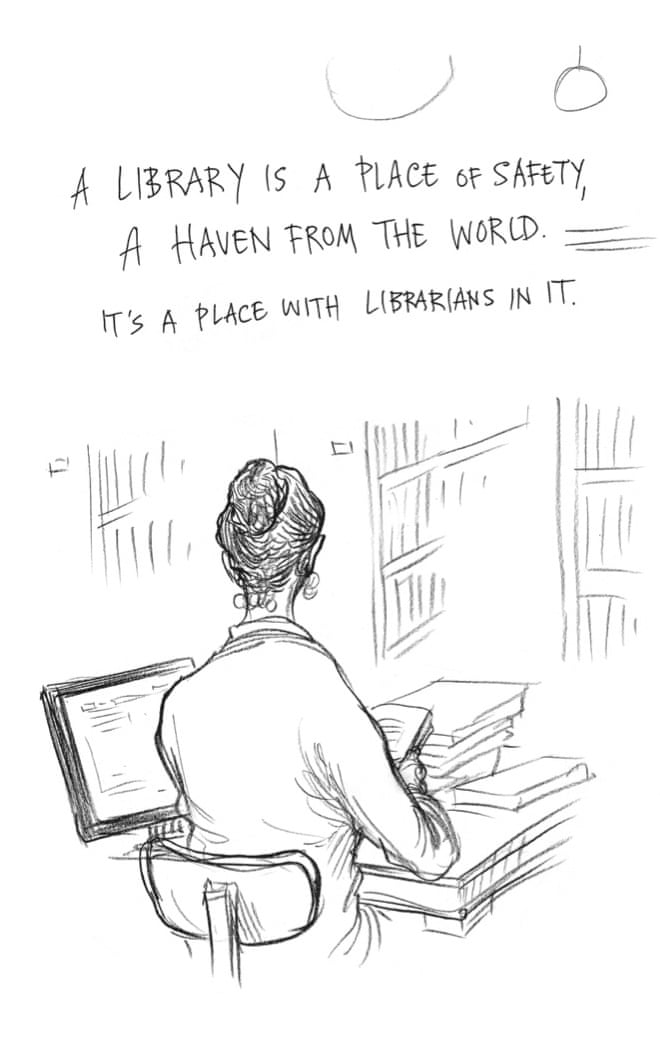
    Here are four remarkable "quotes" from the pictorial essay "Why We Need Libraries" by Neil Gaiman and Chris Riddell, in the Guardian a few weeks ago.

    656

    659

    660

  • Margo jumper 2

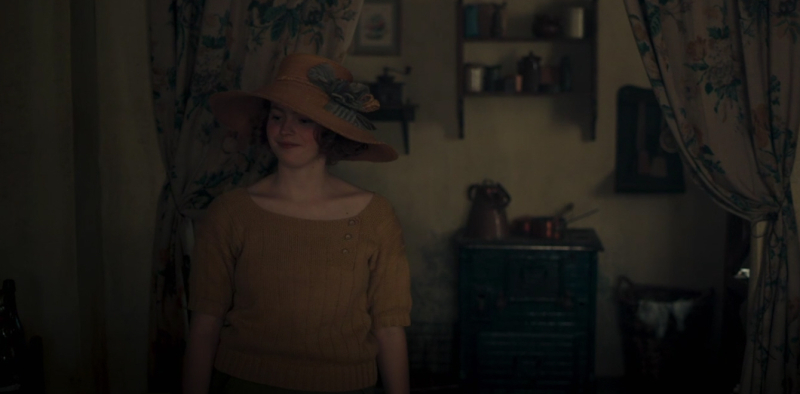
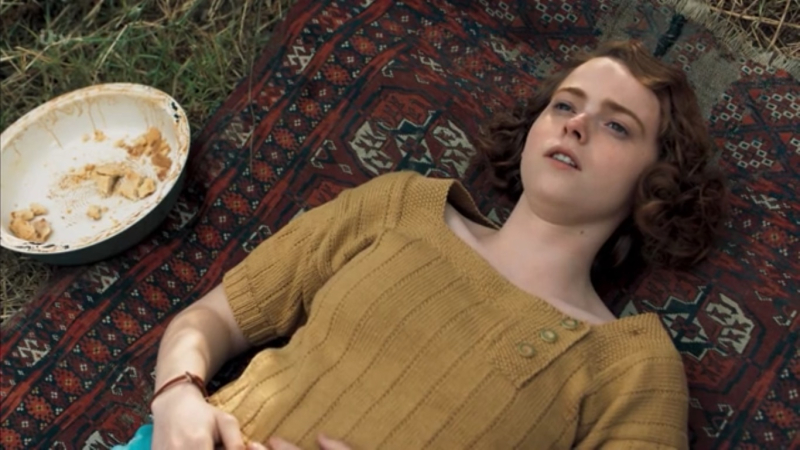
    Watching "The Durrells in Corfu" on Sunday evening, as one does, I spotted this jumper of Margo's, worn a number of times throughout the episode, including in an earlier scene, which is a better view of the jumper itself but darker because it's indoors at Spiro's house —

    Margo jumper

    MV5BNWQ5NzdhMGMtMGIxNC00ZjE5LTljZmYtNGMwNjI3MWU4MGIyXkEyXkFqcGdeQXVyODIxMjk4Ng@@._V1_

    Margo has at least one other knitted jumper, in this scene from episode 4 this season (the one with Larry's friend the Indian prince) —

    WJ8H8y7-asset-mezzanine-16x9-7VxkGgf.jpg.crop.480x270

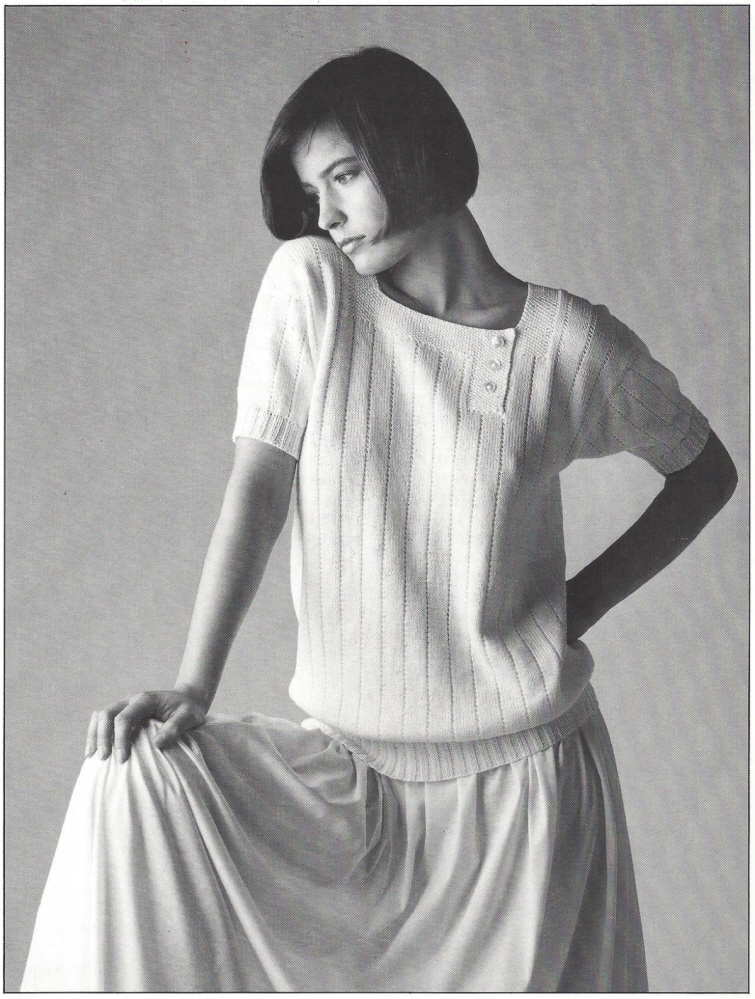
    but it was the mustard-colored one that caught my attention, partly because unlike the striped one it looks hand-knitted, and because it immediately reminded me of one in Marion Foale's Classic Knitwear book —

    Marion foale - badminton jumper

    Foale's version is clearly inspired by the 1930s, and hers — called "Badminton" in the book — is so like the one that Margo is wearing that I wouldn't be surprised if the series costume designer used Foale's pattern, just trimming some of the 1980s hem to a more 1930s length.

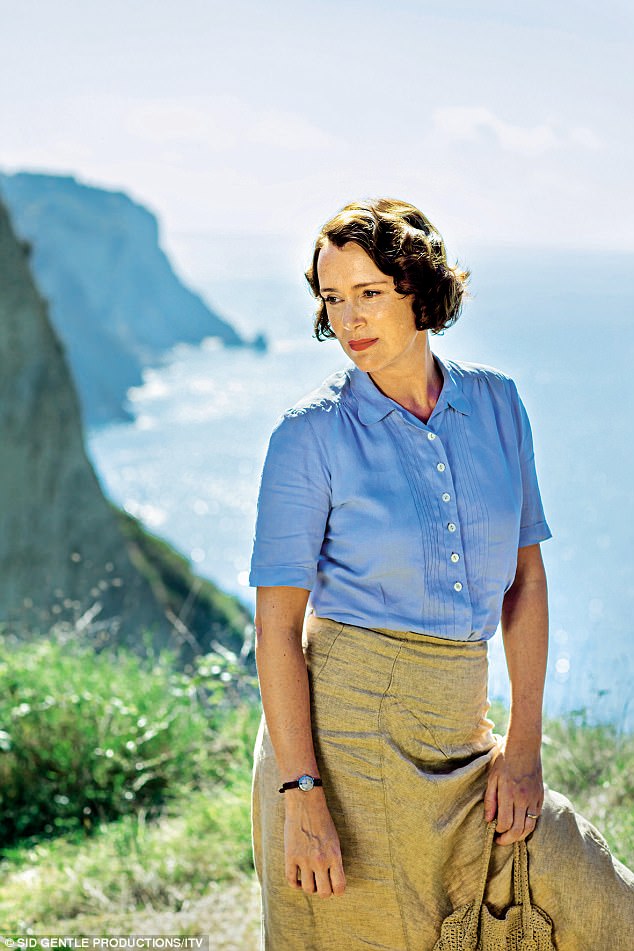
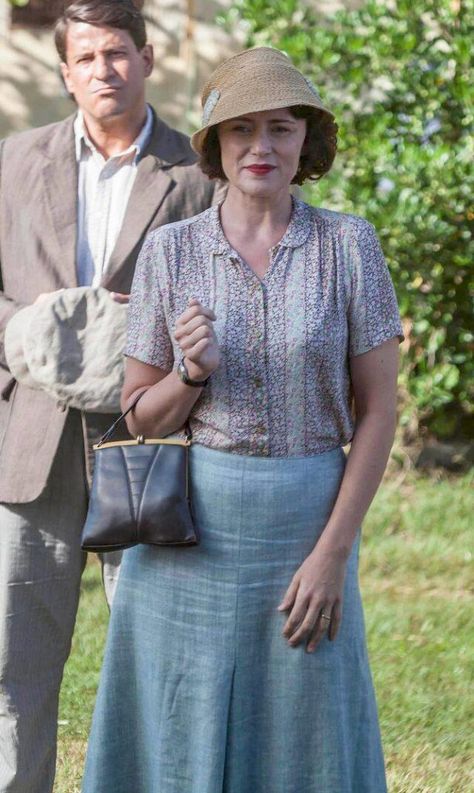
    Actually, all of the clothes in the series are very good, and the high-waisted, slim 1930s lines suit Keeley Hawes especially well, though I'm sure that she would look lovely in pretty much anything.

    3ECE355D00000578-4363736-image-a-9_1490960981404

    25Fd23f-asset-mezzanine-16x9-5eufA9w.jpg.fit.1280x720

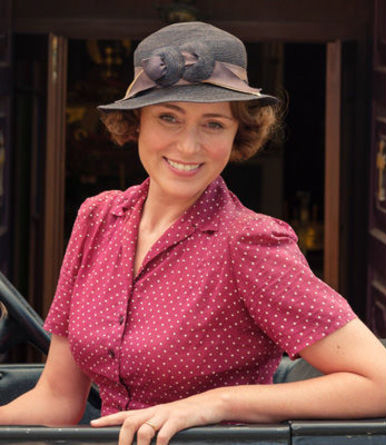
    I love this hat.  I do not have much of a "hat head," but if I saw this hat in a shop I would buy it at once.

    The-durrells-in-corfu-s1-e5-scene-poster-1920x1080

    933121

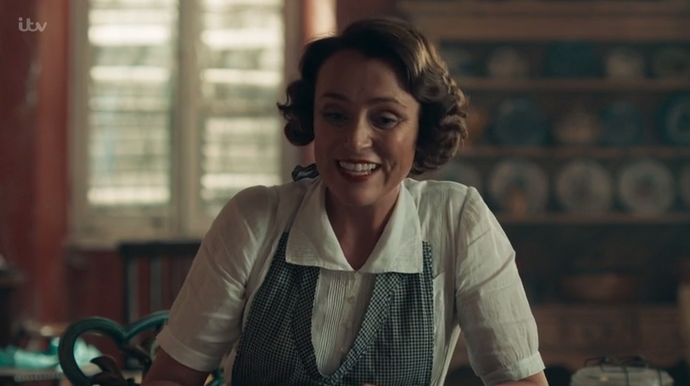
    Louisa also has a number of very pretty blouses, many of which I would happily wear — certainly this one, both for its simplicity and that lovely raspberry color.

    Louisa blouse

    Keeley-hawes-the-durrells-s03e06

    As it happened, the first thing that came up while I was looking for photos for this post was a review on “Frock Flicks,” the gist of which was “if this were my family, I’d have run screaming into the night.”

    Why are they such shits to each other? Why do they stick together if they hate each other so much? There’s no sense of familial affection or tradition or anything holding them together, and they don’t have any money, there is literally no reason to be together when they’re all such assholes to each other (except for Gerry, the little boy, who isn’t a total jerk, and obviously, being so young, does depend on his mom).

    Admittedly, I missed some episodes here and there – including the very first one – so, fair enough, I might have missed the “long, tedious stretches of people being awful jerks to each other, and not in a fascinating or revealing way”. But I am coming away from the series with a vastly different impression. The Durrells in the series certainly take the famous English eccentricity to rather drastic heights, but I don’t at all see a family who hate each other, I see one in which at least three of its members are almost completely self-absorbed, which leads to them giving their own wants a far higher priority than anyone else’s, and with a mother who is indulgent to a rather amazing degree, especially for the 1930s – but this isn’t hate, or even dislike. It can certainly lead to exasperation with siblings and/or parent – and yes, “selfish bastard” behavior – but is a different emotion altogether.

    The English have a tendency to not run away from unpleasant things, which at one end can lead to the sort of attitude shown during, say, the Blitz, having a cup of tea on the rubble of one’s bombed-out house before setting to work cleaning up the mess, and on the other to – in the past, at least, less so now – sticking with a family one doesn’t much like (or even actively dislikes) because they are one’s family. This I think is part of the Durrells’ situation here – they have all come to Corfu, even though Larry at least is old enough have stayed in England on his own, but presumably he goes with his mother and siblings partly because he is lazy and self-indulgent enough to not want to bother supporting himself (he writes constantly but hasn’t published anything) and make a home on his own, but partly simply because his mother arranges to move the whole family. (By the way, the real Lawrence Durrell was married and possibly – depending on whether you read Gerald’s or Lawrence’s Wikipedia articles – already living on Corfu when the rest of the family moved there.) And again, the series family pretty clearly don’t literally hate each other, so the easiest thing is to acquiesce to their mother's notion and go to Corfu, albeit complaining about it most of the way.

    Much of what’s irritating about the story is the hugely ethnocentric attitude this British family has toward the people around them in Corfu. Aside from two characters, naturalist Dr. Theo Stephanides and cab driver/all-around good-guy Spiros Halikiopoulos, the local Greeks are treated as strange foreigners, indecipherable oddities, merely obstacles to be dealt with, not legitimate independent people who should be understood on their own terms. And really, Dr. Theo and Spiros are only there to serve the needs of the Durrells and act as go-betweens with other Greeks. Most interactions the family has with the locals are of the ‘we’re British, we know best’ variety. It’s a genre that’s been done to death.

    In fact, I rather appreciated that the series doesn’t shy away from the reality of that English ethnocentricity, which was still in full form in the 1930s. There have certainly been some expatriates throughout history who dove pretty completely into their adopted cultures, but most took that “little corner of England” with them to at least some degree, whether traveling or living abroad. It can be more than a little dismaying for us to see that attitude now, especially when it manifests itself in overt racism and subjugation – which it does not in “The Durrells in Corfu” – but personally I find it more out-of-place to see a character who is anachronistically broad-minded and tolerant, someone “modern” in a “period” setting (one of the reasons, in fact, that I increasingly found Claire Randall Fraser in the Outlander books to be a bit jarring). It may very well be that from series 1 alone, this is all the impression that we get of the Durrells – except perhaps from Gerry – but there it is. It also should be remembered that the series is clearly not holding up the Durrells as sterling examples of model behavior, either, and thus their British-is-best attitude is not being condoned here, but mocked.

    Knitted toy

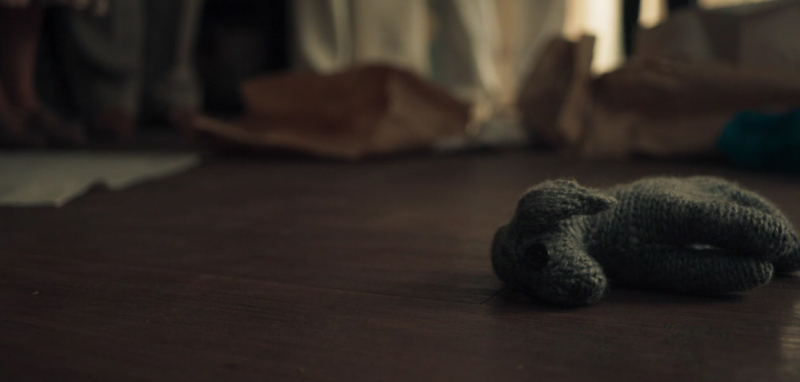
    Perhaps part of the problem is that the characters are, like real people, taking quite some time to develop and mature.  In episode 6 this season, Larry, during a disastrous attempt by their mother to throw a birthday party for Gerry (she literally doesn't remember that he is turning thirteen, not twelve, and has wrapped up a knitted bunny toy for him more suitable in fact to a four-year-old), shows her some of Gerry's zoological notes and says to her, "Gerry's going to be a really good writer" — one of the few times that Larry has said something really generous, or shown a real awareness of any of his siblings as a person.  I have been watching the series partly because it is filmed so beautifully and partly because it's hard not to think "what kind of idiotic things are these people going to do next?" but I'm enjoying it this season even more because the Durrells, while still as the English would say, completely mad, but also are, slowly but surely, growing up.

  • Growth Rings

    4364

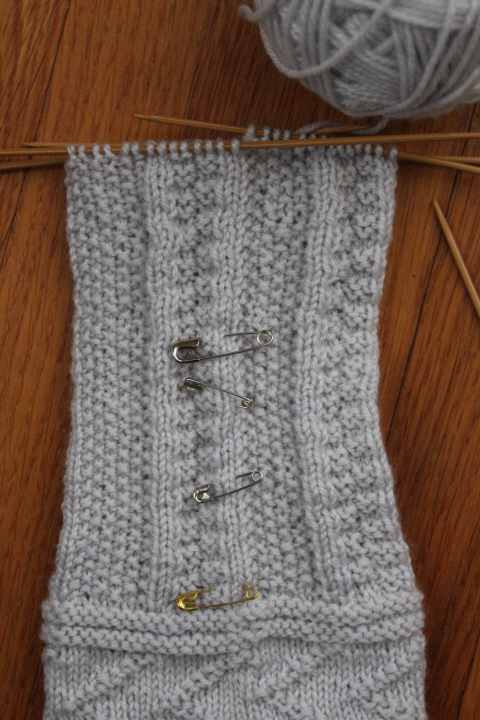
    I am still knitting! but slowly.  This is the second of a pair of Gladys socks, started — to my astonishment and dismay — when I was staying with my mom in July.  I really like the pattern, and the yarn, and the pattern and the yarn together, but somehow I haven't managed to find the time to do much with them — and so, noticing that my slow increments are not at all unlike the growth rings of a tree, I started putting in safety pins at the beginning of each section of knitting.
    — First, just above the rig-and-furrow, during Julia's audition for the Rose Parade Honor Band (she made it!).

    — Then during her clarinet lesson a few days later.

    — Then some weeks later in the waiting room while Laura had her wisdom teeth out.  Only 45 minutes!  Great for her, not so much for knitting!  Hard to believe that I managed to work more rounds during a clarinet lesson than during a wisdom-teeth extraction.

    — Then on the next day, two hours or so of watching "Close Encounters of the Third Kind" last night with David.  I hadn't seen it before!

    But now I'm ready to start the heel at last …

  • Hope

    Anne frank

    "It’s difficult in times like these: ideals, dreams and cherished hopes rise within us, only to be crushed by grim reality. It’s a wonder I haven’t abandoned all my ideals, they seem so absurd and impractical. Yet I cling to them because I still believe, in spite of everything, that people are truly good at heart" — Anne Frank, diary, Saturday, 15 July 1944

  • Making Art

    4322

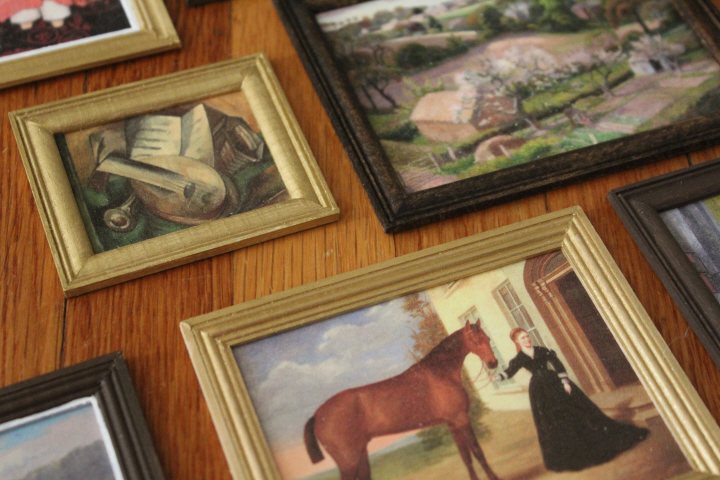
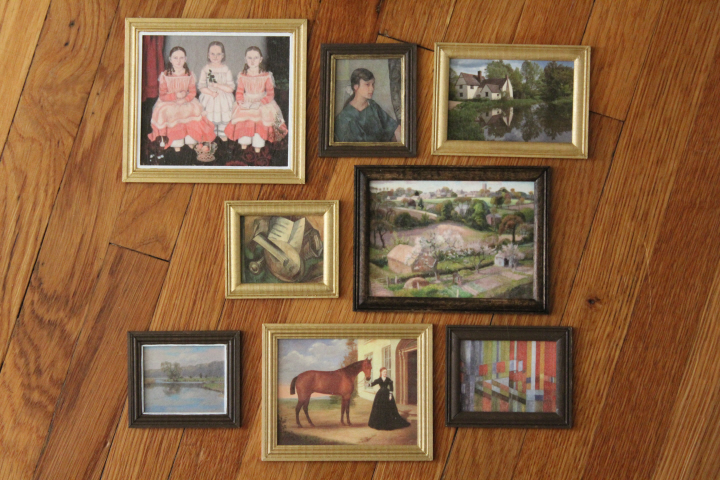
    My miniatures project this week has been making framed "paintings" — which, like my petit-point carpets, are almost always not for any particular spot in a room, but just because I like them. 

    4328

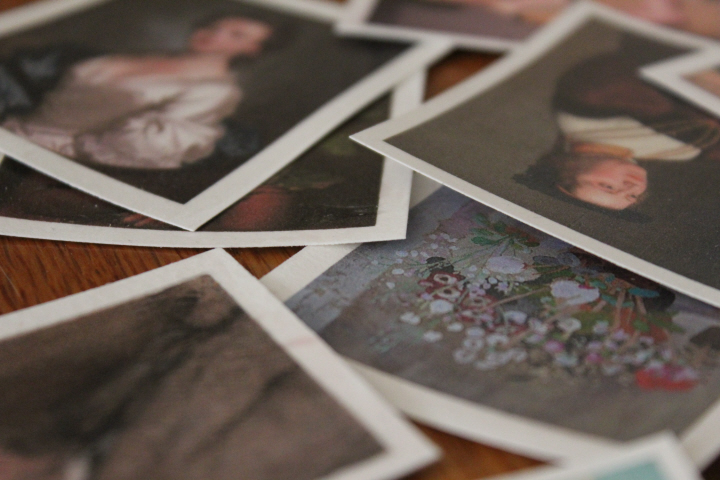
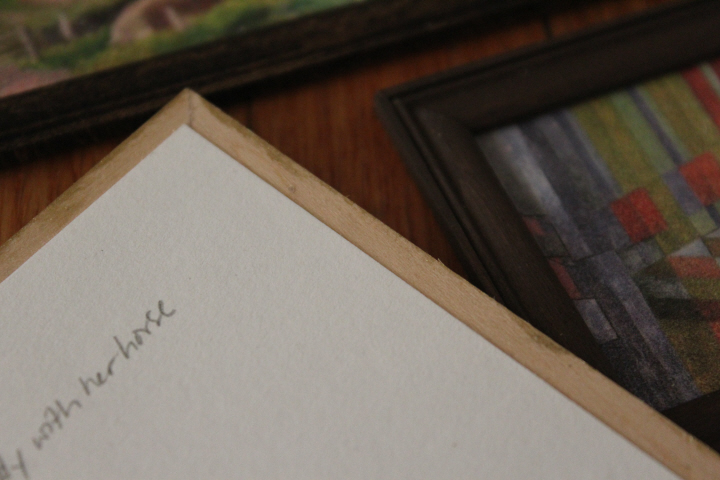
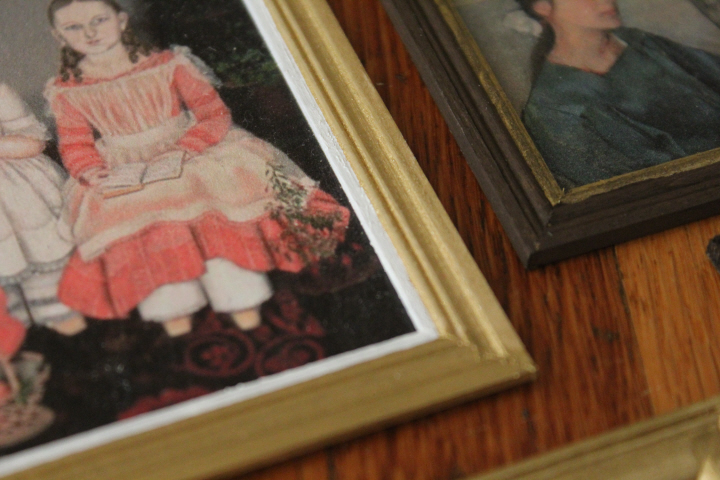
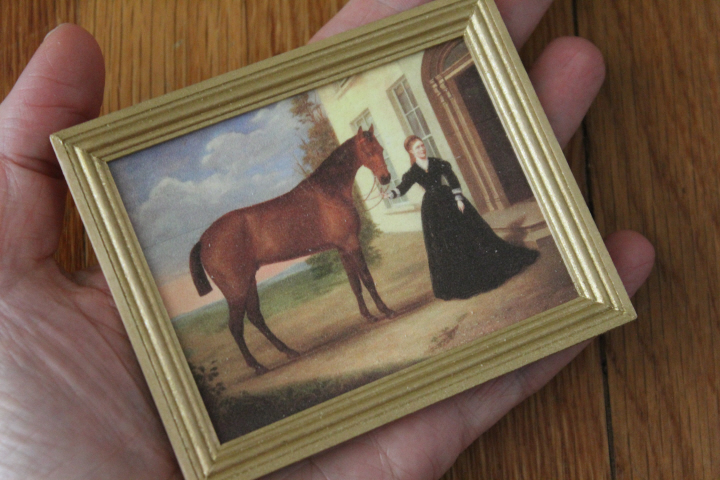
    "The Lincoln Children" (1845) by Susan Waters, "Girl in a Green Dress" by the mid-20th century Swedish portraitist David Tägtström (unfortunately there is not much on the internet about him in English), "Flatford Mill" (more on this below), "Musical Instruments" (1908) by Georges Braque, an early-20th century country landscape that I regrettably failed to identify when I saved the image, a modern landscape probably still under copyright, "Lady with her Horse" (ca.1840) by the prolific "English School", and the abstract "Arrested Movement" (1934) by the Australian Roy de Maistre.

    4329

    My current method of making these is to print out images on as heavy a watercolor paper as my printer will handle, brush on a layer of artist's medium — sometimes smooth, sometimes thicker and textured to give the impression of paint — then cut them out with a border, and after making the frame, to glue the picture to the back, with luck hiding the white edge completely.

    4325

    These mouldings are all Mayberry Street ones, step casings and baseboards and whatnot, as they are fairly easily available in person.  I have used the Minwax stain pens before, and they are certainly easy, but they do tend to dry out if you don't use them regularly, and I usually end up putting on too much (trying to get the stain to drop down into the tip of the pen) and it takes ages not to be sticky — that countryside landscape is finished with Dark Walnut.  But then I discovered that the Martha Stewart satin craft paint in "Vanilla Bean" is a beautiful dark brown, and used that on the rest of these, to very good effect I think!  I finished them with a light coat of DuraClear gloss varnish just to give them a little more shine.  The gold is the Martha Stewart metallic craft paint.

    The hardest part for me seems to be cutting the mouldings exactly the same size, because even a 32nd of an inch makes a noticeable tweak in a frame at 1:12 scale.  I have taken to taping two pieces of moulding together (back-to-back) and cutting them in the miter box at the same time but sometimes even this is not quite successful.

    I had the idea of adding in a faux mat on some of the frames, and so have been experimenting with it — some in gold, some in Martha Stewart "Wedding Cake" which I had on hand, having used it for the stencils in the Hardy House breakfast room.  It's very fiddly, and my hand is not quite steady enough yet for it to look clean, but it adds a nice touch.

    4324

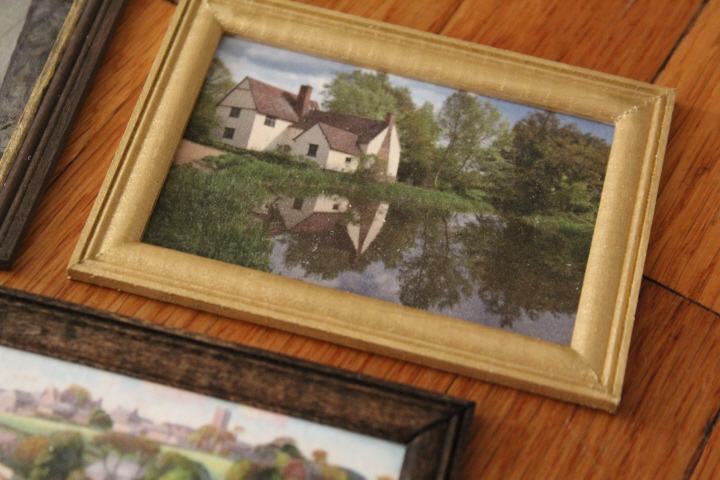
    The picture of the Flatford Mill (in East Bergholt, Sussex) is actually a photograph!  It came out even better than I hoped.  The reflections in the water still look slightly photographic, but the mill itself has that flat realism that reminds me of some of Carrington's work, like "The Farm at Watendlath" and "The Mill at Tidmarsh".

    4323

    4330

  • Texture 1
    I haven't forgotten about the ABChallenge — that is, I did forget for a while, then somehow got stumped for literally weeks on T.  (Tea, far too obvious.  But I'll have another cup, thank you.)  Then I was reading the latest post over at Mr. Micawber's Recipe for Happiness, as one does, and enjoying vicariously, and somewhat wistfully, Mrs. M's countryside autumn, and I decided then and there to walk to Michael's for that skein of embroidery floss I need — it seems a horribly long walk when you drive it, but it's only about half an hour there on foot, stop whining — and that I would take my camera and photograph our Southern California signs of autumn.  (This with a somewhat hollow laugh to myself, as it's difficult to photograph "brown-er," let alone a very slight nip in the air.)  Well, things being what they were, I realized after not very long that what I was taking photos of instead was textures.

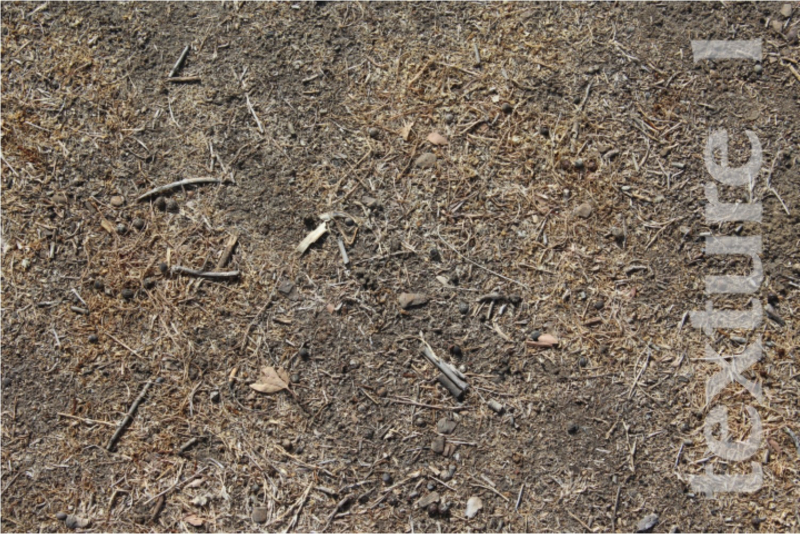
    As it happened, I wasn't much looking forward to the walk itself, but I quite enjoyed the challenge.  The above "texture" is, sadly but nobly, the remains of our front lawn, which we have not watered since the early summer of 2017 when water restrictions began to arrive.  We are now waiting for the rest of the Bermuda grass to give up, and are making plans for planting a California-natives cottage garden.  (To give some idea of the ex-lawn's lassitude, you can still see even a year later (!) the remains of our late and much-lamented camphor trees, wood chips and twiggy bits and a number of dried berries, which trees the city decided must be removed after having first trimmed the roots on the street side — to fix the street — and the sidewalk side — to replace the broken sidewalk.  Their explanation was quite logical — the trees would have less than half of their roots left — but it was with great difficulty that I restrained myself from flinging my arms around those two beauties when the chipper arrived.  The crew were quite kind, though, and let me save large pieces of trunk, which are now curing on blocks in our garage.  And a few months later, we did find two new saplings in their places.)

    Texture 2

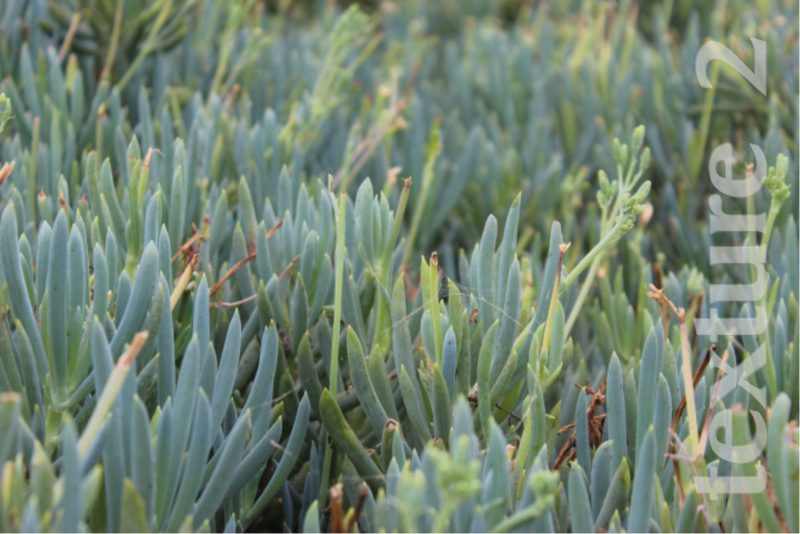
    Blue chalk sticks (Senecio mandraliscae), in front of the public library, whose landscaping went drought-tolerant about two years ago.

    Texture 3

    Texture 4

    Ah, here's a little sign of autumn!  Golden leaves from some tree I don't know the name of, but I love the way the leaves have collected in the center of the young palm (Sabal mauritiiformis?) underneath it.

    Texture 5

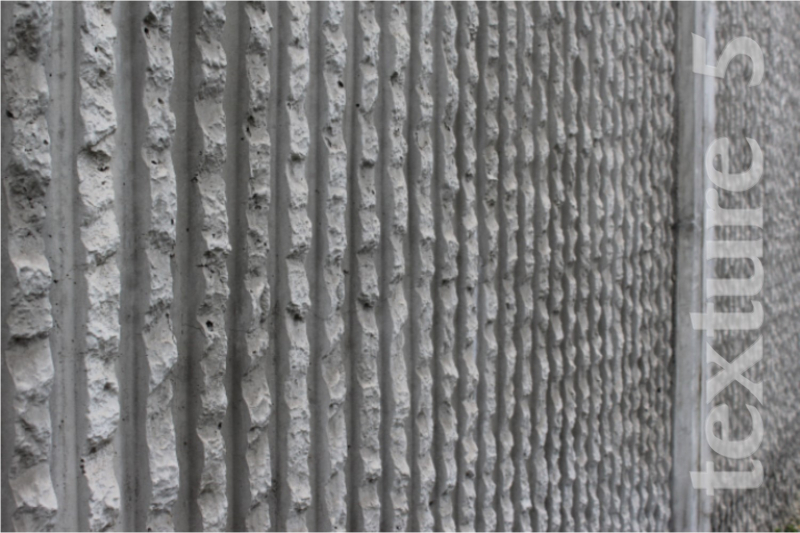
    The wall of the railroad underpass.

    Texture 6

    A California live-oak trunk, wonderfully knotty and scarred.  (It is called "live-oak" because it is not deciduous like most oaks.)

    Texture 7

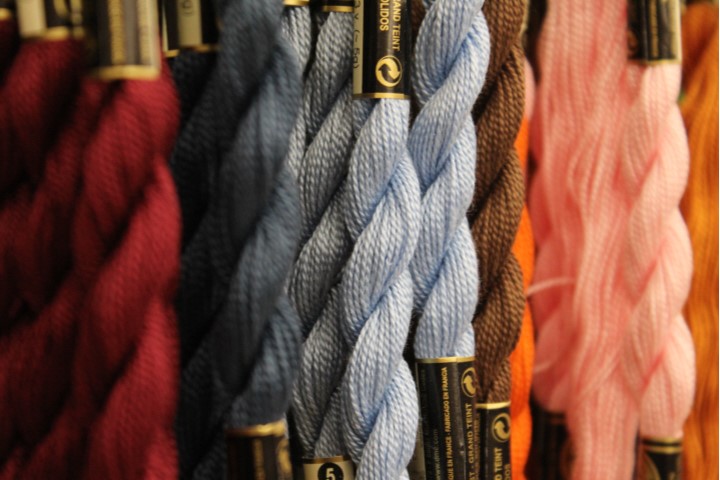
    The only indoor photo, at my destination.  The floss is stored in poky little cubbies, but the perle cotton is hanging on hooks and there is always a lovely variety of colors and that wonderful sheen I find irresistible.

    Texture 8

    A street tree, possibly some kind of eucalyptus, with fabulously shaggy bark twisting around its trunk.

    Texture 9

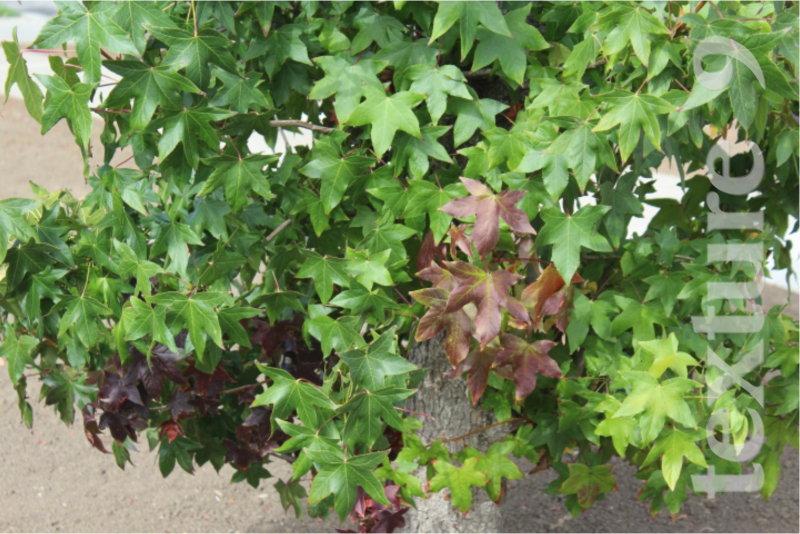
    Ah! another sign of autumn, hesitant as it is — this is a new liquidambar in someone's front yard, only about six feet high so far, but curiously with leaves evenly distributed all of the way up and down its trunk, and today with a hint of brownish-red just beginning near the bottom.

    Texture 10

    Texture 11

    Texture 12

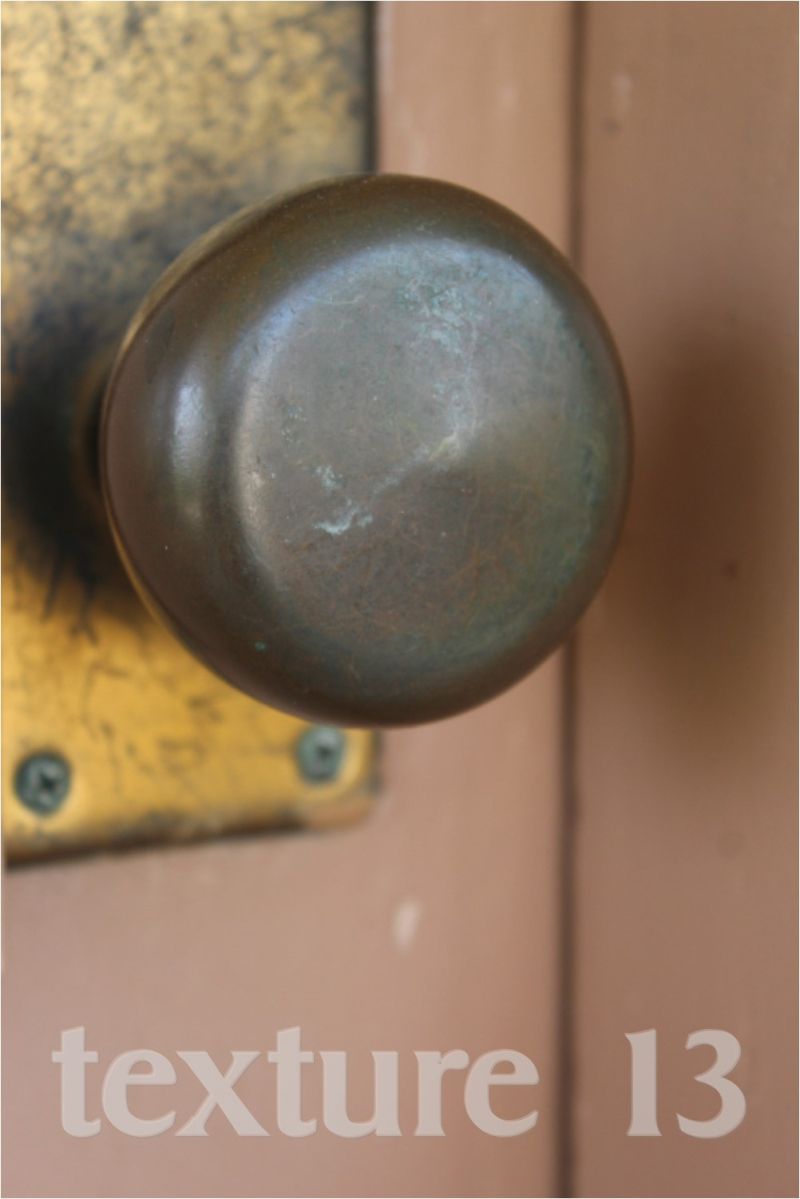
    Texture 13

    There is a very small historic building, one of the first in town, that has been relocated to a small park in the civic center. 1887.

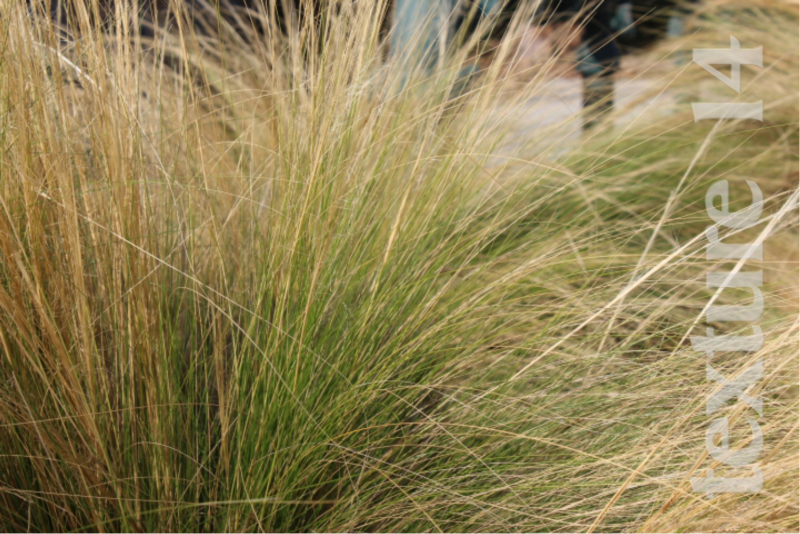
    Texture 14

    This is the grass du jour, it seems, but maybe that's because it has become invasive here — I think it's Mexican feather grass (Stipa tenuissima, aka Nassella tenuissima.).  A pity, as in swathes it reminds me rather deliciously of a golden retriever.

    Texture 15

    Texture 16

    I love the Georgia-O'Keeffe-ness of this agave.

    Texture 17

    Fountain in front of City Hall.

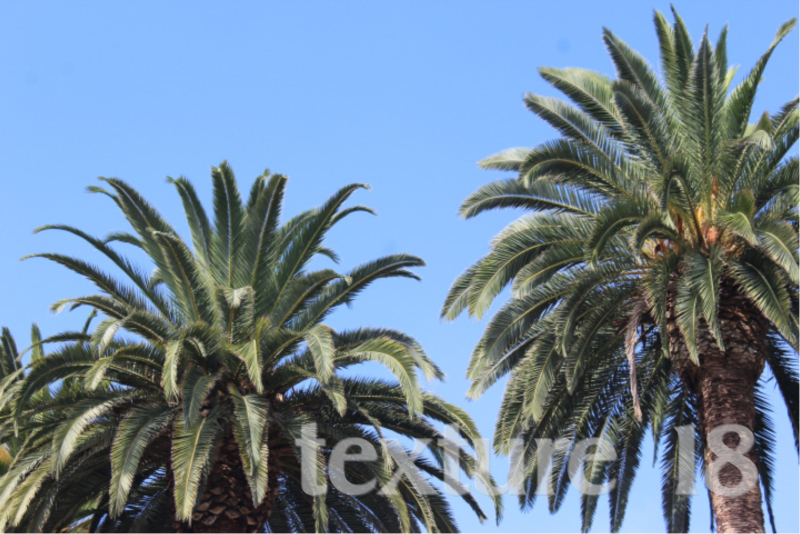
    Texture 18

     This is a Southern California autumn!

    Texture 19

    And finally, back on my own front porch, a Kalanchoe tomentosa (chocolate soldier!) in a pot.

  • 4243
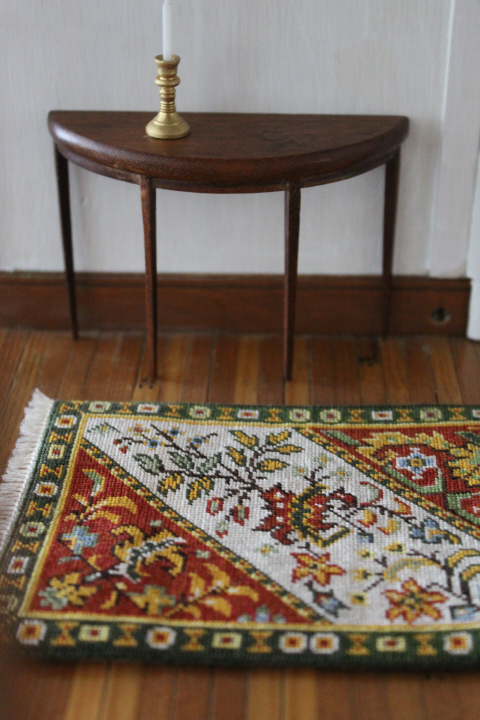
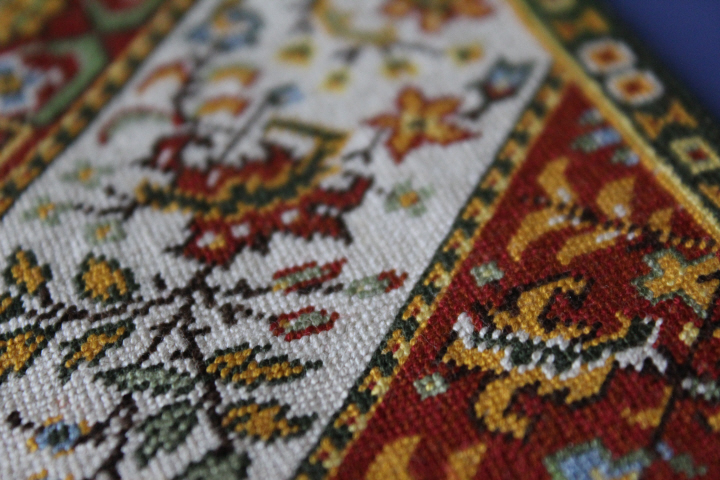
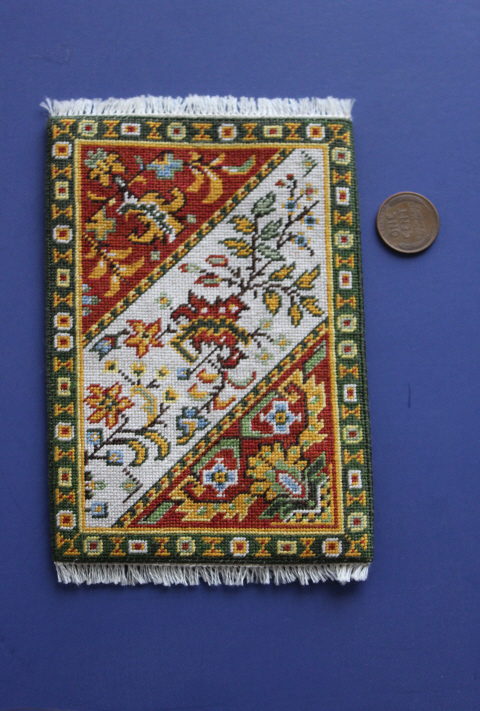
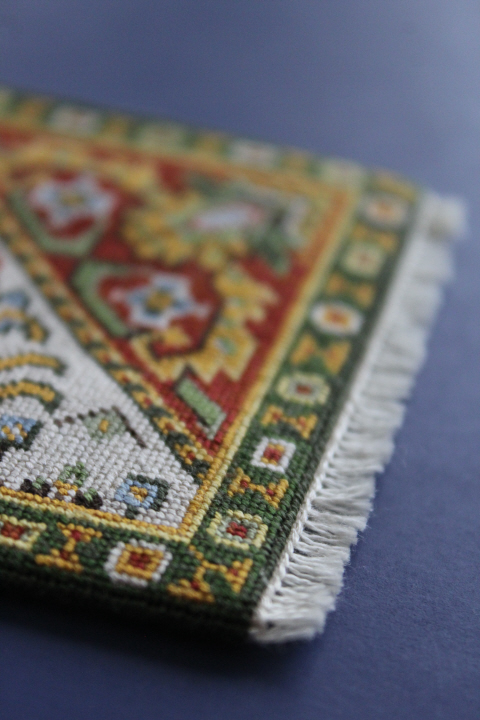
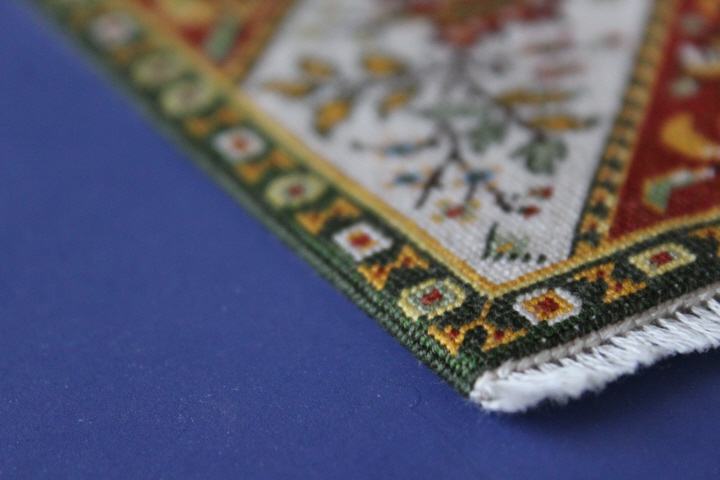
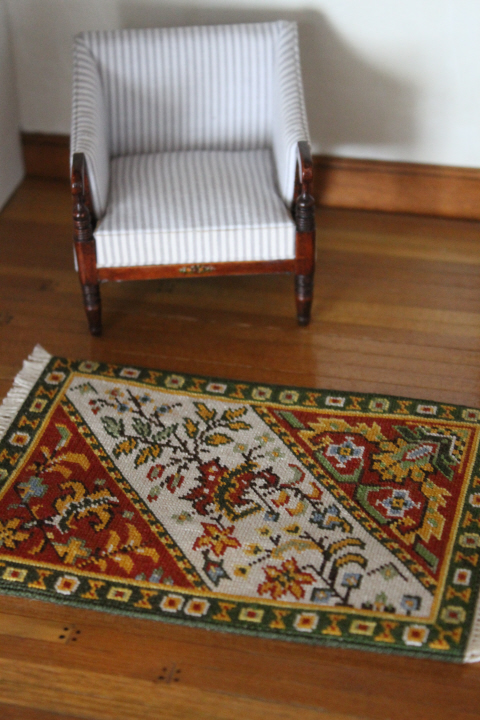
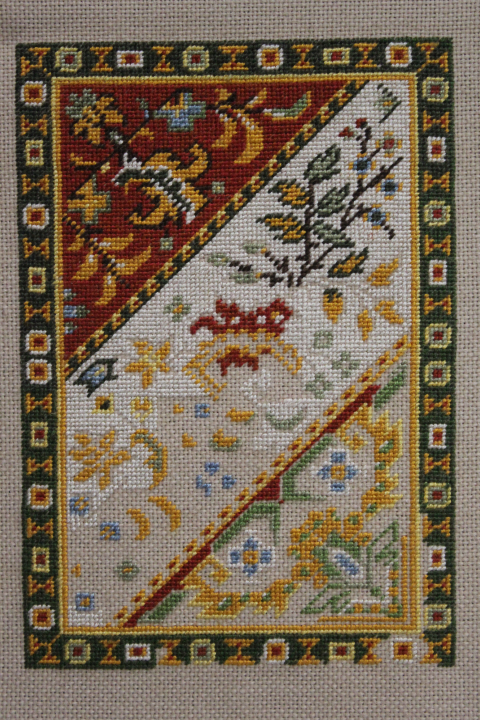
    Here is the miniature carpet worked to a 1903 chart, presumably for Berlinwork or something of the sort, that I found in numerous places on the internet with no source given.  I was really taken by its air of firmly-controlled chaos, and that wildly-unusual diagonal.

    12

    Laboriously typing the Cyrillic into Google Translate — because that's how much of a geek I am — I find that the inscriptions say, at the top, "Album of Patterns" and "Appendix to the 'Homeland' [or 'Motherland', but the gist is clear!] magazine" of January 1903, with "Pattern for carpet" at center bottom, and the publisher, presumably, A. Caslary at bottom left.

    I fed the image into a chart creator, hoping to get some suggestions for colors, but in the end it was much simpler to just work from a print-out of the image itself, though I did use many of their color choices.  I ended up with nine colors, each using two close DMC shades as I really like the depth of color you get by blending threads —

    • dark green (in the border, etc.) = 934 + 935
    • mid-green (the over-painted squares) = 3347 + 3052
    • light green = 3052 + 3053
    • light gold/yellow = 3821 + 3822
    • dark gold = 783 + 3852
    • red = 400 + 3777
    • cream = 3033 + 3866
    • blue = 931 + 932
    • brown-black = 3371 + 3031
    • fringe = 3866

    As it happened, I realized after I had already committed myself to the dark gold, that a number of the figures — the red-outlined flowers and the non-green "leaves" on the white stripe, and some of the outlines in the red sections — are not gold but a sort of goldish salmon.  Mine are now all gold!  It was also quite difficult to distinguish the light-blue squares from the light green most of the time, certainly on my printout.  On the whole, I thought that my color choices, while quite happy together, are more vivid than the somber — if this carpet can ever be called somber! — ones of the original chart, so I might work it again someday in different shades, maybe in wool.

    4245

    4238

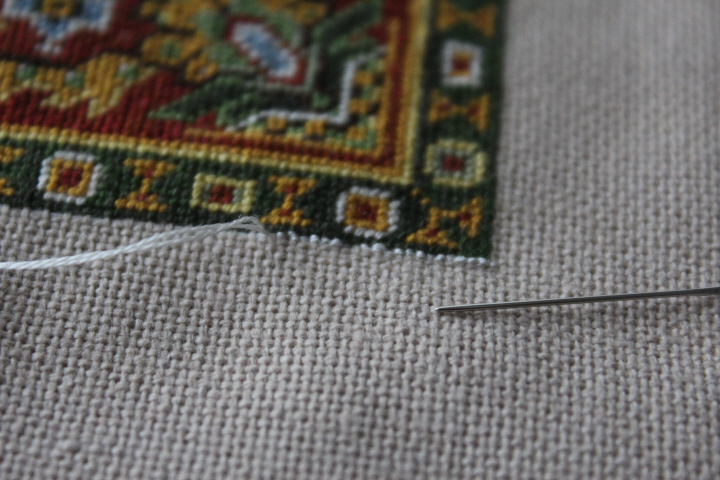
    I've been wanting to try adding the "tabby" to a petitpoint carpet — that little natural-colored woven bit on each end, between the carpet proper and the fringe.  I've seen this on Anna-Carin's site and in Sue Hawkins's book — the method is either a running stitch or a backstitch in a plain color (usually off-white).  Unfortunately, neither worked on my Russian —

    4225

    4225

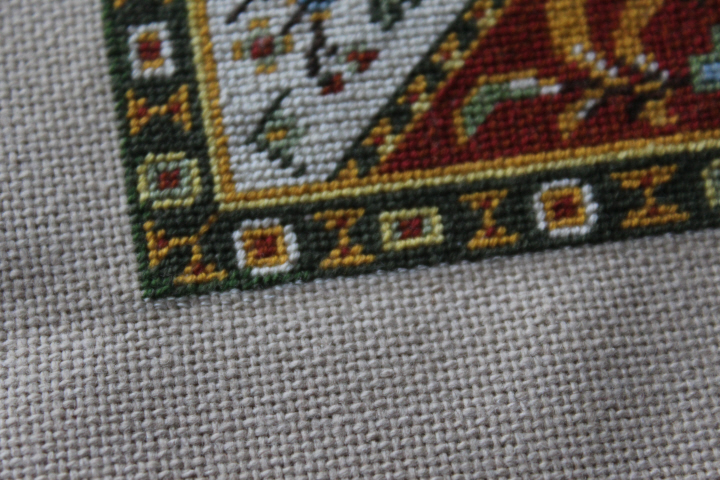
    — I'm pretty sure due to my canvas choice, a Monaco evenweave.  Ordinarily I like this stuff — it is a fine count but not too fine for novices, it stands up well to both stitching and picking out as well as to blocking, and it is readily available.  (Or used to be, I should say — after I had worked a couple of carpets on it, both with wool and with floss, and decided that I liked it, it began to disappear from the various Michael's and Jo-Ann stores around town — "nobody stitches on 28-count any more," I could almost hear them say — so I stocked up when I did find it.  Now I have rather a lot, mostly white except this stash of "mushroom" that was on clearance.)

    But the running stitch (worked with a single strand), in the first photo, pretty much disappears into the weave of the Monaco, and the backstitch (worked with two strands), just sort of gurgles and bubbles ineffectively.

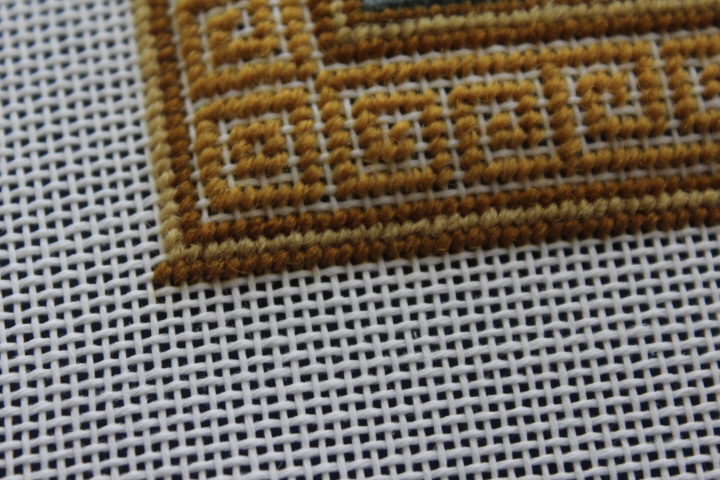
    Here is a partly-worked carpet in crewel wool on needlepoint canvas — you can see how proportionately larger the holes are than in the Monaco —

    4230

    I suspect that the closer weave makes the threads curve more as they travel in and out, even in the length-wise direction of running stitch and backstitch, and that that in combination with the difference in height between the warp and woof strands makes the thread not sit the way I want it to.  So, to make a long story short, I don't think the tabby will really work with floss on Monaco canvas, alas.

    So I have fringed my Russian, and with luck no-one will notice or be disappointed that it doesn't have a tabby.

    4247

    I'm absurdly pleased with the carpet, actually.  It was an interesting challenge, matching the floss colors myself and working to the hand-painted chart, and feel that a whole world of antique charts is opening up to me!

    4244

    4241

  • 4172

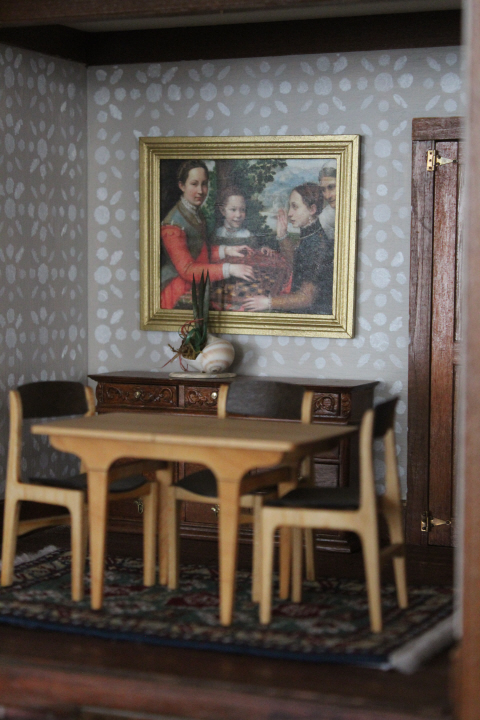
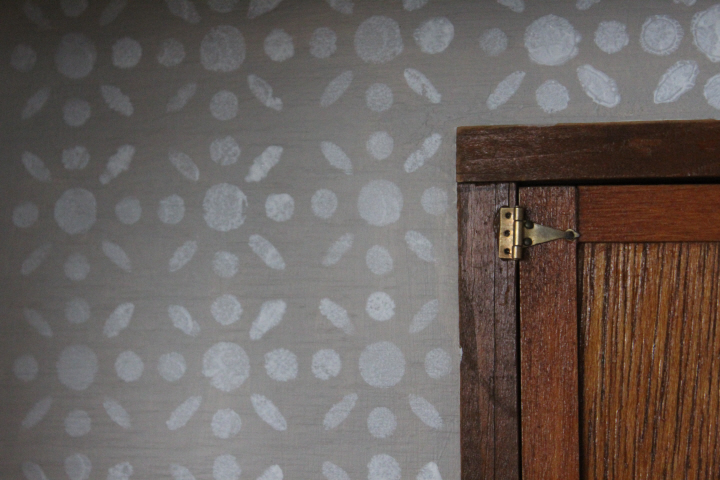
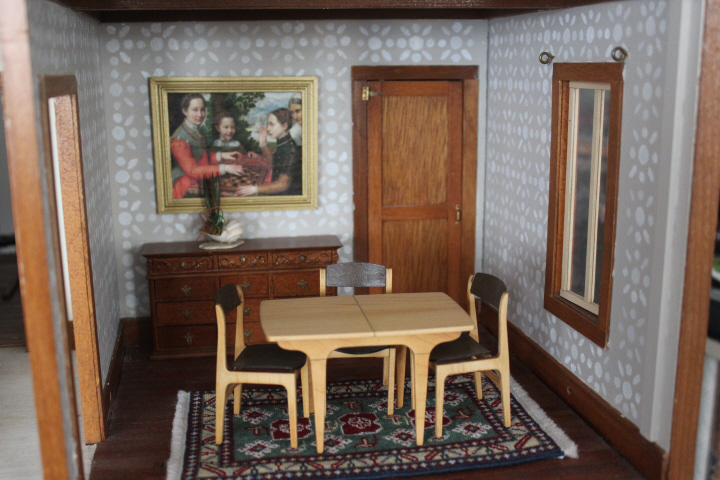
    I decided some time ago that I wanted to try stenciling on the breakfast room walls in Hardy House, and found one in an all-over pattern that looked as though it could have been from the 1920s or 30s, maybe even 40s, so just right for what I'm doing with the house.  I knew ahead of time that I would have to cut the stencil to get it to fit around the door and window frames, so it required some planning to do the larger swatches first, then trim off strips for above the doors and window, and so on, in increasingly-smaller segments.  It didn't work quite as easily as I might have liked, as while I "dry-fitted" the stencil around the various obstructions, I didn't double-check the width of the back wall itself, and ended up having to decide between wider-spaced columns or a partial column in the back left corner!

    But I think it's busy enough that while noticeable it doesn't really leap out at you, and once the furniture and pictures are in place, those distract the eye a bit too.

    4165

    4164

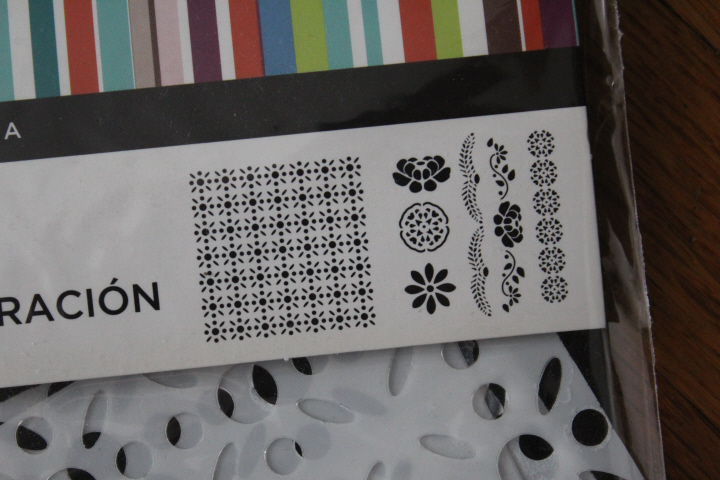
    The stencil is an ArtMinds one — that sort of leafy/feathery swag might be useful later, too.  My stenciling technique is far from polished, I know, and on top of that it was fairly awkward reaching into the room without being able to brace my hand much, or sometimes even see beyond it!  I can understand even better now why people say it's much easier to paint etc. before you even build, but of course I don't have that option here.  I was hoping that the stencil color would be a bit lighter, and therefore more subtle, but I didn't have the skill to daub more gently, nor certainly the confidence to thin the paint at all.  Still, I do like the way it turned out on the whole, so there is that.

    (Haven't decided whether I should try to sand off the daubs that got onto the woodwork, or to paint over them with a similar "wood" color …)

    I haven't yet found a fabric I like for curtains, so that is still on the to-do list.  Maybe just a solid color (blue?), or faux damask, as there is a lot of pattern in the room now!  I think it also needs some more paintings on the wall, certainly one just beyond the door that leads to the kitchen-to-be, on the left here.

    4168

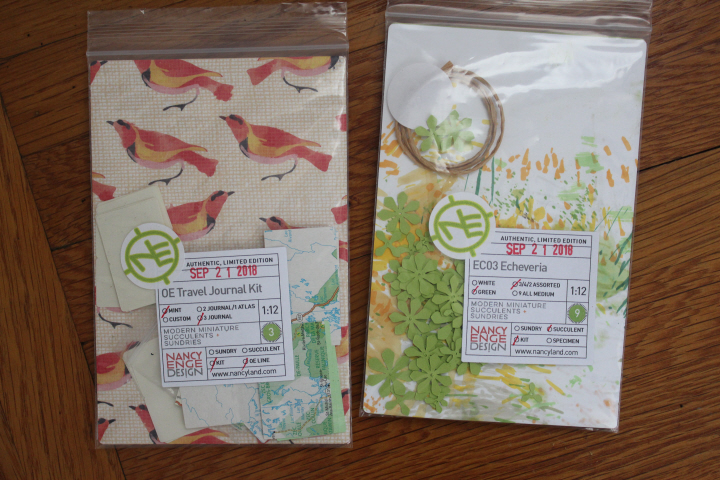
    Two kits from Nancy Enge — travel journals and echeverias, very pleasing to look at even in kit form —

    4126

    4159

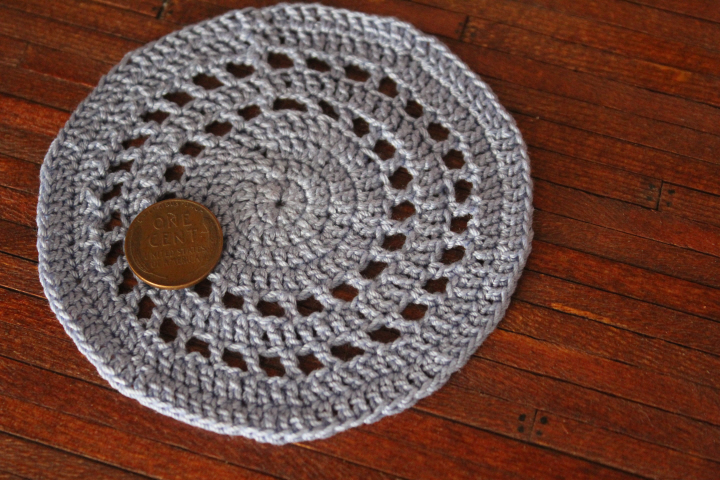
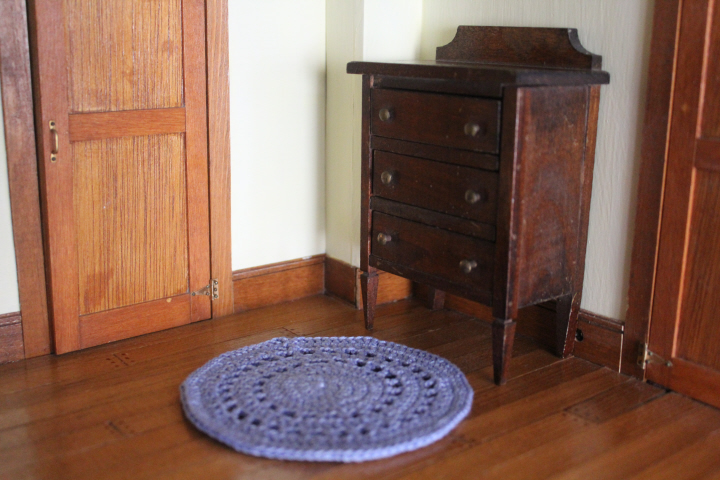
    I was noodling around with the US9 steel hook and some no.10 cotton, and came up with this improvised rug in double-crochet.  I was marvelously impressed with the "mock invisible join" developed by Mrs. Micawber, which took me some time to wrap my head around, as it were — reading the instructions first was like blah-blah-blah-blah for me, but once I actually started to do it, it began to make sense, and indeed worked beautifully.  It didn't, however, work — or possibly more accurately, I don't know how to make it work — on the faggoting rounds, so I began looking around for yet another alternative, and ended up using a "no-chain starting double crochet" as detailed at by Hannah at Not Your Average Crochet.  It seems to me that if you didn't see the join there at the top of the outer two rounds, the places where I earlier worked the NSDC would be almost undetectable.

    4155

    4162

    My current miniature carpet, this from a Berlin-work chart that is apparently floating around Pinterest like the Flying Dutchman, with no actual source.  It is dated 1903, in Russian.  It has a charmingly improvisational air to it that somehow works really well with that imperious diagonal — the moment I saw the chart, I was besotted with it, and it jumped the queue over a number of other projects!