• ,

    She Still Knits!

    8033
    (I am regularly amazed and delighted at the generosity of miniaturists, in sharing both their knowledge and their stuff.  The lady who gave me the big Golden Lion Inn a few years back phoned me last month and said she is retiring — from making miniatures, not admiring or owning them, as I'm pretty sure you don't retire from that! — and would I like to have her stuff?  Of course I said yes.  Among the little treasures were these three House of Miniatures kits and this figure — even though I don't "do" dolls generally, I got a big kick out of this one, since she looks a lot like me! even the slightly tired smile.)

    But yes, despite the volume of not-knitting stuff on this soi-disant knitting blog, which may be excused lately because of the summer heat, I do have a bit of knitting on the go at last, though I confess that it is not only a pair of very plain socks but is in some wool I've had in a drawer for at least a decade, and was orphaned even then, from a stash that came from a yarn shop that was closing and made the rounds of multiple knitters at David's work but nobody wanted this so he brought it home to me.  (Like Maria's homely dress at the beginning of "The Sound of Music" — "The poor didn't want this one.")

    8568

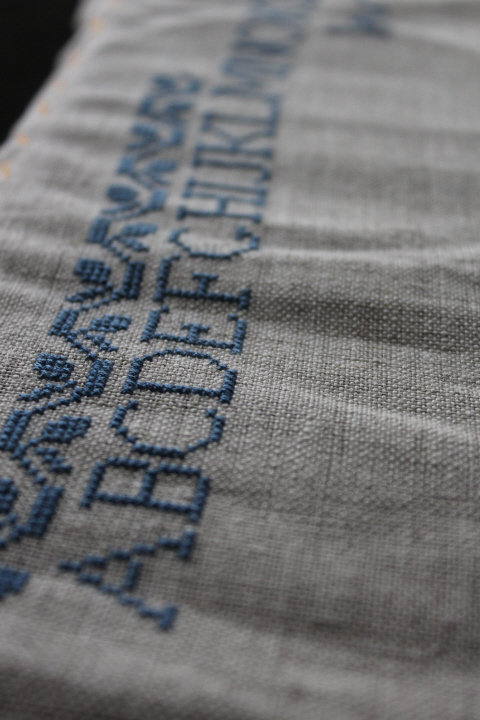
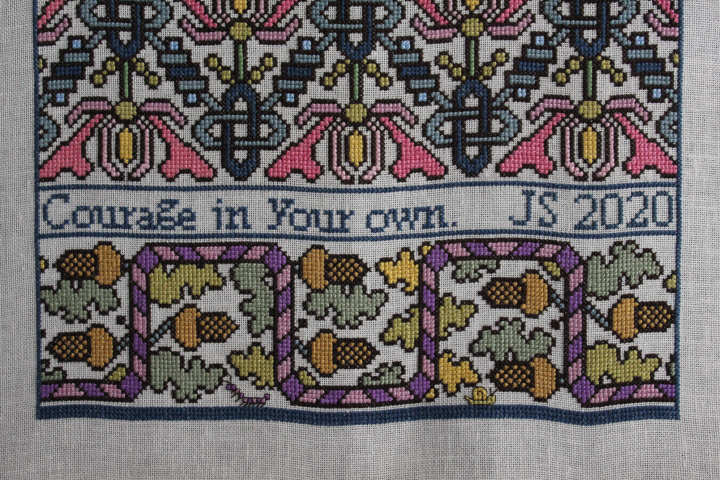
    It has been a very long time since I worked a full-sized piece of cross-stitch, but for my birthday I got two sampler charts —

    Froth-and-Bubble

    one of the band sampler designs from Long Dog Samplers, whose catalog is filled with wonderful, and wonderfully quirky, things, and a Quaker-style sampler from ByGone Stitches

    Quaker virtues

    also with sentiments very meaningful to me.  I am starting with the "Froth and Bubble" but I was only able to decide between the two by remembering that I have been mooning over that since the spring, I think, and only recently saw the Quaker one.

    These are gigantic compared to my usual petitpoint, and since they will have to be worked on a table frame will not only take quite some time but will not be portable — unlike knitting on a pair of socks!  A bit of handwork for every situation, as they say.  (Don't they?!)

  • 8099

    8101

    These had me utterly charmed from start to finish.  I first saw the charts in a book of filet crochet patterns, Le Filet Ancien au Point de Reprise V, at the wonderful Antique Pattern Library, and thought, "well, those look just like needlepoint charts!" — these are on pages 59 and 60 of the PDF — and the fact that there was a pair made them irresistible.  Who wouldn't want a pair of French floral area rugs on either side of their dollhouse bed?

    (This particular book is in APL's "Filet" section, not the "Filet Crochet" section, I don't know why, but then I don't do filet crochet, so perhaps there is something that I don't understand.  There isn't a date that I can see, but AbeBooks and WorldCat citations indicate ca.1917-1920 for the series of at least eight books.)

    8103

    The charts had some little eccentricities that I discovered as I worked, some of which I changed — a random white stitch here and there on the roses chart, and I shifted the daisy bouquet up two stitches within the border to center it a little better and smoothed out an obvious jog in one spot on the outside edge — and some of which I left as they were — the ever-so-slightly irregular ovals, which are surprisingly (given how easy it is to mirror design elements on a chart!) not symmetrical.  While the asymmetricality bothered me quite a bit at times, looking at the chart, happily I don't think it detracts from the charm of the finished carpets at all.

    I worked them in DMC floss 815 Garnet Medium and 712 Cream, on 40-count silk gauze.  I decided while stitching the set of cushions recently that despite conflicting advice ("always use half-cross stitch" — "never use half-cross stitch"), I far prefer using continental stitch instead of half-cross. 

    TentHalf-cross stitch uses much less thread, as your needle is going only from one hole to an adjacent one either horizontally or vertically, while with continental stitch, your needle is going two holes away and up or down one — like a knight's move in chess.  The resulting piece of needlepoint is noticeably thinner with half-cross, which in miniature scales can certainly make a difference, even in fine cottons or silks.  On the other hand, for myself I find it rather difficult to secure the beginnings and ends of threads under half-cross, since they tend to "sink" down into the weave of the canvas, especially non-interlock ones, and frankly, again despite some experts' very strong opinions, I find that for me the tension and resulting evenness of my stitching is just enough better in continental for it to be worth the slight extra thickness.  And I suppose it doesn't really matter since unless one is being judged at some competition, the petit-point carpet is always seen from the front, but with continental stitch, it's a bonus that the backs can be very tidy! —

    8098

    8104

    It was also a bit of a revelation to me that rounded petit-point shapes can be edged with an edging stitch, at least on silk gauze at smaller scales.  I had heard that it couldn't be done, that a simple folding-under of the unworked canvas was the only option for a non-rectangular carpet, but after I had worked a few pieces on this gauze, it seemed to me that an edging stitch should actually work pretty well, partly because the silk simply folds more easily and sharply than cotton or linen does, and partly because of the extreme flexibility of the fabric itself.  You can see in the photo above how very easily the square holes realign themselves into parallelograms, and they did this even before I clipped the turning allowance.  This means that while you can't use an edging stitch that proceeds in a regular manner, you can fudge it a little, adjusting as you go to get the line to curve — you can also see above how my stitches around the curves have a little jog every few stitches, where I followed the curve.  It is possible that you really can't do this on linen or cotton canvas, or on Aida or other non-evenweaves, but it is certainly possible on silk gauze.

    Hawkins

    The "braid" effect of the long-legged cross stitch edging is lost a bit with the uneven distances, so next time I will try a regular whip-stitch — the coverage is better with the long-legged cross stitch, which I suspected would help disguise the potential bare spots.  It may not be as tidy as an edging stitch on a straight piece — though that may also be due to my improvising, and so would get better with practice — but I'm quite pleased with the results.  

    8105

    8106


  • Jane eyre

    In honor of International Translation Day and the often-unsung translators without whom the world of literature, and thus the world itself, would be poorer, here is a link to an interesting article about translations of Jane Eyre.

  • 8094

    Or "plethora of pillows"!  (Though for some reason, I tend to use "pillow" for the kind you sleep on, and "cushion" for the kind you keep on sofas or chairs … why is that, I wonder?)

    Having bought a piece of 40-count silk gauze for a petit-point contest this summer that I ended up not joining, I went a bit crazy with stitching cushions instead — it only takes a piece of gauze the size of the palm of your hand! you could make dozens! — so over the course of August, I stitched four, plus the second of a pair of kits, to make five.  The tops sat on the edge of my desk for most of September, because I kept putting off sewing them up, but I decided this past weekend that I was going to finish them.

    8096

    These are, at the top, the "J" from a fanciful alphabet that is circulating Pinterest without an apparent source, "Rose" that was a gift to the old Petitpointers list when it was on Yahoo, and the charming and excellent "Bijar" kit (which is on 48-count gauze) from from Frances Peterson Petitpoint, and at the bottom the "Persian" cushion by Sue Bakker, and "Willow" that was also on the old Petitpointers list.  The Willow and the Bijar are worked exactly to the chart, the Persian I "faded" by using threads two shades lighter (except for the white) than on the chart — the "J" I had to re-color as the numbers were mostly illegible, and the Rose I used more Gallica-like colors than the coppery original, and it also came out slightly bigger across since I made a counting mistake and discovered when I was well underway that I was two stitches off, so I just sort of … made it fit.

    They all really have to be sewn up by hand, as they are too small to fit into my sewing machine, so with that caveat, I have to say that despite the non-fraying and beautifully-draping properties of microfiber cloth, I don't like sewing it — sometimes it is quite an effort to get even a really sharp needle through it.  I used the microfiber that came with the kit for the Bijar, and for the "J" cushion I used a rather pretty glasses cleaning cloth that came from my optometrist — extra-thin, so excellent for miniature cushions!  The Willow is backed with some tan Linen Look from Joann's, and the other two are backed with Kona Cotton, both of which are nice to sew on even at this scale. 

    I wanted them to look like they had been made by different people, and so I didn't mind experimenting with stuffings as well as sewing methods.  The Bijar cushion is filled with 10/0 beads, the smallest that my Joann's carries, the Persian and the "J" are filled with micro-beads, and the Rose and Willow are filled with glitter, which in these conditions has the properties of sand without as much of the potential for leakage.  Most full-sized cushions are piped, it seems, but piping in 1:12 scale is fraught with the possibility of mishap, as Jeeves would say.  I tend to recoil from the thought of gluing fabric, though of course in more practical moments I understand the rationale for it in miniature, and so I have experimented with couching a length of perle cotton around a petit-point cushion top before stitching it up (mostly successful), or simply doing without piping at all, as in three of these five.  My last experiment here was to make my own piping, using — wait for it! — spray fabric adhesive! and some crochet cotton, which turned out rather well, though I will use a finer crochet cotton than no.10 next time, as the scale is just a little too big.  It basted on surprisingly easily, though stitching the back and front together was a pain, and the piping made the thing stiff enough that I thought I was never going to get it turned right-side-out.  I didn't get the join together as smoothly as I would have liked, but it's a method worth refining, certainly.

    8091

    The bench is from a Jane Harrop tutorial that has since disappeared — I'm really glad I saved it, as it is a charming little bench that went together surprisingly easily, and cost me nothing since it was all scrap pieces!  I haven't decided yet if I'm going to paint it or "age" it, which is why it's still bare.  My idea is to have a bench outside the carpet shop, with "old" cushions on it — at least some of these, though I have a plan for the "J" to go in one of the other shops-to-be.

    And a bit of a non sequitur, but here is a lovely sunrise from the other day! —

    8081

  • X

    I've left the last few letters of my ABChallenge rather long, I'm afraid, my excuses being that Nancy has been AWOL (bloggers are quiet / sometimes when life gets busy, / but they are still missed) and that X, Y, and Z are a lot harder to do than most of the previous ones!

    In fact, I was a bit stumped by "Y," wanting something a bit more unusual than, say, "yellow" or "yawn," so I perused the "List of Unusual Words that Start with Y" at The Phrontistery, as one does, and while there are in fact quite a lot of unusual and interesting words that start with Y, most of them are unphotographable, at least by me — yair, a tidal enclosure for catching fish (impractical), yang-chin, a Chinese hammered dulcimer (haven't got one, alas), yare, "marked by quickness and agility, nimble" (not impossible, perhaps, but not exactly on hand, either) — but then …

    Y

    "Yarborough, n., a hand in bridge or whist containing no ace and no card higher than a nine, named for Charles Anderson[-Pelham], second Earl of Yarborough, English nobleman said to have bet a thousand to one against the dealing of such a hand".  Who knew?!  I suppose I could have done yew or even yoga, but yarborough, well, even though I don't play whist or contract bridge, I can't pass that up.

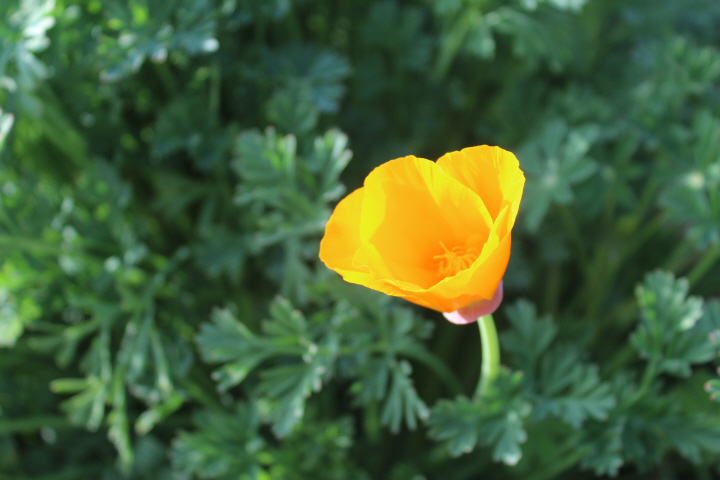
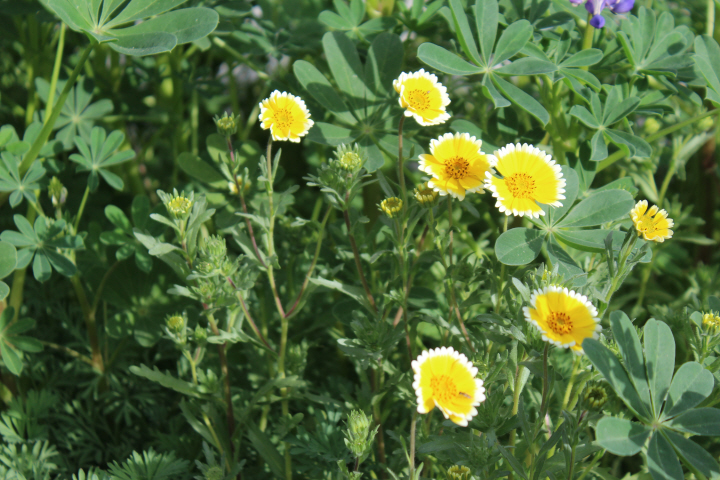
    These cuties bloomed the day before yesterday, just in time! —

    Z

  • 7343

    This was surprisingly nerve-wracking, and I put it off for ages, it seemed.

    The MDF base that came with the kit is here held in the right-angle of my big gluing jig by the two large yellow clamps, the four walls of the box are wrapped around the (now also glued-in-place) floor at the bottom and the removable "ceiling" at the top and held snugly with extra-large rubber bands while the whole box is also pushed into the right-angle of the jig, there is a piece of wax paper between the base and the underside of the shop box in case of glue overflow, and the five handy craft clamps aren't actually clamping anything (because they are too short to go around the box) but are pushed up snugly against the slightly-warped front piece in hopes that the glue will grab hold firmly enough to counteract the bowing — which they did!

    7148

    I wasn't entirely delighted with this — which is regular acrylic craft paint on the Plexiglas, using a 10/0 spotter brush — but it took me so many attempts, hunched over it with my nose literally an inch from the Plexiglass, that I decided this is good enough.  It doesn't look quite like the lovely font I chose, though in all fairness, if you don't know what font it was supposed to be, you might not think anything is "wrong".  Part of the difficulty was that after I had come up with the idea of printing out the template in reverse and taping it to the outside of the window so that I could paint it on the inside, the relative thickness of the Plexiglas was actually distracting, in that I was painting on one side while looking at the template on the other side, which is kind of like trying to put on make-up in a funhouse mirror, where nothing is quite where you think it is!  Oh, well — by the time I did the version above, I had painted it and wiped it off so many times that I couldn't bear the thought of having to do it again.  "It'll never be noticed on a galloping horse," Laura told me comfortingly!

    I had long had the idea to have long rods around the top of the side and rear walls to display carpets on, like many real-life carpet shops do.  It is very difficult, though, to find ready-made 1:12 scale curtain rods that are longer than six inches or so, and I wanted mine at least seven, so in the end, I made some myself.

    7165

    These are actually 1:12 doorknobs, using the knob as the finial and the plate as a base for the "bracket," which is of course really just a brass eye from the hardware store, bent slightly to open it up — I want to be able to remove the rods easily, as I suspect that the only way to get a petit-point carpet to hang on a rod is to actually sew it on, and if I ever want to switch out the displayed carpets, which I doubtless will, I would need to be able to get the rod out and back in easily, from overhead.

    The doorknobs looked very neatly in-scale, but the problem was how to get them to stick to the end of the rod!  I had a solid 3/32" brass rod that was the perfect size visually — and then luckily, as I was poking through the display of "precision metals" at the hardware store, I found 3/32" tubing, and the shaft of the doorknob fit almost exactly into the tubing! so I also bought a package of 1/16" tubing (a rod would have been better, more solid, but they were out of stock).  The 1/16" tubing fit perfectly inside the 3/32" one — I cut the larger tubing to the size I wanted my display rod, and cut the smaller tubing to the same length less the length of the doorknob shaft that would fit on each end.  Running the smaller tubing inside the larger one not only gave the larger one more strength, but the just-short-enough length gave the super-glue more surface to grab on to, to hold the knob/finial in place.

    7174
    I was frugal and got three rods out of two lengths of tubing, using two pieces of the smaller inside one piece of the larger, and vice versa, for the two side rods.  The one in the photo actually has a seam in it — with an extra dab of super-glue on the seams inside the barrel, just in case — but it's barely visible, and once it has a carpet hanging from it, I suspect it won't be at all.

    Gluing in the trims at the tops and bottoms of the interior walls was also fraught with the possibility of mishap, as Jeeves would say, and I was both annoyed and relieved on occasion to find that the pieces I'd glued in crookedly popped off easily enough that I could just sand off the bits of dried glue on the trim and try again more firmly.  I was more than a little deflated to see that after all the care I thought I was taking on the umpteenth try, I still left a huge gap between the baseboard and the floor on one wall, now alas quite permanent.  Oh well, lesson learned.  Thanks to Brae's tutorial for filling in the cracks with paint, though, I managed to get fairly "seamless" connections between the mitered corners, and between the trim and the I-hope-charmingly wobbly walls.

    I'm still experimenting with some last-minute fixtures — I really wanted a light switch and thought of making one in very thin balsa or bass, and then wondered how on earth I'd punch small-enough and neat-enough holes in it, and while I pondered this, I printed out some size tests, using an image of 1920s plates I found on Ebay, which I printed on good paper and glued to a slightly-smaller scrap of watercolor paper, and smooshed the edges down with a burnishing tool so that the cut edge wouldn't show.  When I stuck one on the wall, I thought, "well, that doesn't look half bad, actually" so I've left it there for the time being —

    7652

    (Except that it's a bit crooked, I see! but it's just museum putty, so I can fix that!)  It's completely flat, of course, as I haven't found anything tiny enough to use for the actual switches.  I really like the grotty-brass look, though, which is a complete illusion!

    While I was looking for antique switch plates, I also came across floor registers, so I did one of those as well — I used the smallest burnishing tool to push down the "empty" parts to make it look like there is space underneath.  I'm not quite sure that this works yet, but it's just a background detail, so I can leave it for a while (I do have a friend with a 3D printer, so that might be worth a try …!).

    IMG_7649

  • 7634
    The moment I saw this Sue Bakker petitpoint chart, I wanted to stitch it.  I love its Arts & Crafts naïveté, the profusion of flowers and leaves against the simple rope border, the softly-faded colors — it just speaks to me.  Bakker says it can be a wall-hanging or a carpet, but it didn't seem quite right to me to put it on the floor — not so much the idea of walking on it, I think, but that you just get a different perspective when a piece is on the floor than when it is on the wall — so wall-hanging it would be.

    For me, Bakker's charts have become a matter not of "are there going to be challenges?" but "what are the challenges going to be, and where the dickens are they?"  The Anchor 676 on the chart does not appear on current Anchor color cards, and it was only by happenstance that I came across a website that offered the substitution "A676 = DMC 452".  But Bakker calls it "green" — it appears on the birds' wings — whereas what I found in my hand was this —

    7642

    which takes a very considerable leap of the imagination to call "green" — oh, well.  I tweaked a few things here and there, rearranging the colors on the birds and using a lighter shade of the dark blue for the background.  I like the really deep border on the original, but didn't do quite as many rows on mine, as it's already a bit larger-than-life for 1:12 scale and I didn't want to push my luck.

    Bakker arts and crafts hangingNever mind — I love the design, and those swirly leaves in the top corners give me a thrill every time I look at them.  Morris used birds quite often in his designs.  Here is a detail from the popular "Strawberry Thief" pattern —

    Strawberry thief

    which is certainly a cousin of Bakker's design.

    7637

    I made the hanging rod from a slender dowel that came in a package from the crafts store — it isn't bass wood, that I can tell, but something with a lovely color and grain, which came out beautifully with a bit of beeswax and linseed oil finish.  The finial is a filigree bead attached with a sewing pin that has an unusually ovoid head — they come in the shirts that David likes from Penney's! — and once assembled, I painted the finials with gold paint to tone the bead down a little and make the silvery pin match.  The hanging loops are silk ribbon.

    7639

    7641

    I actually finished the stitching on this quite some months ago, and dithered for a very long time about how to finish the edges, as my usual carpet edgings seemed just … carpet-y.  I was tempted to just fold the edges over and tack them down at the back, and then impulsively decided to do the same thing I did with my first petit-point cushion, and couch a length of perle cotton around the edge.  The color doesn't "match," but sort of "co-ordinates," and it was on hand.  Despite that, I'm very pleased with the way it all turned out.

    The title of this post is the first line of a song from 1530 or thereabouts — I know the poem from Benjamin Britten's "Ceremony of Carols" and it seemed quite appropriate here, with all of the little birdies!

    My hope for the 1:12 carpet shop was to attach the carpets to the display rods in such a way that they would hang as realistically as possible but still be removable if I later wanted to use a particular carpet in another setting.  (Because of course when you want a miniature carpet, you get one from the miniature carpet shop ….)  Luckily for me, what I had thought would probably work did, and on the first try.

    7607
    One of the members on the Petitpointers list proposed a Sue Bakker Challenge recently, to work a design by her, since there is such an abundance published in miniatures magazines and so fairly readily available — and they are charming! — so it is really more of a Celebration or Appreciation than a Challenge, but there it is!  I chose this one since it was new to me.  Bakker clearly has an affection for William Morris's style, as it is one of her many Morris or Morris-esque designs.  This chart is from a long-ago Miniature Needlework Society newsletter, based on a carpet by John Henry Dearle who designed for Morris & Co., and is called "Carnation".  I worked mine on 28-count Monaco linen with two strands of DMC floss, some blended, and I lightened one strand of each color except for the mid-pink to get a slightly "faded" look (the contrast between 523 "Shell Pink Light" and the next-lighter shade was a little too much for the effect I wanted).

    7608

    7610

    7611

    Despite Bakker's repeated admonitions to work petit point carpets in half-cross stitch to prevent distortion of the canvas from the tension of the stitches, I've come to suspect that — for me, at any rate — I have pretty much the same amount of tweak (that is, the finished-but-unblocked piece being a parallelogram instead of a rectangle) whether I use half-cross or continental stitch, and so here I used continental.  It takes more thread, certainly, because of the longer, diagonal leg of each continental stitch on the back of the work as compared to the straight leg of half-cross, but on this kind of canvas at least, I find it so much easier to secure the beginnings and ends of threads under continental stitch that I feel more pleased with my work both while I'm stitching and afterwards, and that is all the persuasion I need.  Different fibers and different canvases may require different stitches, though, certainly!

    IMG_7614

    And so to hang this carpet on its display rod, I just whip-stitched around the rod and through a few rows of canvas on the back of the carpet.  I had thought that I would use invisible thread, and I actually went to my thread box to get it, but I dislike hand-sewing with the stuff so much that I came away with a neutral grey thread instead.  It took less securing to hold together than I expected, which is good news!  I cut a much-longer length of thread than I would need, so that I could leave the loops loose enough to move the rod out of the way in order to see what I was doing, which was very helpful.  I also made the stitches into the canvas fairly short, so that with luck the carpet wouldn't droop or sag — here the stitches in the canvas are two strands tall, where the rod covers about twice that.  Since this particular rod is on a side wall of the room box, I started and stopped the whip stitches about 1/2" (15mm) from the edge so that they wouldn't show when viewed end-on.

    The main uncertainties were that the carpet would be too heavy for the rod (which is fairly flexible), and/or that its weight would cause the whip stitches to slip towards the underside of the rod and make an unrealistic-looking inwards "dent" at the top of the carpet.  But neither has proved to be the case, and the carpet is hanging fairly successfully, I think!

    7626

  • 7603

    I’ve been doing a lot of re-organizing lately, and during one of my KonMari sessions found these in the dresser where I keep a large portion of my knitting stash — I sewed the first two literally years ago, at least ten and maybe even fifteen, from a free pattern handed out at a long-gone and much-lamented independent crafts store not far away.  While my girls were even then too old for burp cloths, it was a clever idea and the store had so many delightful fat quarters that I bought these just to celebrate the fact that I was making things again, and to have on hand as potential gifts for new parents.  As it happened, every time we needed a gift, sometimes we bought a different one, sometimes the cloths seemed a little too quirky for the particular new parents, and sometimes to be honest I just forgot that they were there.  But I pulled these out the other day and realized that I hadn’t actually sewn up the last one (!), and after I did so and laid it out freshly pressed, David asked me about them, and said, “Hey, can I give them to C?” a friend he went skiing with a number of times last winter.  “Absolutely!” I said, delighted that they would finally be used!

    (So far, I’ve only used Marie Kondo’s methods for folding clothes, but I’m really impressed with them!  I can find things much easier in the drawers I’ve done over!)

    This kind of burp cloth can probably be found in any number of tutorials on the internet as it is so simple and so effective at the same time, but here it is again:  Use a pair of fat quarters, one flannel and one cotton.  Pre-shrink them thoroughly.  Pin them with right sides together, then stitch around the edge, using 1/2 to 5/8″ seam allowance, and leaving a small gap for turning.  You can grade or pink the allowances if your flannel is thick.  Clip the corners and turn right-side out, and press.  Top-stitch with a decorative stitch about 1/2″ from the edge, and press again to set the stitches.  That’s it!

    7604

    7605

  • Dear mrs bird

    I went to the public library a while back to pick up the audio-book of The Clock-Maker's Daughter I'd put on reserve after reading a review, and of course I cast an eye over the new-books shelf (as one does), and picked up Dear Mrs. Bird by AJ Pearce.  The premise sounded fun — an aspiring journalist in 1940 London get a job that she thinks will be her first step to becoming a Lady War Correspondent but turns out is mostly just typing up letters for the agony aunt of a second-rate women's magazine.  From the beginning, the book feels like a screwball comedy, with Emmy's tendency to speak in capital letters, her light-hearted dialogue with her best friend and flatmate, her larger-than-life boss (who would doubtless Take Umbrage at the term "agony aunt"), and the increasingly-sticky situations she finds herself in when she begins to secretly reply to the desperate letters that Mrs. Bird refuses to even consider.  But because Emmy's sympathy for the unfortunate letter-writers is genuine, the serious turns that the plot takes once she is deeply embroiled are wholly believable.  Pearce's writing is deft and intelligent, and aside from a very few slips ("on Such-and-such Street" or "called me on the phone") has a real 1940s ring to it, which surely is much of the book's strength, that despite it tottering at times on the brink of farce, it feels, like Emmy, very genuine.

    (I have bemoaned a number of times before about the inexplicable tendency of a number of historical novelists to set their books in a period about which they seem to have done little research, about which they seem not even to care very much.  Why do they bother, if they don't know, or care, why people did the things they did, behaved the way they behaved, talked the way they talked in a given period of history?  Pearce, though, clearly does care about this late 1930s/early 1940s period, and it shows in her novel and in its characters, who are both believably 1940s Britons and people that we understand ninety-some years later, because they too have to deal with love and loss and friendship and uncertainties.  If there is a period about which a novelist feels compelled to write, then the story needs be thoroughly rooted in that period, however universal its themes, or it makes no sense to set it there and then.  This can be done with manners and behavior, with clothing — the much-vaunted attention to detail in "Downtown Abbey" comes to mind, even though it is film and not a book — but language is also an important part of this.  (It is also one of the things that "Downtown Abbey" fell strangely short on.)  As I said above, Pearce's diction in Dear Mrs. Bird had a few anachronisms that leapt out at me,

    but on the whole succeeded very well.  I applaud, for example, Pearce's deliberate use of the word "gay," as in "the conversation became gay," which would doubtless cause many a snicker now among schoolchildren, but was an entirely appropriate, even ordinary, thing for someone to say in 1940, probably even the first word they would think of in that context.)

    (Google n-grams — how cool is that?)

    I also picked up no less than three of Alexander McCall Smith's novels — A Distant View of Everything, My Italian Bulldozer, and The Good Pilot Peter Woodhouse, all of which I enjoyed.  The composer Vivaldi has been accused of "writing the same concerto five hundred times," which could be said also of McCall Smith and his books, but it would be doing both an injustice.  There is much about his books that is "predictable," for want of a better word — in the the Isabel Dalhousie series, she meets someone, either again or for the first time, she thinks of something which reminds her of something else, she talks with Jamie, she thinks of something else that reminds her of something else, she has dinner, and this one was pretty much just that, but I found it all charming and endlessly absorbing.  The second book is one of his "farcical" stand-alones, with an absurd situation — here, while on holiday in Italy, a rental-car snafu lands the main character driving not a Fiat but a bulldozer to his Tuscan destination — gradually turning almost surreal, yet in McCall Smith's gentle hands it is still somehow not quite unbelievable.  And the third is one of his "serious" stand-alones, still with all of his hallmarks — interesting characters, intelligent and thoughtful writing, some plot twists, and an ending that is if not entirely happy still utterly right.

    And last but not least was The Clockmaker's Daughter by Kate Morton, in an audio version read by Joanne Froggatt, who I think was pretty much perfectly suited to this novel.  The story uses multiple viewpoints and historical periods to tell the story of what happens after a small circle of artists centered around the young Edward Radcliffe (who is not unlike the Pre-Raphaelites in his passion to reinvent art and design) spend the summer of 1862 at Radcliffe's country house on the idyllic upper reaches of the Thames — his fiancée is murdered, ostensibly during a break-in, and someone else is missing, and afterwards the broken-hearted Edward never paints again.  Pieces of the story gradually emerge through the voice of Edward's younger sister, who grows up to inherit the house and turns it into a girls' school, through the voice of Edward's model and muse and lover, a girl from the London slums, and the voice of a young archivist in the present day who discovers an old leather satchel containing an artist's sketch-book with a drawing of a house by a river, and an old photograph of a strikingly beautiful young woman.  There are other voices as well, other storylines, and I think the fact that I never lost hold of the different threads was in part due to Joanne Froggatt's excellent reading — she used, even more literally, different voices for each, sometimes varying only the timbre of her voice, sometimes her accent as well — from upper- and lower-class English to American to Australian, always beautifully judged. 

    7399

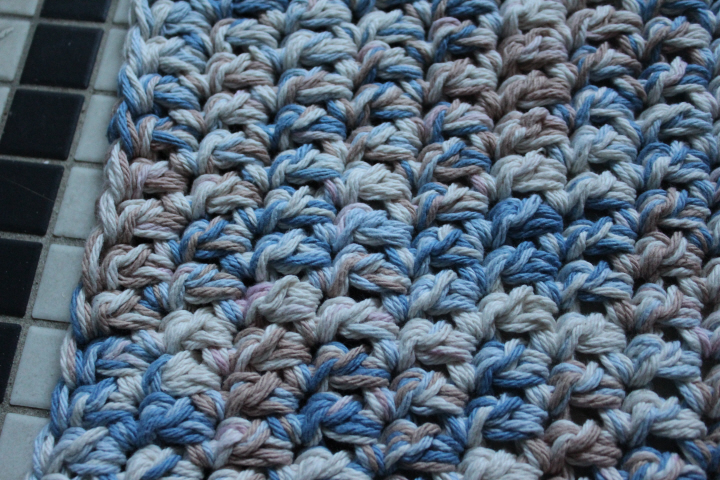
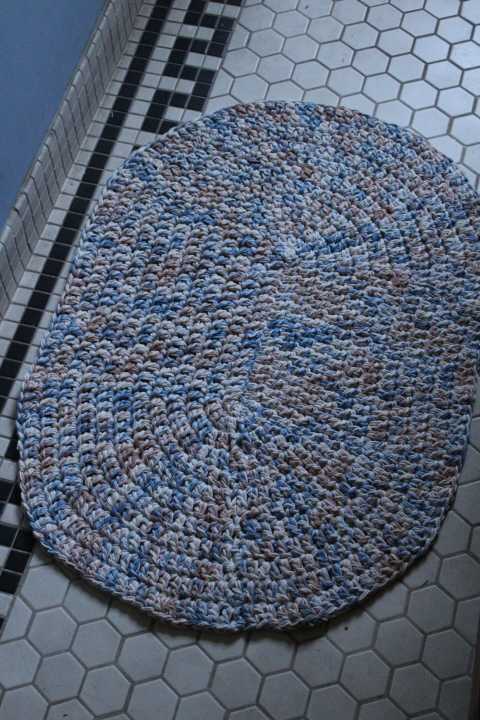
    During the listening of this, I finished up a miniature carpet that I had started some time ago, playing around with a skein of new-to-me DMC Coloris, the familiar six-stranded embroidery floss but in variegated colors.  This one is 4515, also known for some reason as "Paris" — some of the colorways are rather vivid, but this one is beautifully subtle.  I decided to make a sort of "rag rug" just to see how the colors worked on a large field, so this is simply basketweave stitch, which is said to be good for covering large areas of canvas since it distorts less than continental or tent stitches.  (Basketweave, and even more so basketweave-plus-Coloris, is also, not coincidentally, a great choice for listening to a suspenseful audio-book, as you don't need to pay much attention to the stitching! no changing colors or counting!)  I'm not entirely sure about the "good coverage" part as there were frequently strange diagonal streaks of canvas visible across multiple rows, but in this case it worked out all right as the canvas (as many of the cotton ones do) shrank a bit in the blocking, thereby tightening the stitches.  I used shade 931 to edge the carpet with long-legged cross-stitch — according to the chart Mary Corbet gives at Needle 'n Thread, the component blues are 930 and 932, but 930 seemed a bit too dark to edge this, and 932 too light, so I used the one in between.  You can see that it's ever-so-slightly darker than the light blue in the Coloris, but it's a good compromise between the darker and the lighter ones.

    7405

    One of these days, I might try working the wrong side of the basketweave stitch on the right side — it has a fascinating "woven" texture that I'd like to see without all of the worked-in thread ends!

    7404

    Bestway Knitting 1946 A Fair Isle to Use Up Your Small Scraps of Yarn - Vintage Knitting Pattern Archive - 1 of 3

    And last but not least, though not actually from the library as it is on my Kindle, the D.E. Stevenson list is currently reading Mrs. Tim Gets a Job, the 1947 continuation of Hester Christie's diary.  Here, with Tim off with the Army in Egypt and their children heading to boarding school, Hester finds herself unexpectedly accepting a job offer as the assistant to a woman who has turned her Scottish country home into a small hotel.  Hester is a thoroughly engaging character, like many diary-keepers rather reserved in public but with so much to say in her diary that you quickly warm to her, even though if you thought about it, she would be one of those people in the corner of the train carriage of whom you are often vaguely aware but don't really notice.  The diary format is unique among Stevenson's novels to Mrs. Tim, but like all of Stevenson's books, it is full of her quiet intelligence, humor, and philosophy that everything works out pretty much all right in the end.

    I usually try to make at least some effort in choosing a pattern for my D.E. Stevenson virtual knitalong, not wanting to just take the first old thing that pops up, but this was the very first one and suited in at least three ways.  It's charming, obviously, that is certainly a plus!  But the story is set in Scotland in the very early spring, and while the weather is glorious, and gloriously described, often enough for us to feel Stevenson's love for her native land, it cannot be denied that Scotland in March and April, even southern Scotland, can be somewhat, well, let's say bracing — according to a chart of average temperatures, perhaps only towards the end of the latter month does it get up to a high in the mid-50s F (10 C).  One would be glad of a few jumpers, I expect!  And this one is immensely practical in the post-war time of continuing clothing rations too — the title is in fact "A Fair Isle to Use Up Your Small Scraps of Yarn".  The list of recommended colors of wool brings up an uncomfortable reminder of the casual usage of certain words in the 1940s that today make us shudder — curiously, but thank goodness, the abbreviation in the instructions is just B for brown. The first pattern of open and solid diamonds is brown on yellow; the second pattern of diamonds is saxe blue on white (I had to look it up); the third is red on turquoise (!); the fourth is green on white; then a bit more plain yellow ground, and the pattern repeats from there.  (I very much hope that that diamond just under the opening-point of the collar is centered ….)  Amusingly, Sirdar's "Super Shetland" is the same wool that the Victory Jumper uses, my choice for the previous Mrs. Tim book! 

    This pattern is available free courtesy The Sunny Stitcher at the Vintage Knitting Pattern Archive.

    Talking of libraries, I very much enjoyed the short piece "From Bag End to Babel: Top 10 Libraries in Fiction" in "The Guardian" —

  • Farewell-to-Spring

    7387
    Despite their being on the list of contents in the "Payne's No.1 Rainbow Mix" that Julia and I scattered in February, I didn't realize that these too had come up in our front yard — Clarkia amoena (also known as Godetia amoena), or farewell-to-spring.  They had sprouted along with the others, but I thought that they were just mountain garland (C. unguiculata) that hadn't bloomed yet.  Then, when most of the other flowers had started to fade, these burst forth, in a veritable plethora of pinks, from pink-throated white to palest purple to soft pink to unbelievably-vivid magenta.  The flowers remind me of azaleas, with a similar shape and slightly-ruffly-edged petals, and with the sheer volume of blooms, crowded together in masses of pink.

    They give the front yard quite a different character from six weeks ago — it's like two wildflower gardens in one packet!

    7394
    7394
    7394
    7394
    7394
    7394
    7394
    7394
    7394
    7394