• Monday

    via GIPHY

    Probably most of us could use some de-stressors these days, so here's one to help start the week in a calm frame of mind — it was originally posted at DeStress Monday.  Just "breathe with the shape" ten times or so — but it's better to relax and not count than to exacerbate your stress by wondering if that was the ninth breath or the eleventh!

  • 6degoct

    There is a new-to-me meme hosted by Kate of Books are My Favourite and Best, called "6 Degrees of Separation", one of two that I came across unexpectedly the other day — this one has you take the book chosen by Kate, and link it in succession to five more books, and see where it takes you.  (You don't have to read, review, or even have read them, just link them together by whatever occurs to you!)  The given book for October is The Turn of the Screw, which I confess I've never read, but I think you cannot get a degree in English lit without knowing all about it, so I lighted on the governess theme and went to Jane Eyre, which I have read, multiple times in fact.  It was happily part of a class I took in Victorian lit, in which we also read North and South, which was new to me but I liked very much.  (Also the series, which I thought was very well done.)  Gaskell reminded me in turn of Cranford, which I had started reading some years earlier but didn't get very far into before giving up, and then just a few months ago, after watching the series for the umpteenth time, I gave the book another chance — though I was aware that there are quite a lot of differences between the two — and really enjoyed it.  For nos.5 and 6, I made quite a jump — I was looking at the cover illustration for Cranford, and I still don't know which came first, but I thought of bonnets and Laura Ingalls' perpetually-slipping bonnet ("Laura! Ma says you'll be as brown as an Indian!"), hence Little House on the Prairie, and of that fellow peering over the top of the fence, who reminded me immediately of Mr. Collins, hence Pride and Prejudice!  (To be honest, I'm more bothered now, looking at the Cranford cover, about that chair leg! I'm sure it will give way under that poor girl at any moment!)

    I have also chosen these particular covers because I find them both appealing and appropriate to the book!  (Except for that wretched chair leg, of course — do let me fetch you another chair, my dear! …)

    1136

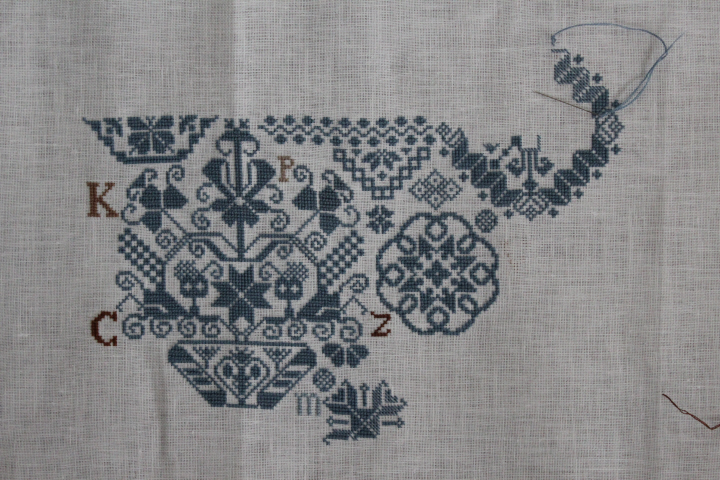
    Steady progress on the "Quaker Virtues" sampler.  I like the "Driftwood" taupe-y brown, but I'm not entirely convinced yet, so I've put the one letter in so that I can think about it for a while.  A dark coffee-brown would be handsome, too.

    1128

    But, oh, what is this?

    I had ordered a piece of linen and the "Anna Ohman" sampler nearly a month ago, and shipment of the linen kept getting delayed — one of the reasons I decided to go ahead and start "Quaker Virtues" — but the linen arrived at last a few days ago, and looking at it and the chart, well, can you blame me?  I braved the 25 minutes' drive to the nearest needlework shop, which I was doubly happy to find open, in these uncertain times, and spent a happy hour browsing the racks and chatting with the owner on the other side of the shop.  The thread I was interested in trying, Classic Colorworks, didn't have enough in very many of the reds I liked, and so the owner recommended ThreadworX, which is not only a local company but comes in twenty-yard skeins, compared to Classic Colorworks' five.  I was hoping for a Falu red, that deep red so often seen on Swedish country houses —

    800px-Gård_med_fattigbössa_framför_i_Västerby_hembygdsby_i_Rengsjö_i_Hälsingland_2012-07-09_c

    so was delighted to find one that comes very close, and goes beautifully with the café au lait supplémentaire of the linen.

    1140

    This is just the first piece of floss! worked with one strand, as the linen is 40-count.  Very small stitches —

    1150

    — but, oh, isn't it pretty?!

    The other bookish meme I came across, when I was replying to a comment on my "Swallows and Amazons" post last week, is the weekly "Bookshelf Traveling for Insane Times" — it was started by Judith of Reader in the Wilderness, and is now being run by Katrina of Pining for the West.  The idea is to share a bookshelf or stack of books in your house, and write a bit about them (read Judith's two original posts here and here) — simply to share discussions about books literally and figuratively "un-hemmed in by spatial constraints or parameters".  I suspect that we are not the only bookish household to find ourselves short of shelf space, and one day I was looking without quite seeing it at the fireplace we'd been so disappointed to realize, after the excitement and confusion of buying our first house, was only a dummy with a gas hook-up and no chimney, and I thought now, "well, nothing's burning in there, might as well put books in it!"  It is clearly not ideal, having to stack books vertically, and it's even harder to dust than a proper shelf, but needs must ….

    Most of our bookshelves have general themes — the travel books are all in one place (along with foreign languages), the science fiction, mysteries, knitting, and so on — but the fireplace, being a catch-all, didn't have any sort of plan, though as it turned out most of the books in it are history-related in some way, except for the D.E. Stevensons, the hardcover copies of which somehow found their way here from other places in the house.  I guess we've been on a history kick lately, though I do spy a few novels in there, and the Shakespeare books that wouldn't fit on the Shakespeare shelves.  Seeing this photo reminds me that I must finish The Wake — it was very atmospheric and dense, I remember from the first chapter or so, but required considerably more of me than I quite had at the time, not unlike W.G. Sebald.

    1142 1

  • 1127

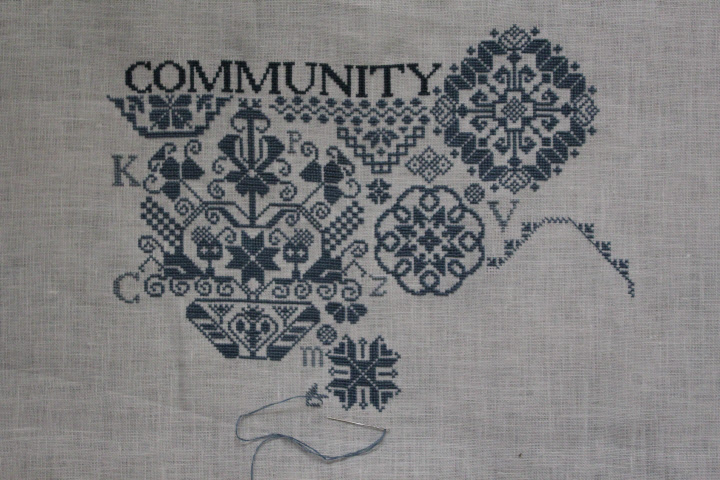
    A sampler of a thousand stitches begins with a single floral motif.  Or something like that.  I suspect it's considerably more than a thousand stitches, actually — this is a week's stitching, an hour or so most mornings, and there is still the rest of the "flowers" and the vase and quite a lot of curlicues to go, in just the one motif!  Not that I'm complaining, mind — it's very peaceful and meditative, especially with the single color.  I decided to use the DMC 931 since there is a good chance that I will not be able to find thirty-some skeins from the same dye-lot, so that any variations thereof will actually be a good thing.

    I forgot to add Molly Clavering to my summer reading — looking for something cozy, my thoughts naturally turned to D.E. Stevenson, but as I knew there was a group read of Amberwell that I would join, I thought I would fill the gap until then with Clavering's Mrs. Lorimer's Family, which I enjoyed as much this time as I did the first.  I also found out that there was a recent-ish reprint from Greyladies of Clavering's Near Neighbours, and so I splurged on a copy.  Opinions on the DES list vary as to the similarities between Clavering and Stevenson (who were in fact friends and neighbors, as well as contemporaries), but I enjoyed Near Neighbours thoroughly, and thought it on a par with the best of Stevenson, with its gentle intelligence and wit woven throughout a plot in which "nothing much happens" but which one closes at the end with a smile of satisfaction that everything has come out all right.

    Mount tbr new 1 pikes peak small 2
    It occurred to me yesterday after writing here that the Ransomes were on my "Mount To-Be-Read" list and that since there were six of them I might have scaled the first peak, as it were — and so it proved to be, as the first goal is twelve books and Great Northern? made my total fourteen!  I took the liberty of making a new badge, with a less time-sensitive title. (The original Mount TBR challenge is at Bev Hankin's blog My Reader's Block.)

  • Swallow
    I was sitting here some weeks ago thinking suddenly, I need to read more, and so I pondered for a while what to choose.  I decided that it was time, after a great many years, to reread the Narnia books, and though I finished Prince Caspian with a sigh of pleasure and my hand was reaching, metaphorically, for Dawn Treader, it occurred to me that there were six volumes of Arthur Ransome's "Swallows and Amazons" series on my shelf still utterly unread.  I had picked up Swallows and Amazons at our beloved local children's bookstore, and enjoyed it very much, enough that when the owner decided to retire and was selling off her stock at half-price, I went over and bought all of the rest of the series that she had — and yet, there they sat on the shelf, for years.  And so I thought now that they would be just the thing right now, in these difficult times when one wants children's stories with plenty of adventure but the assurance of a safe homecoming at the end.  It had been long enough that I thought I should read the first book again, just to get the sail filled, as it were, and I enjoyed it just as much as the first time around.  But I have to say that, while the first book is certainly good, Ransome really hit his stride as he went on.  He clearly knows his stuff, both boats and the Lake District in which many of the stories are set, and better still, he has that rather rare ability to write from a child's perspective that makes you forget that he isn't one himself — as I say, I love the Narnia stories, but it is always clear that they are being told to you by an adult, where Ransome reminds me quite a lot in this respect of Elizabeth Enright's Melendy family series, a different sort of story but with that same feeling of immediacy, of being immersed in it yourself, this is what it's like

    I read, in rapid succession, Swallowdale, Winter Holiday, Pigeon Post, We Didn't Mean to Go to Sea, Secret Water, and Great Northern?, coming suddenly to the end of my collection with a sigh of dismay.  They are all, of course, boat-related but the focus is on different things in each, and new characters come in here and there, so that each book is quite different — especially, I thought, We Didn't Mean to Go to Sea, as throughout the series there are adventures and risky situations of course, but, perhaps because I'm a parent now and long past being the same age as the Walker children, the very real danger they are in at being literally swept out to sea was more than unsettling.  (This one contains the only mention in the whole series of one of the children being seasick, and the physical reality of it comes as quite a shock.)  But, as I say, I enjoyed the series immensely, and can see why so many readers still think of them as beloved favorites.  I am amazed only at the fact that I had never heard of them before!

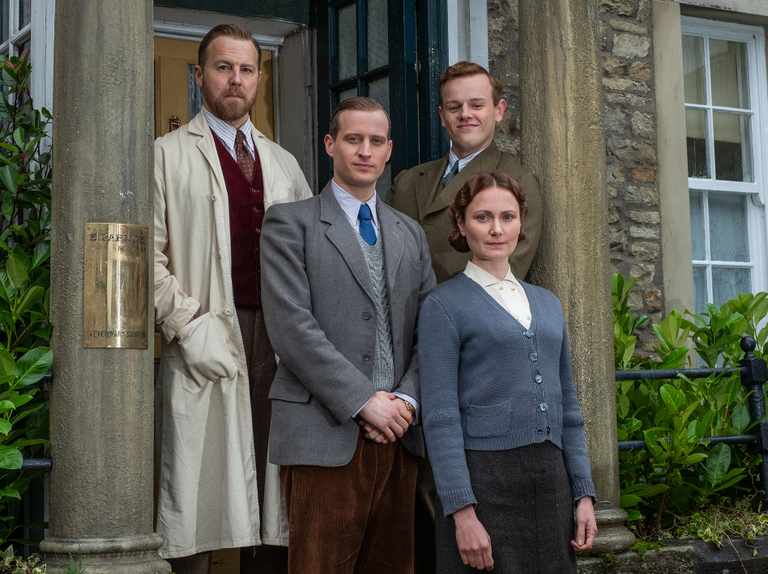
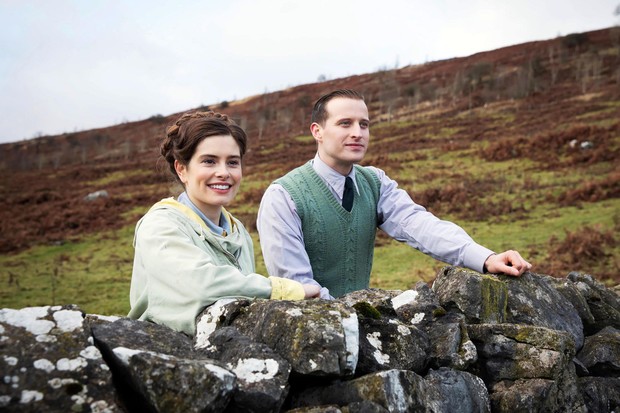
    (The photograph is a still from the 2016 movie version of the first book.  I haven't seen it — I found out about it not long after I finished the book the second time, but after reading in reviews that the writers felt it necessary to insert a completely new subplot about real spies, I thought, "oh no!"  Hearing that Susan has been turned into a whiny bumbler who can't even manage to cook a fish made me shriek — apparently Peter has also been made "more real".  Why, why, why take classics that generations of children have loved passionately, and change them??  Oh, well — it looks beautiful, at least.  Sigh.)

    4628716_8cfebfad_1024x1024

    The D.E. Stevenson list is reading Amberwell, and this time around I volunteered to lead a section, offering a summary of each chapter and some discussion questions.  Mine turned out to be quite early in the book, chapters 4-6, which I estimate to be taking place around 1930.  The Ayrton family live in a fine old estate on the west coast of Scotland — the story begins a few centuries earlier with the building of the house and the establishment of the Ayrtons, but by chapter 4 the main characters of the "present day" have been introduced, Mr. and Mrs. Ayrton, his two sons from his first marriage, and three daughters from this second, which daughters are all still under ten and in the care of their Nannie.  One of the central events of this section, and a recurring motif in the story, is the dedication of Mr. Ayrton's contribution to the estate — others in the generations before him were a walled garden, a bowling-green, a stone terrace, and so on — Mr. Ayrton has decided upon a fountain with the statue of a little mermaid. On the day of the ceremonial Turning on the Fountain, the girls are sitting on rugs on the bowling-green in their best dresses and the boys in their kilts, waiting for the festivities, and Nannie is nearby keeping an eye on them, and knitting.  This seems too good and opportunity to pass up, to choose something for my "Knitting with DES" virtual knit-along — so what might Nannie be knitting, I asked myself.

    Bestway749a

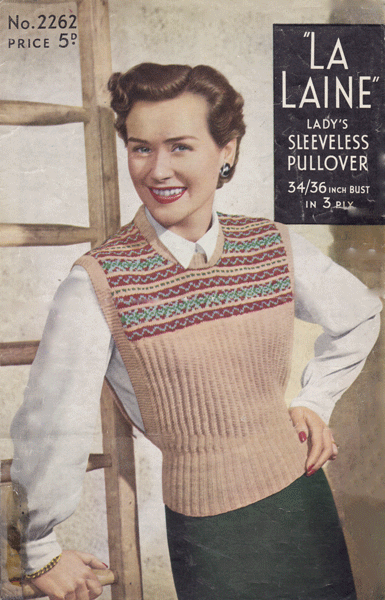
    This is a bit later than ca.1930, by about a decade, but how could I possibly resist three little girls in matching boleros? and just the right ages!  This is in the Bestway 749 booklet, this pattern available for a small fee from FabForties.co.uk (who seems to have changed her name recently from The Vintage Knitting Lady, perhaps to specialize in the 1940s?).

    (The house in the photo above, by the way, is Inchmarlo, not on the west coast as in the story but in Aberdeenshire.  My Scottish-immigrant ancestors worked there, according to the 1840 census!  The descriptions of Stevenson's Amberwell and a number of the dust-jacket illustrations in the book's long publishing history remind me of Inchmarlo, and so I was delighted to find this photo available for Creative Commons use at Geograph.uk — this one is by Stanley Howe.)

    HMS-Surprise-stern

    "Swallows and Amazons" leads quite naturally to a grown-up sea adventure, and I picked up Patrick O'Brian's Master and Commander after many years — too long!  I've only just finished the second in the series, Post Captain, enjoying every moment.  O'Brian's prose is so complex yet wonderfully fluid that it is a pleasure to read, and his flashes of wit and deft characterizations are sheer genius.

    (The photo — from Wikimedia Commons — is the stern of the Surprise built for the 2003 movie and now at the Maritime Museum of San Diego.)

    1069

    It's been too hot lately for snuggling-under-a-blanket reading, so I just made one instead, and gave it away as a house-warming present — it is the simple-but-effective "Modern Granny Stitch Blanket" by Jess of Make & Do Crew.  I used the recommended Lion Brand "Heartland" yarn, in "Glacier Bay", "Hot Springs", "Olympic", "Mount Rainier", and "Kings Canyon" (for a lark, try guessing which is which! I think I got only one right). 

    1072

    I ran out of "Olympic" just a little over two rows short — there had been only one skein of it in the store, so I bought a sixth color but decided that I'd risk looking for another skein somewhere else.  And rather surprisingly, because it's 100% acrylic and therefore produced by recipe that isn't subject to the whims and eccentricities of natural fibers, the dye lots of "Olympic" at least are noticeably, even disappointingly, different.  There is much less of the black in the second skein, leaving the color rather dull and flat — oh, well.

    I'm not generally a huge fan of acrylics, but this is quite pleasant to work with, and I must say it makes yummy tassels!

    1071

  • 1078

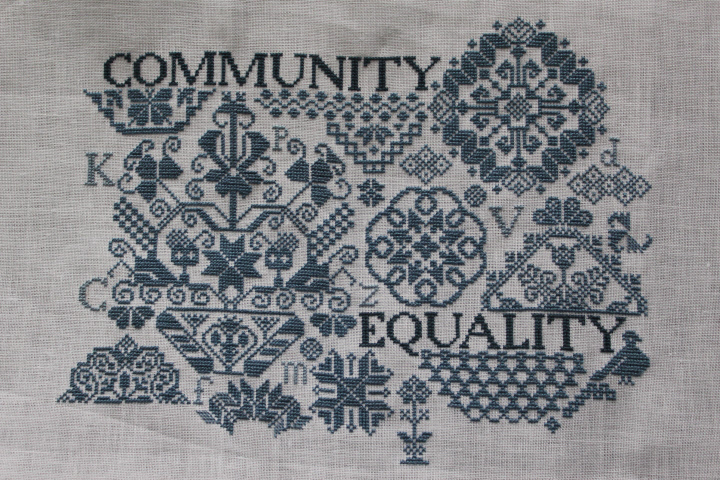
    I've long had a soft spot for the Quakers, I guess ever since reading Steal Away Home — maybe in third or fourth grade — in which two runaway slave boys are helped on their journey north along the Underground Railroad by, among others, generous Quakers, and from Jessamyn West's Except for Me and Thee which I read in high school, I think, coming away from the story not only with one of my early book crushes (after Tom Sawyer!) but also with a growing respect for a religious community that from its earliest days gave its women a place beside its men, not below them, that not only preached the values of tolerance, peace, and integrity but practiced them.  It was an easy decision for me to choose a nearby Quaker college when I finally went back to get my degree, and although it was not a "religious" college at all, those values were nevertheless very much in evidence.  When I first started becoming intrigued by antique cross-stitch samplers last summer, one of the first I saw was this "Quaker Virtues" by ByGone Stitches, and it spoke to me deeply, on many levels.  There is the Quaker connection, of course, but I also loved its jigsaw-puzzle-like blend of small and large figures — that so often look like Scandinavian knitting motifs, another deep pleasure for me — and the intertwining of letters and words with the motifs, words that would speak to me deeply with or without the Quaker associations.  I bought two sampler patterns at about the same time, and started with the "Froth and Bubble", then got sidetracked by the "Peace to My Friend" — but lately, stitching of a summer evening on a little freebie chart that will soon be finished —

    1080

    which is by Beth Twist — my thoughts turned once again to the "Quaker Virtues".  I had bought the linen at the same time as that for "Froth and Bubble" but held off on getting the threads, and when I started planning in earnest this week, I remembered why.  The recommended threads are overdyed cotton flosses by Gentle Arts or by Classic Colorworks, both of which are extraordinarily beautiful — the downside is that the chart says you will need 38 skeins of the main color and 3 of the accent one, and 41 skeins of overdyed thread tip into three figures in one's shopping basket, I was rather aghast to see.  Even with David back at work (huzzahs and relief all around), that's a lot to spend on thread — even on the assumption that 38 is probably a generous estimate.  So I've wistfully but realistically set aside Classic Colorworks and Gentle Arts for smaller projects, and have been auditioning the more budget-friendly DMC —

    Threads

    Their "Antique Blue" is I think my absolute favorite DMC color family, so the 931 is a sentimental favorite, and I'm sure would be very handsome for this chart with the sand-y 3782, though I'm also really liking the way that the slightly-more periwinkle "blue gray" 161 plays with the taupe-y 07 — and there is a possibility of overdying at home, with my one bottle of RIT "Evening Blue," carefully saved in this 2020 shortage.  (Would it stretch to 38 skeins?!)

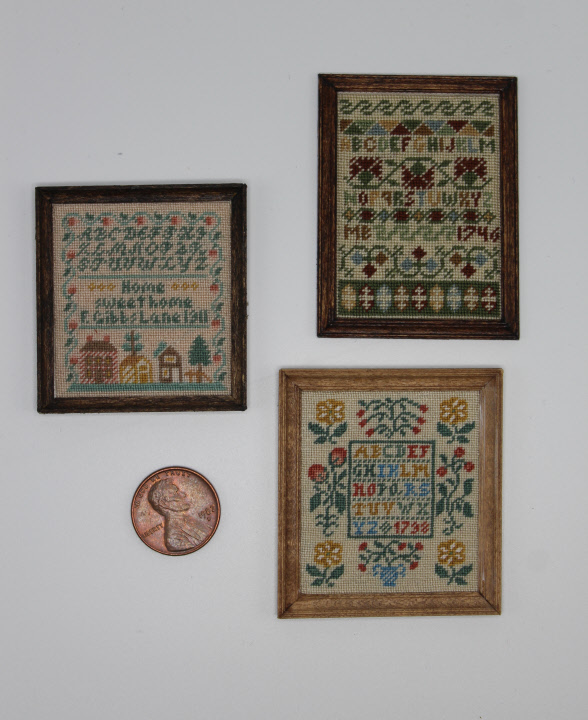
    And, if you are wondering how a group that promotes simplicity and plainness can inspire designs full of such near-giddy abandon as the sampler above, you are not alone.  I had to laugh when I pulled out the "Virtues" chart again this week, that after months of looking at antique Quaker samplers, how "modern" this one looks to me now!  Like most sampler styles, different regions evolved different arrangements and styles of design, some quite distinct from others.

    Pim Elizabeth 1729 - earliest known Quaker sampler

    The earliest-yet-known Quaker sampler is this one by Elizabeth Pim, dated in different places 1729, 1731, and apparently 1750. The Pims were a noted Quaker family in what is now County Laois in central Ireland, and Elizabeth may have been associated with the Quaker school there at Mountmellick, or simply worked hers in the then-emerging Quaker style.  Samplers were originally simply models for future reference, so it is not surprising that Elizabeth worked hers on different pieces of linen at different times, then sewed them together.  Interestingly, the distinctive scattering of initials of family and friends is already in evidence on her second piece.

    Swinborn Eliza 1803 Brooklyn Museum CUR.50.141.166

    Eliza Swinborn's sampler of 1803 is already a "typical" Quaker sampler, with its border of half-motifs surrounding full motifs in the center, with scattered initials. The motifs of paired birds, swans, flower sprays, and eight-pointed stars, because of their association with the Quaker virtues of equality, community, simplicity, and peace, would quickly become used widely by Quaker teachers instructing their students.

    Budd Rebecca 1801 - Westtown Quaker School Philadelphia

    The Ackworth and Westtown Quaker schools, in West Yorkshire and Pennsylvania respectively, took the alphabet-and-motifs sampler combination and went in different directions with it.  Ackworth samplers were typically a selection of half-motifs around the edge of the sampler, with full motifs in the middle, and like Elizabeth Pim's with the initials of school-friends or family scattered in the spaces between motifs.  I don't know if it was the girl's choice or the teacher's, but Ackworth samplers are found in both monochrome and polychrome, as these by Rebecca Blake in 1809 and Ann Grimshaw a few years later in 1818 —

    Blake Rebecca - Ackworth 1809

    Grimshaw Mary - Ackworth 1805

    Grimshaw ann orig

    (Nobody online wants to venture that the two Grimshaw girls were related, but as a genealogist that seems to me an interesting tidbit worth researching!)

    Ellis Rachel 1800 - Westtown Quaker School Philadelphia

    Although some Westtown students worked samplers very much in the Ackworth style, some of the teachers went in a different direction and emphasized the alphabet with a plain set of letters like Rachel Ellis's above.  (Perhaps this was for the younger girls, just learning to stitch?)

    Susanna_Furman_1831

    Susanna Furman's 1831 sampler has a less "typical" arrangement, but still shows the influence of the Quaker tradition with its central wreath of birds and a number of floral motifs that are found in other Quaker samplers.  She may have been from the Delaware River Valley.

    Sandford Emma 1867

    It was not a Quaker school, but you can see the relationship between Quaker samplers and the style that developed at the Bristol Orphanage.  This one by Emma Sandford in 1867 is typical of the Bristol Orphanage style, with its lines of non-stop alphabets at the top that gradually decrease in size — sometimes surrounding a motif in the middle, sometimes not as the stitcher chose — then a closely-packed assortment of borders and motifs in the lower section.  (Bristol Orphanage samplers were always hemmed, as the goal was for the girls, and sometimes the boys, to learn to sew and mark neatly and efficiently, in order to obtain good jobs in service to support themselves honestly.)

    So you can see that the unusual octagonal shape and closely-packed assortment of motifs of the "Quaker Virtues" sampler give it a much more modern air than traditional Quaker samplers, but it bears a very close resemblance to them, especially to the Ackworth style!

    (Sources for much of this historical information comes from here, here, here, and here.)

  • ,

    That Was Fast!
    1044
    The "Color Wheel" sampler from Dropcloth Samplers, done!  I have just a couple of quibbles: I wish that the fabric was a bit bigger — the "margins" are a bit skimpy, and especially for novices like me I would have felt safer with a bit more room for error and/or a bit more scope for mounting — and although I completely understand about artists wanting to identify a design as their own, having "DROPCLOTH SAMPLERS" smack in the middle like this keeps the stitcher from putting initials and date there, and there's really nothing you can do about it as it's printed on the fabric, much more centrally than on other designs from Dropcloth.  On the bright side, I love the piece's cheerful exuberance and vivid colors!
    1046

    1048

    I can see now that the original uses four strands of floss (in some sections at least), not three as I chose because it's the equivalent of the perle no.8 recommended for beginners.  Mine therefore looks to my eye at least a bit more spare than the original, though this isn't a problem per se.  Four strands does also give you more scope for blending colors, which I definitely wanted to do.

    1045

    I shamelessly pinched the idea of a running stitch edging around the binding that uses the "main" colors of each section!  I even learned how to tie off the quilter's-knot.

    Here again are the colors I used —

    1043

    though as it turned out, in the case of the French knots and the coral knots, I decided on the fly which of the possibles to go with.

    1051
    With just the caveat that the supplied fabric shows noticeable needle holes if you have to pick anything out (yes, I learned this from experience …), these samplers would be excellent projects for Scouts or 4-H groups, this "Color Wheel" or maybe the "Stripe" for beginners, and the "Original" and others for either kids with some embroidery already under their belt, or for those with more focus, though simply because the latter samplers are bigger.  It would be great fun to see the variety in a group's choices and work!

    1050

  • Blursday

    1043
    Good heavens, it has been almost two months since I posted last!  It isn't that I haven't been doing anything, just that … well, you know.  One day blends into the next.  I can usually remember what day of the week it is, but the date — sometimes I only remember that it's late-August.  Even our clocks are uncertain lately, with this one five minutes ahead of that one, which is twenty minutes ahead of another one, as though time is literally moving at a different rate in each room of the house.

    Above is the Color Wheel Sampler from Dropcloth Samplers.  I fell for the cheerful exuberance of Rebecca Ringquist's designs and had a hard time deciding which of them I wanted to stitch, but chose this one to start with, at least.  The thread colors aren't given, which is fine when you're willing to wing it, but what spoke to me about the original was its colors as much as anything else, and so I was a bit dismayed that the only clue was the photograph on the packet.  I appreciate interesting color combinations, even unusual ones, but feel more than a bit uncertain when called on to make the combinations myself, so I spent quite a long time at Michael's yesterday poring over a list that had taken me quite another long time to write up from online DMC color charts the day before, trying to decide if this color was close to the original color, or if that color clashed just a little too unpleasantly with the one next to it.  As you can see, I was unsure about the yellow-oranges!  Some of these I bought, some I had already.  (Yes, I write the numbers on the "bottom" of the paper bobbins.  It seemed that very time I put one back in my storage box, the slits that hold the ends of the thread kept getting snagged on the bobbins already in the compartment, so one day I just started turning them around.)

    1035

    In the spring we bought a pair of pop-up raised beds, to put at one side of our front garden, which thanks to the Tree in our back yard is the best place for sun-loving things to grow.  I had envisioned herb beds, popping out for a bit of basil or sage, and chose a couple of heirloom dwarf tomato plants to try starting from seed.  I don't know if it's me, or just that starting tomatoes is not like growing nasturtiums, say, but I carefully planted at least two dozen seeds and had less than half of them get above the edge of their seed pots, and two survived.  Neither is the one I was really looking forward to, the cherry "Dwarf Velvet Night," alas — the healthiest one is the bonus one the seed company sent along with my order, "Dwarf Sleeping Lady"

    1034

    Not sure which the other one is yet, maybe "Dwarf Beauty King" or another "Sleeping Lady".  It's in behind the French beans, between sage and basil — a bit cramped, but things didn't quite grow (or not …) according to plan!

    1033

    How have I run a household for twenty+ years without knowing that you can grow cuttings of green onions on your kitchen windowsill??  When you buy a bunch at the market and use the green part, don't throw away the rest! just put the finger-length remnant in a jar of water, and in literally just a couple of days, if it has enough roots to start with, you will see a new length of green pushing upwards.  We got two or three full-sized stems or more from each one before they got pale, presumably from lack of soil nutrients and sun, and then I planted them outside.  All but one or two are now growing happily.  Recycled onions — amazing!

    Lucky day

    Wow, how often does this happen? four hypergems in one round!

    0996

    A three-tiered "dumb-waiter" table, from a hand-me-down House of Miniatures kit.  From this angle, you can hardly tell that despite my checking and re-checking, I still managed to glue it crooked.  Oh well — the color turned out nicely!

    0990

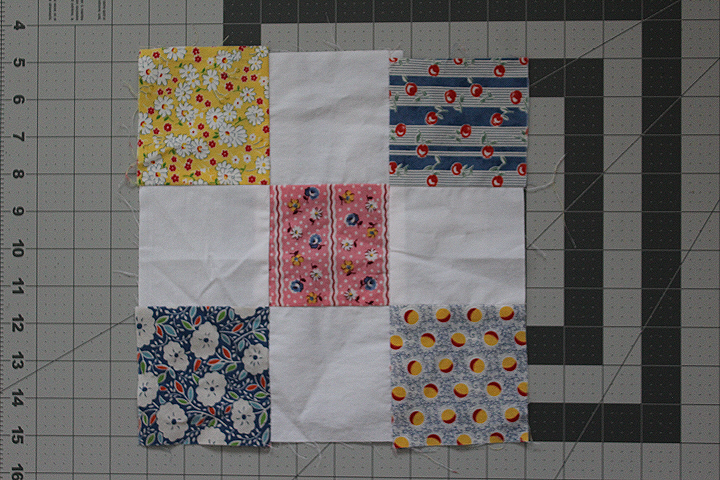
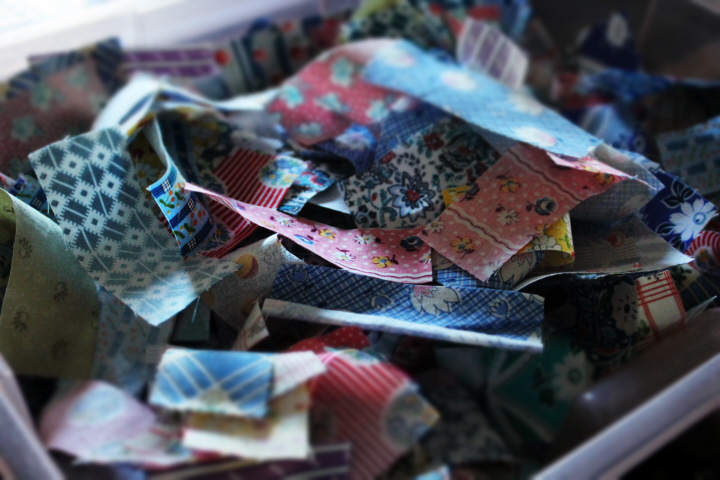
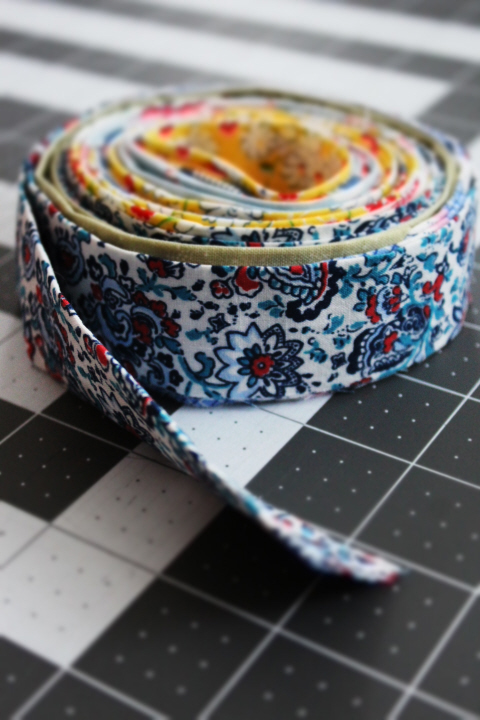
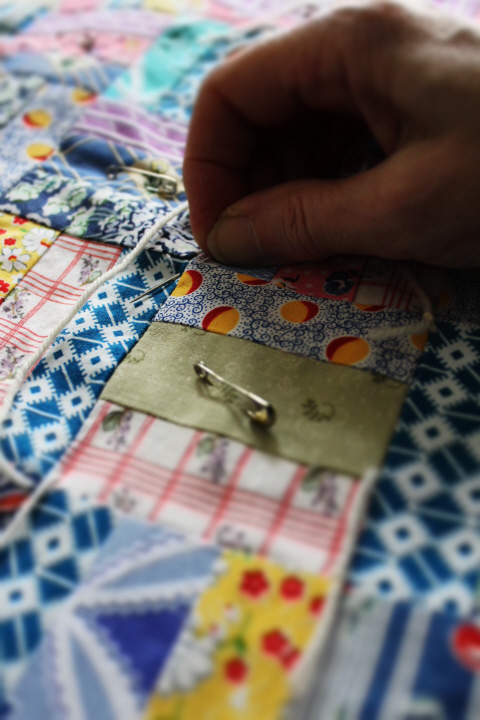
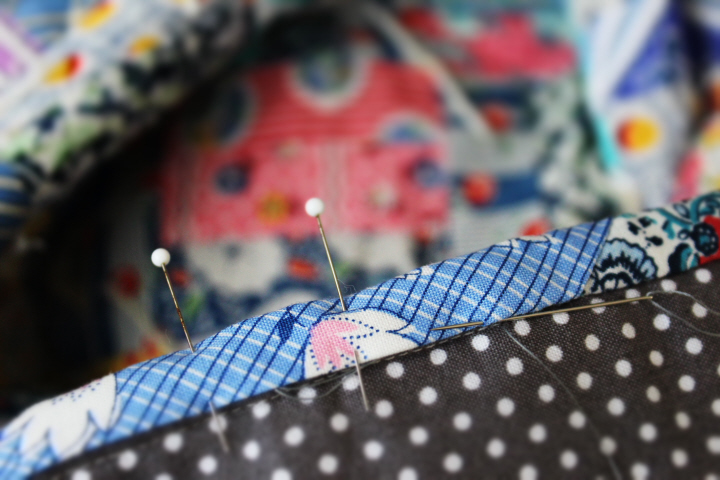
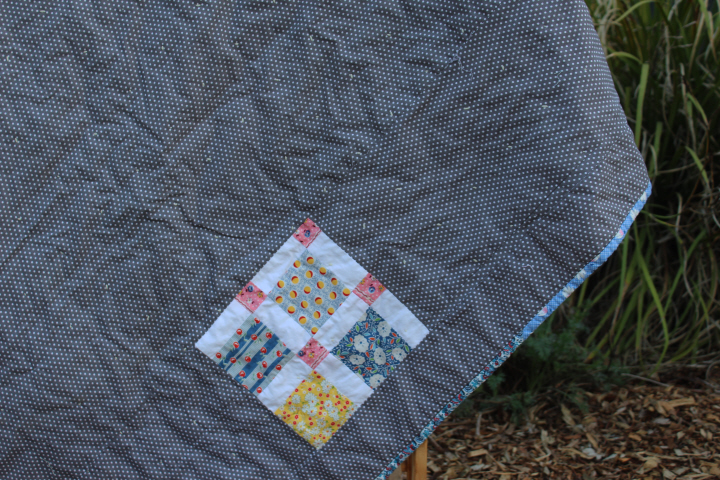
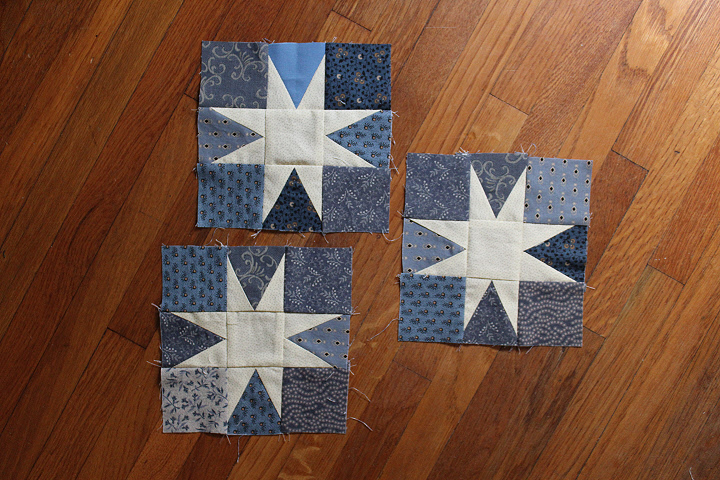
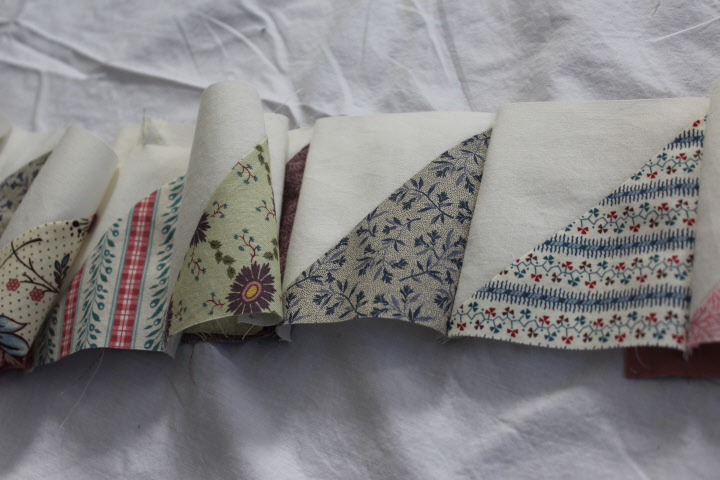
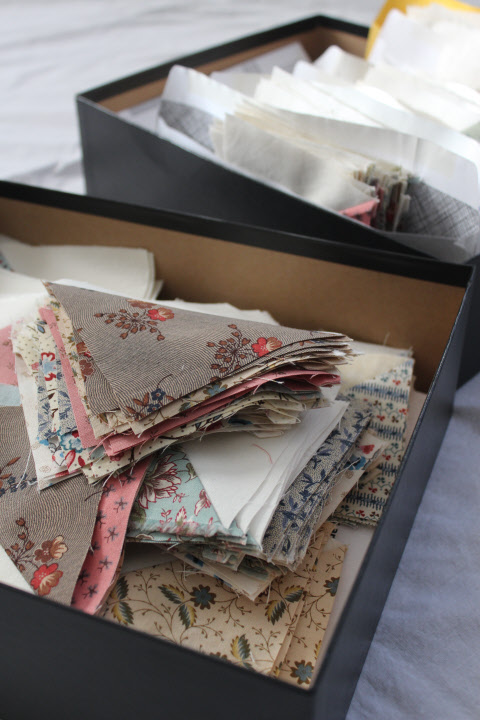
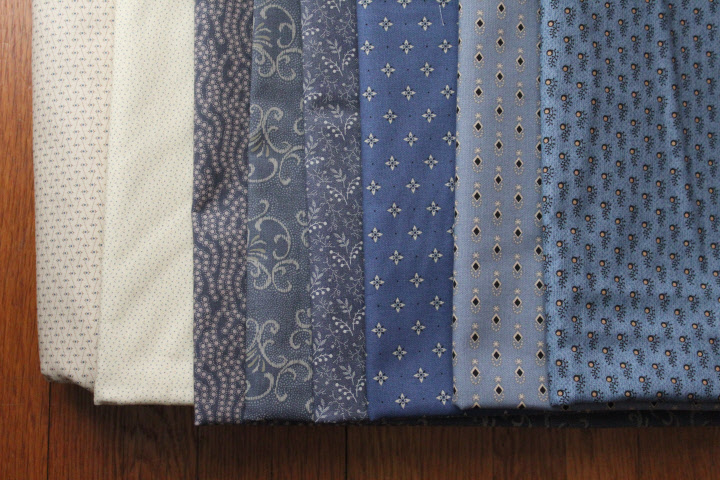
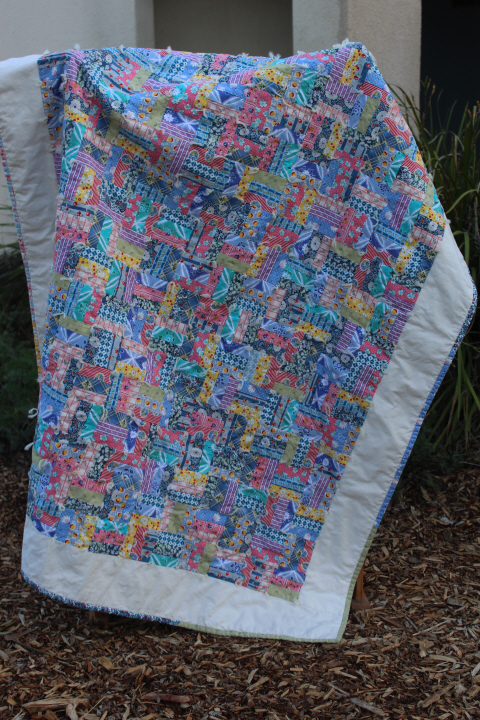
    I wanted to make a cover for Julia's bobbin lace pillow — you spread a cloth over things when you are not working on the project, to keep it from getting dusty or fiddled with by inquisitive pets (if you have them, so in our case the first is much more likely).  It seemed to me that large-ish quilt blocks would make excellent covers, but in scouting around the internet, as one does, I came across the “All in a Row” quilted placemat, and thought with a few modifications it would suit very well.  Julia has a large pillow, so the cover would have to be significantly larger than a placemat, and although I was tempted to batt it as in the original, I was concerned that that might make it a bit heavier and stiffer than one would want — it wouldn't do to dislodge anything when covering or uncovering the project, obviously.  I also found this pack of fat quarters on sale, pretty but not twee.  Perfect!

    1003

    While I was dithering, I decided to get my feet wet, as it were, by sewing up a bag to take to the farmer's market, since I can walk there and back quite easily.  It is the Summer Festival Sling bag, a free pattern from Swoon.  This fabric is the last of a unknown remnant I got ages ago — I had already made a roll for my increasing stash of crochet hooks with some of it, so there wasn't enough, no matter how I turned and pieced it, to do more than the two sides and the two inner pockets, but I like the finished bag a lot, and it is quite handy!  It has good-sized inner pockets to hold change and reusable produce bags.

    1006

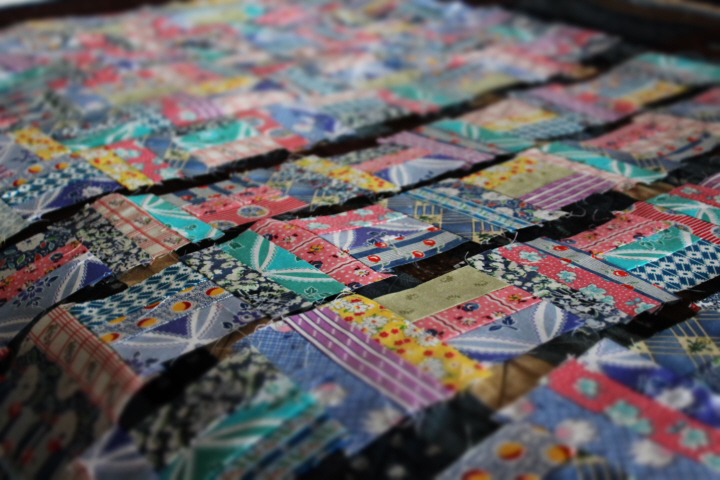
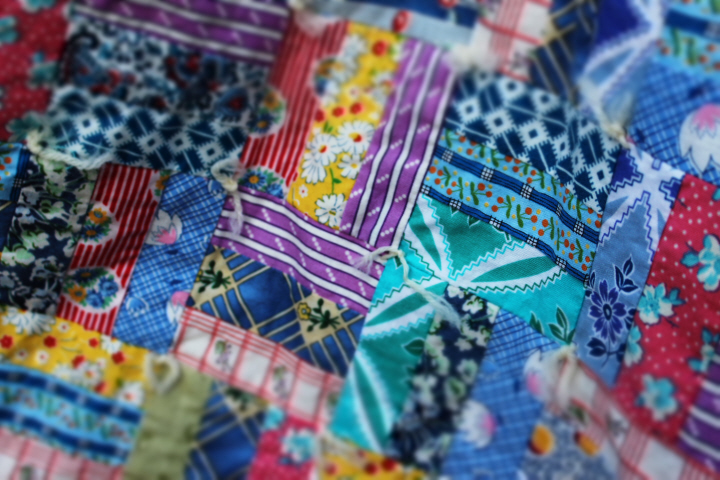
    This didn't turn out as well as I had hoped, but there it is.  I enlarged the dimensions by 147% — I don't remember now why such an odd figure! — though in hindsight perhaps I should have made the patchwork strip a bit deeper, to enjoy the patterned fabrics more.  As I said, I sorely wanted to hand-quilt it, even without batting, as it seemed an excellent small project for getting into that, but it also occurred to me that the pins on the lace pillow might get caught in larger stitches (which mine would almost certainly be) and pulled out, which is not what one wants in a lace-pillow cover cloth — quite the opposite in fact — and so in the end I did the whole thing by machine.  It did go together very easily, though, so my slight dissatisfaction is not at all with the pattern, but most likely from my not being able to realize my fantasy of hand-quilting something!

    I do like the fabrics, at any rate — that dash of algae green is a nice touch, to keep it from being too sweet!

    1007

    This is why the thought of pins snagged on quilting stitches was a concern —

    0995

    Julia is already miles ahead of me with bobbin lace, but that is in fact her only hobby at the moment, where I have a myriad of things that catch my interest — but I've been slowly turning out bookmarks, which are an easy beginner project as they can range in complexity but are small enough not to be daunting.  I still need practice, but I'm getting better …

    1040

  • FLOYD _PAULINE._WOMAN_SUFFRAGE_LCCN2016866495
    One hundred years ago today, Carrie Chapman Catt, one of the leading figures in the women's suffrage movement that had had its beginnings in the U.S. some sixty years before that, celebrated the certification of the Nineteenth Amendment with a speech including these words:

    The vote is the emblem of your equality, women of America, the guarantee of your liberty. That vote of yours has cost millions of dollars and the lives of thousands of women. … Women have suffered agony of soul which you can never comprehend, that you and your daughters might inherit political freedom. That vote has been costly. Prize it! The vote is a power, a weapon of offense and defense, a prayer. Understand what it means and what it can do for your country. Use it intelligently, conscientiously, prayerfully. … The vote is won. … but human affairs with their eternal change move on without pause. Progress is calling to you to make no pause. Act!

    "Woman Suffrage" (1915) photo from the Library of Congress.

  • ,

    Done! … ish

    Peace to My Friend framed 2

    Here is my version of the "Peace to My Friend" Quaker-style sampler by Jacob de Graaf of Modern Folk Embroidery, on 32-count linen in Natural by MCG Textiles using custom-dyed floss.  I made some modifications, perhaps most notably to me the alphabetization of the ligatures (!), and in the dedication and initials plaques, and some tweaks here and there with spacing but which I think don't detract from the charm of the original.

    It's "done-ish" because the frame is at the moment only a virtual one — though excellent, and perfect for this piece in both color and elegant simplicity — but I decided to enter it in the virtual County Fair we're having this year, the deadline for which is next Monday.  Even the mascot is getting into the spirit of things! —

    Contest guide

  • 0925

    I have been utterly delighted with this piece from start to finish, I admit.  It has always been one of my favorites in Frank Cooper's book — Oriental Carpets in Miniature — and so it was a pleasure to add it to my queue at last, and then to work it, and even better, to have something charming to make in these worrisome times.

    0916

    Here again is the late 18th-early 19th century original now in the McMullan Collection at the Metropolitan Museum of Art in New York (accession no.1970.302.8) —

    DP166864

    I think Cooper did a fine job here, reducing and (necessarily) simplyfing the design without losing any of its charm.  It is my good luck that he worked his version on 18-count canvas, and that converting that to 40-count silk gauze — which was only a matter of my using a different fiber, one strand of DMC floss instead of Paternayan crewel wool, and converting the colors — makes the rug a more-delicate scale for 1:12 miniatures, and very like the original proportions of a prayer rug.

    For colors, I used these —

    • dark blue 3750
    • medium blue 931
    • light blue 3752
    • ivory 3033
    • red 815
    • green 523
    • gold 680
    • yellow 422
    • coral 3722

    The green and light blue are very pretty but together their value is so similar that it isn't easy to distinguish them, so perhaps a darker green might have been better — though on the whole, I don't think it spoils the effect at all.

    I worked mine in continental stitch, which I find makes a neater back and an all-around more pleasant experience than working half-cross in tiny scales!

    0918

    0917

    This has always been meant to have pride of place in the carpet shop, so the next thing is to install it!

    0953