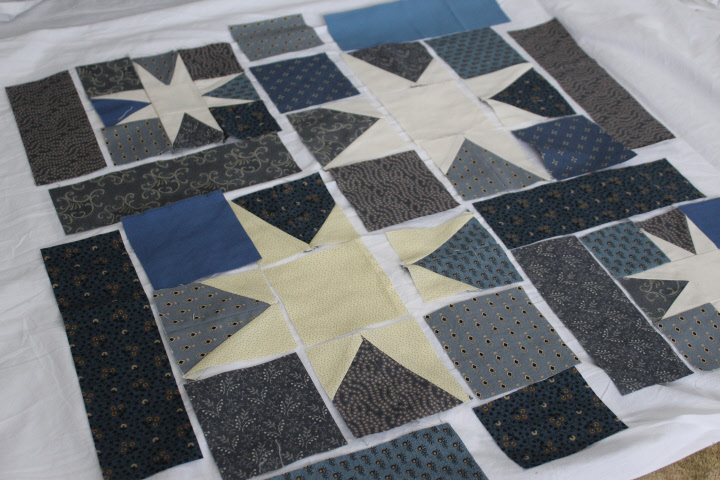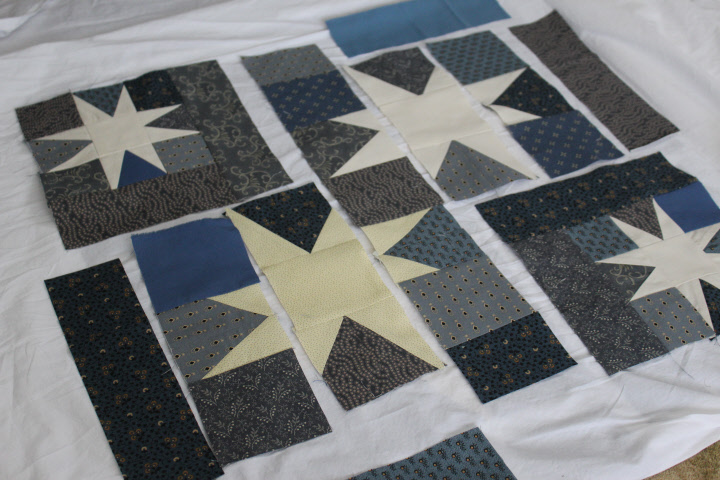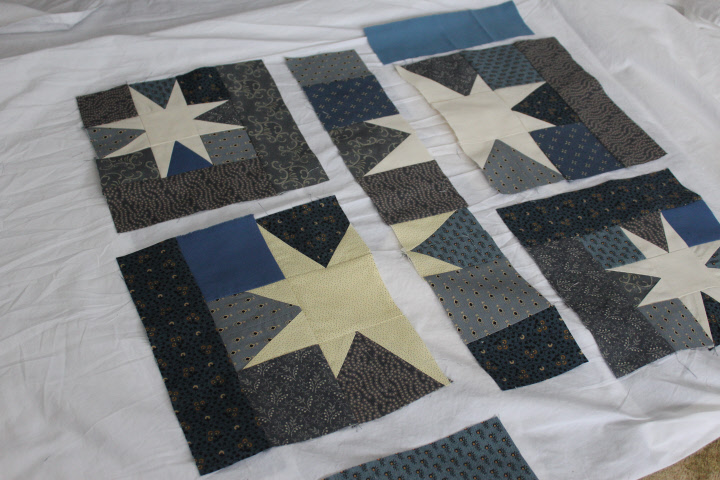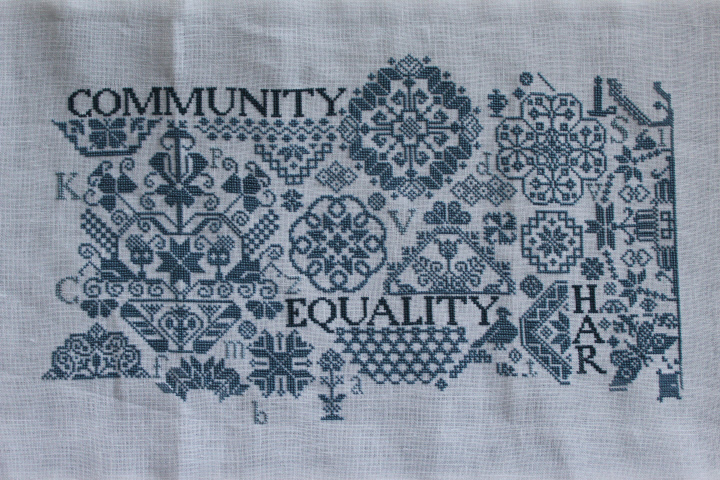
• 1551

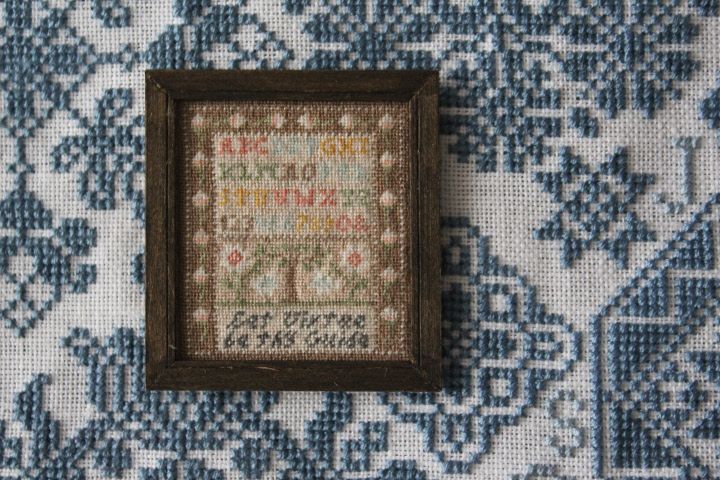
    Some of these have been finished for a few months, but I didn't want to show them here just in case, as they were Christmas gifts.  Two samplers for our mothers, both stitched to free charts and entirely from what I had on hand this more-budget-conscious summer — the one above is the "Skinny Mini" from Samplers and Santas for David's mom, who likes warm tones.  I "faded" some of the colors a bit and re-centered a couple of the sections, but otherwise did little to it for a pleasing and appealingly naive piece.  The one below is for my mom, who likes cooler tones and blues, the "Hold Fast That Which is Good" by Julie of Sum of Their Stories.  It doesn't come with floss colors noted, but I got pretty close to the original, I think (except that I changed the yellow running-stitch border to blue!), which appealed to me for its steadfast simplicity.  I made the frames myself — that is, I glued up the poplar molding lengths that had been beautifully-cut and perfectly-chopped to request by Xylo Art Framing, and I stained and finished them — the rabbets aren't quite deep enough for mounted needlework and glass together, but with David's help I managed to cobble together a solution with some extra pieces of mat board.

    1557

    1545

    A pincushion for Julia, who has already advanced to some very pin-hungry bobbin laces — this is based on the Hexagon pincushion here, with the obvious modification of giving it straight sides, since I wanted it to have as much surface area as possible.  Some time ago I bought a packet of Liberty scraps from someone on Etsy to use for miniature quilts, but this seemed equally worthwhile, and also fulfilled the "budget-conscious" criteria since the Kona backing is from the remnants I've slowly been acquiring and the stuffing is wool that Julia sheared from her project lamb last year.  There is a matching tab on the opposite side, so that it can be secured to a lace pillow for ready access.  The pins look small because the pincushion in fact turned out to be quite large indeed, barely fitting in my hand!

    1167

    This was for nothing, really, though I might convert it into a gift some time if I find a suitable occasion and/or recipient — the chart is another free one, from Beth Twist of My Heartstring, an enjoyable and pleasantly-quick project. I faded all of the colors, and used some 22-count Hardanger fabric that I've had sitting around for ages since graduating to smaller counts for miniature carpets.  Laura is now working as a local store's picture-framer, and she did this for me — I thought it turned out quite well.

  • ,

    Lacy Curtain Panel

    1569

    1574

    1564

    1928

    2043
    A new curtain panel for one of our closet windows, using the "Wheel Lattice" Square (8-round version) by Dayna Audirsch in no.10 crochet cotton, joined with a chain-stitch zigzag I saw here,

    2044 (2)

  • 1912
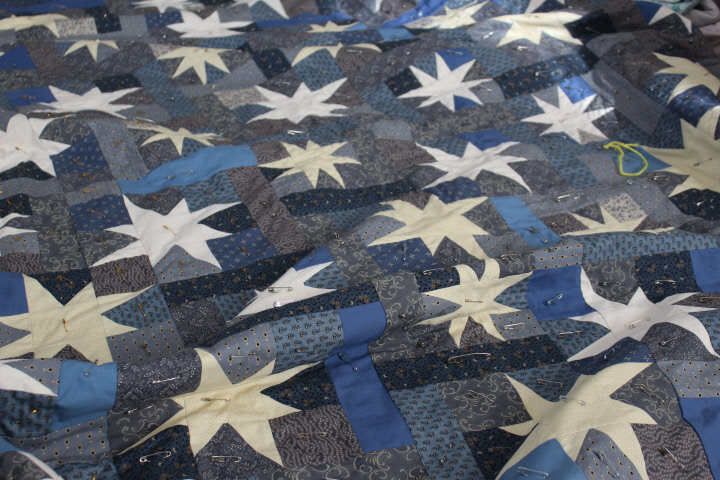
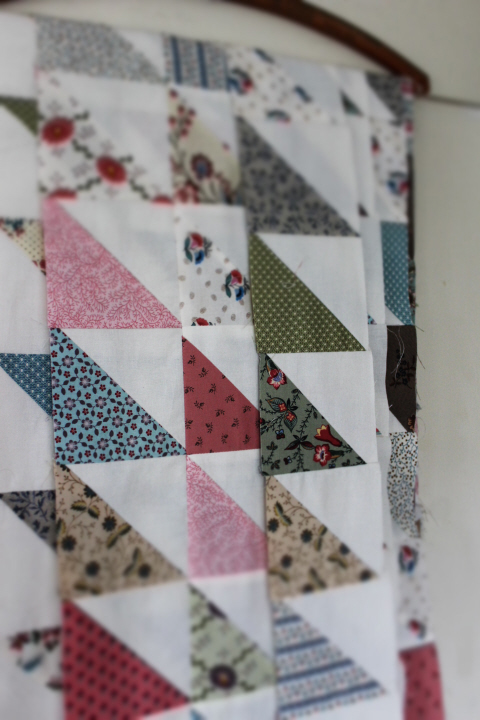
    It occurred to me, moving aside a bundle of jelly-roll cuts of fabric out of the way yet again, that I should just make something with the darned things and get them out of my stash box.  I had bought this roll to use for miniature quilts, as it contained a number of smallish prints and colors that already go well together, but the fabric frayed so easily that it was more frustrating than anything else trying to make 1-inch squares, that I gave up, and to be honest, the fabric is too rough anyway.  But I had seen somewhere, can't remember now, a quilt of strips sewn end-to-end, then cut to a fixed length and shuffled up in a random order, and so I thought, "right, time for a 'Stay-at-Home Jelly Roll'!" — the requirement being that I not buy a single thing. 

    1915

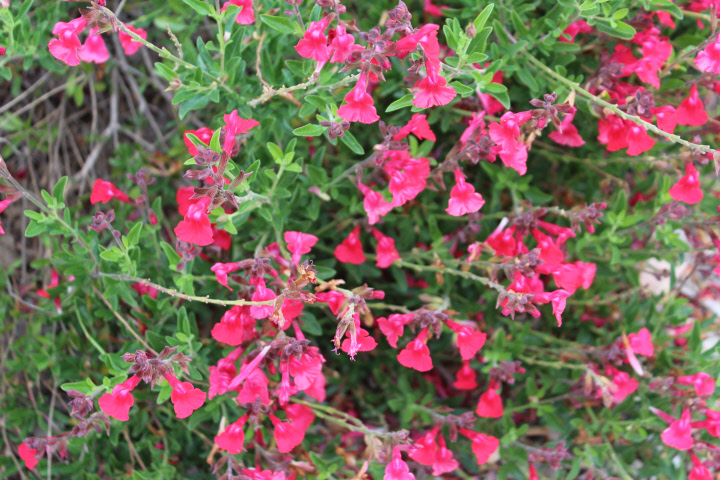
    I had just enough pre-made binding in a relatively-coordinating color, and a package of polyester batting that I'd bought when I didn't know any better, still in a box in the garage that I'd forgotten about.  The back is a pleasant Robert Kaufman polka dot that I had bought online for a dress a year or so ago but decided wasn't quite right when I saw it in person, but is now doing sterling service as a backing material for various projects.  (The bonus bloom is Salvia mellifera that is enjoying the warmer weather we've been having for the past few weeks — the flowers are a bit unremarkable, but the leaves have a heavenly scent that actually wafts on the breeze, so I'm quite happy with it!)

    A number of the jelly-roll strips were now half their original length — the ones I used for the failed miniature quilt — so I just laid them out to make sure the polka-dotted ones were distributed fairly evenly throughout, but otherwise I didn't do much "arranging".  I chain-stitched them end-to-end, which went wonderfully quickly, and ended up with just a little over 70 inches/178 cm in one long strip.  After some puzzling sums and divisions, I decided that 30 in./76 cm would be a generous-but-not-profligate length, so I cut a random bit from the beginning to help re-align the changes between the original strips, and cut the whole thing into 30-in. strips (adding in the bit I'd taken off the beginning somewhere in the middle, and rearranging another section so that one of the seams wouldn't be too close to the edge).  Then I tossed them all up in the air, and laid them out in a random order — this time I did tweak the layout a bit, so as not to have two strips with the same fabric next to each other, or too much of one color in a section — then sewed them up.  I've been making an effort to appreciate and enjoy the process and not feel that I need to speed-sew/knit/stitch, but I have to admit that this came together gratifyingly quickly!

    After I sewed and pressed the whole top, I put it in the sink and swished it rather violently in hot water, partly to get it to shrink if it would, and partly in hopes that it would soften up a bit once the sizing was washed out.  I don't really get the don't-prewash method — maybe it's easier to get edges lined up when they are still a little stiff with the sizing, but it just seems utterly wrong to me not to pre-shrink, especially considering that some fabrics behave more erratically than others in the first wash!  I don't think these softened up much, though, as it happens — oh well.

    1916

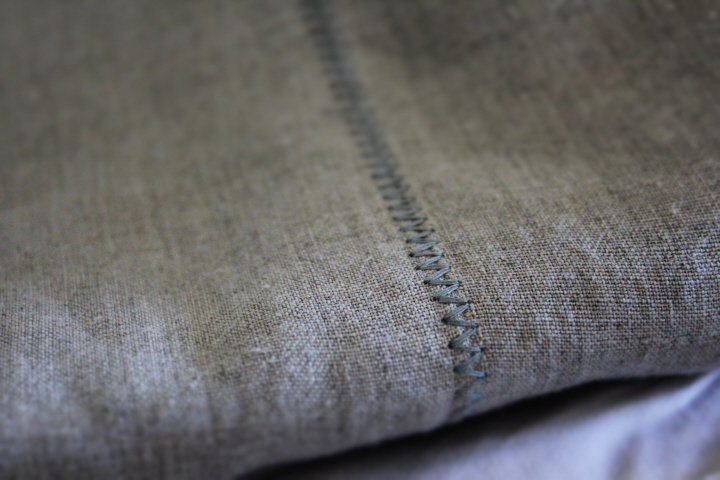
    I was debating with myself whether to attach the back of the binding by hand (which I prefer for the softness of the thing afterwards) or stitch-in-the-ditch from the front, when I noticed this zigzag variation on my old Kenmore.  I don't think I had ever used it before!  Since the whole point of this  was to be done and out of the way as quickly as possible, I seized the inspiration and sewed both sides of the binding at once with the zigzag.  The effect is actually rather handsome, as long as the fabric travels at an even rate under the sewing foot — you can see that it went a bit awkwardly along the top here, then smoothed out after turning the corner.  And I ran completely out of the blue thread about two-thirds along, first the bobbin and then the spool, so finished with a pale pink, just going with the improv vibe, as Julia would say.

    So there it is, a bit on the small side, being 28×36 in./71×92 cm, but it's a lock-down project, needs must.  "What are you going to do with it?" David asked.  I said I'd probably just give it to the local Assistance League thrift shop, and David said, "Or you could give it to the Bs!" a co-worker of his that he's become good friends with in the past few years, who with his wife had their first baby in the early spring, a little girl.  "That's a good idea!  And it's pink-but-not-too-pink."

    1918

    And a bit of the other Jelly Roll! —

  • Bairnswear 520 rae

    Julia astonished me last week by saying, "Mom, I'd like a 40s Fair Isle vest."  I nearly fell off my chair.  Julia, for whom even Shepherd Sock is "too scratchy"??  She is getting very interested in "retro" and period clothing, mainly 1940s.  She had seen some modern versions on a website somewhere, and showed me what had piqued her interest, although when I started cross-examining it turned out that she liked the actual 40s details better — the higher waist and shorter ribbed welt, the slightly-smaller armholes and narrower armhole ribbing, and the generally-closer fit.  Poking around on various websites looking for free patterns, there were quite a number of ones that were close, but none with all of the details plus a set of Fair Isle patterns that she liked.  I was on the verge of cobbling the right shape garment with color-your-own Fair Isle patterns, when I traced an image I found on Pinterest to FabForties.co.uk (formerly The Vintage Knitting Lady) where I found the above Bairns-Wear sleeveless pullover for mere pennies — almost as good as free.
    Rae chart 1

    With a pattern in hand at last, I sat down with a chart-making software and graphed the first two patterns from the written-out instructions — all three patterns have a 10-stitch repeat — in something vaguely resembling the suggested colors, which are a burgundy ground with maize (the lighter yellow here), ice blue, berberis (the gold), sea green, and "Queen Mary Rose".  I didn't even get to the sea green and rose before I knew something was very wrong.  I tried it again, thinking maybe I was a stitch off somewhere and things were misaligned, but it was exactly the same.  The next day, it occurred to me that since — nowadays at least — Fair Isle is usually worked in the round, and these instructions are for knitting flat, maybe the designer had worked it in the round and whoever typed it up hadn't realized that, so I tried charting it with every row worked as though from the front, and got this —

    Rae chart 3
    which en masse looks like this —

    Rae original

    which looks much more likely.  I'm still pretty sure that that bottom band is not the same one as in the knitted-up slipover in the photo …

    Band 1

    Still oddly irregular for Fair Isle, but not as Chinese-dragon-like as the one from the instructions!  (Chinese dragons are all very well when you want Chinese dragons, of course — maybe not so much in a 1940s Fair-Isle slipover.)

    As a relief from those garish chart colors, here is what we worked out from the Knit Picks "Palette" line — with the main mousy-brown color "repeated" between the pattern colors —

    Rae in palette

    Fingers crossed that they go well together in real life!

    To be continued …!

  • Love in a cold climate 1980

    I watched the entire series of the 1980 version of "Love in a Cold Climate" last week.  Of course I had heard of it, both the series and the book, and was impressed by how many people love both, but I must admit that I did not see much of the charm of the story that others talk about — I like Fanny, who except for her inexplicable fondness for Linda seems a sensible person.  It seems more than a bit depressing that so many of the characters insist on marrying for love (to the dismay of their families) only to have it fizzle away not long after the wedding.  I don't know if that is Nancy Mitford's view of love and/or marriage or if she is pointing out the folly of the young, of whom as the Bolter says, "One always thinks that, always".  There is certainly much wit, most of it biting — the English do not come off particularly well as a species — and there are also some satisfying moments, such as the one in the photo above, in the last episode, set during the second War, in which Fanny and Louisa are seen more than once, knitting busily on the sofa as they talk. 

    And for something almost completely different, Julia, who is a dedicated "Star Wars" fan, was delighted to point out this in a recent episode of "The Mandalorian"

    Aran2

    so knitted garments are now "Star Wars" canon, it seems.  In case you don't quite believe it (a knitted Aran on a semi-amphibious species in the outer reaches of the galaxy…??), this still shows absolutely clearly the knitted cables —

    Mon calamari aran

    As for me, I am actually knitting rather a lot lately, but on a gift-to-be so I don't want to show it yet just in case.  Other things will also have to wait to make their bloggy debuts until after Christmas, but here is the state of my Copilot cowl, after a Zoom meeting last night (of course I knit during Zoom meetings!) —

    1562

  • Snowflake

    1543

    This is the snowflake pattern I chose for a gift exchange — it is a free pattern by Maggie Weldon. I used no.10 crochet cotton with a 6 steel hook, and starched it with 1:1 starch and water.  Quite pretty, I thought!

  • Virtue outshines the stars - cover
    I spent a few weeks recently on a bit of a quest, having fallen utterly, completely in love with this sampler.  It is by Darlene O'Steen of "The Needle's Prayse, both of which names, still being a neophyte in the world of reproduction samplers, were new to me, and it is called "Virtue Outshines the Stars".  Everything about it appeals to me, the softly-aged colors, the 17th-century florals, the meticulous symmetry, the verse — wonderful, all of it.  But, alas, look at the date — 1984 — there are no copies of the chart to be had.  In my wanderings, though, I discovered more of O'Steen's work, and more about her. 

    The name of her design company is from a line in a 17th-century sonnet by John Taylor, "I write the needle's prayse (that never fades)".  A needleworker from early on, she was fascinated especially by samplers, and found that in early examples quite a variety of stitches were used whereas by the mid-1800s or so many of them had fallen out of fashion, leaving mostly just the basic cross stitch.  She began to study early samplers, from the 17th and 18th centuries, the intricacies of queen stitch, Smyrna cross, herringbone, rice stitch, and others that have not been forgotten but became less and less common in samplers.  Naturally, she began to design new samplers, teaching samplers that incorporated these old stitches and motifs, and to give classes on them.  I remember reading somewhere, though I can't now remember where, that she stitched all of her pieces in hand, without a frame or hoop, which she said compresses the stitches — I confess I have a grudging admiration for people who can do that and still keep the tension in their stitches even, as it isn't easy! 

    I found after not very long in my searches that O'Steen had had a bout of cancer and found it necessary a few years ago to retire from teaching and designing, and that now only a few of her more-recent charts are still easily available.  Em-Li's still has a number of charts listed, and for half-price, and so I sent off a note (this was before things went south furlough-wise, and there was a generous wodge of cash tucked into a birthday card from my in-laws).  Luckily for me, the one called on the website "Lady Brittany's Sampler," which is my next-favorite after "Virtue" —

    Lady b

    was originally published five years earlier as simply "Floral Sampler by Darlene O'Steen," in the February 1996 issue of "Just Cross Stitch" magazine, as Em-Li's was unresponsive despite multiple attempts.  I did manage to find a copy on Ebay, along with this unexpected tiny charmer —

    Honeysuckle

    The fact that it was signed by the designer was a bonus, but a very pleasing one, as the chart is charming.  I was also very taken with the mounting, that it seems to float on the mat underneath — I later noticed that this is a favorite method of O'Steen's.

    Pomegranate

    I also found a copy of the "Pomegranate Sampler" in the May/June 1996 issue of "Just Cross Stitch" — it wasn't on my list, but rather quickly found its way up there close to "Lady Brittany" (!).

    Strawberry

    This one is also intriguing, the "Strawberry Sampler," which might be on my list someday.  You can see a definite family resemblance to the "Froth and Bubble" I finished last spring, except that the "Strawberry" is all backstitch, of all things.

    I can't say that I love unreservedly every design of hers — whitework, for one, does not move me much, to my loss or my discredit perhaps, but there it is.  I should love this one —

    Treasured friends

    — but through no fault of O'Steen's, for some reason I find the little manikins (now called "boxers" for want of a more period description) almost universally irritating, perhaps for their frequently simpering smiles.  The Escher-like self-shaking hands are curiously Victorian to my admittedly-inexperienced eye — though I have to say that the bottom half of this sampler is quite perfect!  Well, it is probably a good thing that I am somewhat rigorous in my selections, as I can already see how very easy it would be to end up with more charts than I could stitch in a lifetime, a situation that others who have been doing counted stitch longer than I have are already familiar with, judging by the number of bloggers I've seen who are either selling off large portions of their stash or posting numerous photos of their shelves before and after re-organization!

    O'Steen collected her years of study into a book called, with intrepid simplicity, The Proper Stitch.  It has no motif charts, no alphabets, but instead meticulous stroke-by-stroke diagrams, not unlike a calligraphy book in fact, of how to make dozens of counted-thread stitches, divided by chapters into "families" according to their basic structure — cross stitches, straight, satin, buttonhole, and looped, with another chapter on drawn-thread techniques.  The first edition also contained a complete learning-sampler chart, while the expanded edition has no less than three.

    Proper stitch

    She is quite persistent — some might say fixated — on reversibility, on making a particular stitch a certain way so that it is "reversible," if not looking exactly the same on both front and back then at least looking presentable (my word for it) on each side, perhaps in the way that in knitting, stockinette stitch can be used with the knit side or the purl side as the "right" one.  I might be a bit put off by her stringent perfectionism if she didn't sound such a generous person on the whole — and I admit that I certainly have noticed in my own needlework, both petit point and cross-stitch, that the direction the thread comes in from on the back can actually make a difference in the way the stitch looks from the front.

    Picture21I discovered, working petit point carpets, that despite any number of expert stitchers saying that half-cross is the way you should work them in cotton floss, mine usually came out better-looking somehow when I worked them in continental (the recommended method for stitching petit point in wool).  Why?  I don't know about the physics of it, but there is something in the way I hold the needle, I guess, that just makes continental look better for me.  If you look at these diagrams, you can see that the thread travels differently on the back as you go from one hole to the next, and so it comes to the front from a 45° angle in half-cross, but at almost half that in continental.  This makes the stitch sit differently on the threads of the fabric — you can see how they "hug" the crossing a little more snugly in continental than they do in half-cross. The effect is even more obvious in a cross-stitch sampler, where the crosses often have empty threads next to them, with no other stitches to support them, as it were, the way they do in needlepoint.  I suppose the effect is amplified in cross-stitch yet again by the fact that you make essentially two stitches, one on top of the other, first one stroke of the X and then the other, and so the opportunity for the thread to go at a different angle is doubled — the first stroke could come out at upper left and go back in at lower right, or out at lower right and in at upper left, depending on which direction you're going, and the second stroke opposite to either of those! and it could all make your head hurt after not very long and take all the fun out of things.  But the key I think is consistency, in making your stitches the same way as often as possible, whether you work them the "right" way or another way.  I haven't yet had the opportunity to work anything from O'Steen's book, but while I'm giving myself permission to ignore some of her strictures (waste knots, for one — I've just never done it that way and don't see the need to start now), I certainly appreciate the depth of her study and knowledge, and am interested and eager to learn something old that is new-to-me!

    (If you are tempted to buy a copy of O'Steen's book, and I suspect already that it's worth it for those interested in historical needlework stitches, I will tell you now do not pay such reprehensibly exorbitant prices as sellers on Ebay and Etsy have listed theirs, as you can find the revised and expanded edition, as of this writing at any rate, at Annie's for a mere $20.)

    Just as a side note, in case anyone is interested in which three full-sampler charts are included in the book — I hadn't seen this information anywhere before getting my own copy — they are the "Proper Stitch Sampler" (presumably the chart from the first ed.), the "Tudor Rose Sampler," and the "Pinkes Sampler" (as in the flower, a favorite of the Elizabethans).

    Proper stitch 2
    Tudor rose 2
    Pinkes 2

    It was not unexpected, given the news of her illness and retirement, but still a sad confirmation to find an obituary for Darlene O'Steen, who died just a few weeks ago on October 22.  May we remember her by her works.

  • 1387

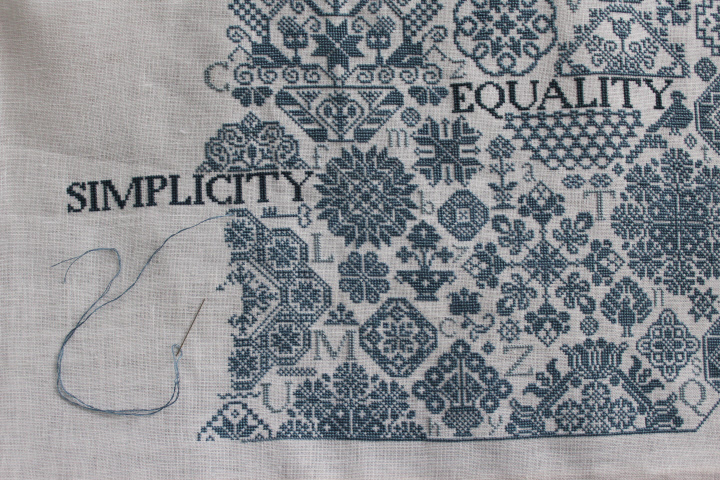
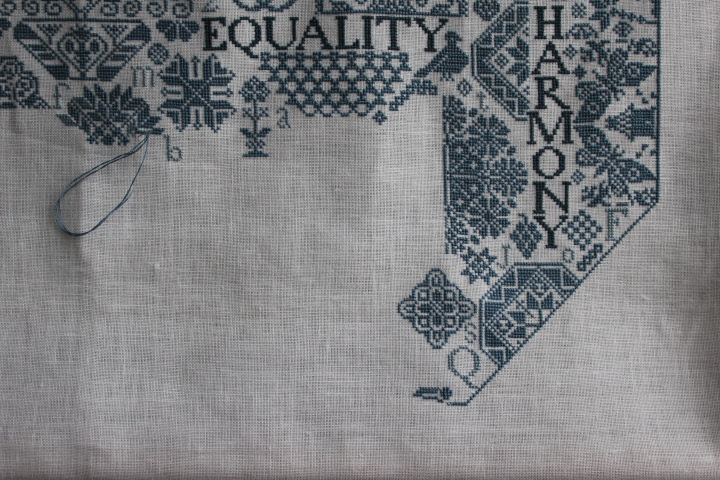
    The first motif on the "Quaker Virtues" sampler, finished this morning.  I didn't find it as jarring as I thought, switching back to the soi-disant "Danish method" of working all half-crosses in a section, then going back to make them full crosses, so I probably could have worked on both at the same time, but as it happens the stitching on "Anna Ohman" is finished —

    1385

    — and as I said, has been a pleasure every moment.  I'm delighted with the color and the ThreadworX floss, and the linen from R&R Reproductions, and even more with all of these together.  I "signed" it with my initials and the year in half-cross using a beige-brown strand — of I think DMC 840 — very similar to the background so that it would clearly not be an antique sampler but wouldn't jump out at you.

    1386

    It has been good to have these calm, almost serene pieces to work on, these days.  David was called back to work a few months ago, which was a great relief though of course these days few things feel particularly secure, and then this past Monday he was told that along with most of his department he is being furloughed again.  It is what it is, of course, and we are all healthy, there is that.

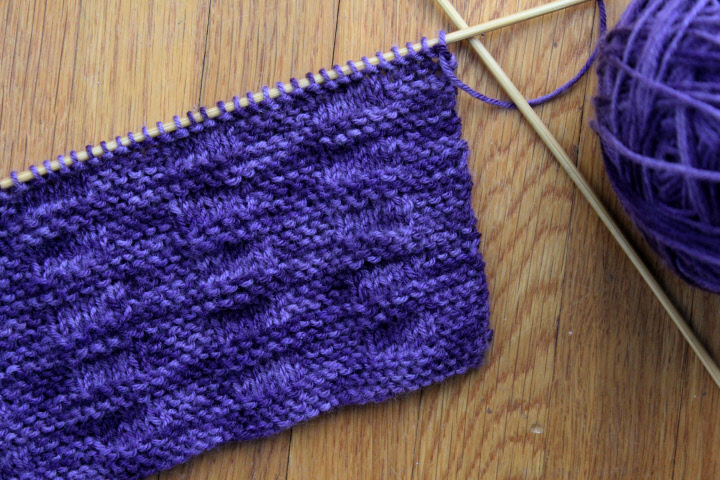
    I am still knitting, though admittedly not much at present, but when the weather turned suddenly cold last week, I decided it would be a good time for that Copilot cowl.  I haven't got very far yet, as the rows are extraordinarily long, but the wool is deliciously soft, like knitting a cloud —

    1388

  • ,

    Anna So Far

    1201

    My math was off (there’s a shock!), so that the picture-frame mat I’m using to hold the Anna Ohman sampler is just not quite big enough at the top and bottom for me to work the whole thing.  I had just removed it from the frame when I took this photo yesterday, before turning it sideways.  As ever, I’m really delighted with this sampler, and find it very satisfying in spite of my mistakes.  (Discovered late last night that what I’d planned would be a Golden-Spike moment with the two sides of the top line meeting in the middle, was off by one stitch, so I had to pick out the wrong half and re-do it.  Now it’s more Lewis-and-Clark.)

    I’m also auditioning some crochet snowflakes for a gift exchange next month.  I like both of these, but am thinking that finer thread might be prettier —

    1211 2

  • 1174
    I was going to shamelessly pinch an idea from Beyond Eden Rock and do an ABC of miscellanea, but found myself with multiple ideas for S (some of which I've redistributed to other letters — !) and nothing at all for Z, M-N-O, not even for E.  And so rather than leave this post marooned in the Drafts folder while I flail about trying to think of what would work for D, I'll just go with what I've got …

    A = The “Anna Ohman” sampler continues to be a pleasure to work.  (I have since gone back and put in the missing dot on the downward stroke of the R in år, Swedish for "year," florid though it is.)

    1184

    B = This week's “Bookshelf Traveling for Insane Times” is one of our living-room bookcases.  Most of the one on the right is science fiction and fantasy.  Dedicated shelf-readers might spot in the other case my set of Laura Ingalls Wilder companionably next to my set of Patrick O'Brian's Aubrey/Maturins, and the Ransomes on the shelf below.  What you do not see is the Golden Lion, aka Hardy House, which has resided in front of these shelves on a pair of sawhorses for the past two years or so.  It was a bit of a wrench to even decide it was time to give it away, let alone do so, but I realized that not only was I not able to devote the time to fixing it up that it deserves, but that it was keeping me from even beginning the project that had got me started in miniatures in the first place.  Luckily for me, its departure was as gentle and sudden as its arrival three years ago.  So — bless you, dear Lion, and fare well!

    1169

    C = I asked David to put up some shelves in the closet in our front bedroom — which we continue to call a bedroom though in the twenty-some years we've lived here has never had a bed in it, but is our family/catch-all room.  All three of our bedrooms still have the original 1929 built-in dressers, but we have added to the shelves that other owners have added, because, really, can you ever have too much storage space?  I had suggested merely a plank resting on the existing 2x4s attached to the walls on either side, and another across the top of the window frame, but David either didn't believe me or knows me too well when I said that there would still be enough light from the window, and so he decided this was a better idea.  Which it probably is, mind you, as I can put my boxes of embroidery floss (just about to perform a sort of meiosis into at least one more box) on the little shelves as the boxes are not heavy and will be quite easily reachable, with the much-larger shelf on top for heavier seasonal things.  I have also made the promise to weed things out as they go into the closet …

    J = I'm very much enjoying my re-read of the Jack Aubrey/Stephen Maturin series — am on the fourth at the moment, The Mauritius Command.

        [Jack] sighed, smiled, and was about to seal when Stephen walked in, looking mean and pinched.  "Stephen," he said, "I have just written to Sophie.  Have you any message?"
        "Love, of course.  And compliments to Mrs. Williams [Jack's mother-in-law, a tartar]."
        "Lord," cried Jack, writing fast, "thank you for reminding me.  I have explained about Lady Clonfert [a fellow-officer's wife who has begged passage on Jack's new command]," he observed, as he closed the letter up.
        "Then I trust you kept your explanation short," said Stephen.  "Circumstantial details destroy a tale entirely.  The longer, the less credible."
        "I merely stated that she did not appear at the rendezvous, and passed on."
        "Nothing about three o'clock in the morning, the hocus-pocus at the inn, signals disregarded, the boat being made to row as though we were escaping from the Day of Judgement, and the lady ditched?" asked Stephen, with the unpleasant creaking noise that was his nearest approach to a laugh.
        "What a rattle you are, to be sure," said Jack.

    1183

    L = Two lace samples from an 1849 lace collar pattern that I'm trying to figure out from the both complex and somewhat cryptic period instructions.  These are the two choices for edgings once the collar is knitted — I did these in crochet cotton at a much-larger gauge, just to get it worked out before I started the real thing.  As it happened, I recognized both of them after a few repeats — the bottom one is  a variation of the "Hearth and Home Lace" edging and the top one a variation of the "Clover Leaf Lace" found in Nancie Wiseman's Lace from the Attic, and probably numerous other Shetland edgings sources.  I started knitting the collar in no.80 tatting cotton on the smallest needles I have, but got interrupted enough times by Julia wanting another length of the cotton for her elaborate bobbin lace project that I decided it would be better to just give her the rest of the spool and start again with a fresh one! which I haven't got hold of yet.

    1175

    Q = I had already heard, around the internet and from the local needlework shop owner, that if you work cross-stitch with overdyed thread, you should do it in the "English style" and not the "Danish," which is making each X before going on to the next, instead of a line of //// as long as necessary then returning to work the \\\\.  Why "English" and "Danish"?  I don't know! but the reason is that because, unlike in the days when unevenly-dyed thread was something to be disguised, now we celebrate it, and making all of the strokes in one direction then coming back to finish the Xs tends to even out the variations, whereas making the whole X at once keeps them prominent.  It seems that I have been working Danish-style all my life without knowing it (also "left-handed" with my right hand, though that's another story)!  Because I wasn't sure if I could go back and forth between the two methods without driving myself crazy, or if concentrating hard on making sure that I was keeping to one or the other would spoil my enjoyment of both projects, I decided that a bit of prudence was in order and I will set the “Quaker Virtues” aside — but not very far — for the much-smaller "Anna Ohman".

    1180

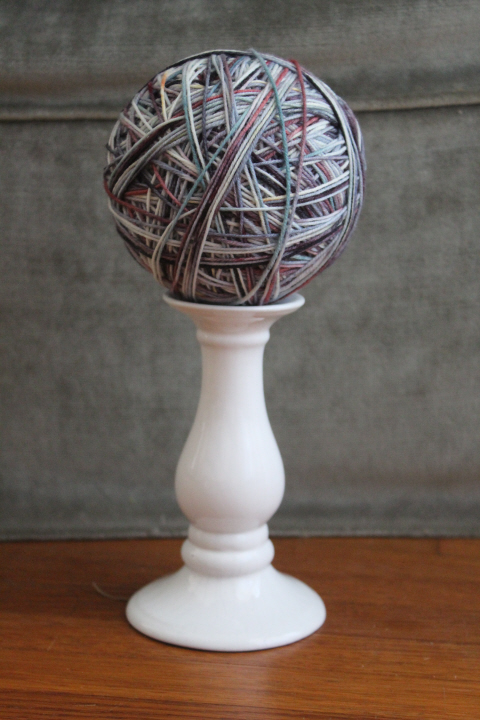
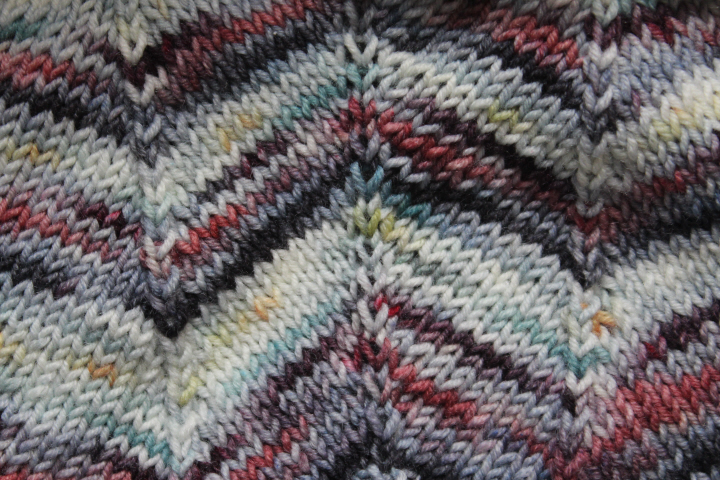
    S = Yeah, I also needed a knitting project, because the gauges are small enough on the samplers that it's easier for me to work them without my glasses or contacts.  I can't watch television without my glasses, obviously, so having a knitting project means that I can watch the new season of the "Bake Off" or "The Good Place" while I knit! and save the samplers for the quiet hour after my usually-early breakfast, before anyone else gets up.  The S is for Savannah cashmere/nylon/superwash merino, wonderfully soft, which is on its way to becoming the “Copilot” cowl.

    T = Skillet Turkey Chili from Smitten Kitchen — impressively delicious for something so quick and so simple!