• Queen marys other dollshouse 1 V&A

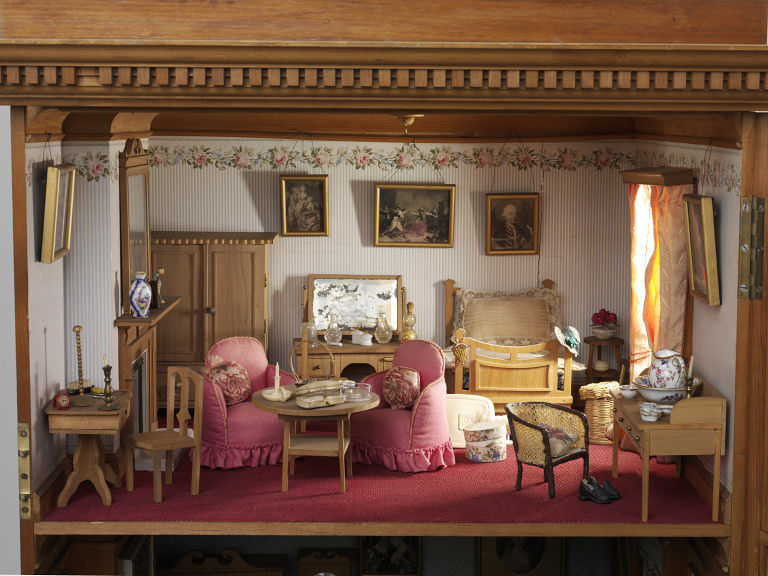
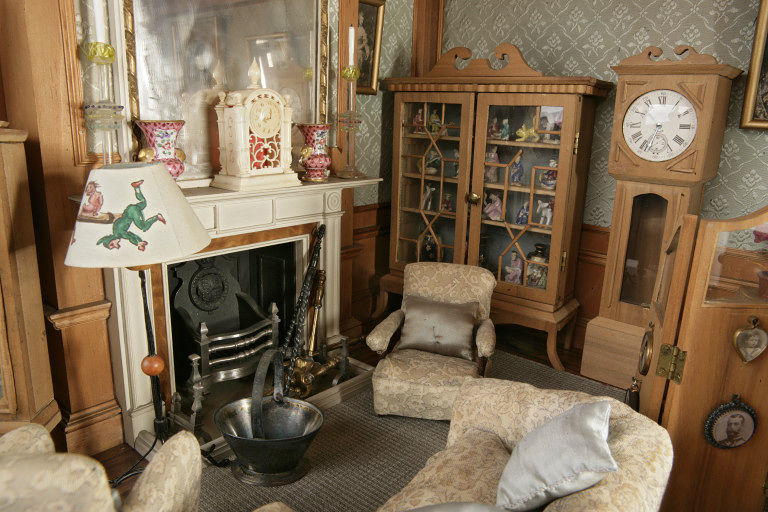
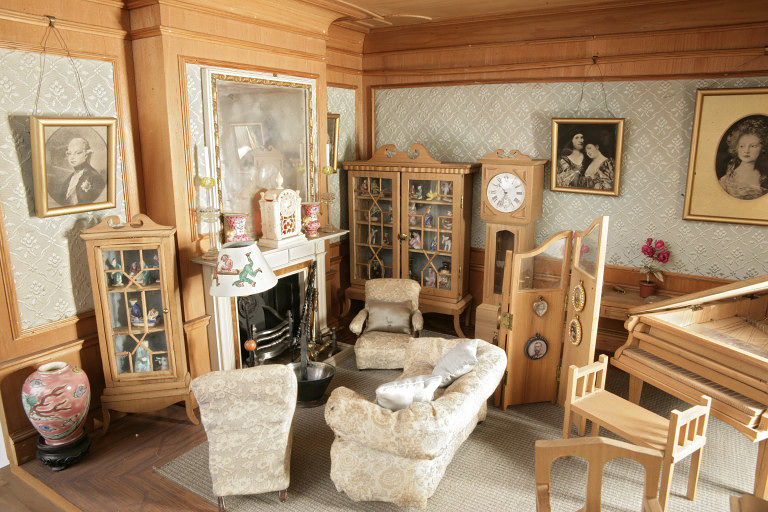
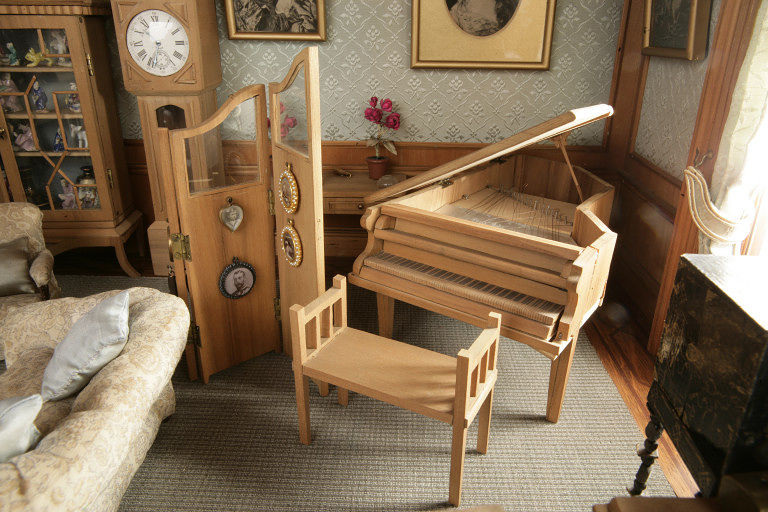
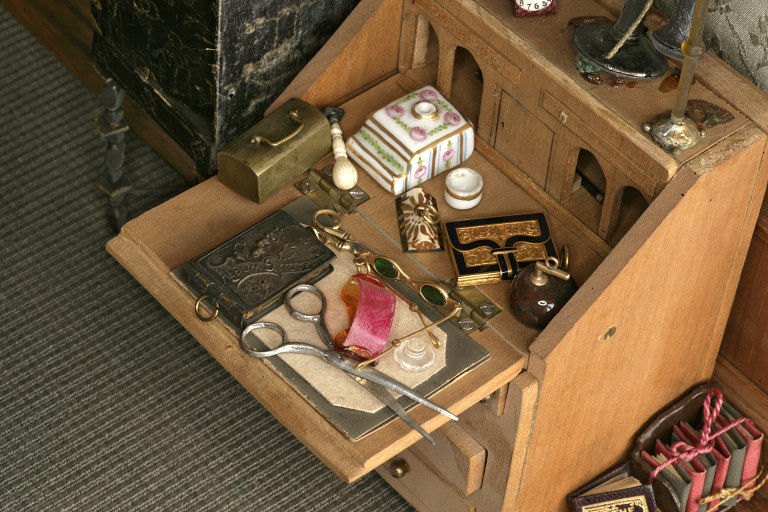
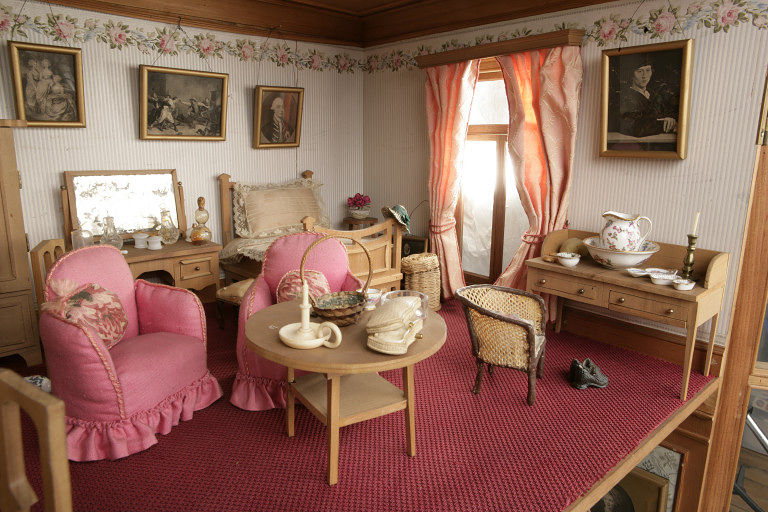
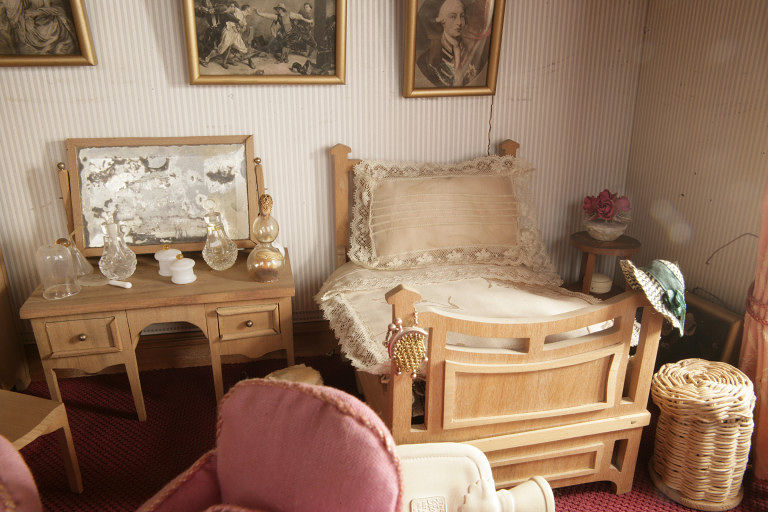
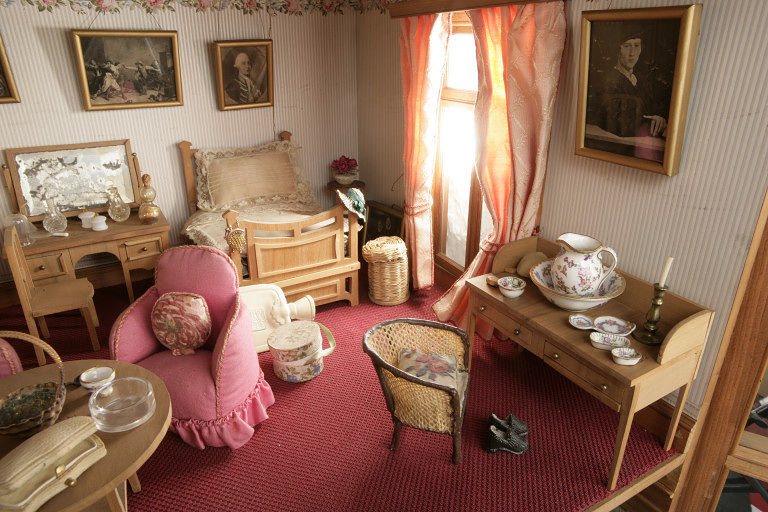
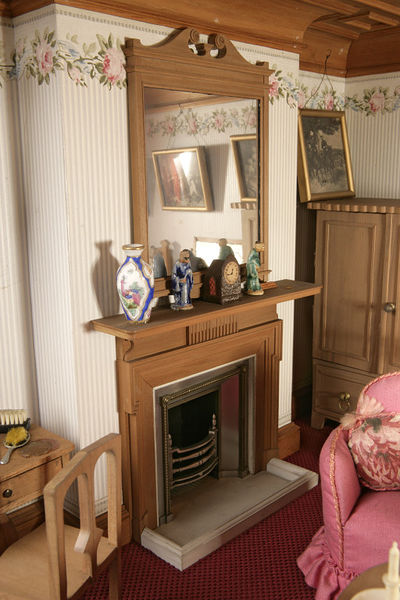
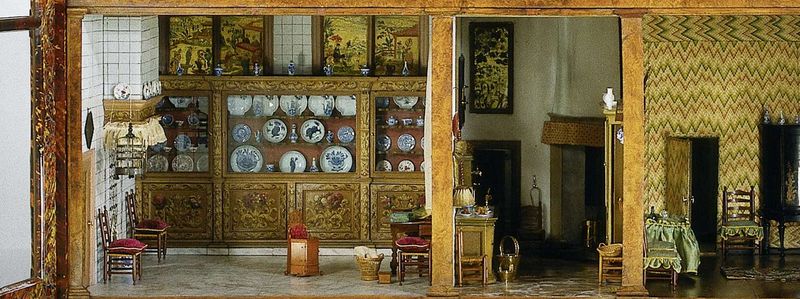
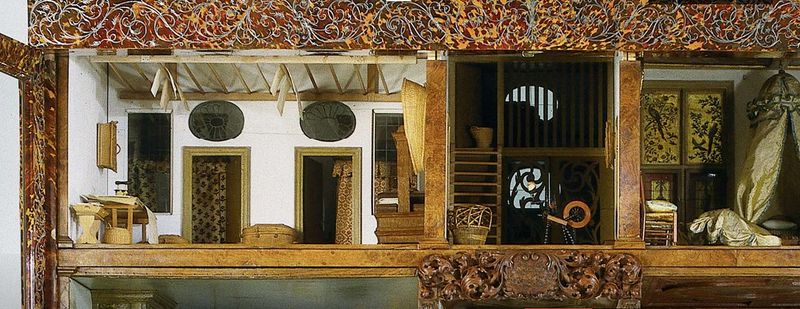
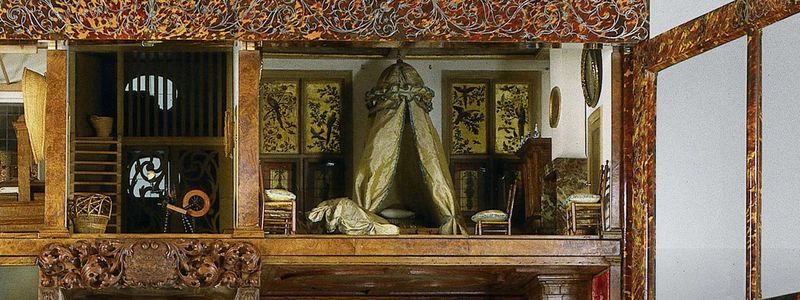
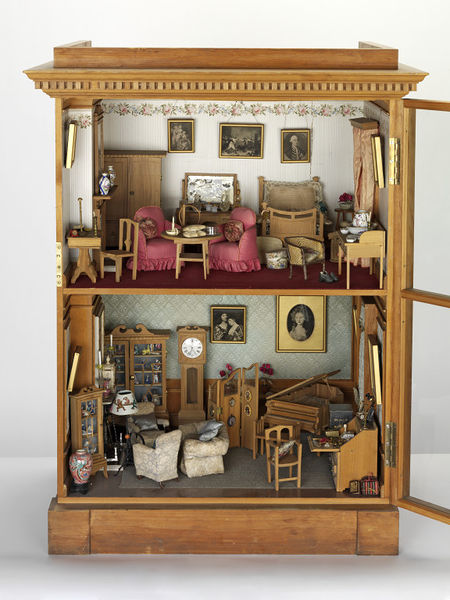
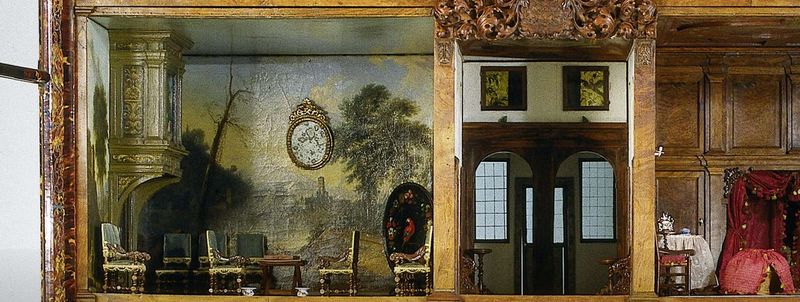
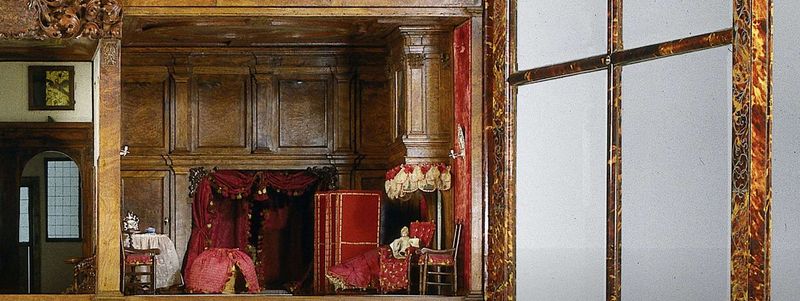
    Of course I've known about the famous Queen Mary's Doll's House for quite a long time — but I didn't know that she had another house — properly "Queen Mary's Rooms" — which is now at the V&A.  Far more intimate, this two-room house was made, the museum says, in 1920-24 by David Allan, who was responsible for the textiles and upholstery at Buckingham Palace.  Queen Mary gave the house to the Museum of Childhood in 1924.

    The "big" house is amazing and splendid, but to my mind this little one is far more charming!  It's very beautifully made, too, — look at all of the mouldings around the tops of the walls, and the mitered corners of the sitting-room floor.  I keep finding new details in these photos — of which there are more on the museum website — like the family portraits on the folding screen, and the hot water bottle, and the lorgnette on the desk….

    Queen marys other dollshouse 14 V&A

    Queen marys other dollshouse 16 V&A

    2007BP9187_jpg_l

    2007BP9198_jpg_l

    2007BP9201_jpg_l

    2007BP9188_jpg_l

    2007BP9197_jpg_l

    2007BP9183_jpg_l

    2007BP9194_jpg_l

    2007BP9184_jpg_l

    2007BP9189_jpg_l

    2007BP9191_jpg_l

    2007BP9192_jpg_l

    2007BP9193_jpg_l

  • 4094

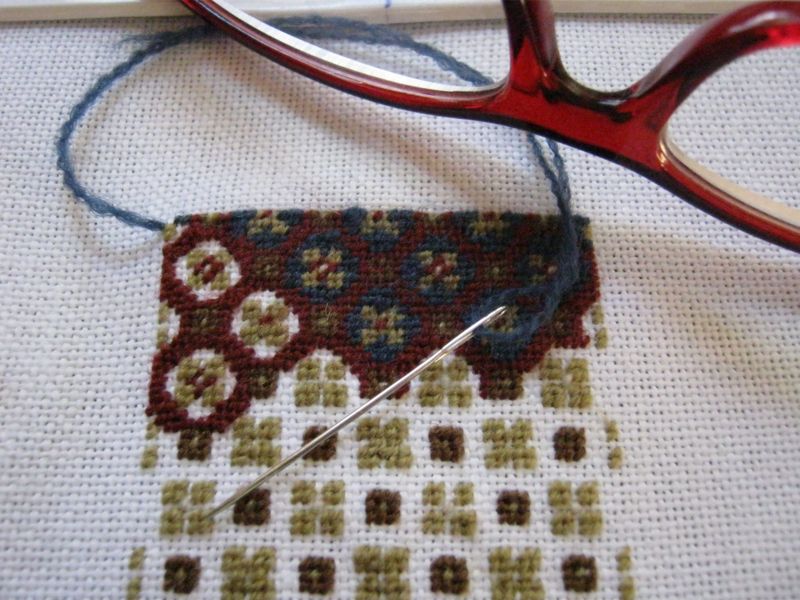
    I haven't been doing much knitting since the last pair of socks, since I got distracted by this, which is the "Small-patterned Holbein" carpet from Meik and Ian McNaughton's Making Miniature Oriental Rugs and Carpets.  I was a little concerned about it being too big (!) for my Tudor house-to-be, so I'm working it on 28-count evenweave instead of the 24-count of the book — it's a bit more fiddly, and I have a hard time seeing it sometimes, especially now that the pattern is really filling in, but the more I look at the design and the colors, the more I like it.

    This is the first miniature piece I've worked in wool — of course it will have a different feel to it, but I didn't realize quite how much.  I guess at this gauge the linen is even harder on the wool fibers than a 24-count would be — I have to be unusually stingy when cutting a length, as it can get worn down to just a few hairs very quickly!

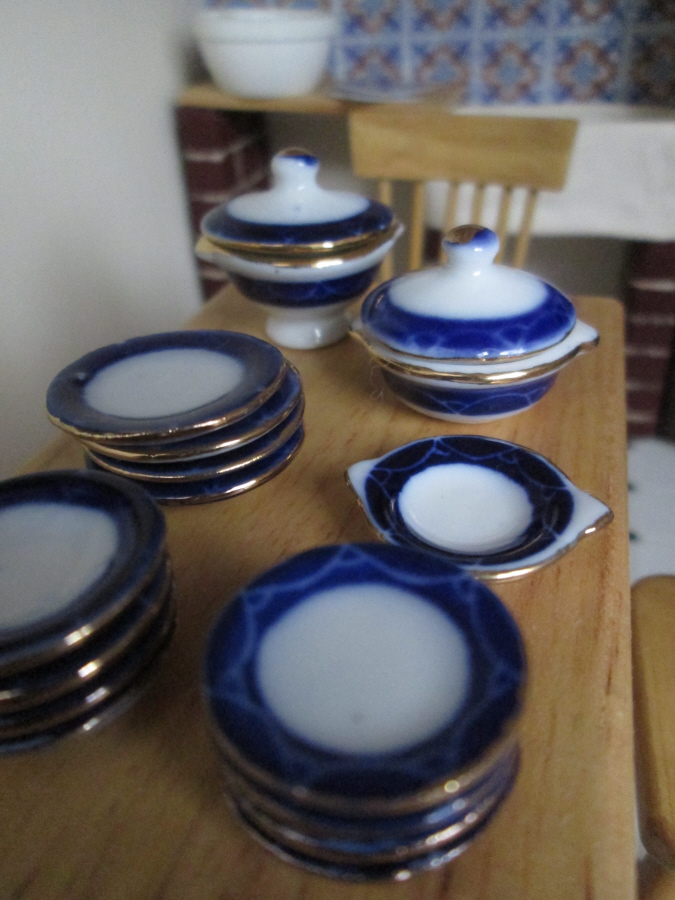
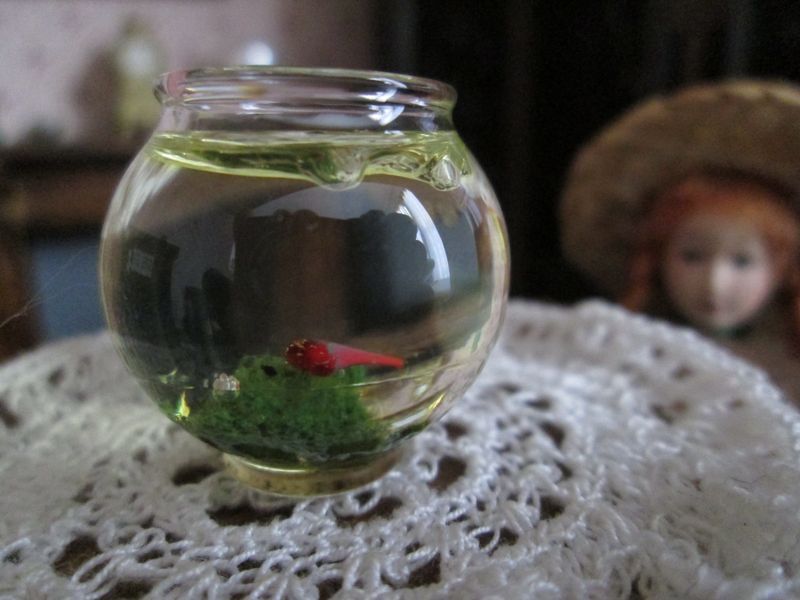
    Here are two new things for No.16 that I impulsively put on my wish list, and got for my birthday — thanks, Mom!  The fishbowl looks a bit odd in close-up because of the bubble in the "water" but it's very charming in real life.  Now I need to get started on a kitchen dresser for the new dishes!

    Blue china

    Fishbowl

  • 4123

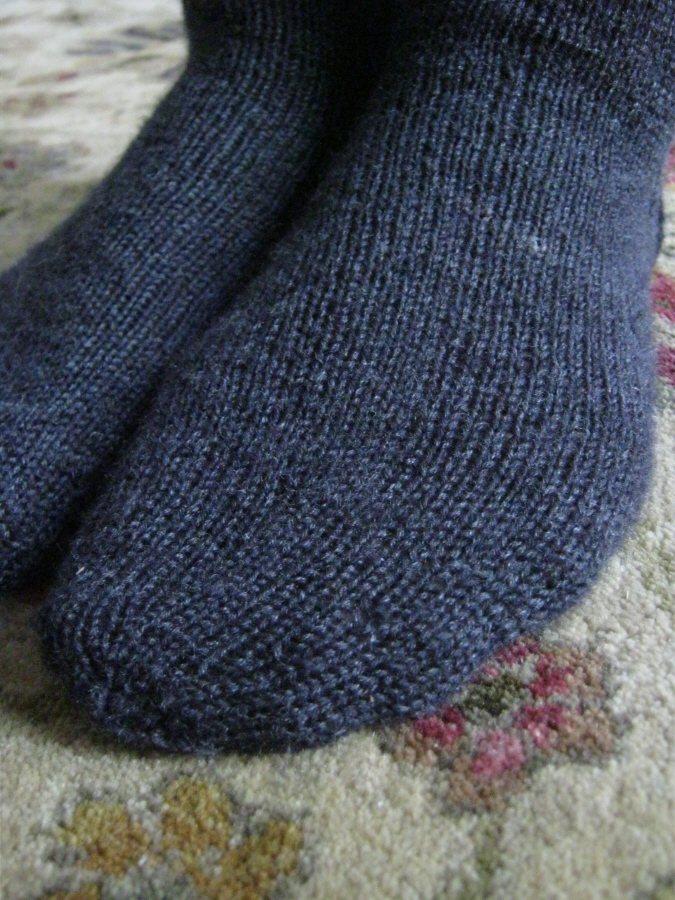
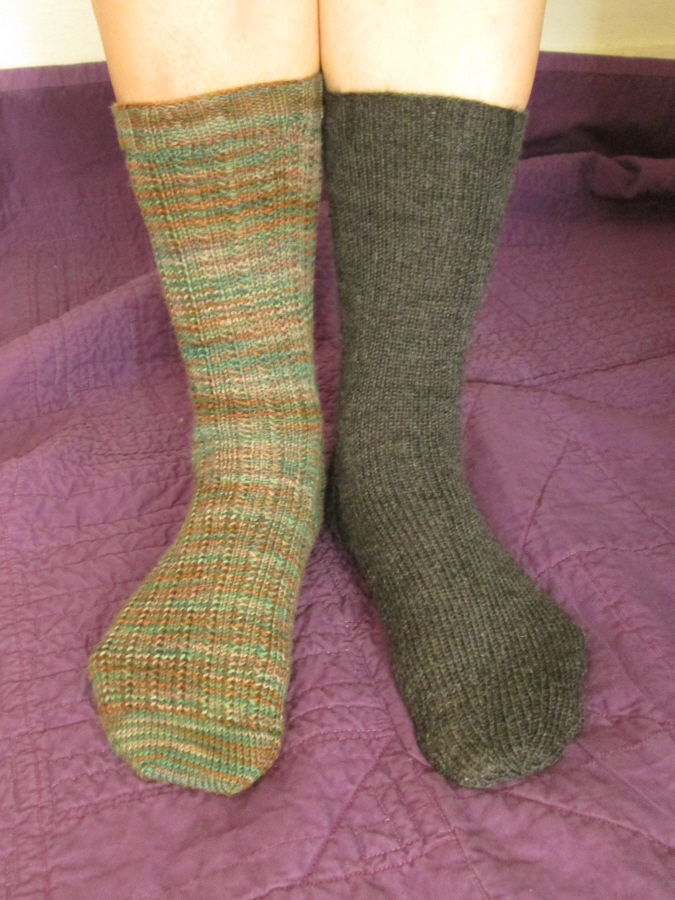
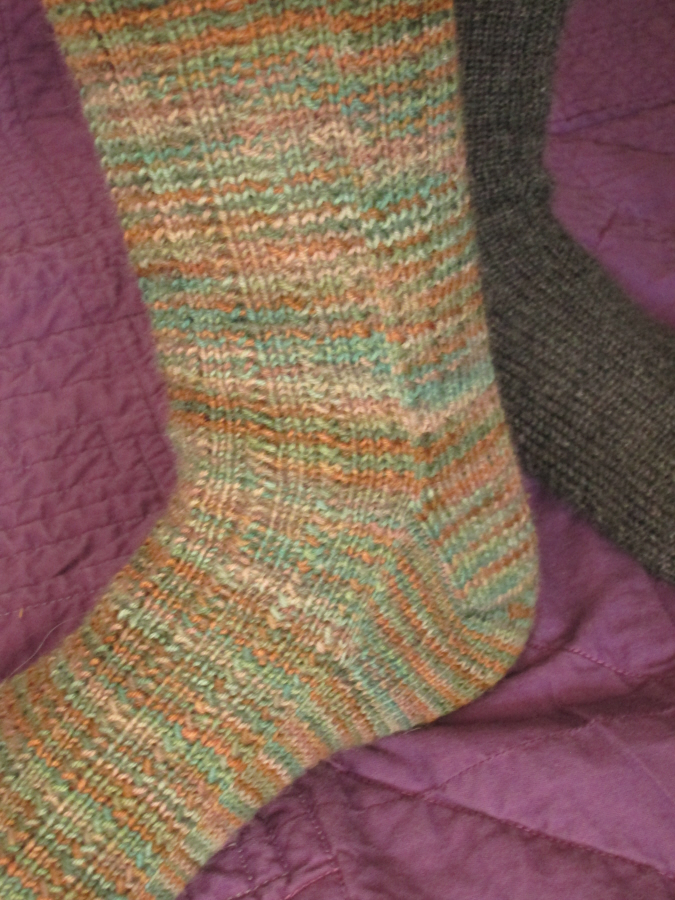
    These socks are a calf-length version of the "Barnim-Style Stocking" by Anne DesMoines in the Spring 2014 issue of "Knitting Traditions", in Sensations Truly sock yarn from Jo-Ann's.  This is a so-so yarn, good for the price, I suppose, which was about three dollars a giant ball I think, but not what I would call sensational.  I do like the tweedy charcoal-grey, though.  I actually could have made my socks a lot longer, as I didn't realize — despite the enormity of the ball, in hindsight — how much yardage there is.  Oh well — it's been discontinued for some time, apparently.

    4112

    4120

    This is an interesting pattern, and makes a very comfortable foot, which seems to hug one's arch a little more than the usual side-gussetted foot.  It did take a considerable amount of attention, though, and I had to rip back the second foot a couple of times for not paying attention and missing an alarming number of the paired decreases.  I wouldn't mind having a stocking-length pair, though, so I'm sure I'll be having another go.  The pattern didn't seem to mind much being adjusted rather considerably for a different gauge, either.

    4118

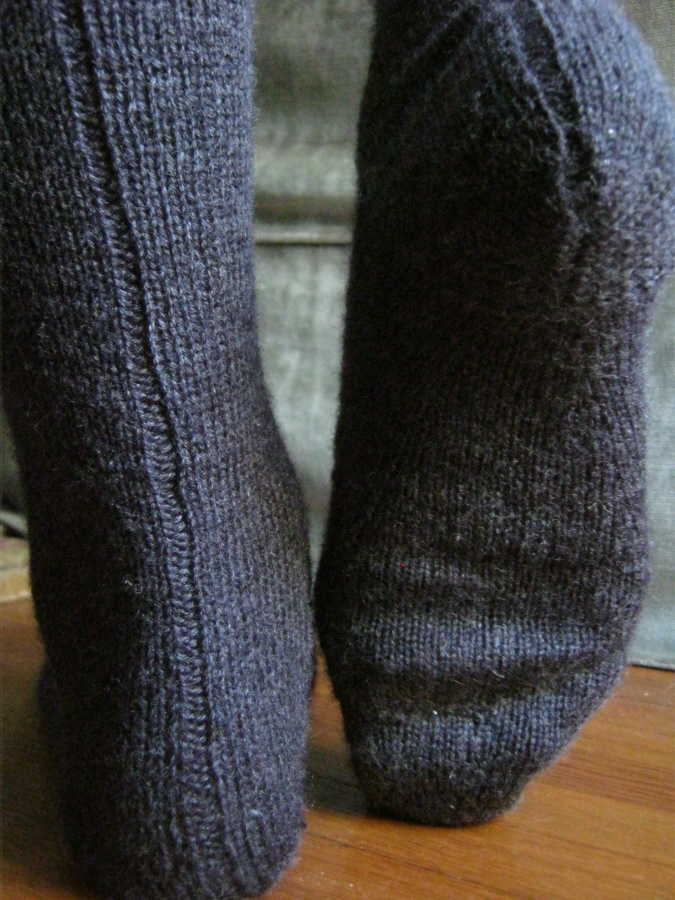
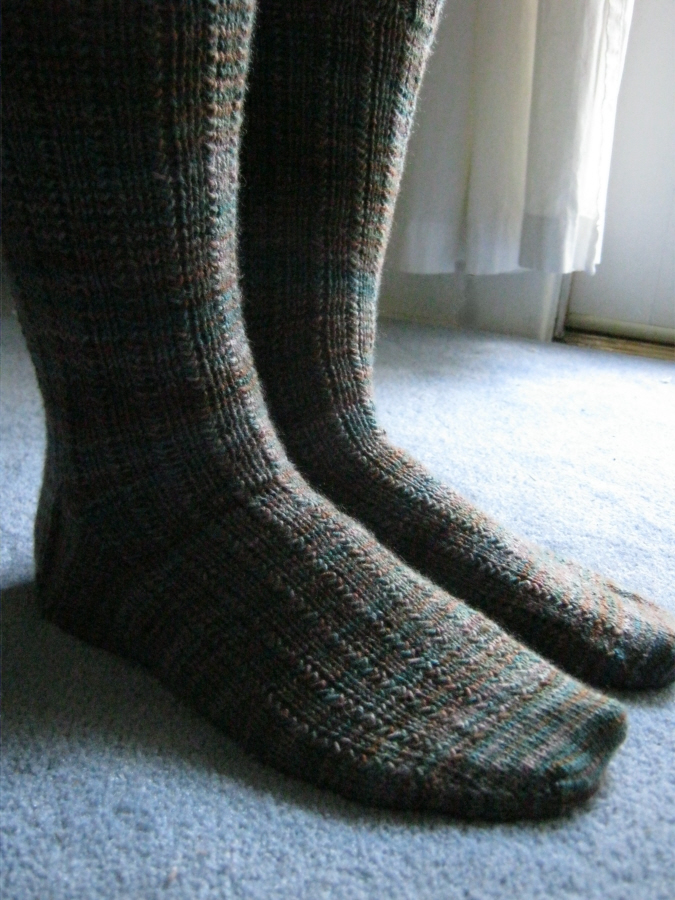
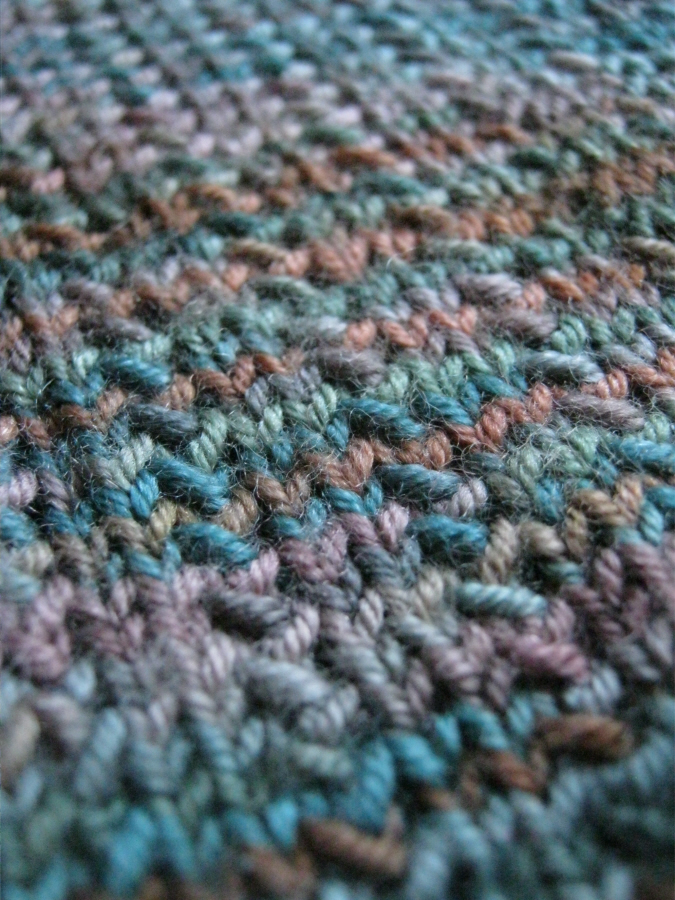
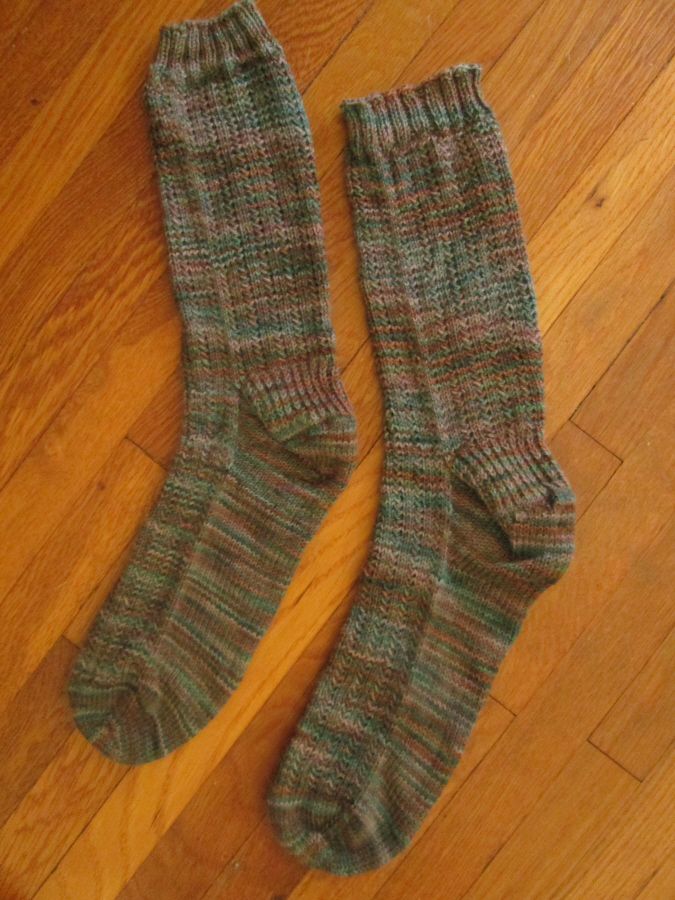
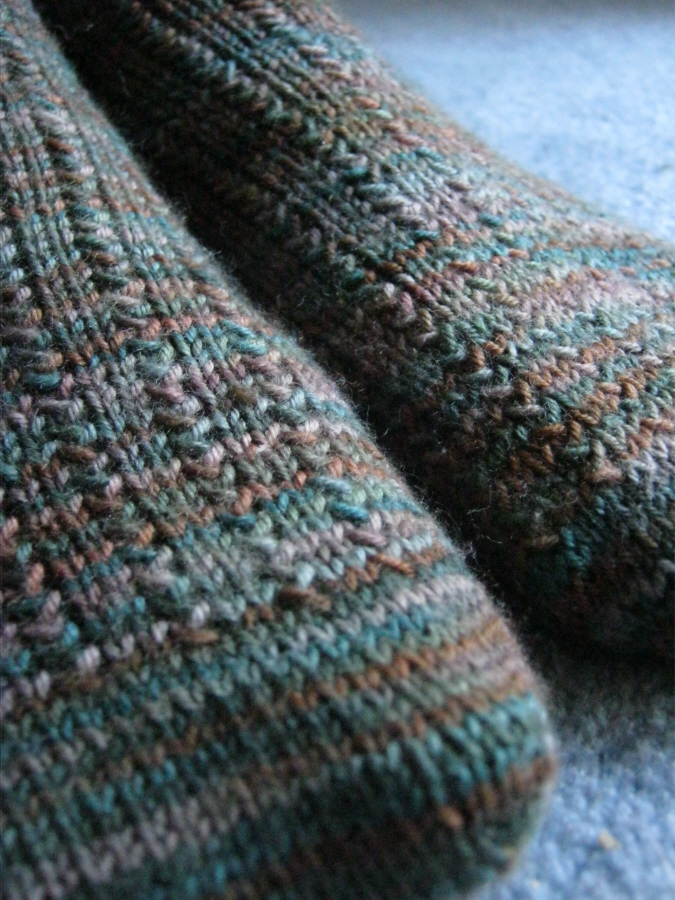
    I also finally finished this pair of the justly-celebrated Charades by Sandra Park — I really like this herringbone pattern, it's easy to work and to memorize, and it looks great in solids and variegated colors, simple yet effective.  Can't believe it took me literally years to finish them!  The yarn is Shepherd Sock in "Baltic Sea".  As I've said before, I worked this pair toe-up, just because, and since I didn't want the "Baltic Sea" to pool at all, I alternated the two balls of yarn on every round, except on the toe, the heel, and the ribbing at the top.  There is still a sort of shadow of flashing, but since the colors are similar in value it doesn't bother me.

    4103

    I don't have a photo of what the "Baltic Sea" looked like to start with — it was so long ago that I bought it, you still had to get two skeins for a pair of socks.  Sigh.

    4102

    Baltic charades

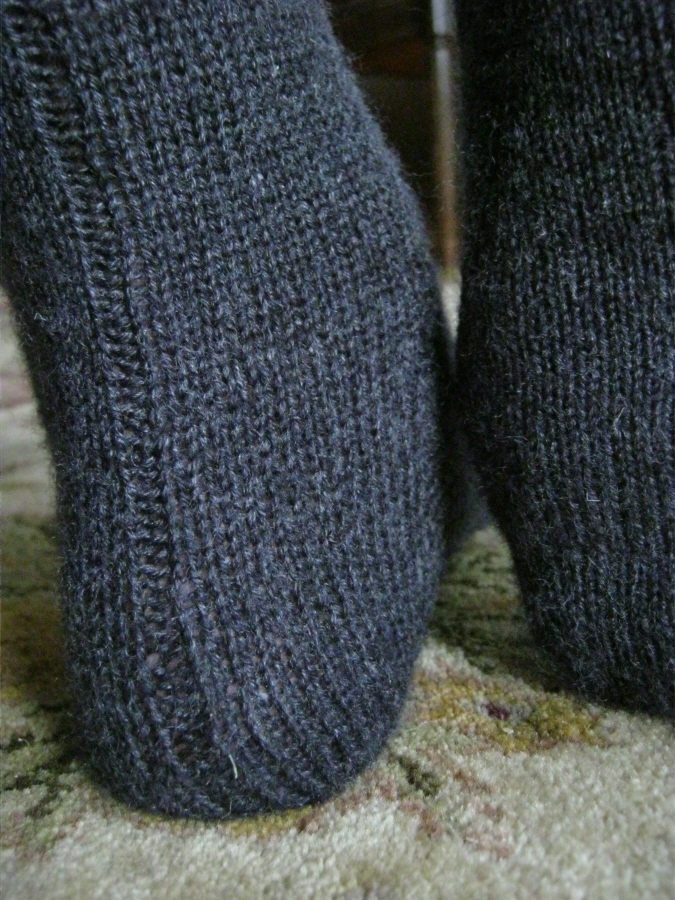
    What a difference the background color makes!  This color is less true-to-life than the photos on the blue carpet, as the gold of the floor has brought out more of the brown.  The ridge is where I twisted the strands on the inside, which has since flattened out when I washed them.  The sock on the left has my Old-Norwegian cast-on ribbing grafted to the leg, and the sock on the right uses Mary Lou's "K2TBL Stretchier Bind-off", which is —

    K2, *insert left needle into the front of the two stitches on the right needle and knit them together. Leave that one stitch on the right needle. K1, repeat from * to end, fasten off.

    4108

  • Merchant 1

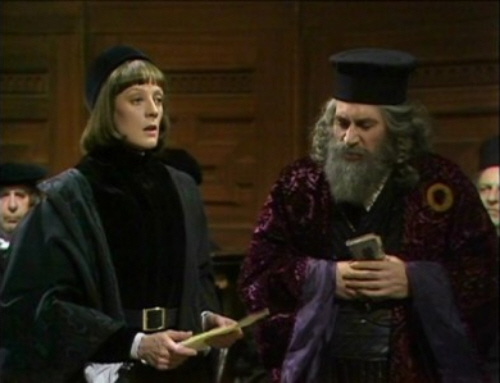
    Last week in the FutureLearn "Shakespeare and His World" online course, we discussed "Money and the City", with "The Merchant of Venice" as the focus play.  The public library had three productions on the shelf, so since I have long found this play intriguing, I brought home all of them.  I decided to watch them chronologically, so began with the 1972 BBC Play of the Month production, with Maggie Smith and Frank Finlay.  I like both of these actors, and so it may have been no fault of theirs, but this was a rather dull production.  I kept getting distracted by various things, that Antonio looked laughably like Henry VIII, the absurd pumpkin breeches worn by the younger male leads, which were made out of cloth lattice-work, revealing all — though, to their credit, the gentlemen wore them well — and, really, how unlike a man Maggie Smith looks in drag.
    Merchant bbc

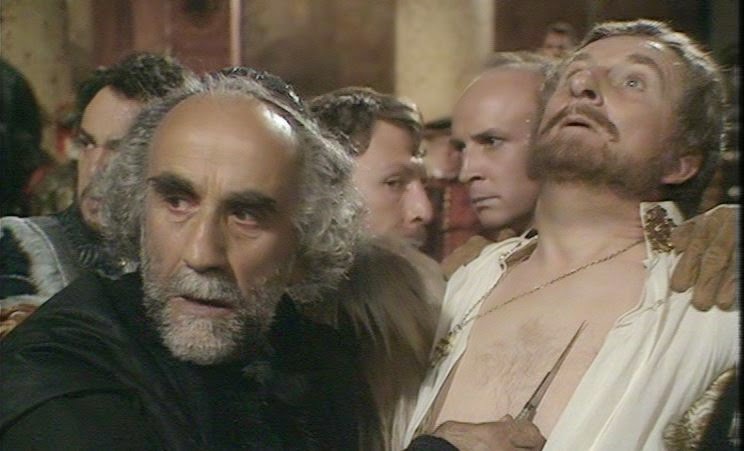
    Next I watched again, after many years, the 1980 BBC Shakespeare production with Warren Mitchell and John Franklyn-Robbins — Gemma Jones is Portia.  This held up pretty well.  It's a difficult play, and this cast does it capably.  I just feel that the "quality of mercy" speech shouldn't be a lecture, as so many actresses do it.  It seems to me that, yes, Portia has prepared all of her arguments — she knows that she has the ultimate one, a pound of flesh but no drop of blood — but that Shylock's stubbornness should come as a bit of a shock to her.  How can he really be demanding that a pound of flesh be cut from another man's living body?  "Then must the Jew be merciful," she says, and Shylock replies, "On what compulsion must I? tell me that."  If she looks at him in disbelief, then tries to reason with him — because, because "the quality of mercy is not strain'd" — I think it plays better, plus it would sound less like a set piece that we've all heard a thousand times before.

    Merchant 2004

    The third was the 2004 Pacino version, here also with Alan Corduner as Tubal.  The cast is first-rate, and Pacino does a terrific job (I was going to say "for an American", but I don't always get Pacino).  Visually stunning, with wonderful costumes and gorgeous photography, and the only production to actually be filmed in Venice, so there really are palaces and canals — though of course, to be fair, the other two were television studio productions.  I just wish this one hadn't cut so much.
    Macbeth bbc shakespeare

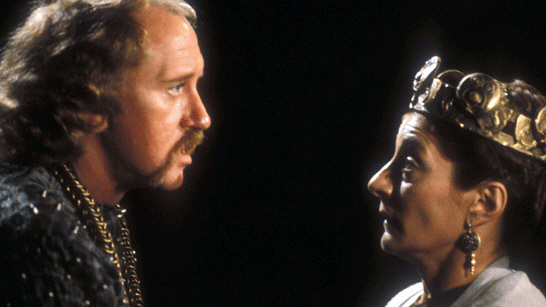
    By the time it came for this week's unit on "Witches and Doctors", the only "Macbeth" left on the library shelf was, alas, the 1982 BBC Shakespeare production with Nicol Williamson and Jane Lapotaire, which I didn't like much the first time around either.  He was wooden, and she took up the slack and went in rather the opposite direction.  This is one of my favorite plays, so I was hoping to see the 1972 one with Jon Finch and Francesca Annis again, after many years, or perhaps a new-to-me production — McKellen and Dench, say, or Patrick Stewart and Kate Fleetwood.  Will definitely have to look for those.  (Alan Cumming has done what looks like a stunningly bizarre yet effective one-man version set in a mental hospital — this takes away all of the "reality" of the play, of course, since it's obviously all in his mind, but what a tour-de-force!)
    Money pot 1550-1650 shakespeare birthplace trust

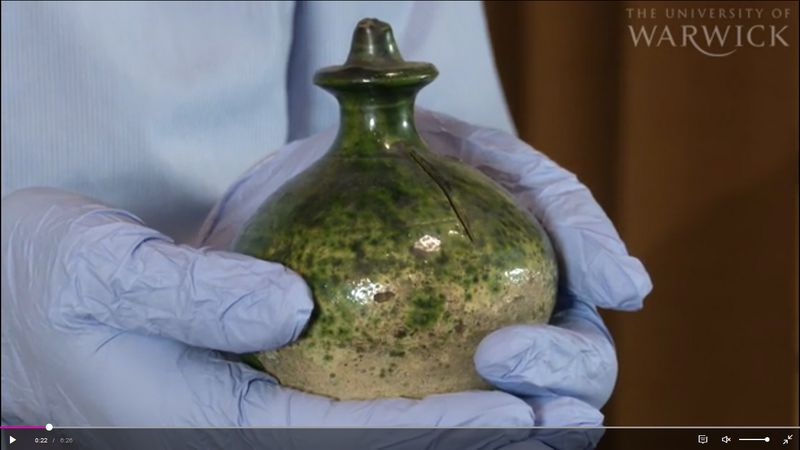
    Professor Bate accompanies each unit with a selection of objects from the Shakespeare Birthplace Trust collection, a contemporary map, a hornbook, a ceremonial pike.  I think the one I found most fascinating was this, which is a glazed money pot used for collecting the pennies from the audience at the theater.  It has no bung like a modern piggy bank, so that the only way to get the takings out is to smash it — obviously intact ones are therefore very rare, which is why he is holding it here so gingerly!  Apparenly it was not unusual for the lesser members of the company, the wardrobe or props for instance, and thus often women, to be the ones to go round with the money pots. It's a very evocative picture.
  • Pioneer girl

    For those of you who, like me, are a little out of the loop, plans have been in the works for some time now to publish Laura Ingalls Wilder's original autobiography, which she titled "Pioneer Girl", in annotated format.  Background and details can be found at "The Pioneer Girl Project" blog.  The book is to be, thankfully, a "serious, scholarly work for adult readers" — though not, if the blog posts are anything to go by, dull.  (I'm sure that the term "adult readers" doesn't mean what it does so often nowadays, but that it isn't written for children who are doing an "about the author" report!)  "Scholarly but accessible" is how editor Pamela Smith Hill describes it in her original proposal.

    Most people know that events in Wilder's life were compressed and sometimes altered a little to fit her purposes in the "Little House" books, so that Pioneer Girl will shed I think a fascinating light not only on Laura herself but on her writing.  It will include the stories Wilder later felt were not appropriate for children, or which for one reason or another were not included in the "Little House" books — I didn't know, for instance, that the Ingalls family had lodgers with them during the hard Long Winter, a young married couple and their infant son — and the annotations will give background on various places, people, and historical details, not leaving out the controversies surrounding how much of a hand Rose Wilder Lane had in the "Little House" books.

    The publication date is November 20, 2014.

    (The image of Laura's manuscript is from the video in the post "A Pioneer Girl's Treasures".)

    A July 2013 interview with Smith is here.
  • Michael-peter-ancher-a-young-girl-knitting-maren-brens-1887

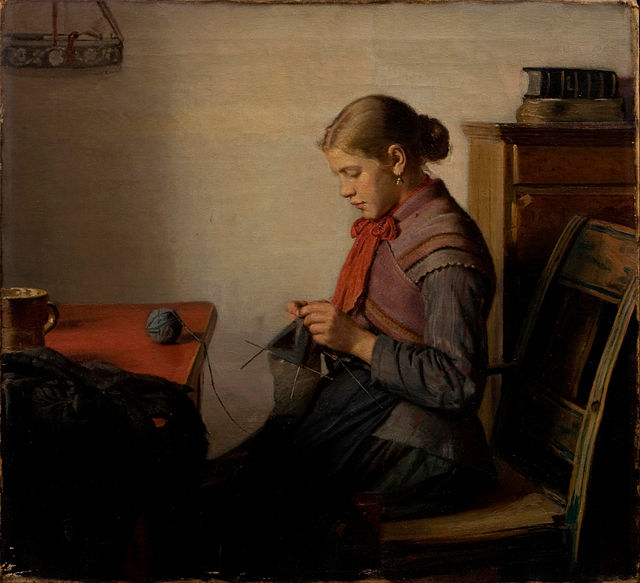
    Here are two paintings by the Dane Michael Ancher — "A Young Girl Knitting (Maren Brens)" (1887) —

    Michael_Ancher_-_Skagen_girl,_Maren_Sofie,_knitting._-_Google_Art_Project

    and "Skagen Girl, Maren Sofie, Knitting" (1882).  Socks, I think — pretty certainly in the first painting.  The shawls — or is it the same shawl? — look intriguing too.  I love the quiet homeliness of both of these.  Thanks to Wendy of Spinsjal for writing about her trip to Skagen, and for reminding me of the Skagen painters, whose work I admire tremendously.
  • Merry wives bbc 1

    I recently signed up for a free online course at FutureLearn called "Shakespeare and His World", presented by renowned Shakespearean professor Jonathan Bate, taking a cultural (Elizabethan) theme and examining a particular play that illuminates it.  This is not actually the first FutureLearn course I signed up for — I started the "Literature of the English Country House" and "England in the time of King Richard III" but although they were both interesting, I was having trouble finding the time to do even one of them, let alone two nearly simultaneously, and so I regret to say that I haven't yet finished either of them.

    But Shakespeare — but Shakespeare and Jonathan Bate! — well!  So here are some potted reviews of the productions I'm watching as we discuss them.

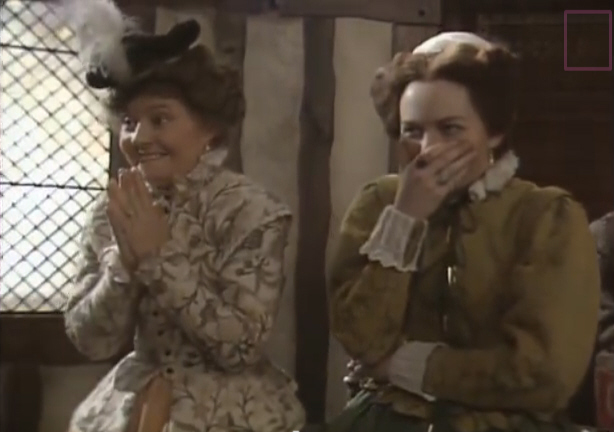
    After the introductory week, the second week was "Shakespeare and Stratford", with the focus play being, perhaps unsurprisingly "The Merry Wives of Windsor", since despite being nominally set in Windsor, it is very much small-town England of the time.  I watched two productions, as it happened, both that the public library had, first a production from 1980 with Gloria Grahame as Mistress Page.  It was, I'm afraid, a not especially good production, though that was perhaps more the fault of the sound man and the costume designer and the cameraman than the actors.  Despite being touted as being "Staged as seen in the 16th century" Grahame wore a gown in the style of at least a hundred years later, though everyone else was more-or-less 16th century.  More irritating was the fact that the actors' mikes picked up every movement of their bodies, so it was a lot like the scenes in "Singin' in the Rain" where Lena's pearls drown out her dialogue.  Grahame acquitted herself tolerably well with the Shakespearean prose, though she still carried herself as an indelibly 20th century woman.

    I had seen the 1982 BBC production of "Merry Wives" when it was first broadcast, and I'm pretty sure I fell asleep halfway through, but I must say it improved with age.  Prunella Scales and Judy Davis play Mistress Page and Mistress Ford respectively — Davis's very modern lipstick was a bit jarring, but Scales could do this kind of role in her sleep.  Ben Kingsley was alarmingly manic as Master Ford, but then Ford is supposed to be madly jealous; Richard Griffiths seemed surprisingly bland as Falstaff.  (Actually, it was also fun to play spot-the-actor, as there were quite a number of familiar faces, from Nigel Terry to Elizabeth Spriggs and Alan Bennett.)  The costumes were excellent, and I admired the set as well, which is supposed to have been based on Hall's Croft.

    Dream 2

    For "The Birth of Theatre" in the third week, the play was "A Midsummer Night's Dream", and I watched the 1996 Adrian Noble production currently on Netflix.  This was kind of weird.  I liked the framing of the play as a little boy's dream — he hides under a table during Theseus's and Hippolyta's first scene, and so on — but it doesn't seem to hold up when we are asked to believe that he's still dreaming this when the "translated" Bottom (Desmond Barrit) and Titania (Lindsay Duncan) go at it, and pretty obviously.  The fairies were quite Seussian.  The slapstick was good — I especially liked the multiple doors when the four young lovers are wandering in the forest — but, hmm, I'm still waiting for a really good filmed version.

    Branagh henry v

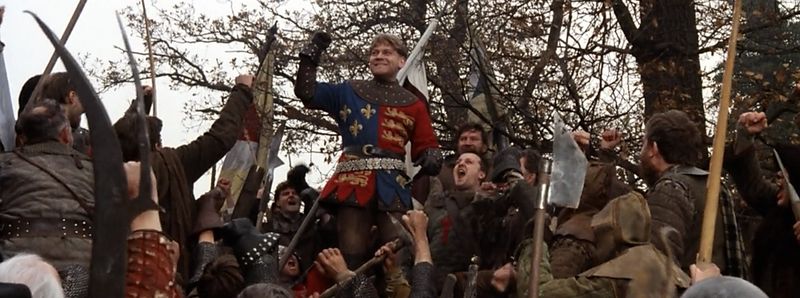
    This week is "The World at War" and "Henry V".  My library has a number of productions, but Kenneth Branagh's was the only one I brought home.  A cracking production — first-rate acting, great production values, and a real sense of the both the grit and glory of war.

  • 3291

    Okay, so it was two different socks, not one pair.  My self-congratulation is tempered with annoyance at my losing not one but both sets of notes as to the modifications that I made in transit, so that now I must re-create my own work.  Sigh.

    3293

    The first was sock 1 of my "Baltic Sea" toe-up Charades, with an only partly-successful attempt to avoid the tight cast-off by working the rib top-down and grafting it to the leg (!).  The photo is also only partly-successful in capturing the color and general air of the sock, which is actually quite pleasing — I'm afraid I am less and less happy with the Canon PowerShot.

    3295

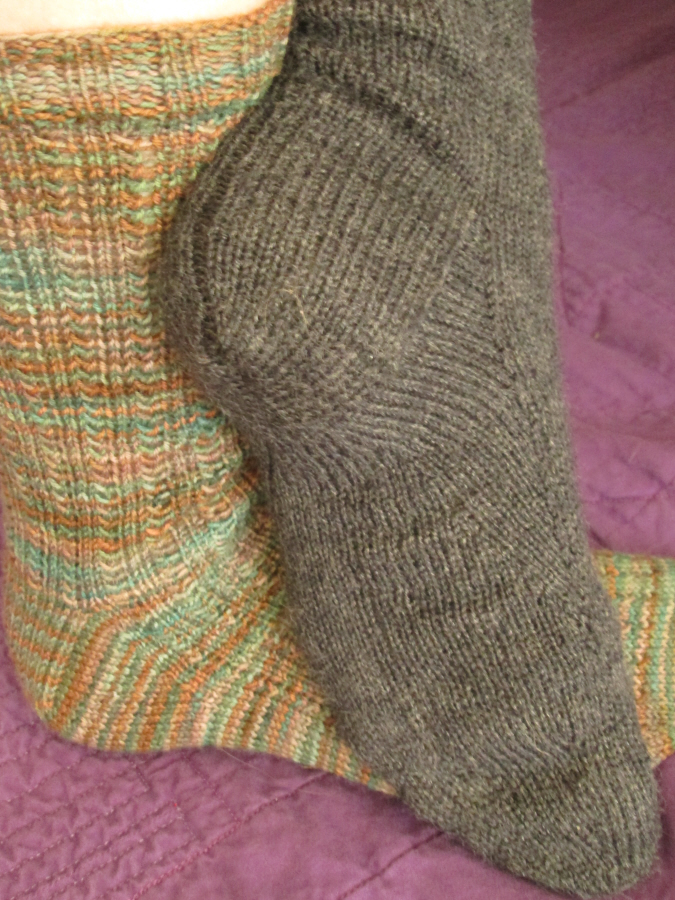
    The second is sock 1 of a gussetted-foot school sock using the foot part of the "Barnim-Style Stocking" by Anne DesMoines in the Spring 2014 issue of "Knitting Traditions".  I was using yarn from my stash, so didn't have enough to make the full-length stockings — hence the "school sock" designation.  Apparently this foot is very like something that Elizabeth Zimmermann came up with on her own, I mean without knowing that there was the historical sock in existence — pretty clever — though it seems she didn't use it much after that.  I can't think why, as it's quite comfortable.

    Gosh, it's difficult to take a photo of the bottom of your own foot!

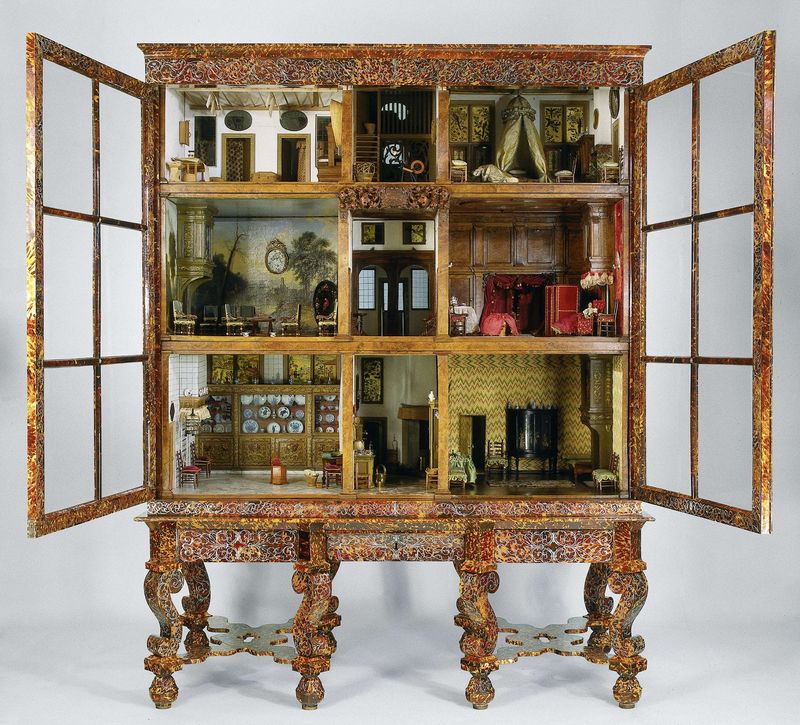
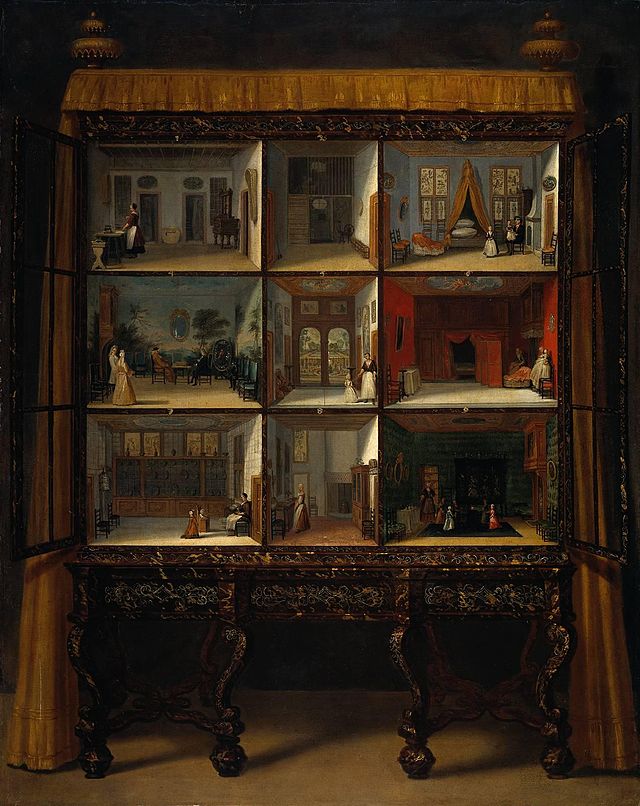
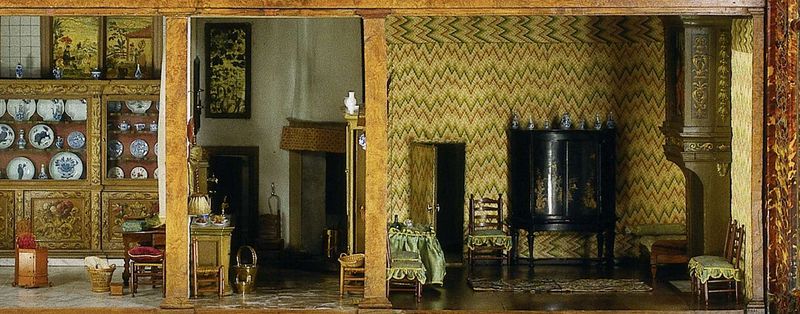
    In other news, I just got from the library The Miniaturist by Jessie Burton — was wondering not long ago atal if there are any novels about dolls' houses, and here one is.  It's an imagining of the newly-married Petronella Oortman and the mystery surrounding the cabinet house her rich merchant husband gives her — the book is inspired, obviously, by the real house, which is now at the Rijksmuseum in Amsterdam.  I've not gotten very far into the book yet, but here are some pictures of the house, and a 1710 painting of it by Jacob Appel — all of the images are from the Rijksmuseum except the painting, which is from the Dutch Wikipedia.  The museum dates the house c.1686-c.1710, so the painting is I assume what the house looked like a little before Petronella's death at the age of sixty in 1716.

    Oortman rijksmuseum

      Dollhouse_of_Petronella_Ortman_by_Jacob_Appel

    Oortman 5

    The "state" kitchen, with its display of blue-and-white china, and the humbler working kitchen.

    Oortman 6

    The "tapestry room".

    Oortman 1

    The reception room, and hall.

    Oortman 2

    The lying-in room, for the mother and newly-born baby to receive visitors; this room was a common feature of Dutch dolls' houses of the period.

    Oortman 4

    The maids' room, with linens hanging from the rods on the ceiling.  Apparently the little room at the center is a peat loft — for storing, and keeping dry, I suppose?

    Oortman 3

    The bedroom.

  • Mitts 1

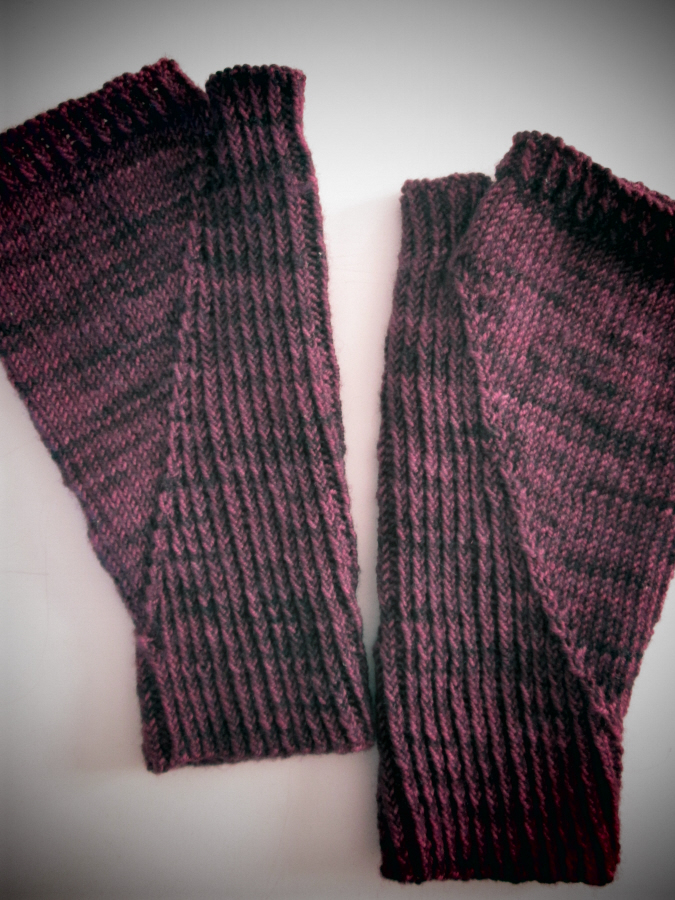
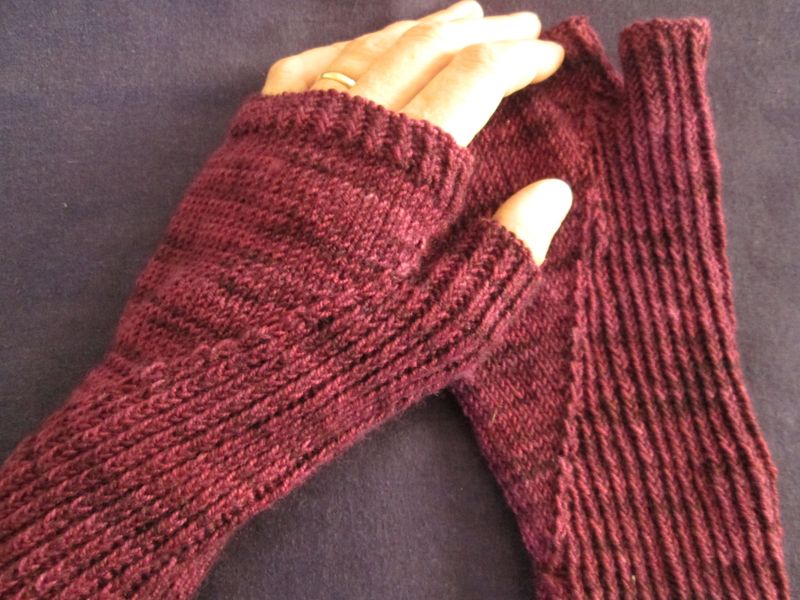
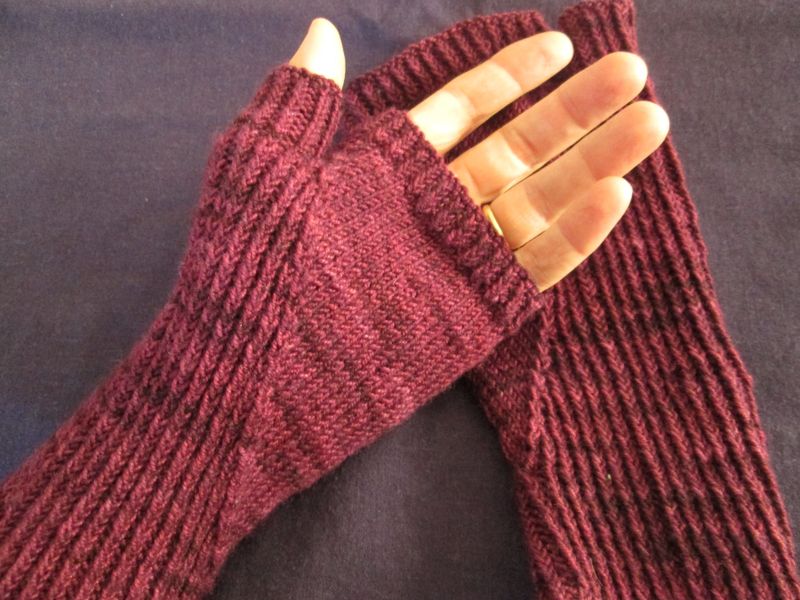
    I finished these Sunday evening — finally, it felt, though it didn't take me that long relatively speaking.  It's only that I finished the first mitt in two days, then took a month and a half to finish the second one, not for lack of interest, but because I kept making stupid counting (or not counting) mistakes and had to rip it out more than once, so that I put off knitting for days on end.

    The pattern is the Hidden Gusset mitts by Mone Dräger, available free at Knitty.  The yarn is a skein of Colinette Jitterbug in Velvet Plum, which as I've said was previously a pair of socks that was a little too big, so I ripped them out and recycled the yarn.  It's a gorgeous color and feels wonderful to knit with, but I don't think I will ever use this yarn for socks again, as they felted alarmingly quickly, after only one or two wearings.  (Yes, all of the three pairs of socks I've made with Jitterbug have done this.)  Luckily I was able to pull out even the slightly-felted bits with little trouble, and they show in the reknitted piece only if you know what you're looking for.

    (The color is a little washed-out in the photos, but I noticed that the camera picks up reds better against a white or dark bluish background than it does against the golden-brown of my wood floors.  The Velvet Plum has a bit more blue in its purple than these photos would suggest.)

    Mitts 5

    The mitt doesn't cling to my wrist as much as I like, but perhaps this is partly because the Jitterbug is slightly heavier than the one recommended in the pattern, so that mine came out a little larger — the ones in the Knitty photos look a bit stretched on the wearer, which would of course make them more snug.  At least my watch won't show as much as it does under more closely-fitting mitts — does she or doesn't she?

    Mitts 6

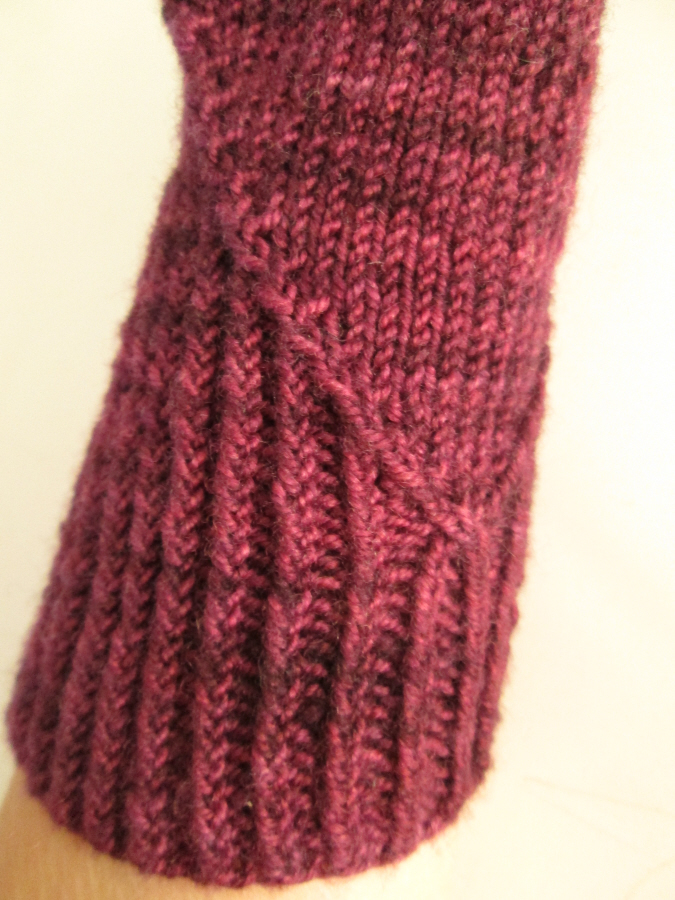
    I didn't especially like the little ridge that runs up alongside the traveling stitches, which is from the increase used in the original pattern, so I used the usual M1L and M1R.  I also, just because it amused me, made the traveling stitches twist as well, by working a K2tog tbl on the left side, and on the right side a rather complicated sequence of slipping 2 and twisting the second of that pair of stitches, then knitting them together — I guess because of the twisted stitch's tendency to cheat to the right, these traveling stitches aren't as pronounced therefore, as the ones in the original, but as I say it amused me.  Such is life.

    Mitts 2

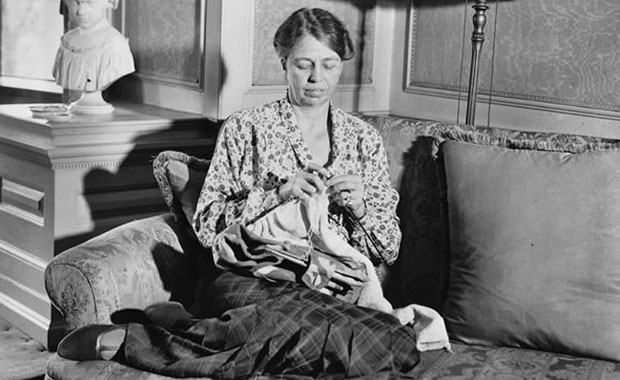
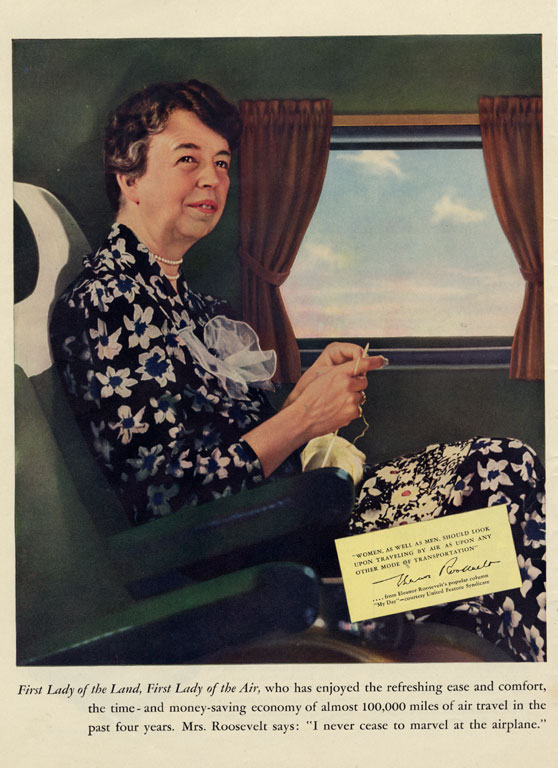
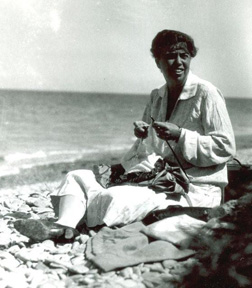
  • I've been watching the magnificent "The Roosevelts" series on PBS this week — was tempted just now to say "the magnificent Eleanor Roosevelt".  She was well-known as a knitter, though perhaps characteristically, she knitted not fancy things but useful ones, such as socks or scarves or pullovers for her family, as well as wartime knitting for servicemen, and knitting to her was something one did to fill otherwise idle time.

    17@-Eleanor

    Mrs. Roosevelt knitting in the Memory Room of the Governor’s Mansion in New York, 1932, from the Hudson Valley Almanac Weekly.

    01061101

    "First Lady of the Land, First Lady of the Air", an advertising poster promoting the safety of airplane travel, from the Smithsonian (with a blog post about the poster here).

    Er knitting

    I must say that I especially like the family snaps of Eleanor knitting, such as here on the beach somewhere.

    Eleanor roosevelt knitting 1914

    An image from the FDR Presidential Library, of Eleanor knitting, ca.1914.

    Eleanor-Roosevelt

    The famous photo of Mrs. Roosevelt knitting on the plane during a tour of the United States in 1937, in a photo by Thomas D. Mcavoy of LIFE Magazine.

    Eleanor-roosevelt-knitting-underwood-archives

    Eleanor Roosevelt knitting at the Associated Country Women Of The World's exhibit at their triennial convention, Washington, D.C. June 2, 1936, from the Underwood Archives.

    Here is a link to the Knitty article from Franklin Habit, containing an interview with Mary Ann Colopy, seasonal park ranger at the Roosevelt/Vanderbilt National Historic Site in Hyde Park, as well as a pattern for mittens written down by Mrs. Roosevelt.