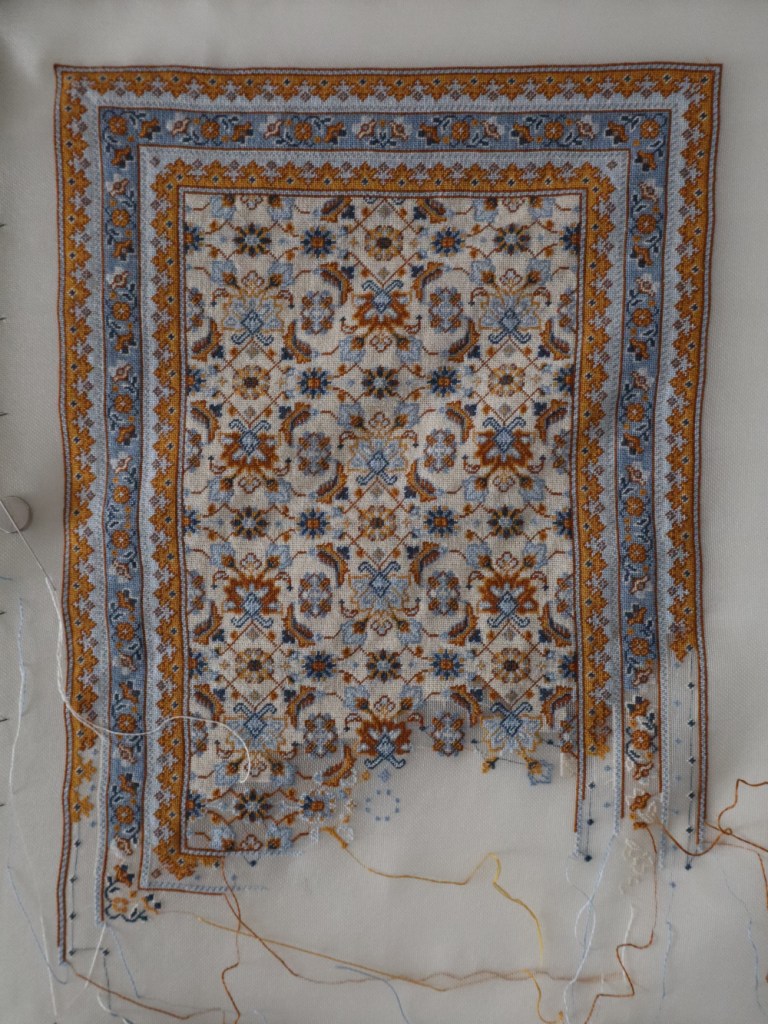
I work on this 1:12 carpet most mornings after breakfast — while finishing my cup of tea — so maybe between fifteen and thirty minutes, let’s say, and it finally feels like it shows! I turned the third corner a few weeks ago, which I pushed a little, mostly, to be honest, because I don’t want to end up with nothing but border to work. It’s good when you get tired of one section, to be able to move over to something different. I reckon that this is still a few months’ stitching left — and there is three lines of medium-blue all the way around the outside edge, as well — but I’m getting there! Soon my corner shop will have something to put on the floor …
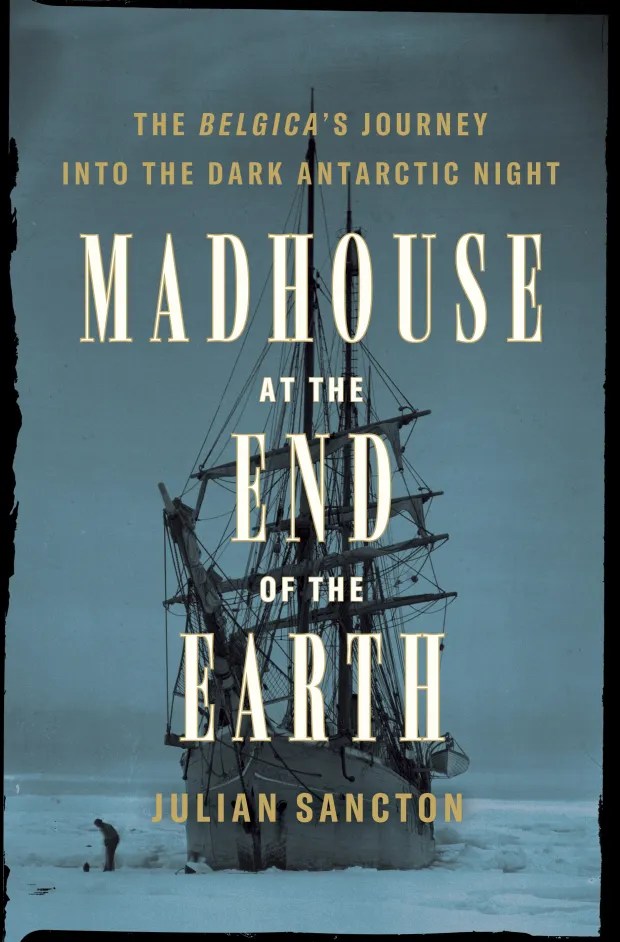
I just finished reading Madhouse at the End of the Earth by Julian Sancton, which Julia got for Christmas. (After watching “The Terror” while at Otago last year, she became what can only be described as somewhat obsessed with the series and the Franklin expedition both, so much that she can rattle off the names of the crew members of both “Erebus” and “Terror” and the — probable — fate of each.

I must admit that she takes after her mother in many respects, though she is enough of a Gen Z member that she went to the length of making a two-hour PowerPoint presentation on the expedition (!) and how the series diverts from it. (We were treated to the presentation over two evenings in our hotel in Wellington!) Anyway, last December Dad was trawling around for Christmas-present ideas, as one does, saw the “Belgica” book among the recommendations, and bought it for her. I had heard of the 1897-1899 expedition, of course, and its numerous dramas, from Roland Huntford’s Scott & Amundsen, so was already familiar with the story, but Sancton’s book of course goes into much greater detail. It is certainly a rather harrowing story — stuck in the polar ice (secretly intentionally) with a crew many of whom refused to eat penguin and seal but stuck with the ship’s inadequately-canned food, most of them came down with scurvy, which was at that time only partly understood. The expedition’s doctor, hired en route at the last minute, was Frederick Cook, who was already an experienced polar explorer, and was instrumental in saving the men from the worst ravages of scurvy, though he could do only so much about the mental ravages of being on a wooden ship stuck in the two-meters-thick, ever-shifting polar ice for over two months of polar night. (Amundsen, meanwhile, learned any number of lessons, both from the “Belgica”‘s experiences and from Cook himself — one can imagine him noting things down, “this didn’t work, that didn’t work, this worked,” etc. etc. He decided, after trying it, that man-hauling across the ice was far too draining, and that Cook’s insistence on fresh meat did indeed keep scurvy at bay — two hard-won lessons that a decade or so later got his own expedition safely to the South Pole and back.) Sancton’s book is meticulously researched and well-written, feeling almost like a novel with its deft characterizations of the expedition’s members and the events that most of them managed to survive.
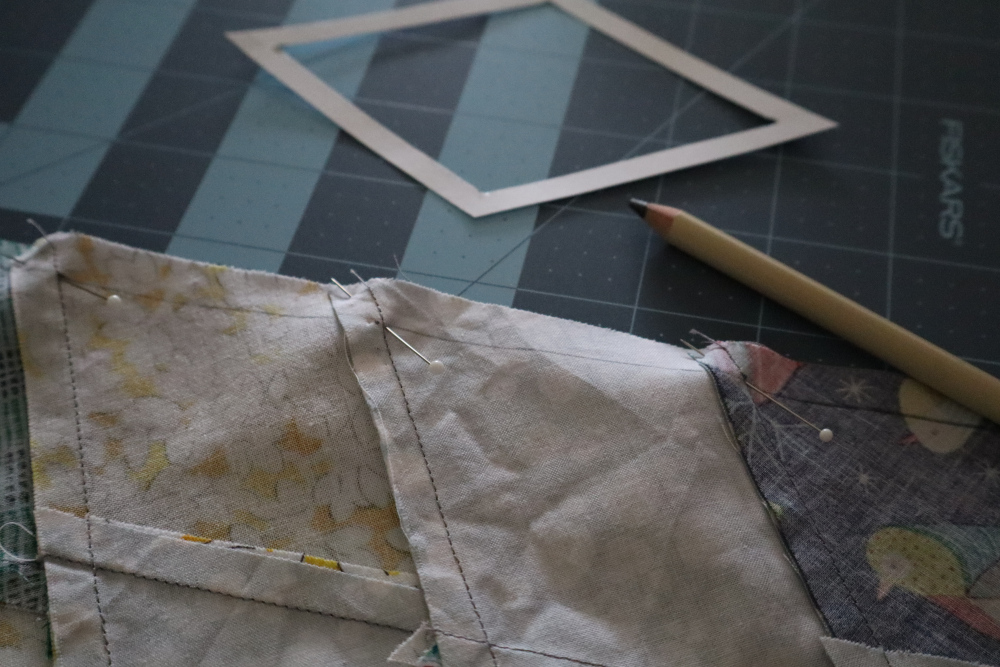
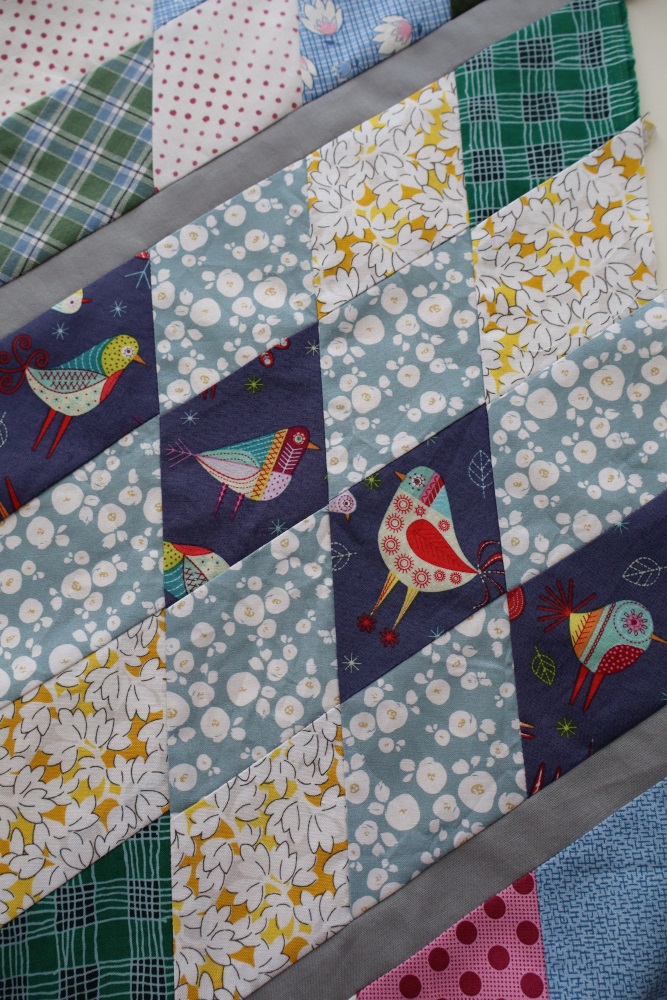
On a completely different note, I am now sewing the sashing between “Lucy”‘s diamond blocks, and sewing the blocks into diagonal strips. I was impressed with the freezer-paper technique for the diamond pieces, which on the whole worked well — as long as I’d cut the freezer-paper templates the right size, that is (sigh) — but when it came to the sashing strips, it was pretty much a failure, I suspect because a 3/4-inch wide strip of freezer paper doesn’t really have enough oomph to stick to a piece of sashing throughout the process of moving it back and forth between ironing board to sewing machine. I gave up on it about eight or ten strips in, and decided to simply draw stitching lines on the backs of the pieces with a water-soluble pencil, which to be honest is I think a bit easier than the freezer paper, and certainly more ecologically-sound, since there is no freezer paper to throw away afterwards and the freezer paper is in fact coated with plastic, not wax as I thought (because ironing the coated side to fabric makes it “stick” slightly = wax, in my mind). In order to print the templates onto the freezer paper, you have to cut the large widths of paper into a size that will fit into your printer — which is a bit of a pain, to be honest, even with a long-arm paper cutter — then carefully cut out the templates, iron the templates to your fabric, sew the pieces together (getting the two edges aligned properly!), whereas with a quilting pencil, once you have a set of templates, you just trace the lines on the back of the fabric, pin, and start sewing. But, as I say, the freezer paper worked well for the diamond blocks, and I’m very pleased with them, so — huzzah!
I would just like to add again that I rain hosannas on the head of whoever came up with the technique of nesting seam allowances to line up the spot where four fabrics meet! I didn’t always get it perfectly in this project, but I always got at least very close, and many times, it looks superb!


Leave a comment