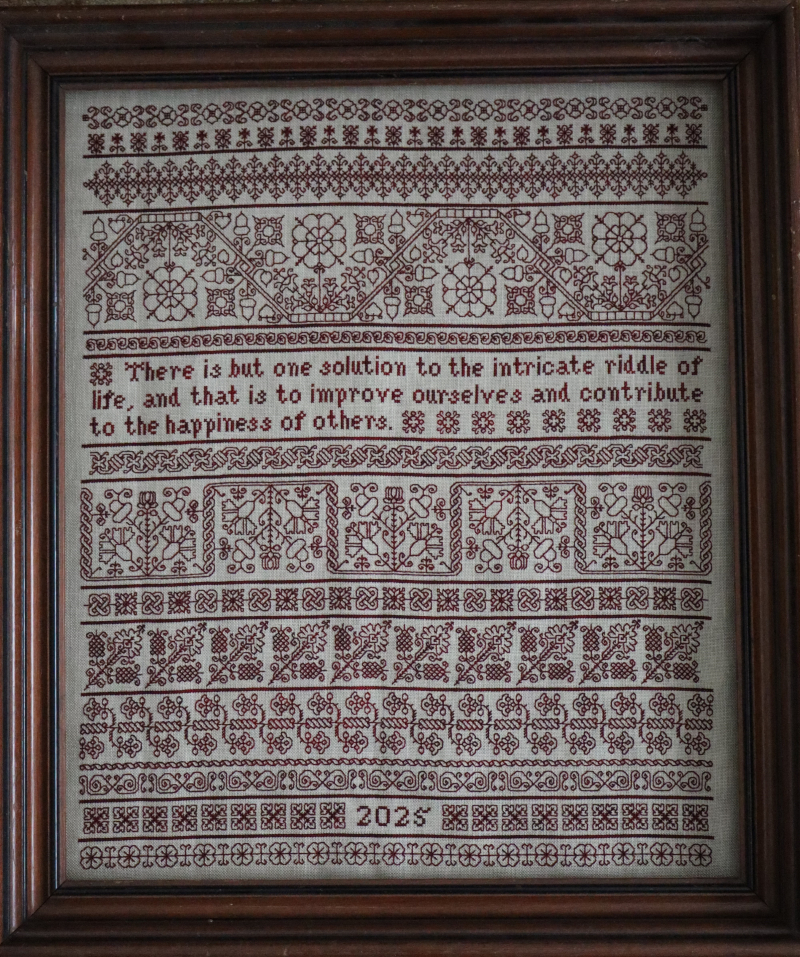
Ooof, it has been a long time! I finished my "red work" piece not very long after the previous post, am very happy with it. This is a virtual frame before I blocked it and had it mounted, but I wasn't sure that I could photograph it well once the glass was in. I would be happy to share the chart if anyone is interested.
TypePad is giving me grief again about uploading photos, and so this is will be a bit random, I'm afraid, depending on which photos actually show up (grrr) — this has been written over a couple of days, because it's too frustrating trying to get things to work, and as a result it's only quick recaps except for a long-ish bit I wrote a few days ago in preparation for this much-delayed post. (Hangs head in shame.)
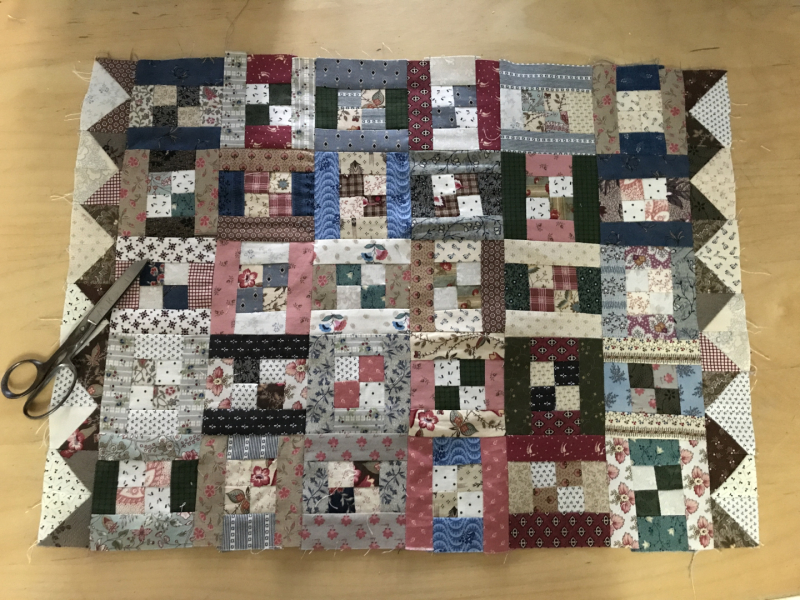
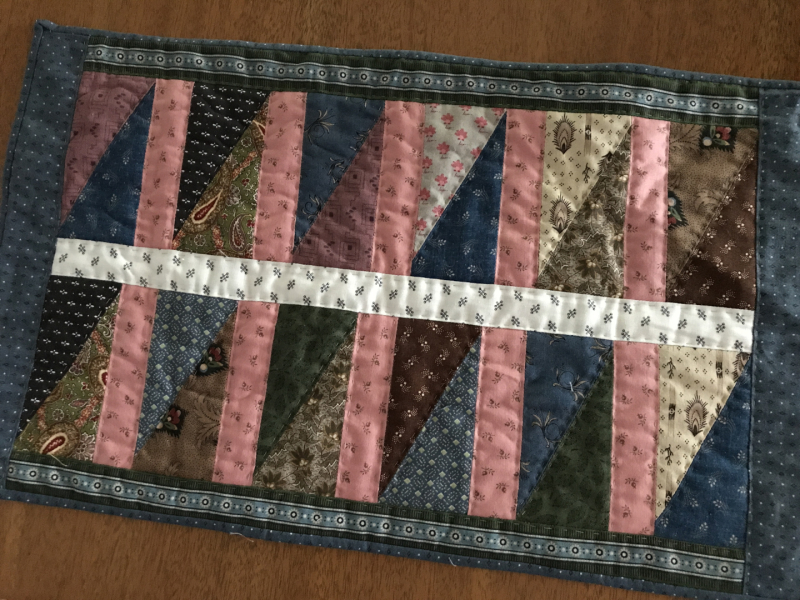
Two mini-quilt placemats, the free “A Bit of History” and a shameless copy of a half-rectangle triangles one by Temecula Quilt Company. The top one is now quilted and bound — it turned out rather bigger than I really expected — quite big for a placement — but there it is, I had fun piecing it, and am happy with the result!
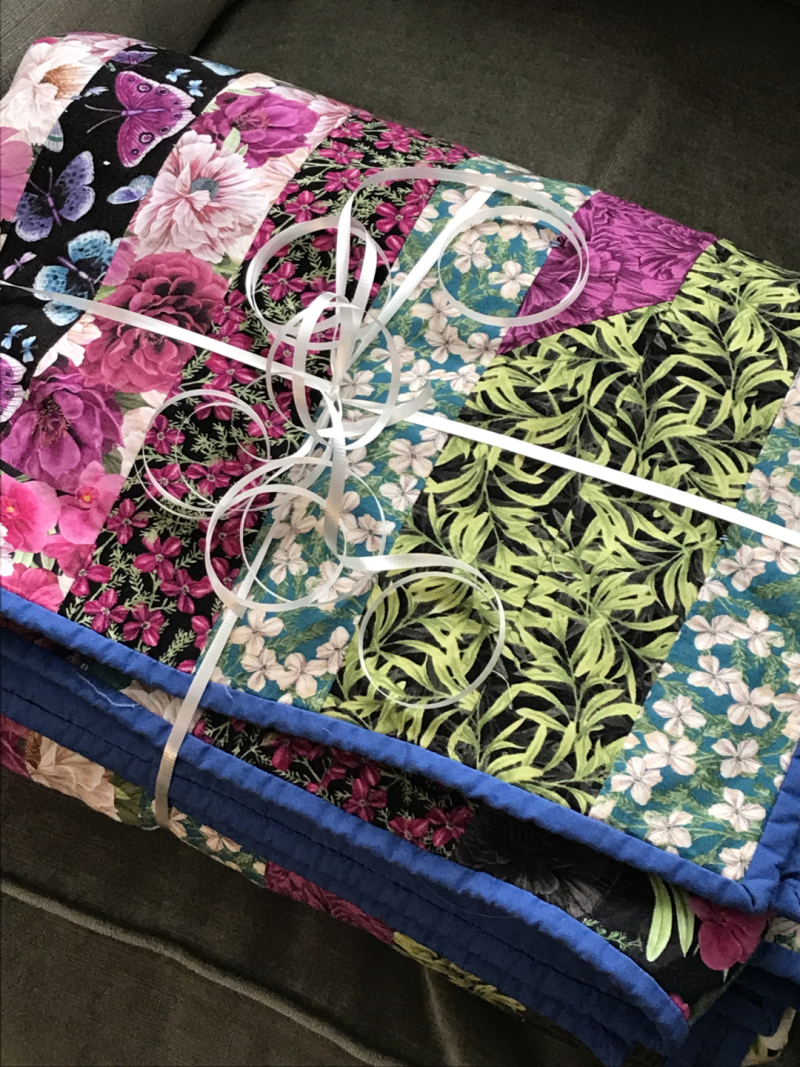
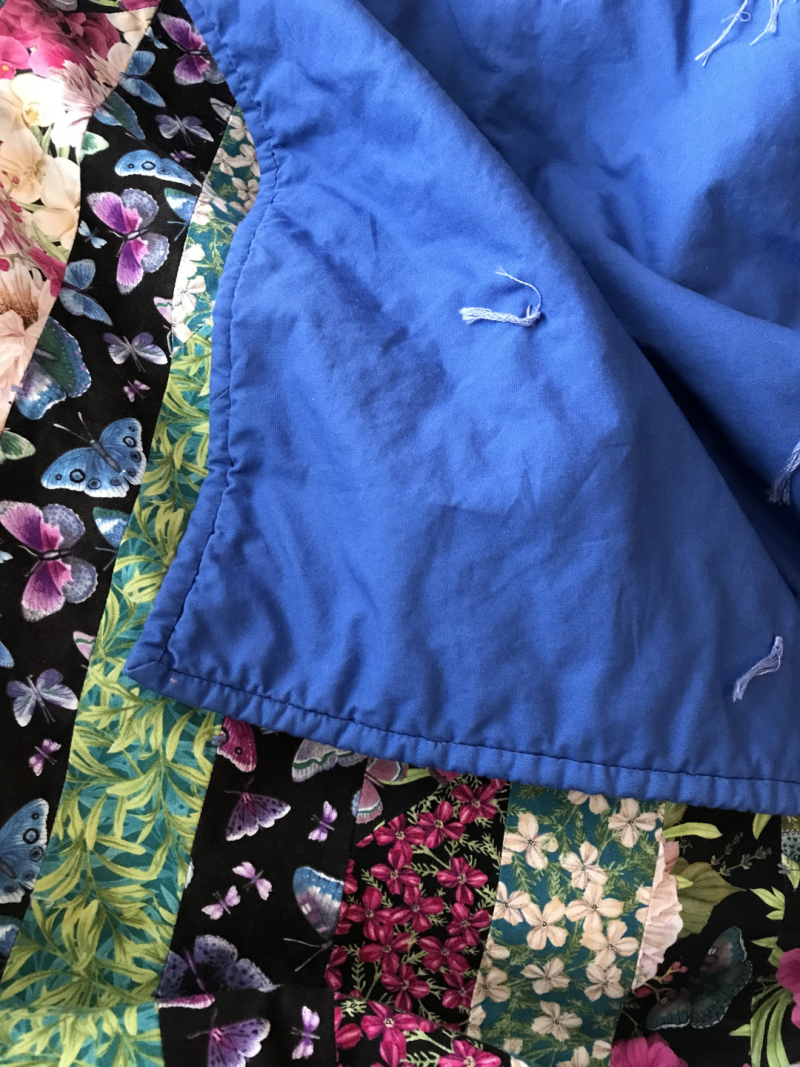
A quilt for my new niece! Just a quick jelly-roll race quilt, as to be honest, I'd left it rather late, but it turned out pretty well. The fabric is "Midnight Garden" by Danielle Leone, un-"baby"-like, but I like the strong colors and all of the little butterflies she can look for.
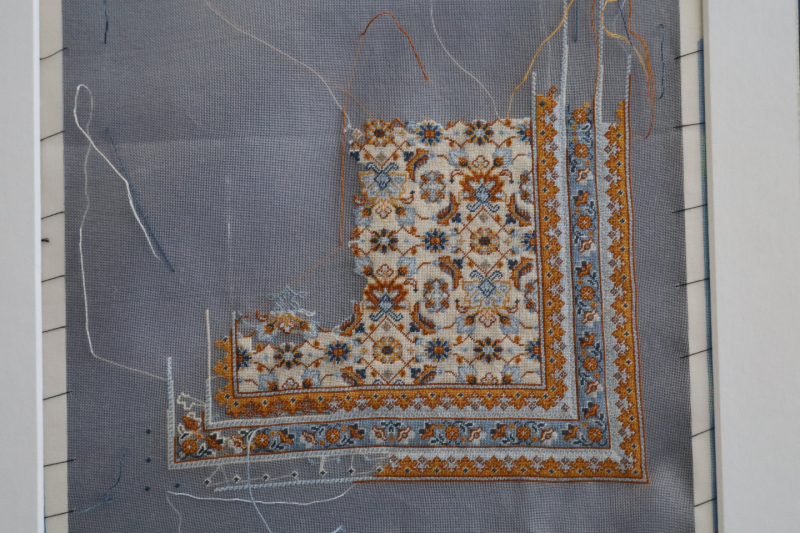
My "Ferenghan" 1:12 carpet a while back. I don't really like "parking" threads, certainly not as many as I often do on this carpet, and so occasionally I've just kept going until the end of a given thread, which is how I ended up finding, when I'd worked the central field over to the corner turn, that I was one stitch off. I had a Ralphie moment ("I'll fake it! They'll never know!") but of course picked it all out — you can still see the ghost of my optimism there, running up along the innermost border. Sigh. But I have stitched considerably further since this photo was taken, and it's all a distant memory.
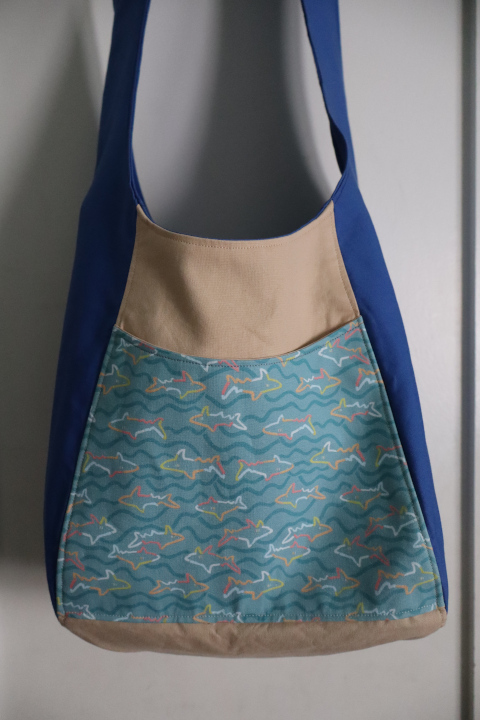
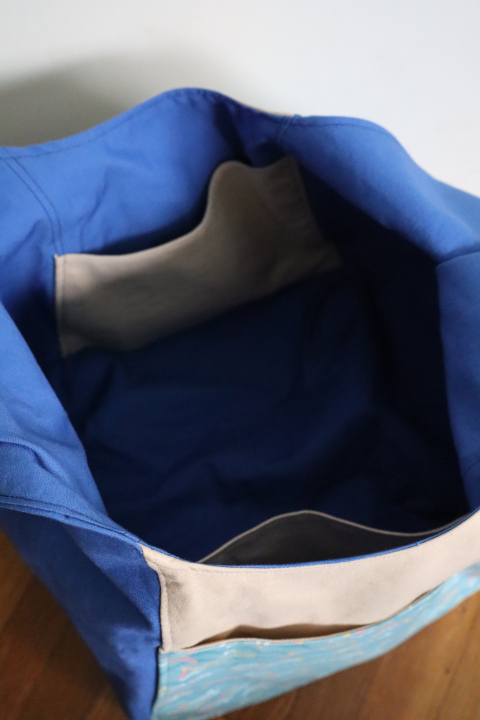
A second Summer Festival sling bag, this one for Julia out of scraps from her quilt and the set of table napkins that I made for her on her way to university — this time she is on her way to a semester abroad, in New Zealand. Gosh, that's a long way away (said mother wistfully). I really like this pattern — it's easy, and it makes a good-sized farmer's market or walking-to-the-grocery store bag, and I use mine a lot. Good big pockets, too, inside and out!
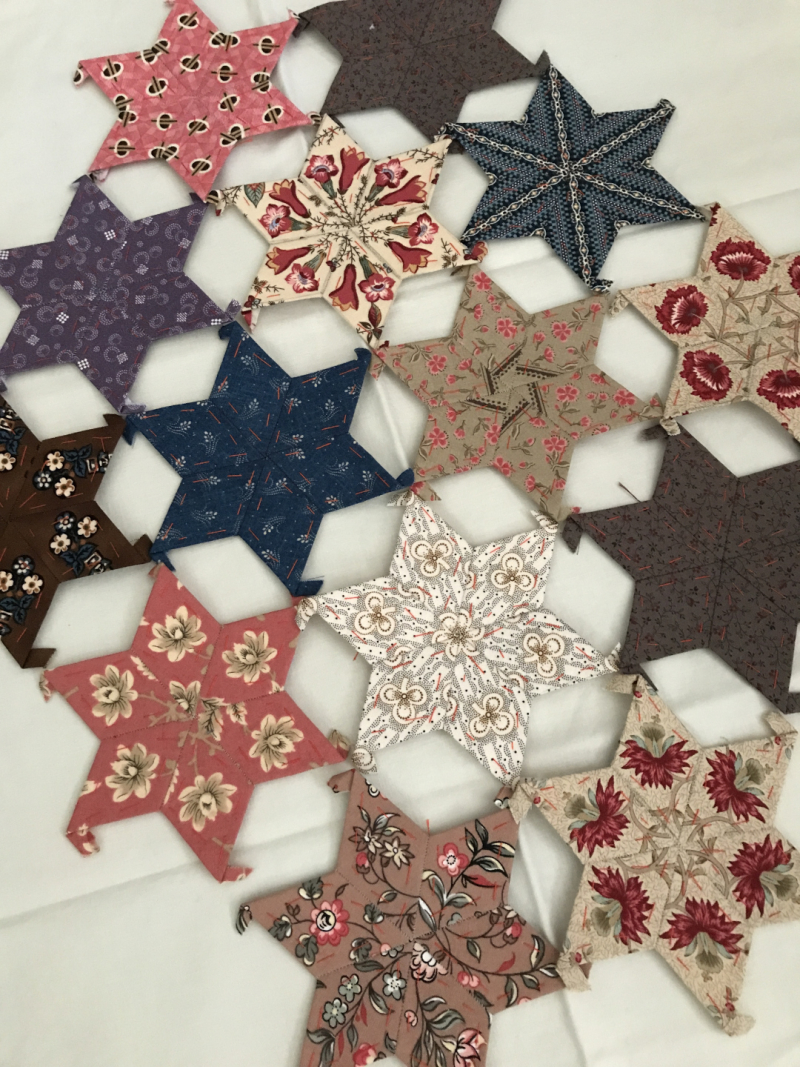
More patchwork stars, this time against an off-white Kona Cotton I found in my stash that will do very nicely for the background diamonds! I'm really enjoying these. Not all of the fussy-cut ones are completely successful — the pink one in the second row from the bottom is a really handsome fabric, a beautifully silky heavy cotton, and the flowers themselves are good but the center is definitely a bit, erm, wobbly — but the whitish one next to it was quite pleasing to see!
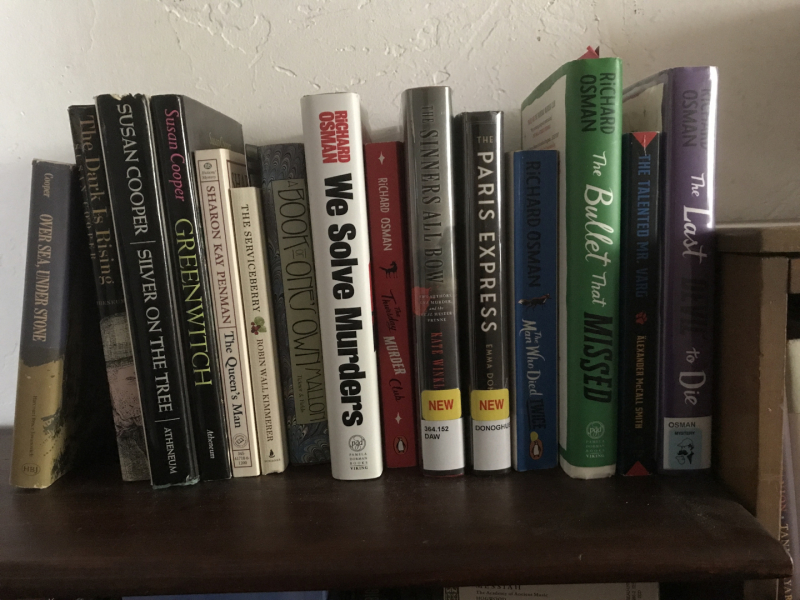
I've also been doing a lot of reading — this was actually during the summer. I enjoyed the Thursday Murder Club series immensely, and highly recommend it.
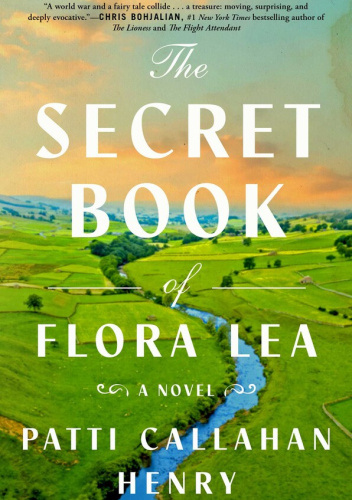
My mother passed this book along to me, thinking I'd enjoy it, and indeed the premise was intriguing: two sisters are evacuated from 1939 London to a small village outside of Oxford, but tragically little Flora, barely six years old, is lost in the nearby river, and Hazel, who grows up to work in a rare-book shop in 1960 London, is haunted by her grief and sense of failed responsibility, so much that when a new children's book arrives in the shop full of stories about the secret and magical land that Hazel invented for Flora — and told to no one else — Hazel is consumed with the need to find out if Flora is somehow still alive. And this premise was enough to keep me reading to the end, but I must admit that I nearly threw the book across the room a number of times, frustrated by the anachronisms and Americanisms on pretty much every page. Why would you set a story in a particular time and place if you can't be bothered to find out how people spoke and behaved in that time and place?
There are the usual Americanisms like "lived on So-and-so Street" for "in" (which I'm sorry to say is now so common in Britain that even people who should remember the 1980s have become accustomed to it) or "pants" for "trousers," but also any number of grammatical anachronisms. I accept, albeit very reluctantly, that the use of "so" as a stand-alone intensifier is now widespread and firmly entrenched, but even by the 1960s people didn't say "that's so true" or "her eyes were so wide" without what would have then been considered the rest of the sentence — "that I can't deny it," "that her eyebrows nearly disappeared".
Signs announcing "Oxford" greet the author's trainload of evacuated children — despite the fact that fingerposts and railway station signs were removed at the beginning of the war, to confuse and/or delay enemy agents or invaders. People take trains to and from 1939 London regularly, and taxis to and from the station — despite decreased regular service leading to massive delays and overcrowding of trains, government discouragement of civilian travel, and the rationing in force from September 1939 that made petrol increasingly difficult to come by. People have "cuppas" constantly — and while the act itself was certainly true of the British long before 1939, it is unlikely that any but lower-class folk would refer to it as such — the first known use of the word, according to Merriam-Webster, was 1934, and would have been thought slangy a mere five years later in a still very class-conscious Britain. There seem to be an extraordinary number of Gaelic names in the author's 1939 Oxford — Kelty, Aiden (sic), Father (sic) Fenelly, Bridie Aberdeen for heaven's sake — and a very anachronistic tendency of the adults to prefer being called by their first names, even by children (the mother with whom the girls are billeted might allow it, perhaps, at a very long stretch, but not the village policeman). Even the pet names are jarring — I can't imagine, say, Noel Coward or John Mills in 1939 or James Mason or Kenneth More in 1960 calling even a fiancée "my love" — "darling," certainly, but the popularity of the latter by the 1930s somehow decreases its emotional fervor, even if it does clearly mean something very similar.
And if the title of this post has got you, as it has me, humming a certain song, here's the full version!

 A Bluestocking Knits
Leave a comment