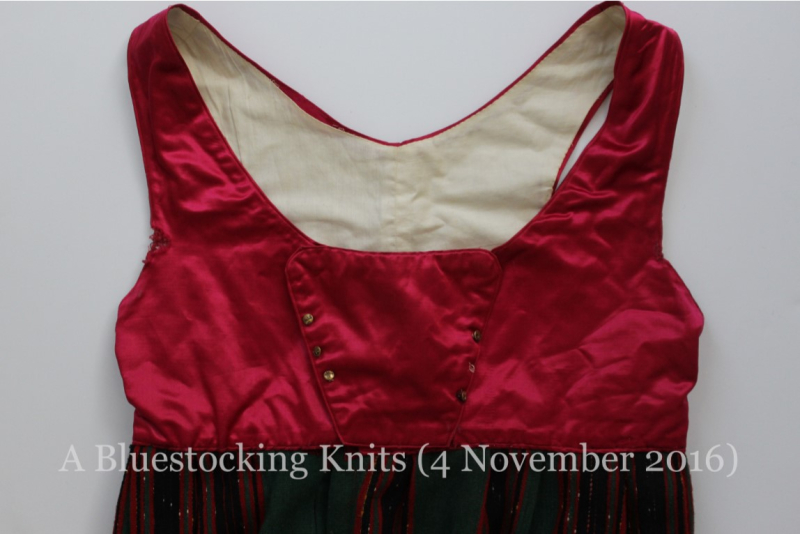
I bought this ensemble from a seller on Ebay who said that it had belonged to her great-grandmother, ca.1870, who was from Silvberg parish in Dalarna, Sweden. It consists of a bindmössa (close-fitting cap), livkjol (bodice and skirt attached together), and two halsdukar (silk shoulder-scarves). There was also a sheepskin jacket which the seller said was part of the ensemble, but very unfortunately I could not afford to purchase it so it went elsewhere. The outfit would have been worn with a linen or cotton chemise or blouse (särk) underneath, and an apron (förkläde), but these were long gone.
I would very much appreciate comments on the authenticity of these garments, the likelihood of their really being ca.1870 and even more importantly from Silvberg, answers to the little mysteries, or corrections to my assumptions about them! If this turns out to be an historically-interesting garment — which of course I hope it does — my intention is to eventually donate it to a museum. I have been able to find not a single reference at all to a Silvberg dräkt, original or reconstructed.
This page is part one, with the livkjol — part two is here, and has the cap and scarves.
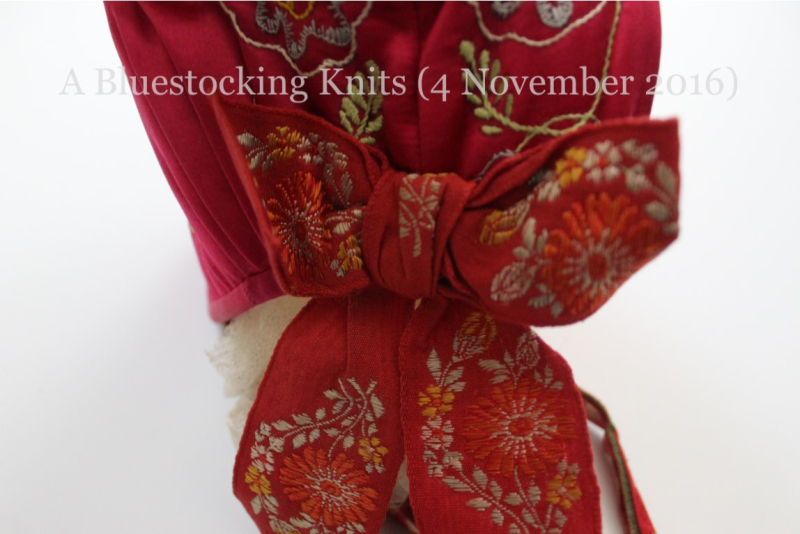
Because I am interested in the construction of historical clothing, as well as in Swedish folkdress, I’ve taken rather a lot of photos of both the inside and outside of the dress and cap, so this “page” will really be “pages” — but I hope it will be more useful this way.
It is entirely likely that I will update these pages as I find out more information, or with more specific photos, etc.!
Note that the condition of the garments is exactly as I received them.
Specific measurements are at the bottom of this page.
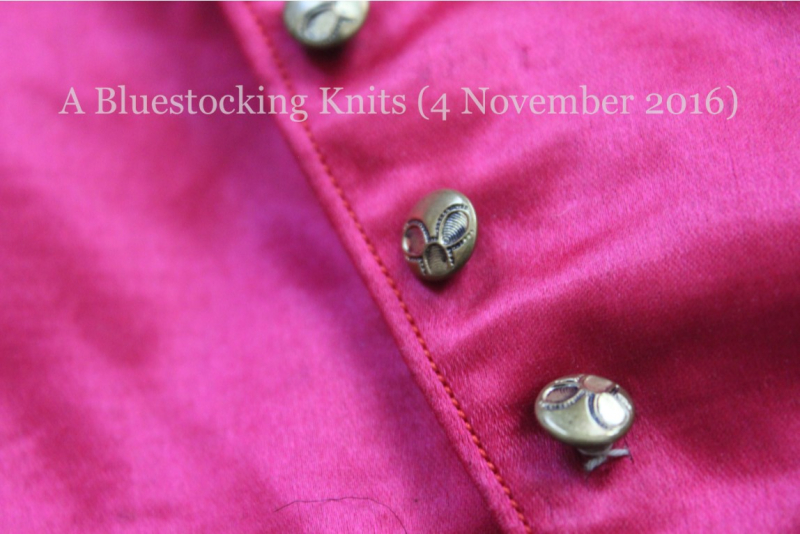
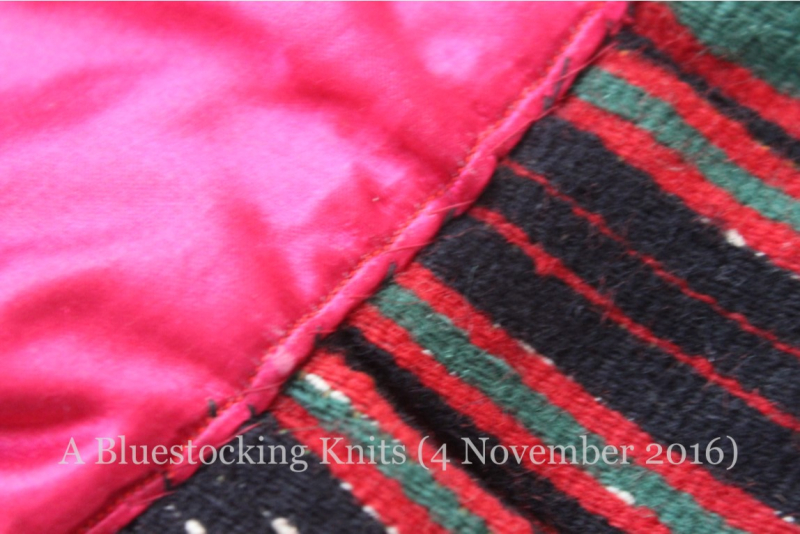
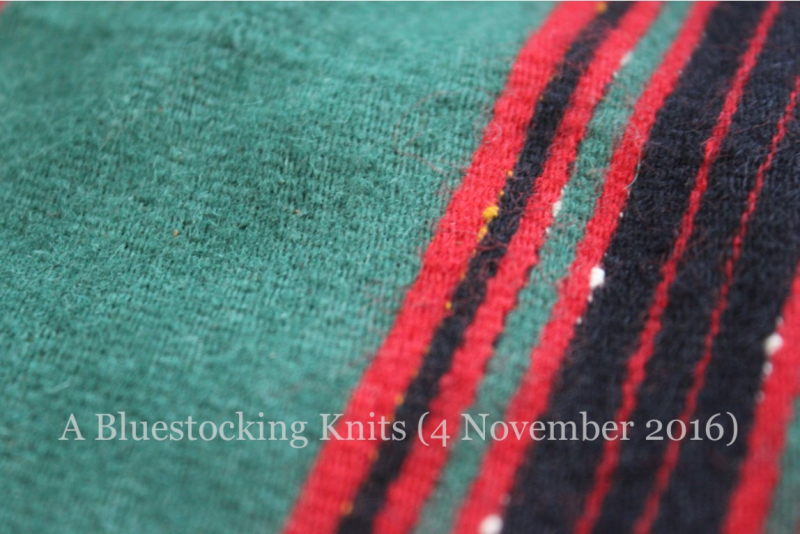
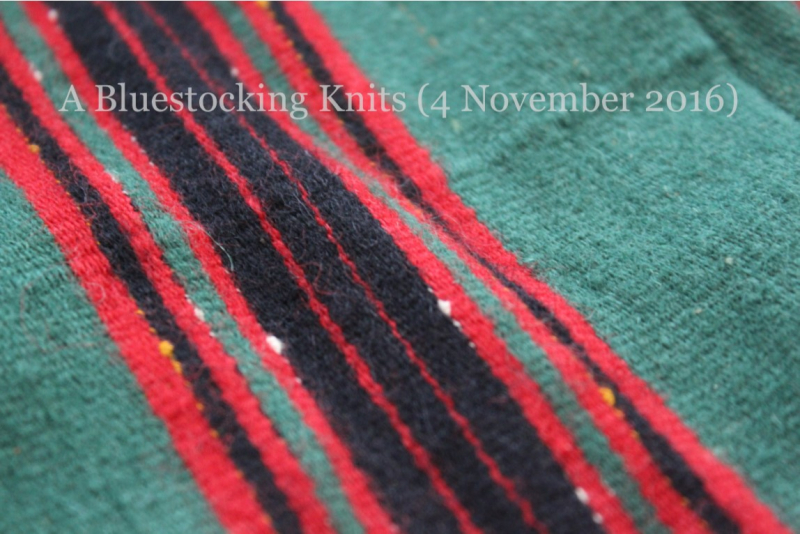
The livkjol (bodice and skirt attached together) is of a deep rose-pink satin on the bodice, and for the skirt a heavy woollen homespun with black and red stripes shot through with nubs of yellow and white, on a dark green ground. The bodice closes with a bib front, giving a double-breasted look; the bib has small non-working buttons, probably brass, and hooks and thread-loops on the inside. The skirt is one width of cloth, with the seam at center front; there is a facing of black twill tape at the hem. It is knife-pleated for the entire circumference of the waist except for a handspan or so at either side of the front opening; the top edge of the skirt fabric (on the inside) is bound with red tape, which is also used to face the skirt front opening. The bodice is interlined and lined with undyed evenweave, probably linen but possibly a linen/cotton blend. The lining is assembled in one piece and then sewn in, not flat-lined.
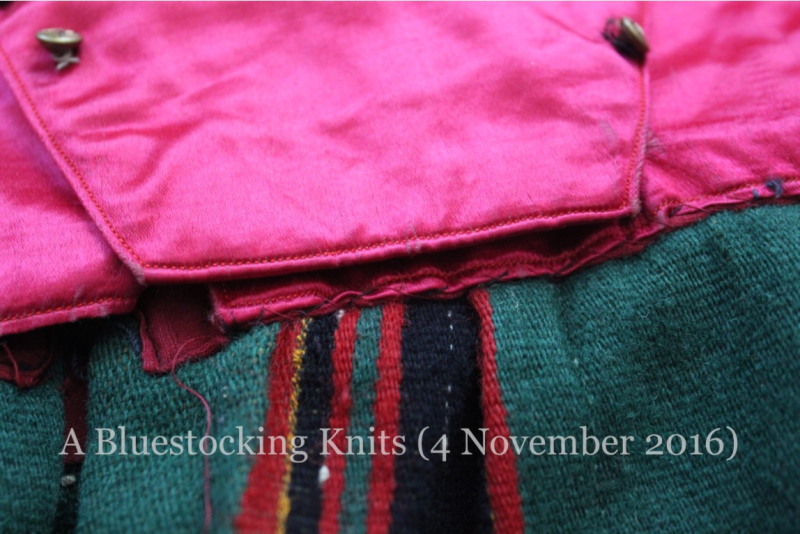
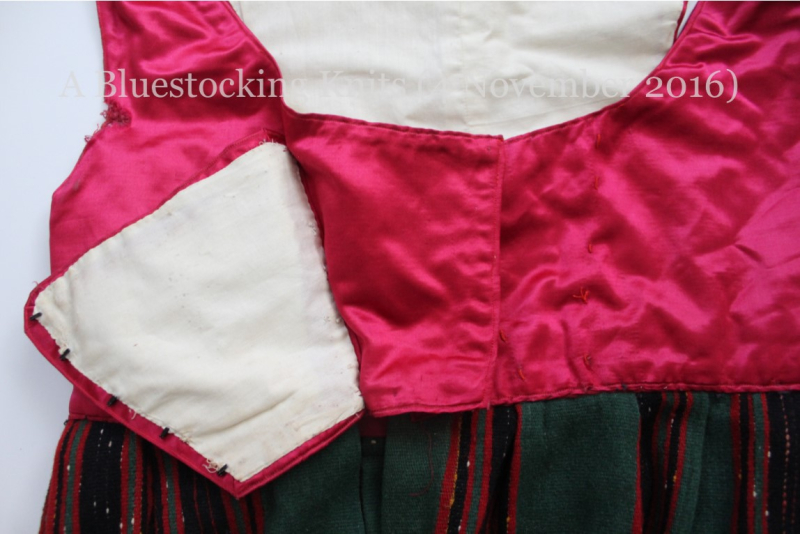
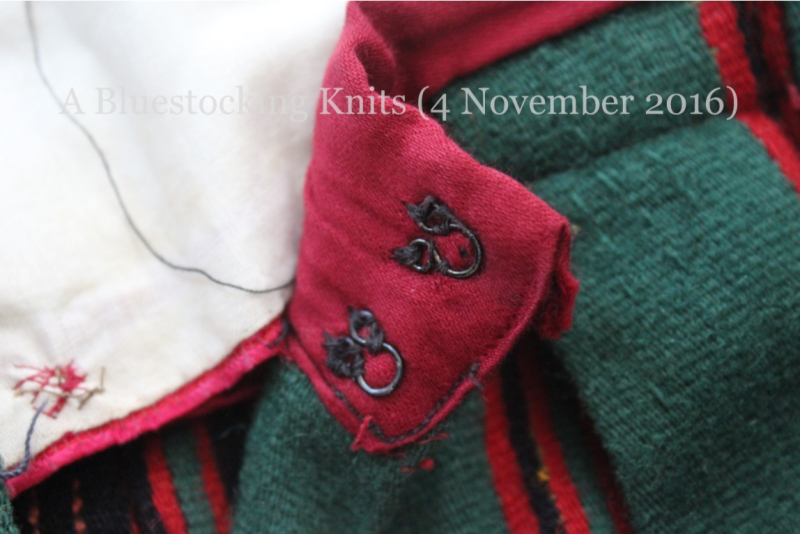
The five hooks have corresponding thread loops. The front opening under the bib is slightly off-center.
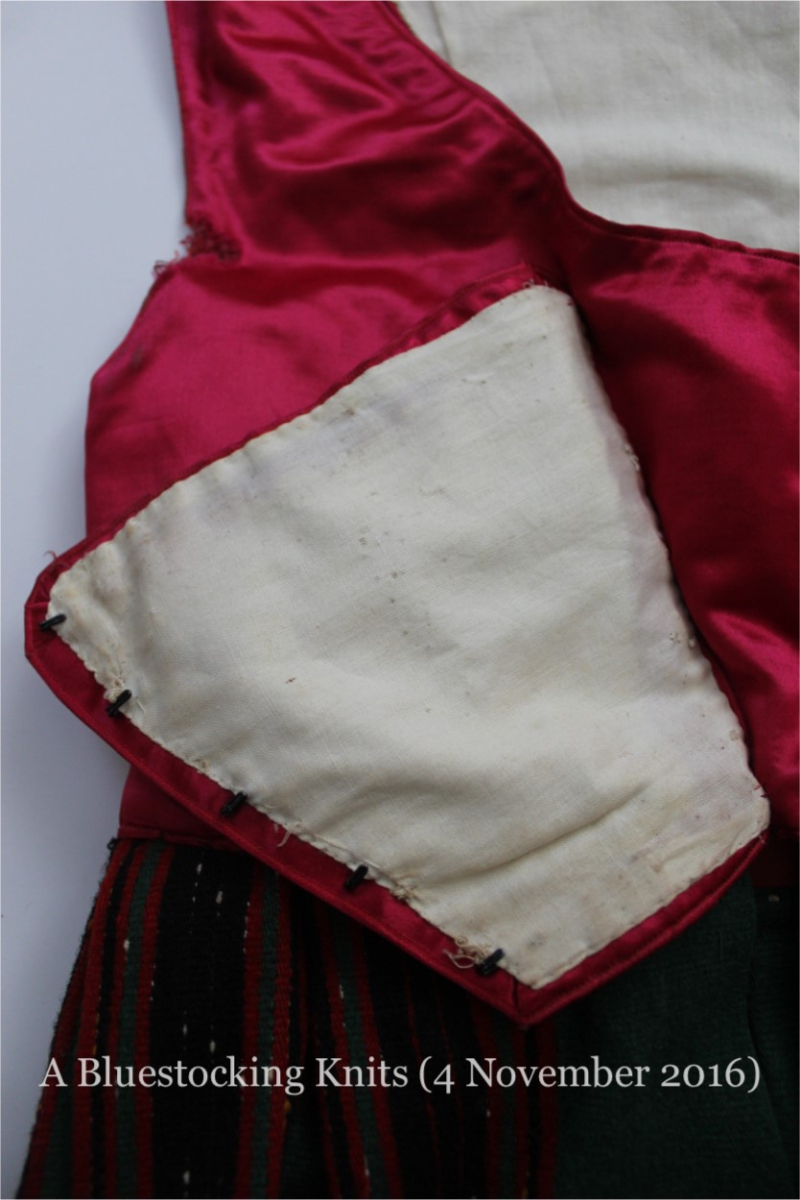
The pink satin is folded over to the inside, over the interlining, and top-stitched by machine, and the lining is folded to the wrong side, and stitched down by hand.
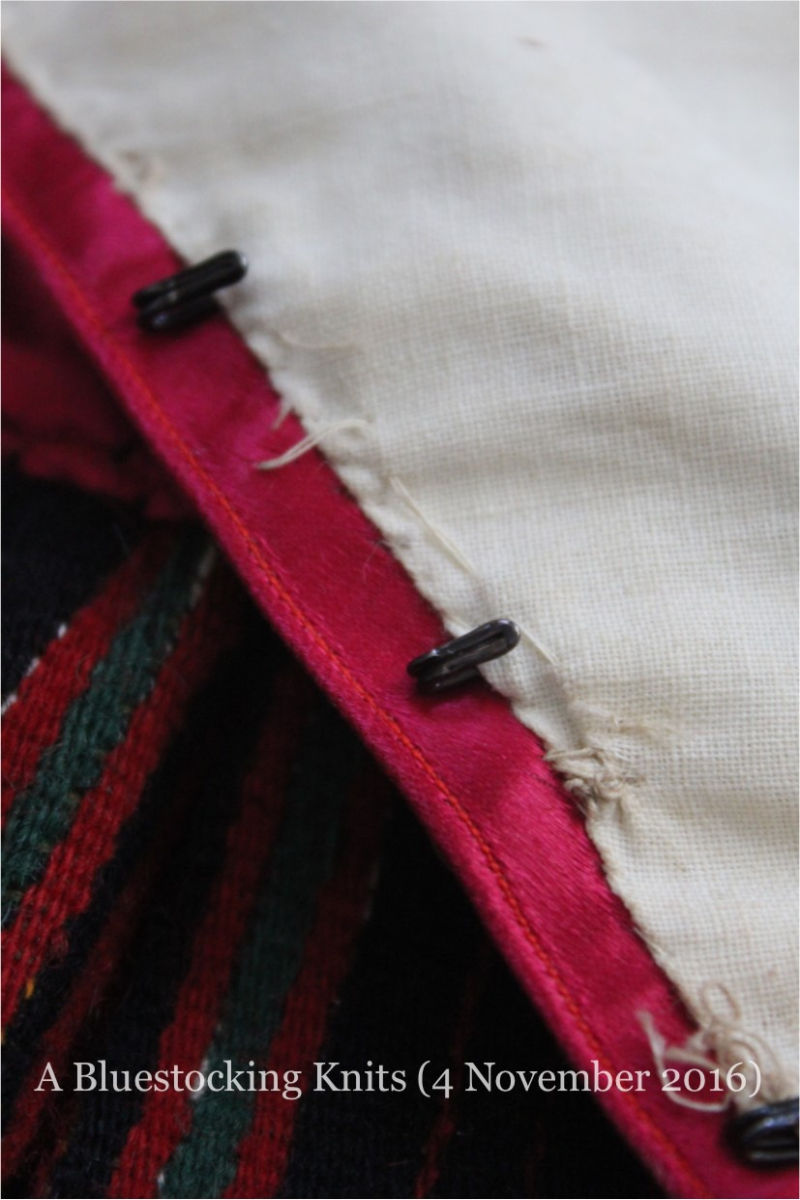
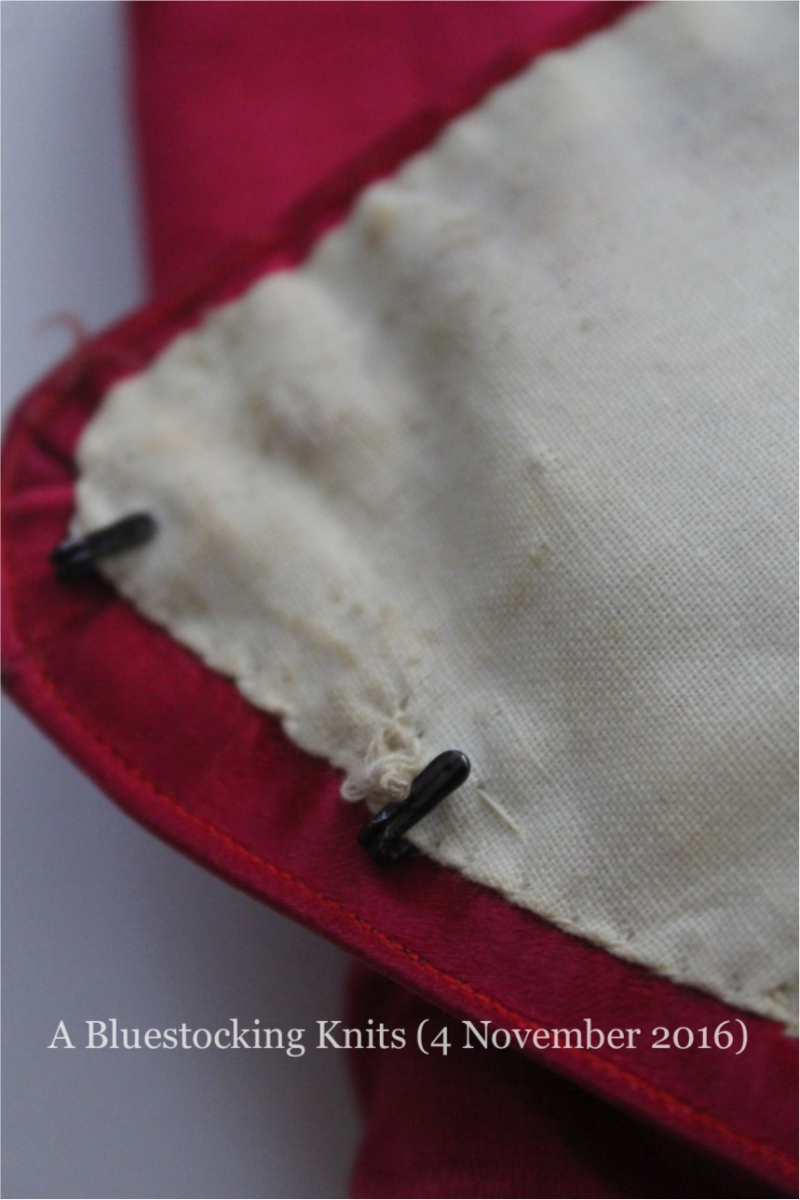
Although the bodies of most of the hooks are tucked under the lining fabric, they were apparently sewn on after the lining fabric, as a continuous thread was used, which is still visible at many points along the edge of the lining. In some places, the entire hook is visible.
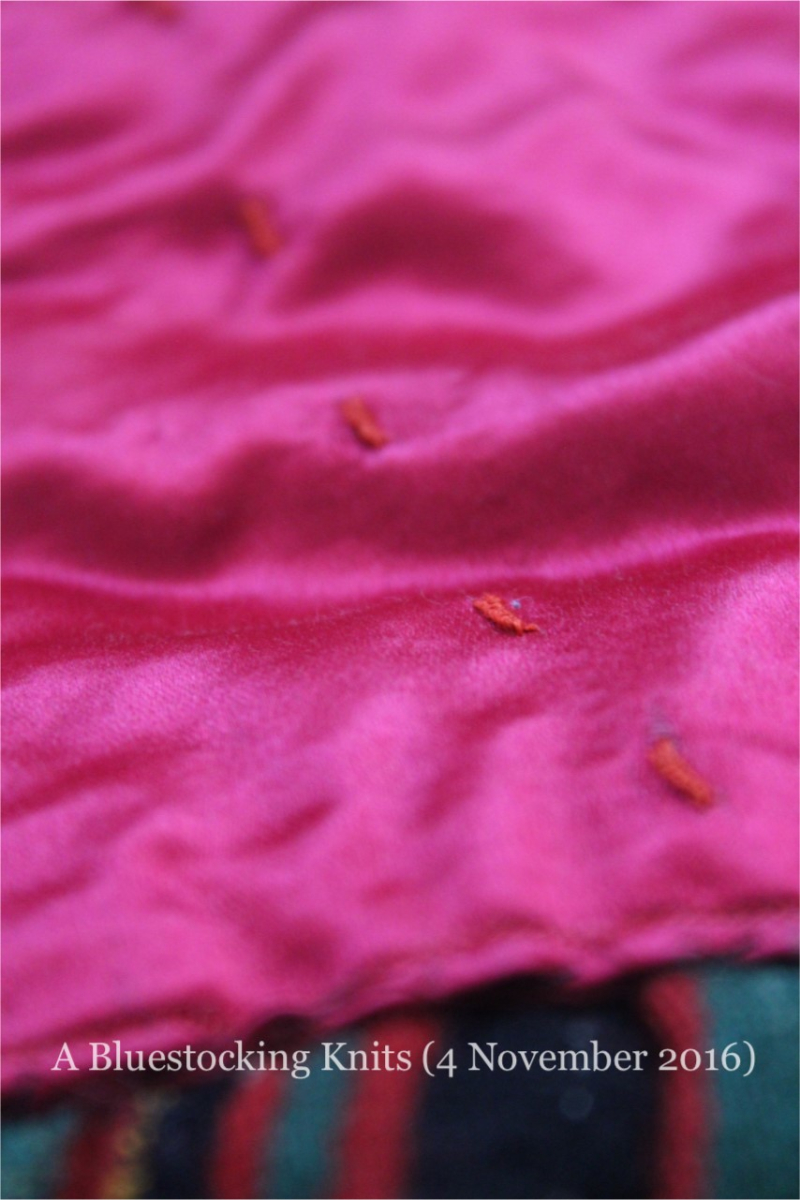
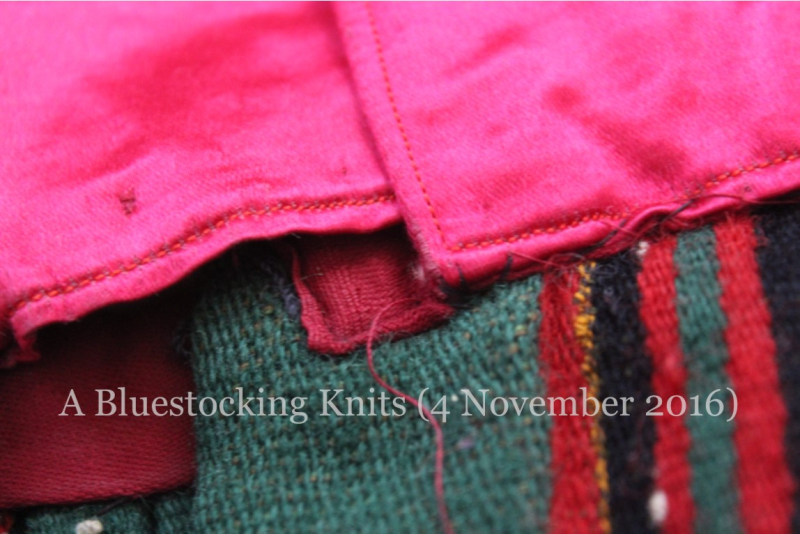
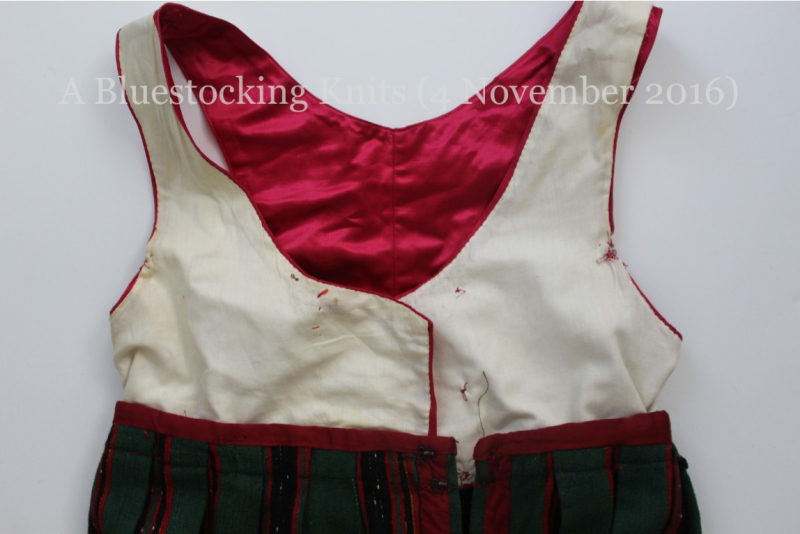
The bodice and skirt were finished completely separately, then whip-stitched together by hand, with both pink and black thread in some places.
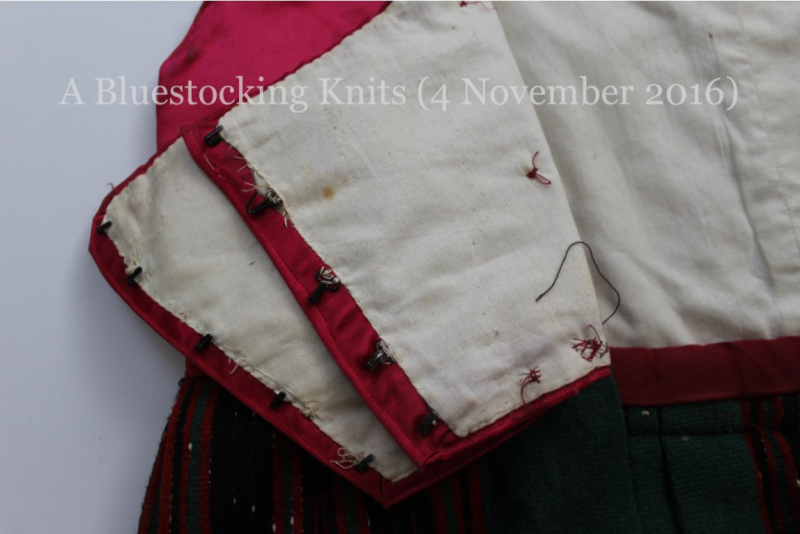
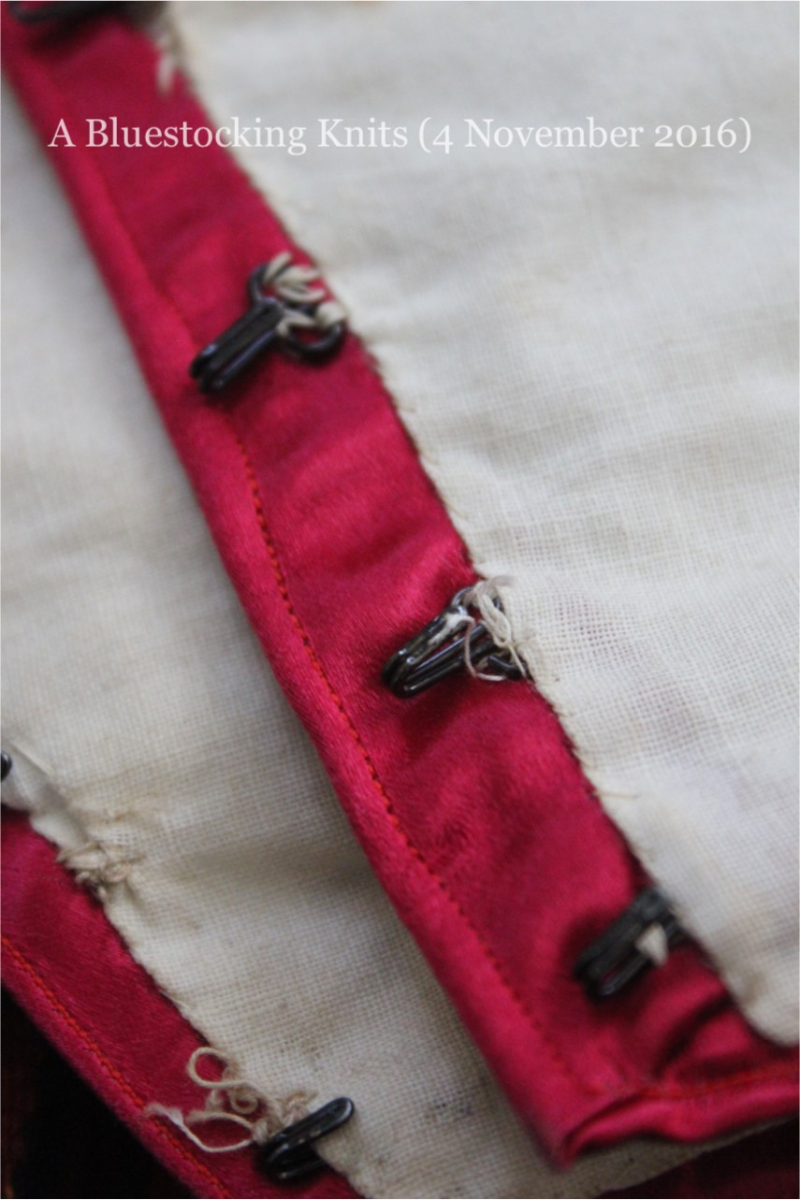
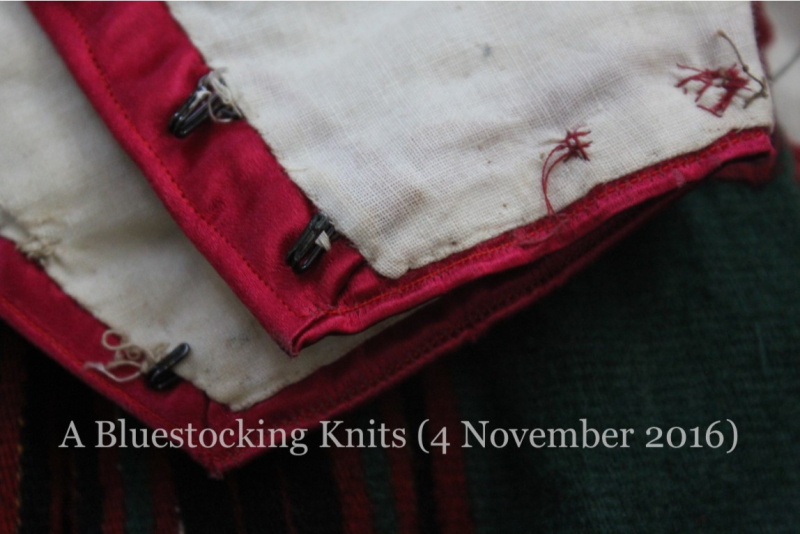
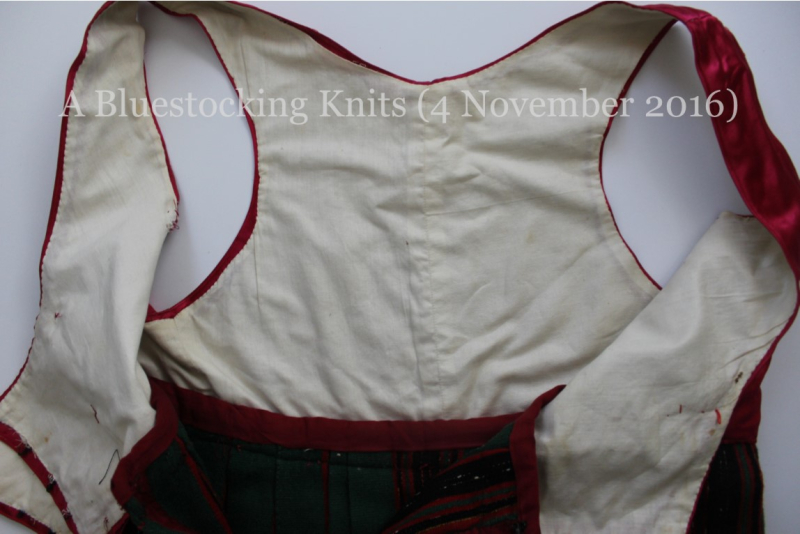
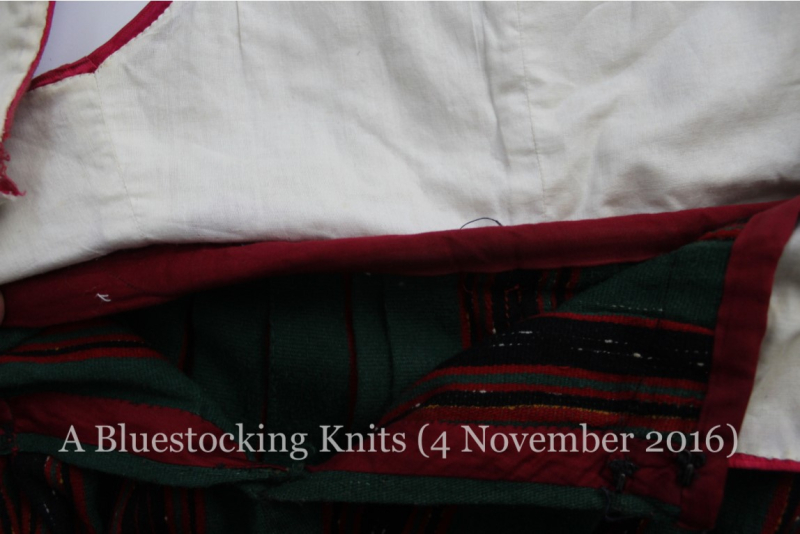
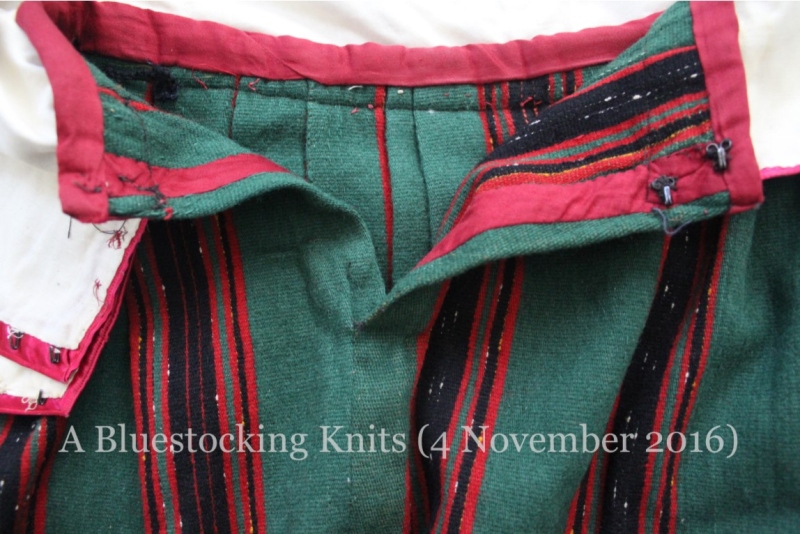
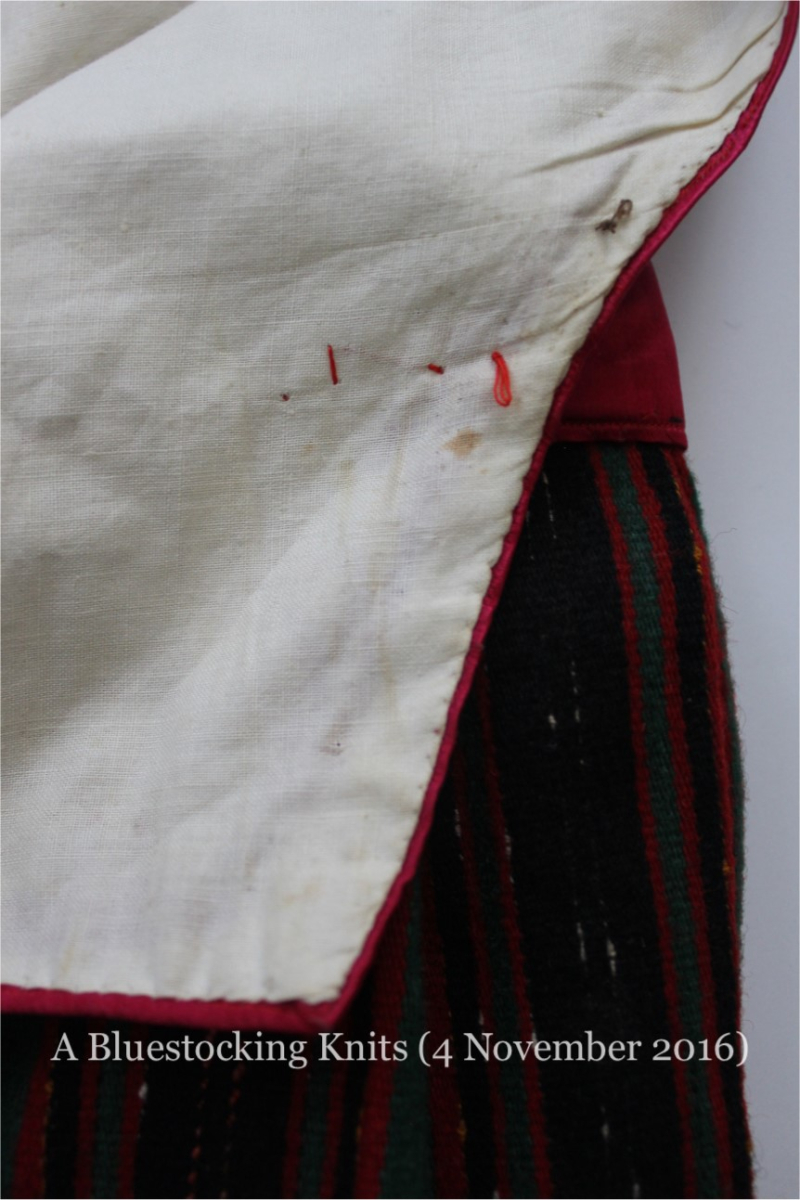
The top edge of the skirt is bound with a silky tape in a dark red, after the pleats were formed. This edge is tucked under the bottom hem of the bodice, and sits facing upwards — I have turned it down on the left here, so that both sides can be seen.
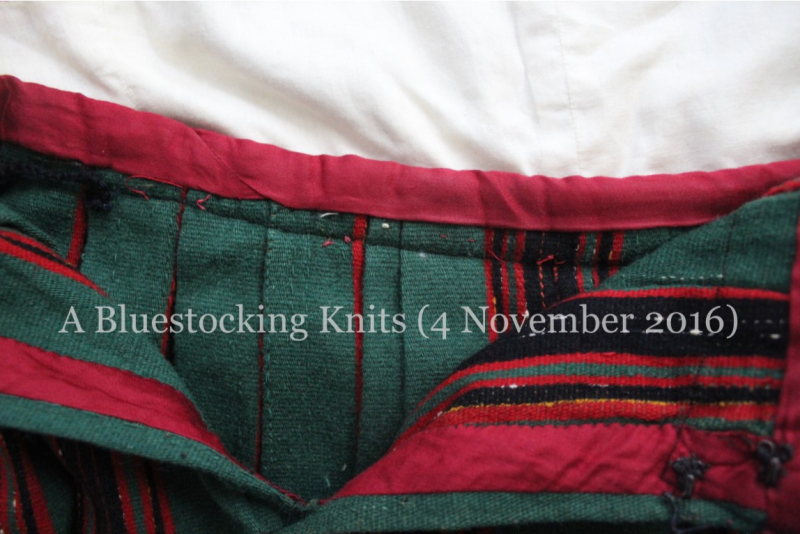
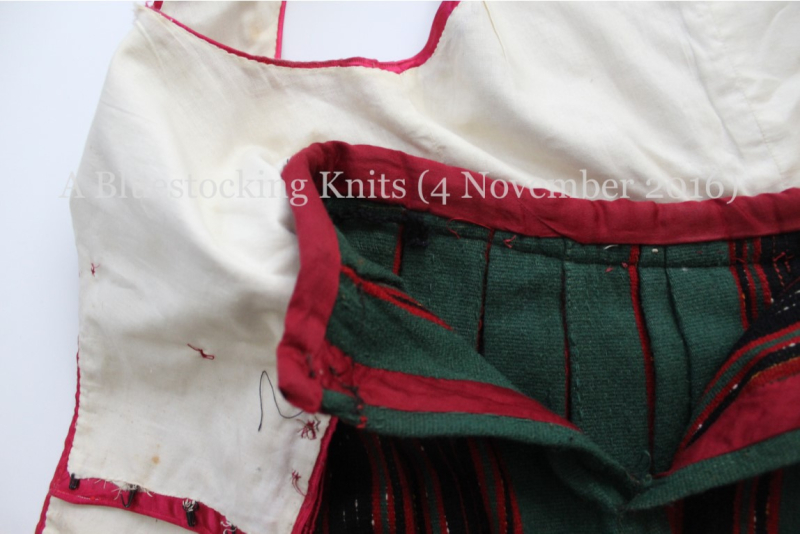
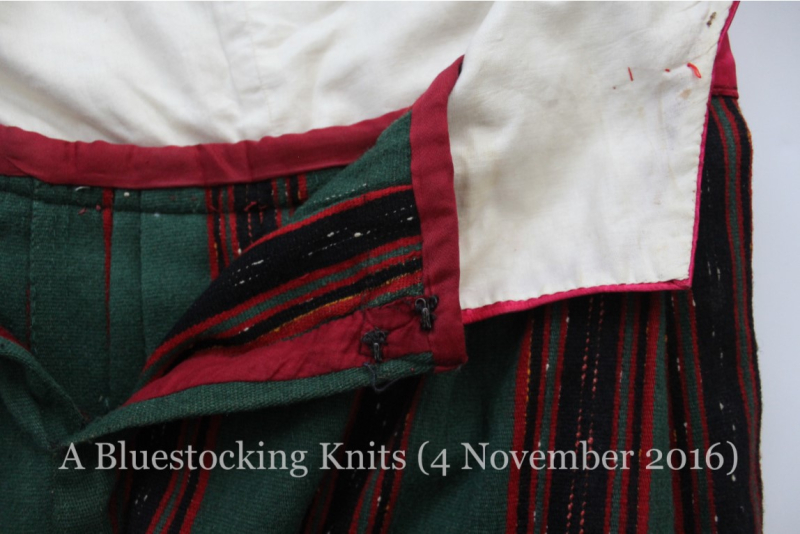
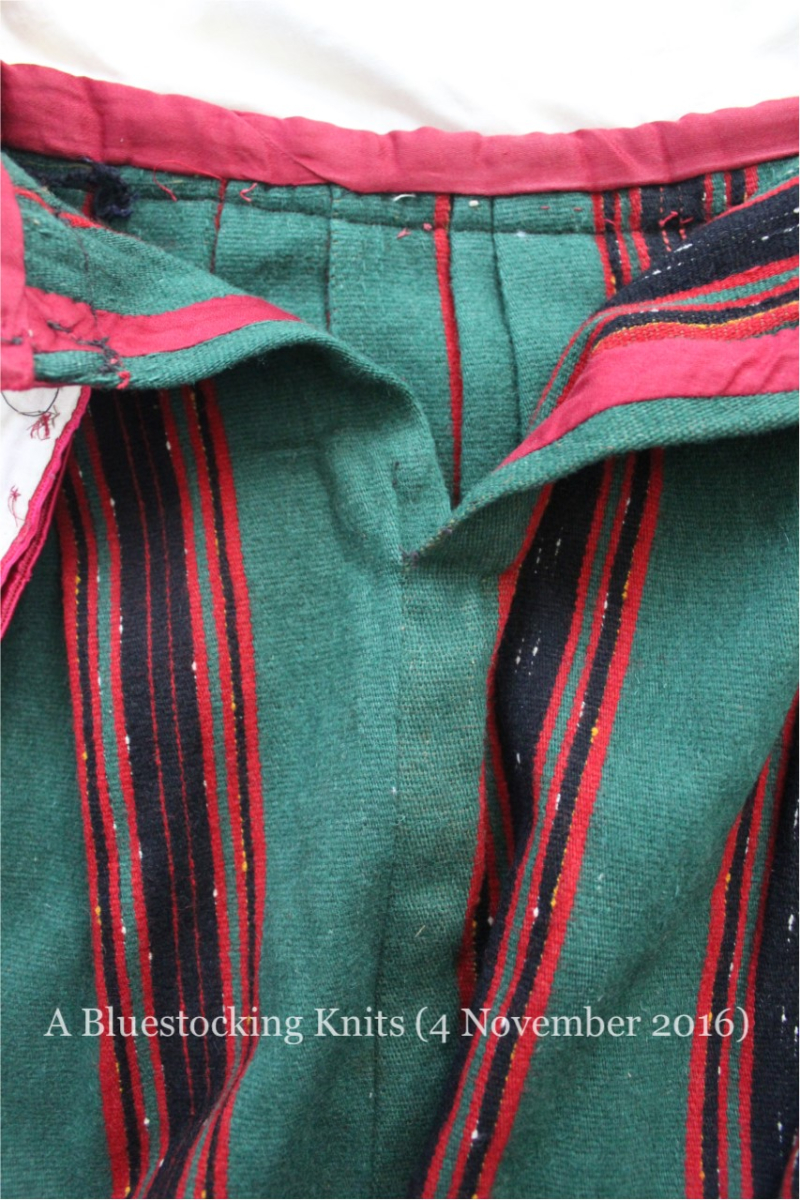
A center-front placket is formed by overlapping the seam allowances on the fabric
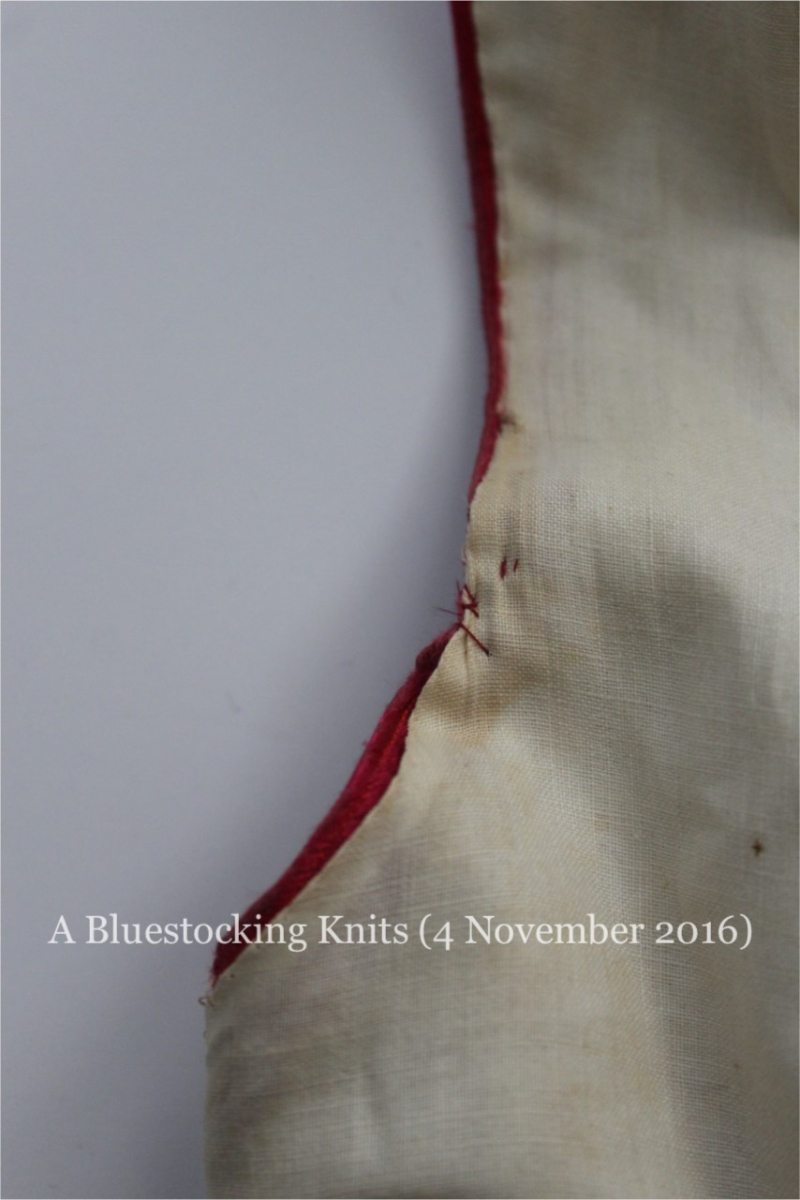
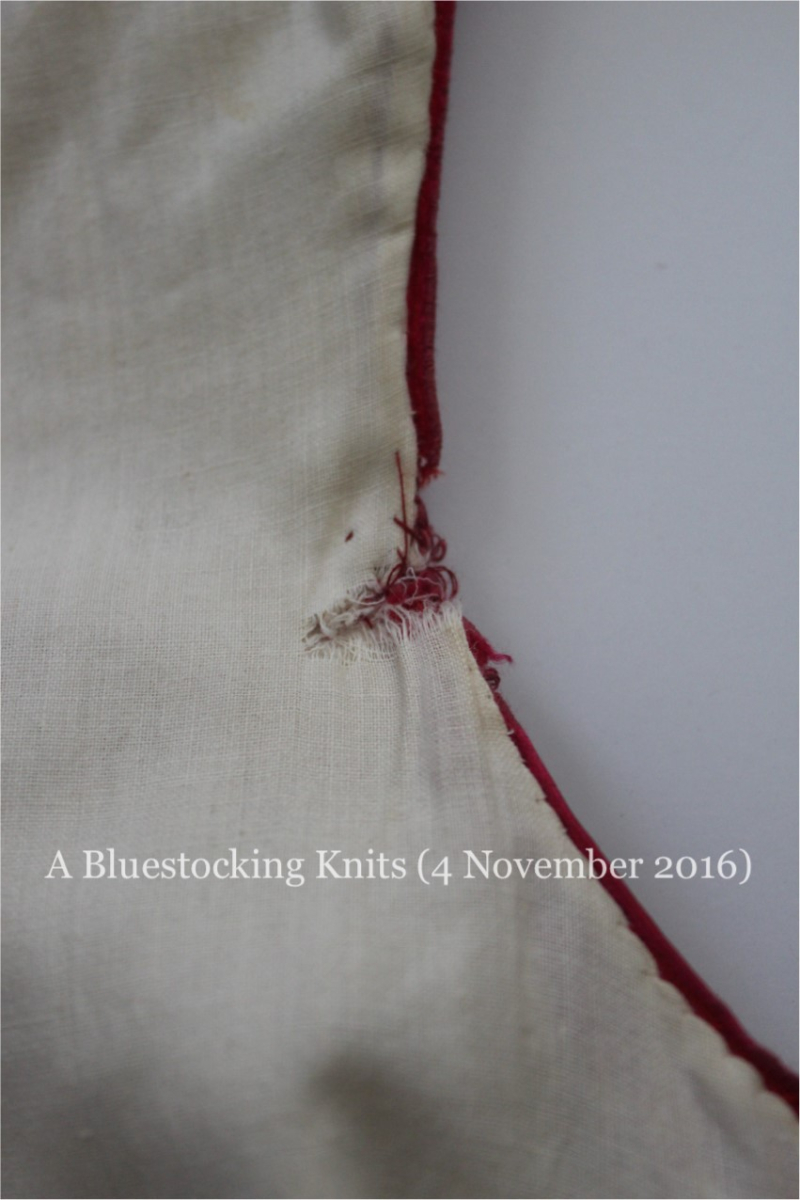
Aside from the general air of age which is only to be expected in a garment over a century old, there are only a few signs of actual wear, some rubbing of the satin at the front waist, and the small tears at matching points on the fronts of the armholes, this one on the right front, and the one below on the left, both of which have been only hastily mended.
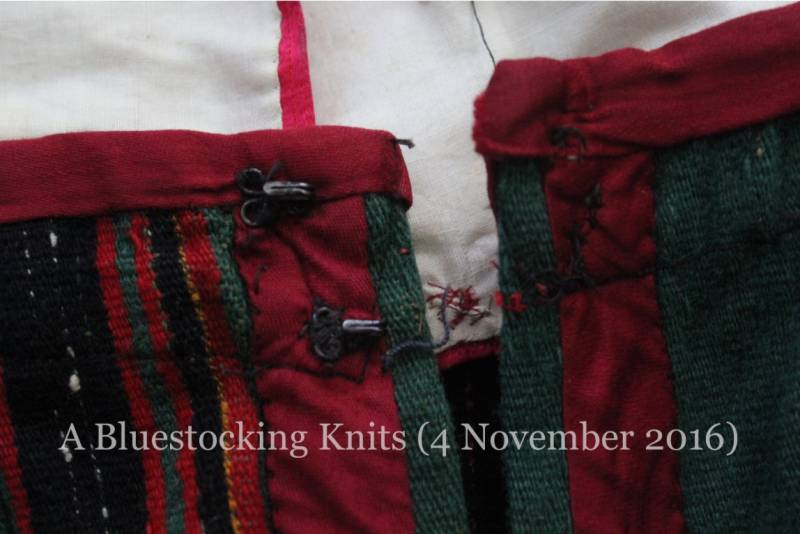
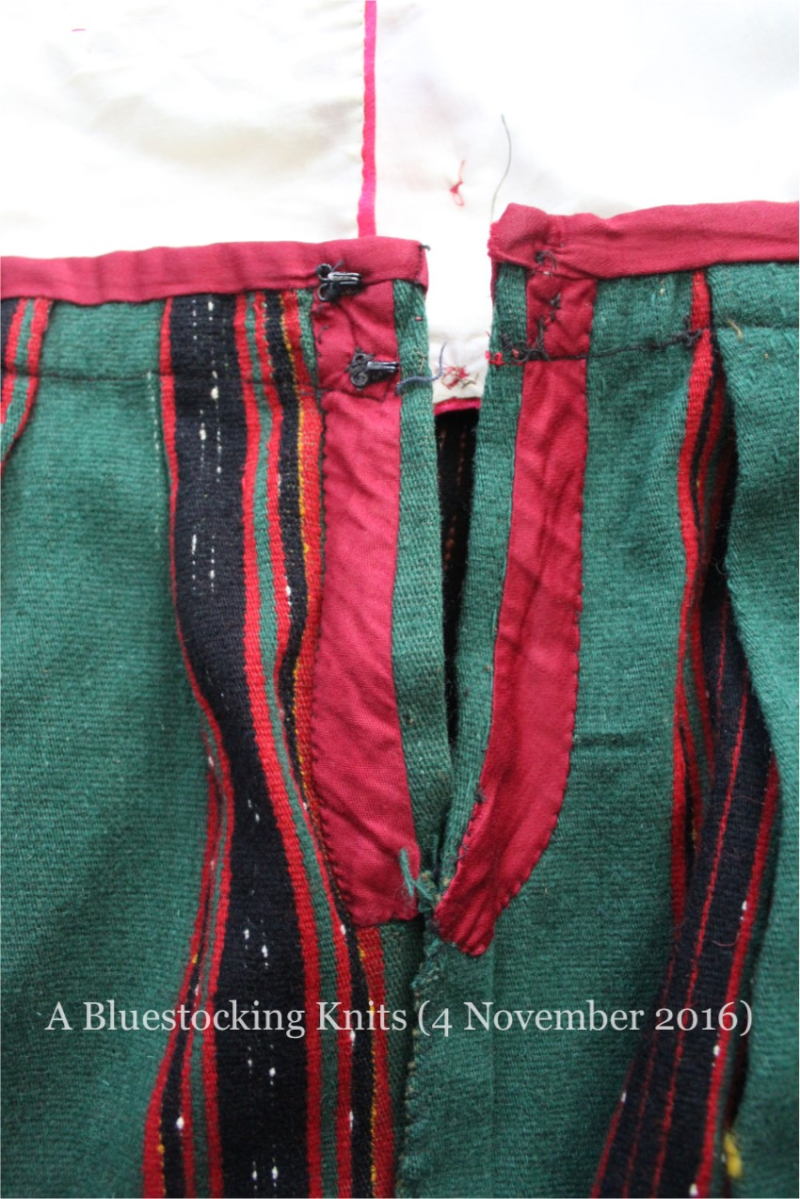
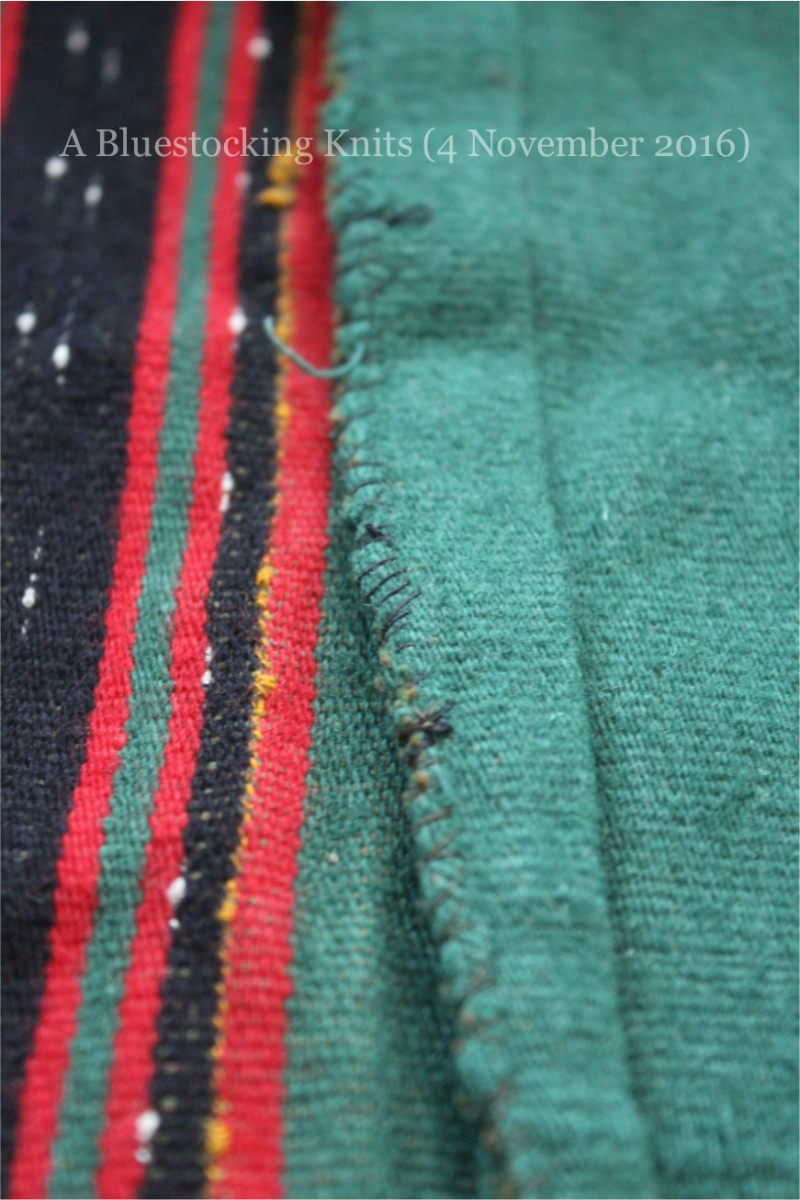
The front opening placket from the inside. The facings are sewn down by hand, and the seam is whipped by hand.
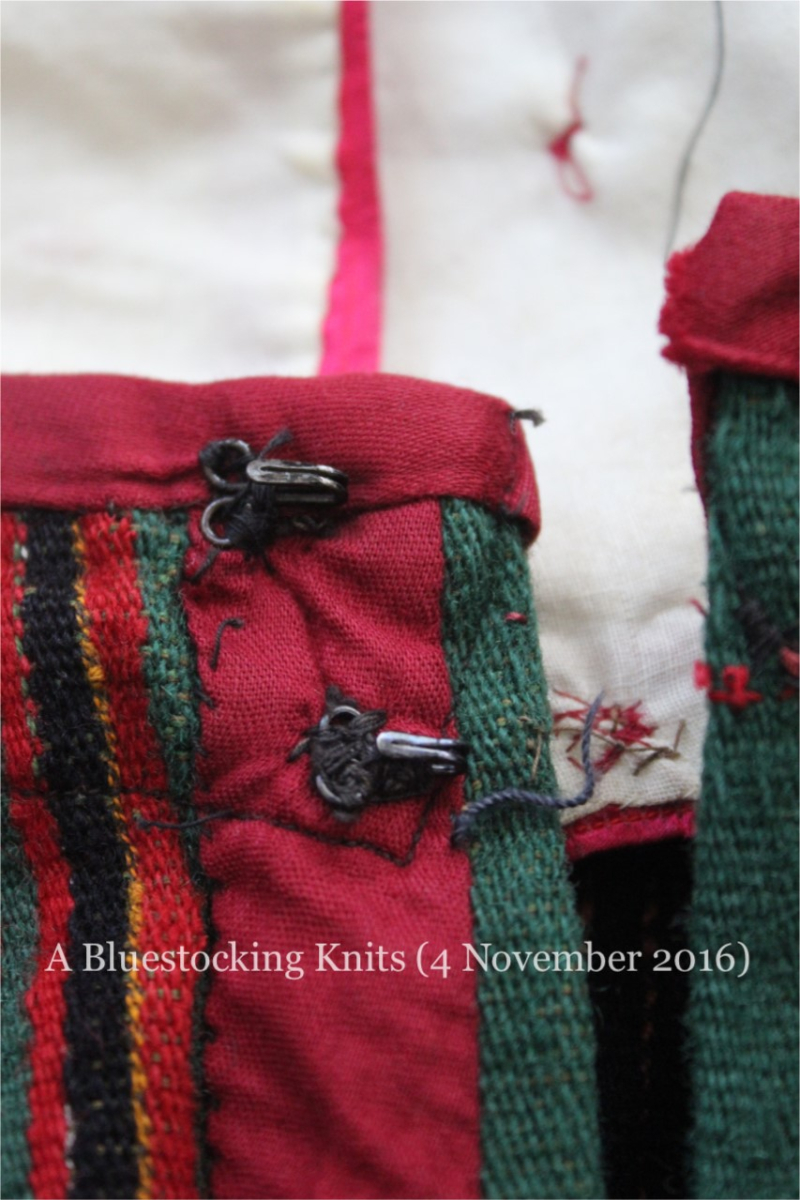
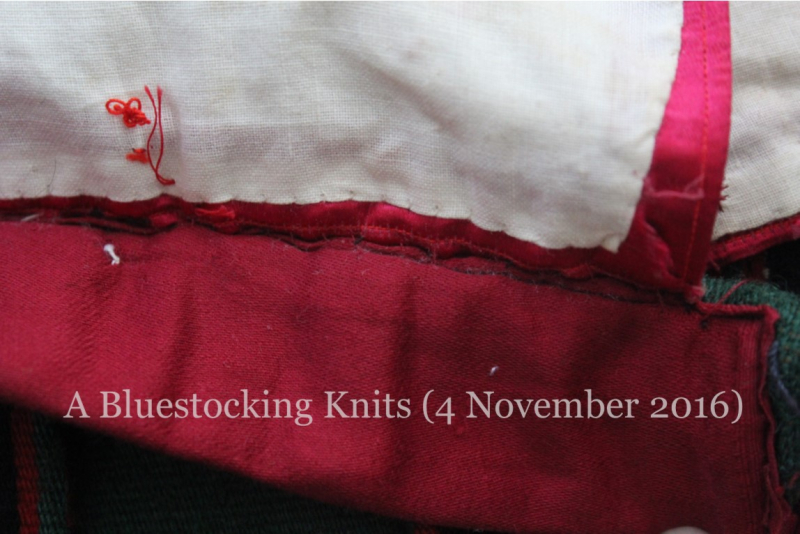
This is the bound top edge of the skirt folded down to show the lining of the bodice.
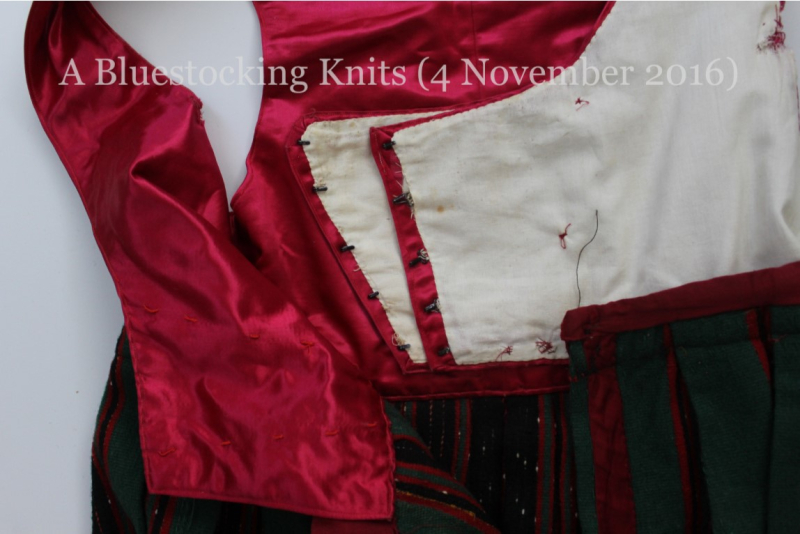
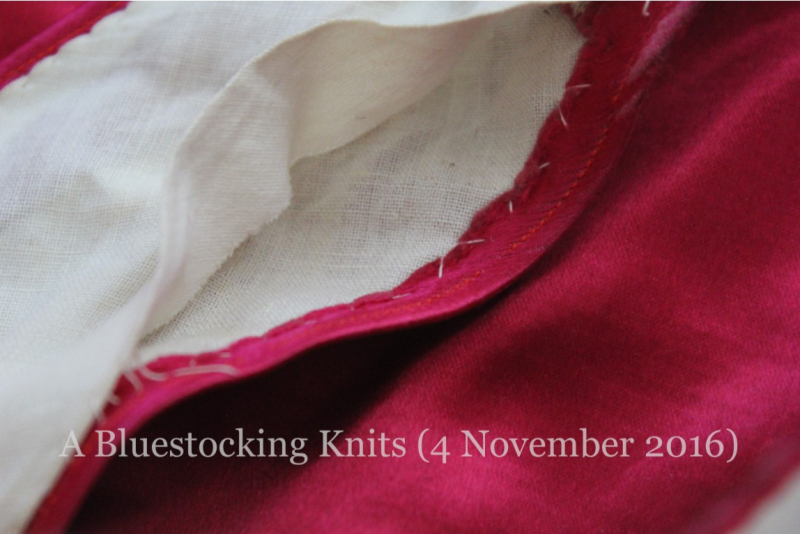
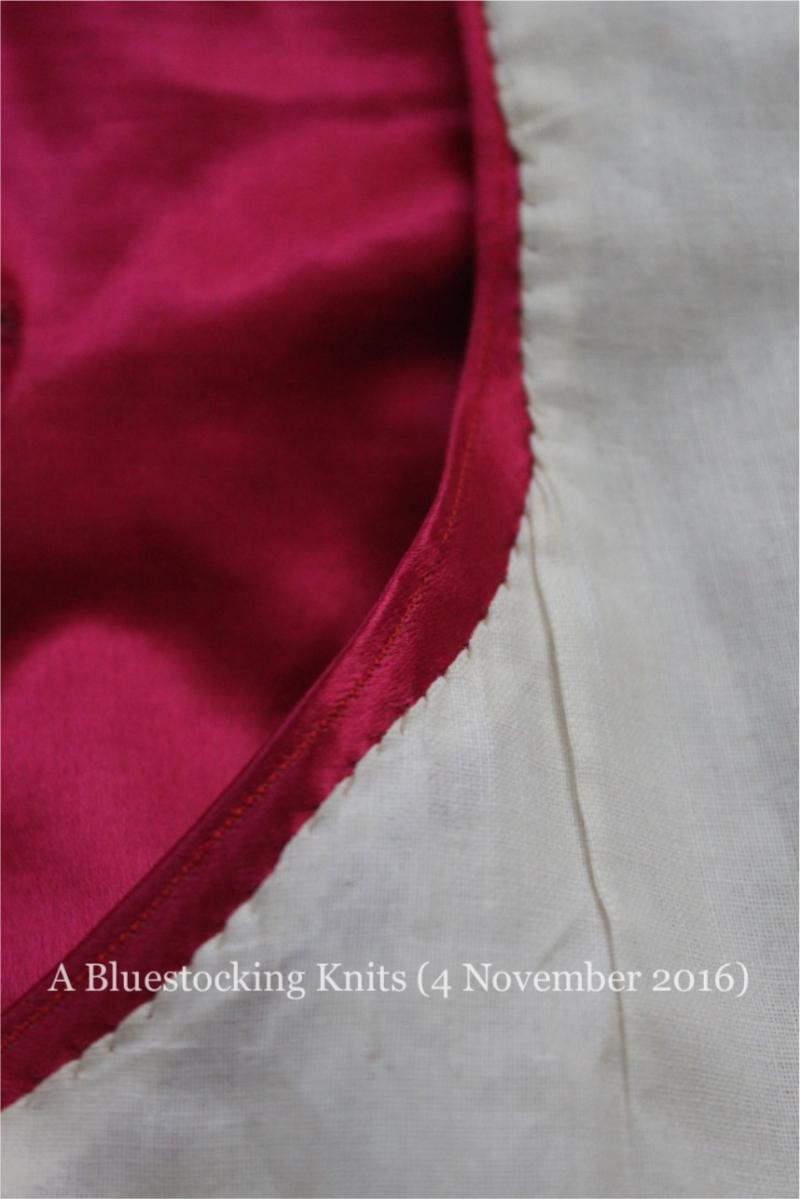
The stitches attaching the lining have come apart in two places, this one on the right back, near the center back seam. The interlining fabric is visible through the opening. The satin has been tacked to the interlining, and top-stitched, before the lining was attached.
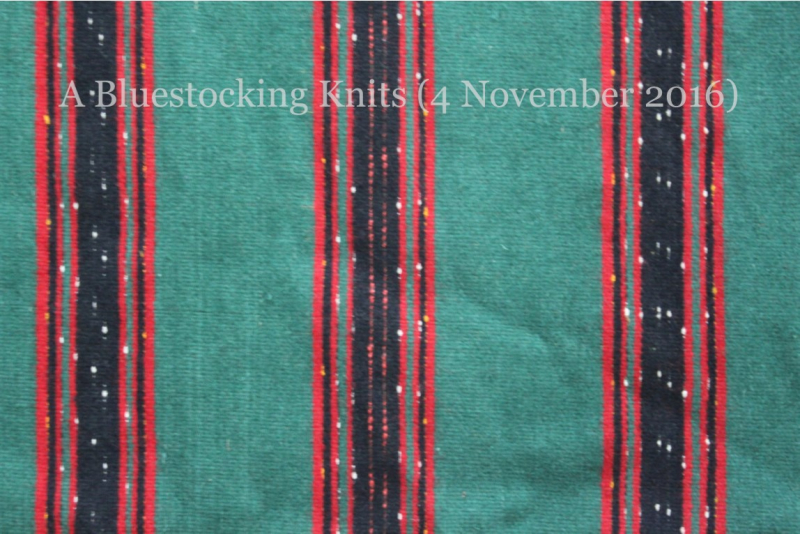
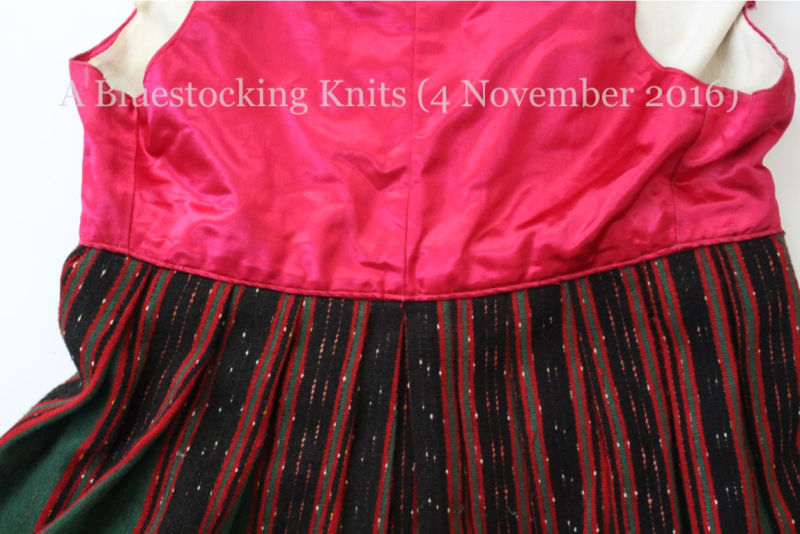
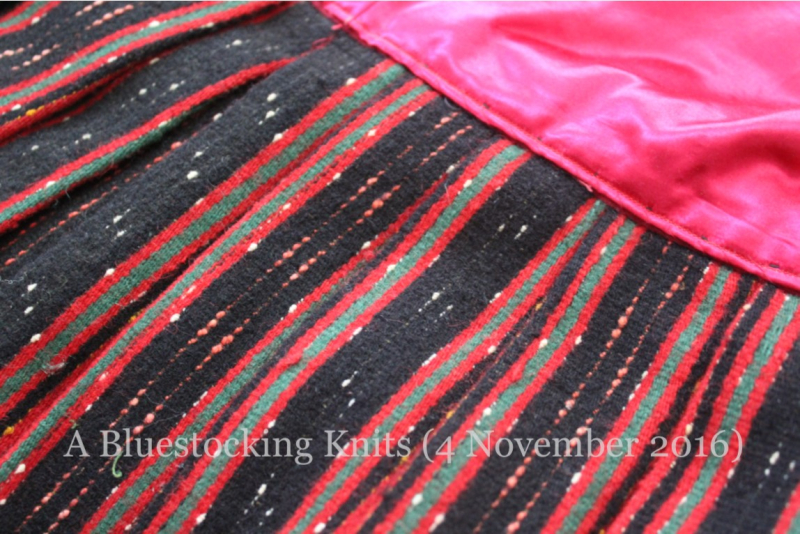
The skirt is knife-pleated all of the way around, except for a short distance at center front. The center back pleat is inverted.
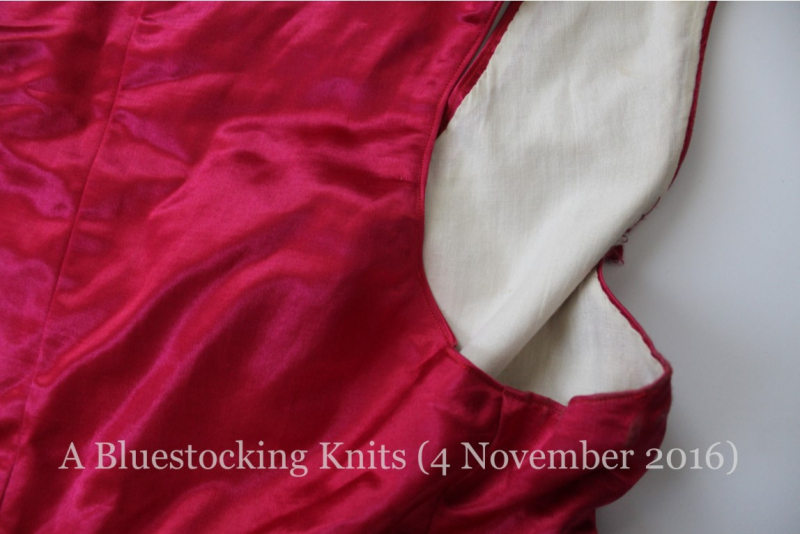
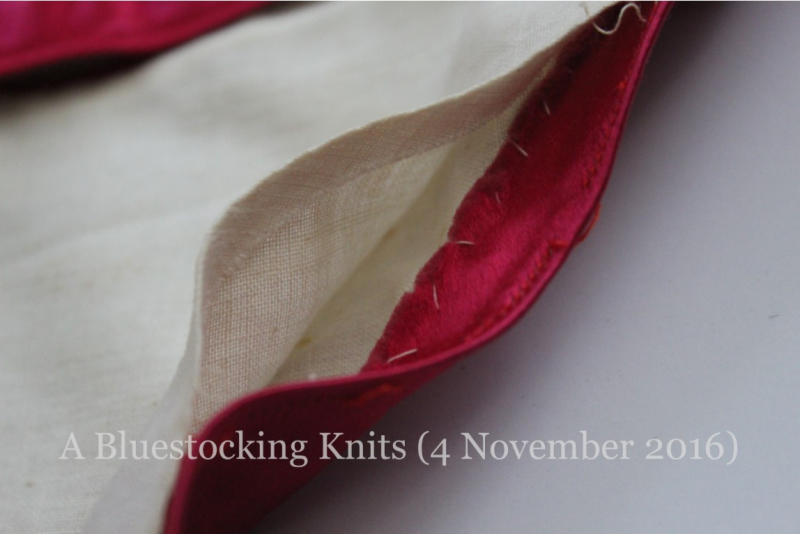
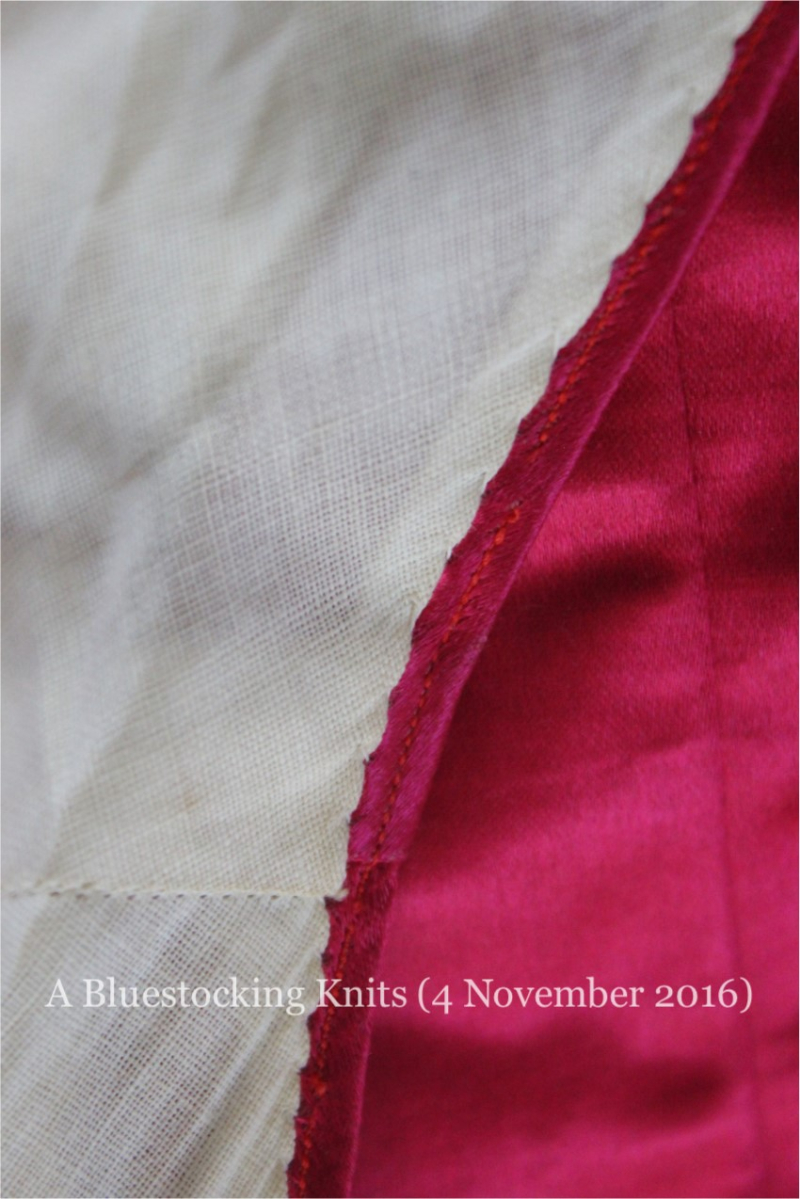
This is the smaller of the two places in which the lining has separated — this one is on the left armscye, near the shoulder seam.
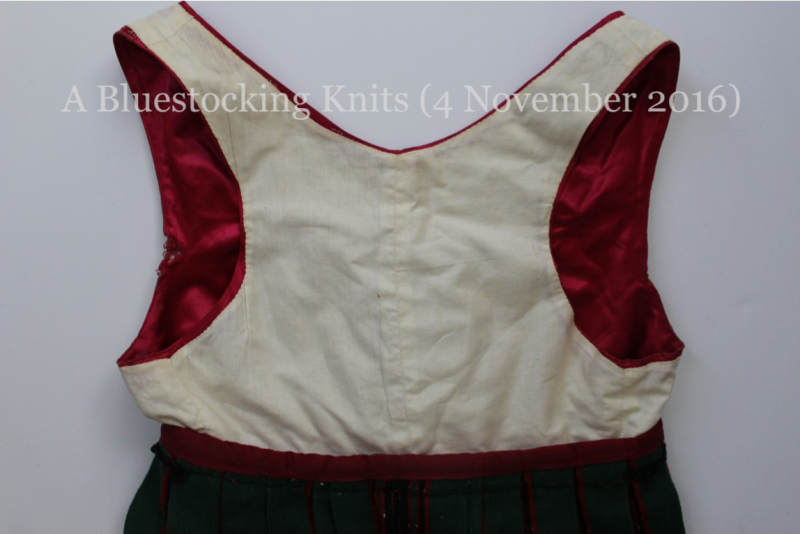
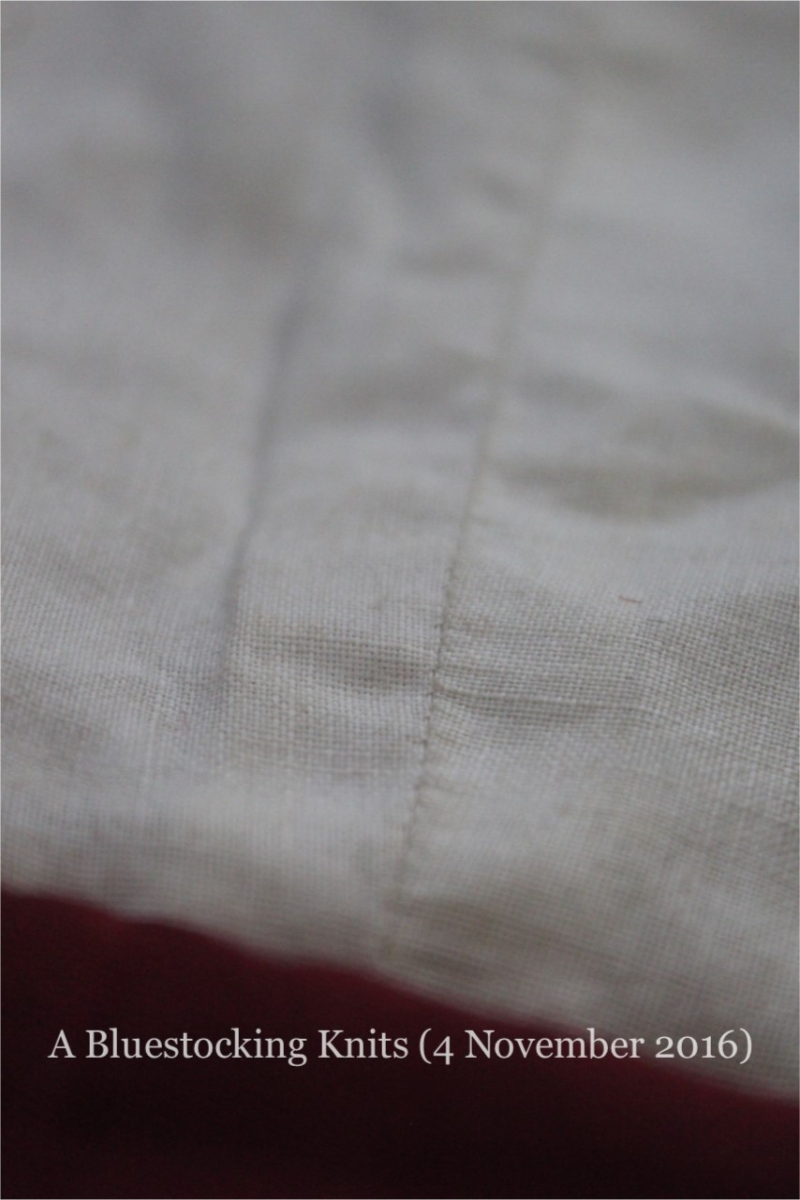
The center back seam of the lining.
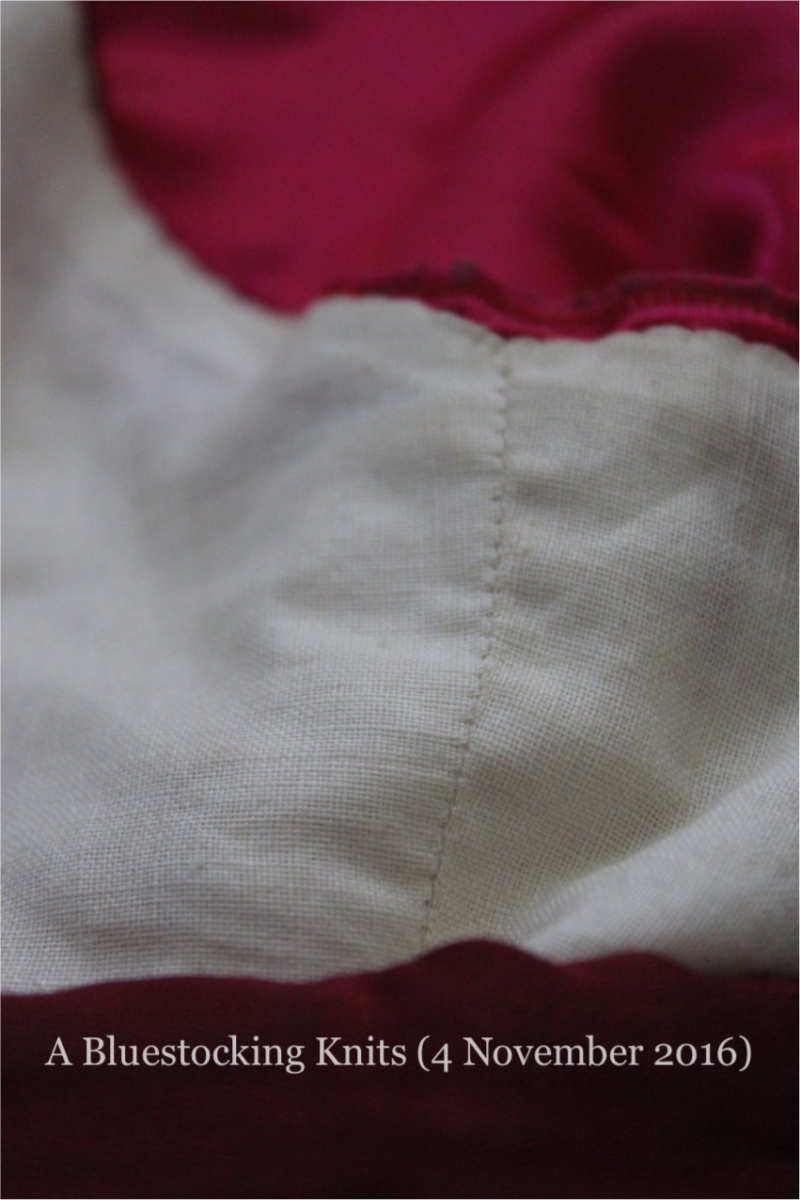
A side seam of the lining.
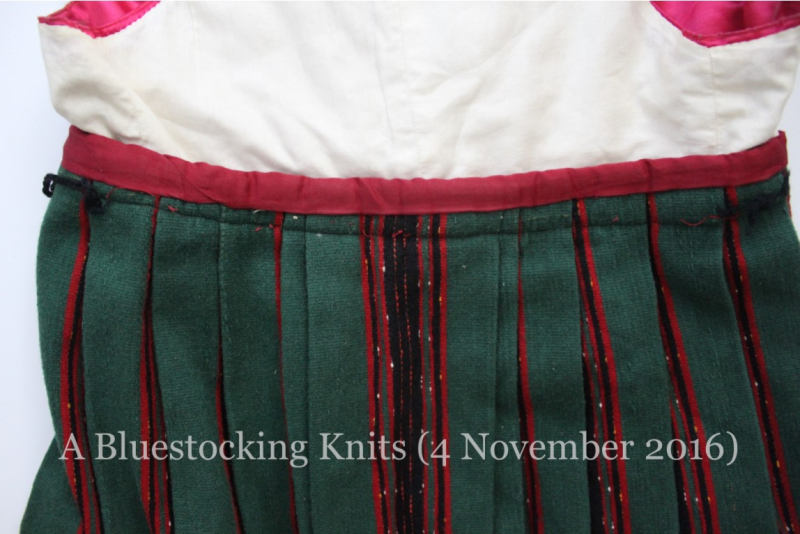
The pleats have been set at the edges of the red and black stripes, but some of them were not done with quite as much care as others!
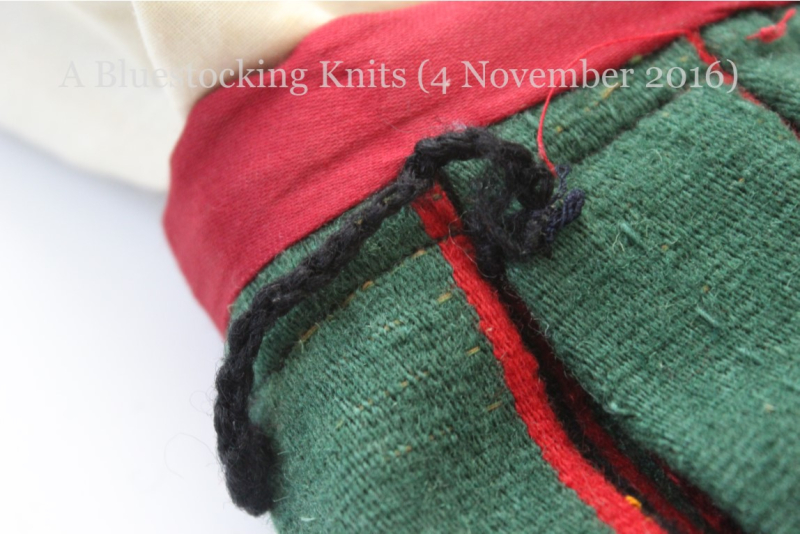
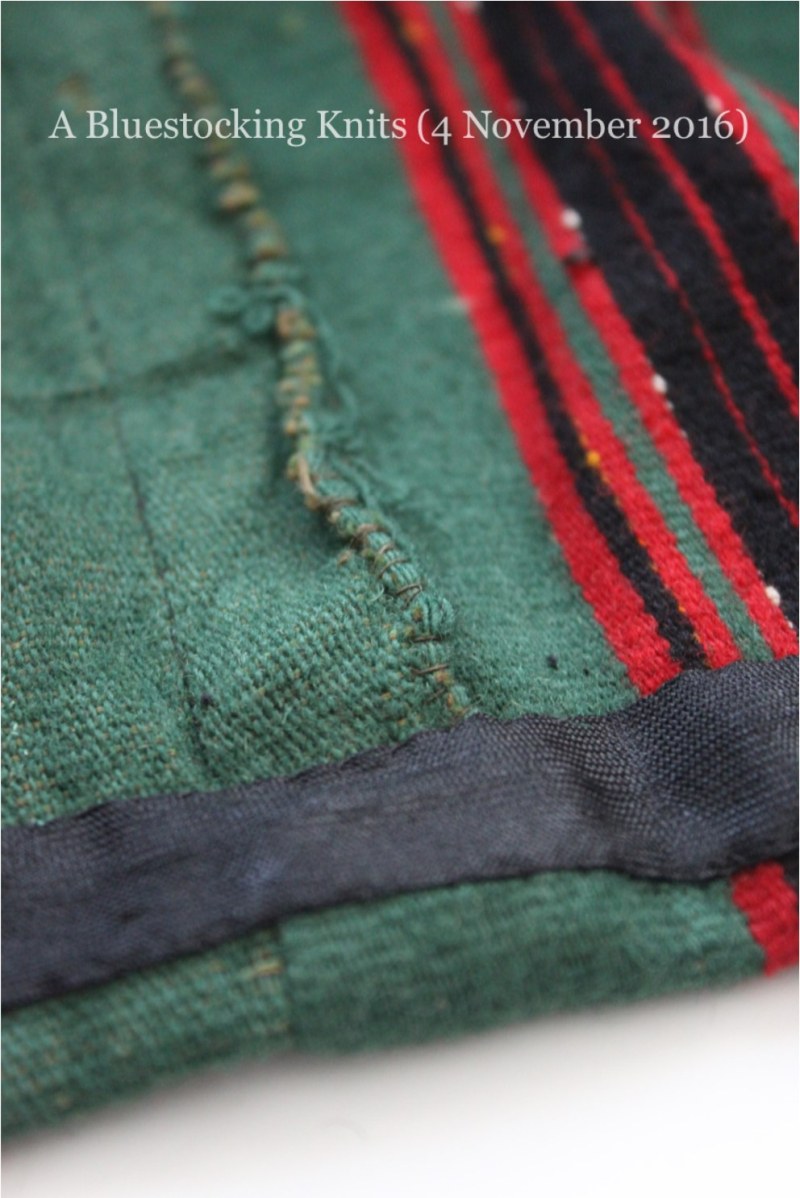
I thought this was a raveled spot on the inside of the skirt waist, but it is in fact a length of braided wool stitched on to make a loop on the right hip. What is it for, I wonder? There is a corresponding one on the other side, though now more worn than this one.
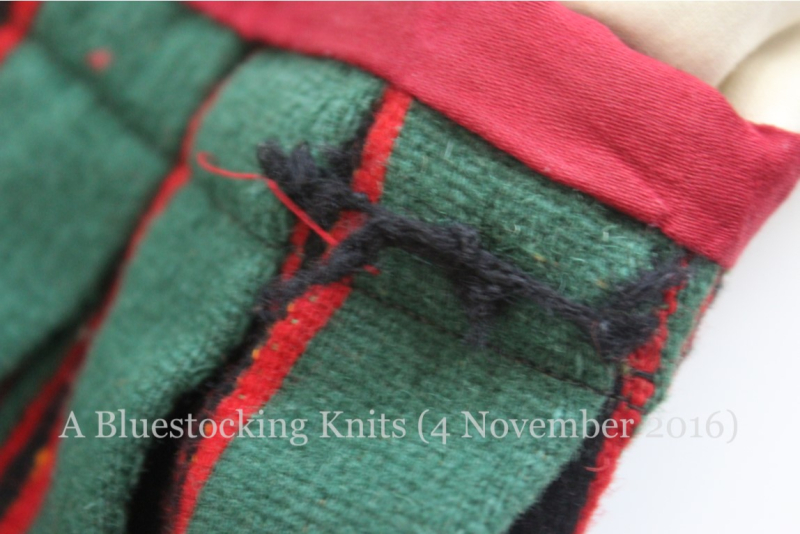
There are in fact no raw edges of fabric anywhere — the bodice is completely lined, and all edges on the skirt are either bound (at the top), whipped (along the one seam), or faced (at the hem).
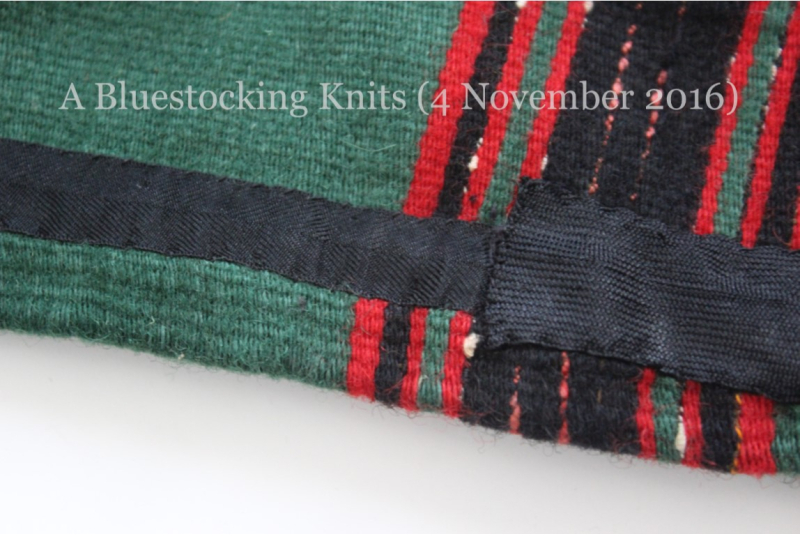
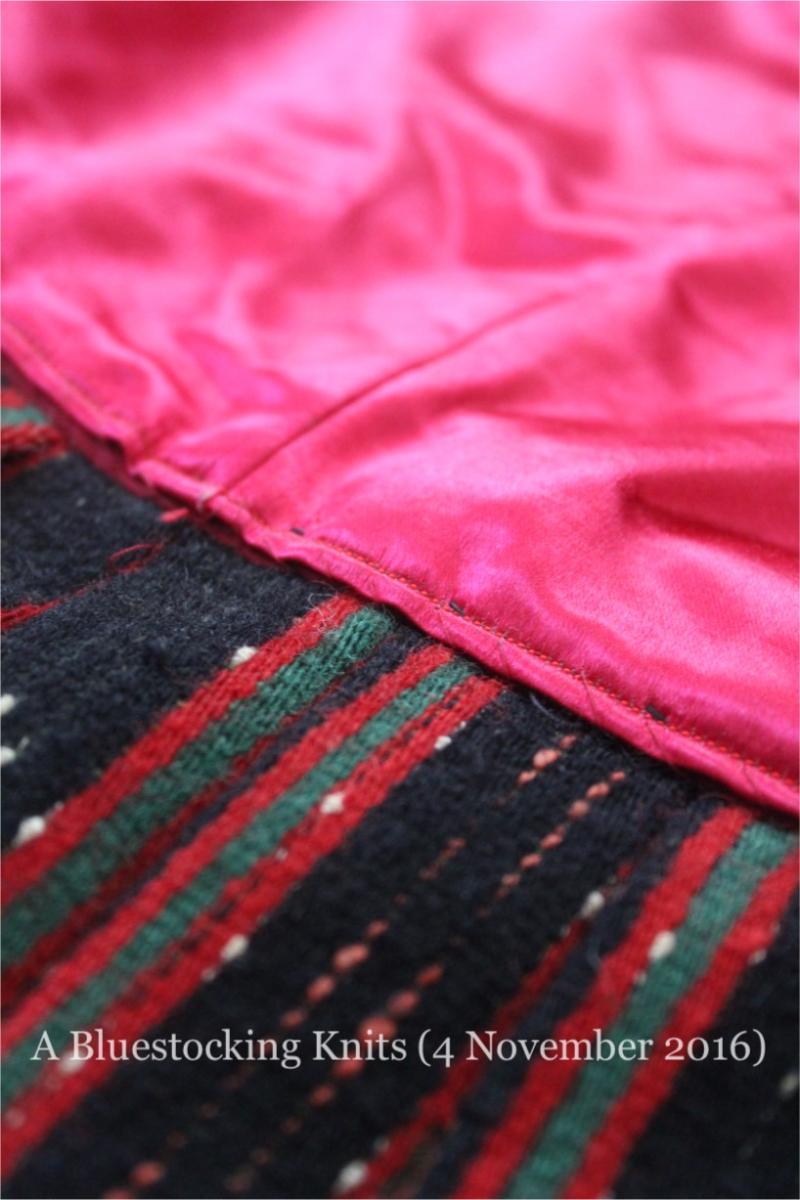
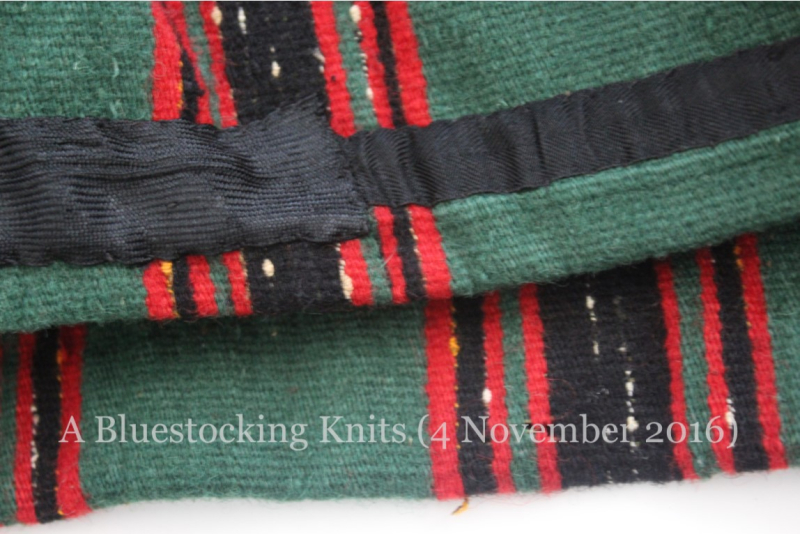
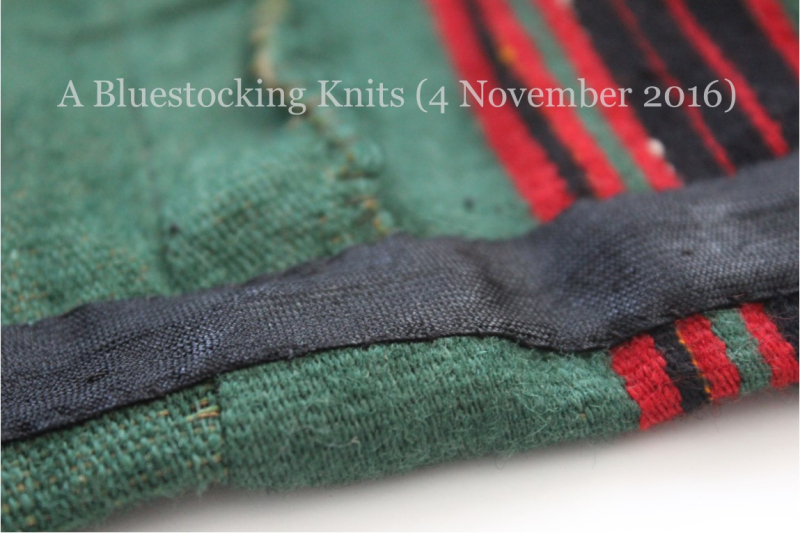
The hem of the skirt is turned under and faced with two different kinds of twill tape, a wide one on the front and a different, narrower one at the back — presumably the difference is simply coincidental, and due to what the maker had on hand.
Measurements (all approximate, and not including allowances unless stated):
full length 112cm
circumference at hem 210cm, with 2cm seam allowance at each edge (seam at center front)
skirt length (waist to hem) 76.5cm, with a 2cm hem and 3cm allowance at waist
green stripes 5.25 to 6.75cm
colored stripes 4.25 to 5.5cm
waist 77cm
bib 13.5cm H x 16cm W (top) x 7cm W (bottom)
button 0.75cm
side seam (under arm) 9.5cm
center back seam 24.5cm
shoulder seam 5.25cm
left front at waist (side seam to front opening) 29.5cm
right front at waist (side seam to front opening) 26.75cm, overlap 6cm
waist binding tape (red) 5cm + unknown allowances
hem binding tapes (black) 2.25 and 1.25cm + unknown allowances
 A Bluestocking Knits
Leave a comment