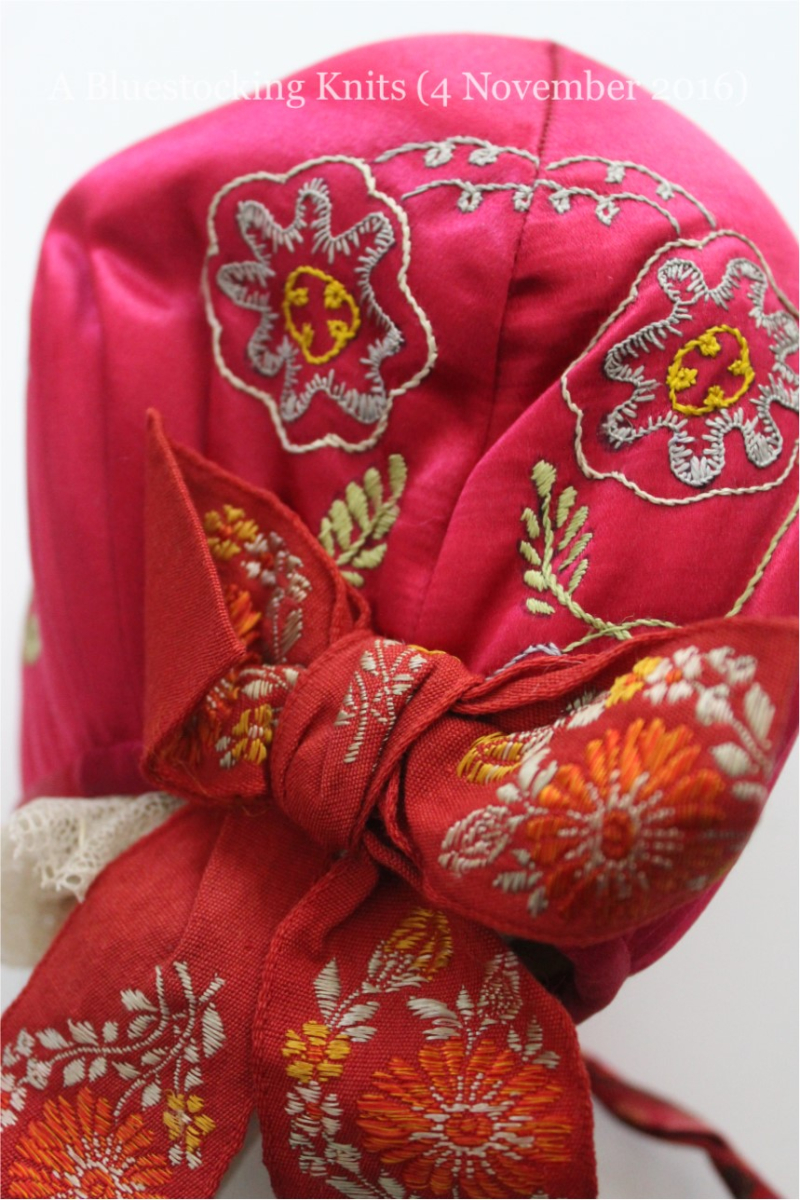
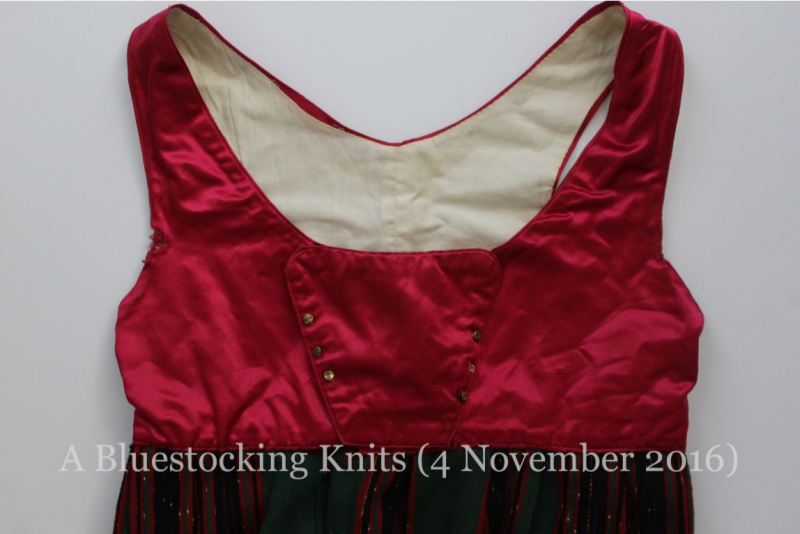
I bought this ensemble from a seller on Ebay who said that it had belonged to her great-grandmother, ca.1870, who was from Silvberg parish in Dalarna, Sweden. It consists of a bindmössa (close-fitting cap), livkjol (bodice and skirt attached together), and two halsdukar (silk shoulder-scarves). There was also a sheepskin jacket which the seller said was part of the ensemble, but very unfortunately I could not afford to purchase it so it went elsewhere. The outfit would have been worn with a linen or cotton chemise or blouse (särk) underneath, and an apron (förkläde), but these were long gone.
I would very much appreciate comments on the authenticity of these garments, the likelihood of their really being ca.1870 and even more importantly from Silvberg, answers to the little mysteries, or corrections to my assumptions about them! If this turns out to be an historically-interesting garment — which of course I hope it does — my intention is to eventually donate it to a museum. I have been able to find not a single reference at all to a Silvberg dräkt, original or reconstructed.
This page is part two, with the cap and scarves — part one is here, and has the livkjol.
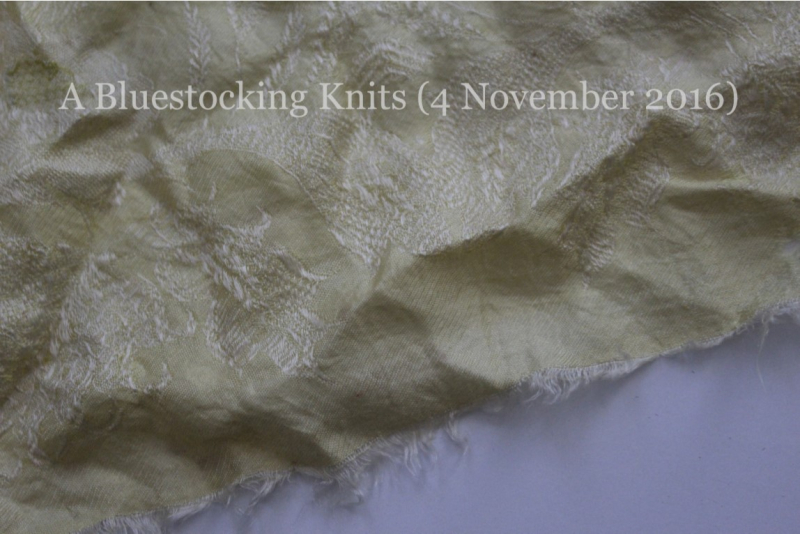
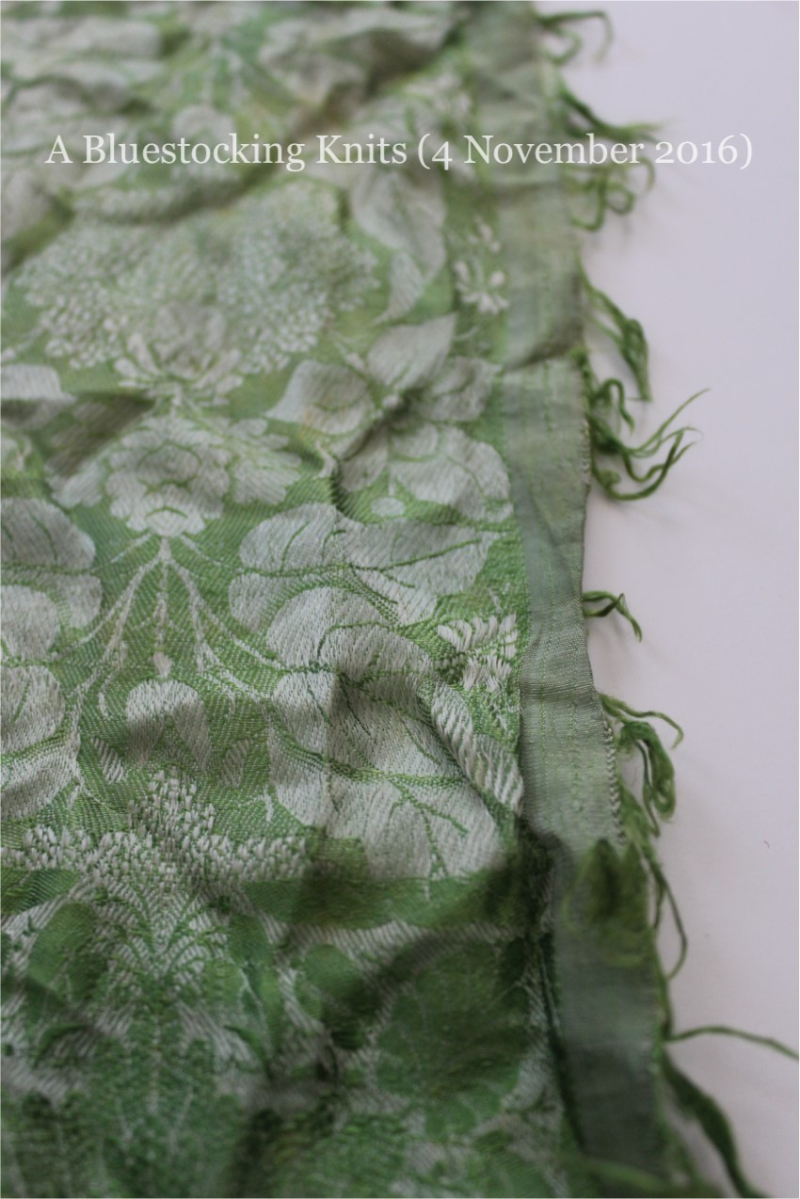
The two scarves are fine silk with a floral pattern, with the centers of the flowers being a darker color, apparently added after the fabric was woven; these spots are (or have become) a brownish version of the ground color. One scarf is lemon-yellow, and the other lime-green. The yellow scarf has two selvage edges and two untied-fringe edges; the green scarf has fringe all around.
The bindmössa (close-fitting cap) is of the same rose-pink satin as the bodice, and is hand-embroidered with colored threads in flower and stem patterns. At the back is a bow of jacquard ribbon. The tie is a single long piece of printed ribbon, with the ends sewn to the inside of the cap. Inside the cap is a piece of very fine wide lace, gathered and attached at each end but loose in the middle; this was meant to protect the inside of the cap from hair oils, and also to frame the wearer’s face.
Note that the condition of the garments is exactly as I received them.
Specific measurements are at the bottom of this page.
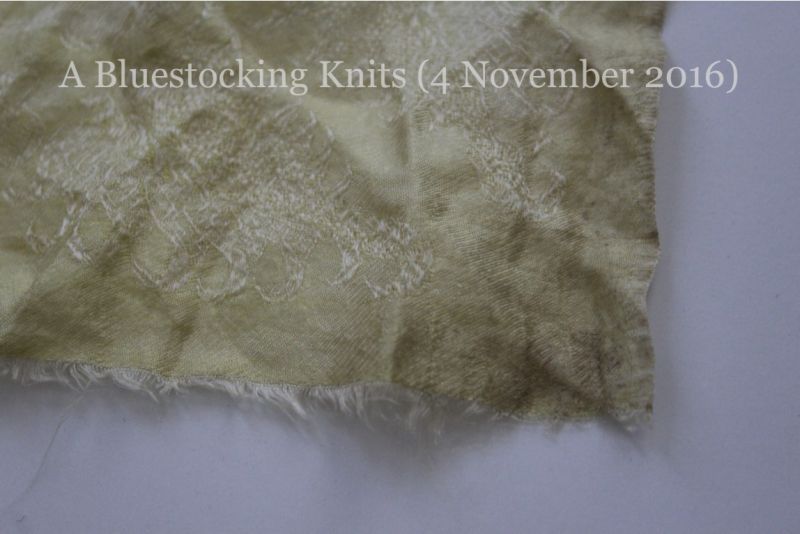
A corner of the yellow scarf.
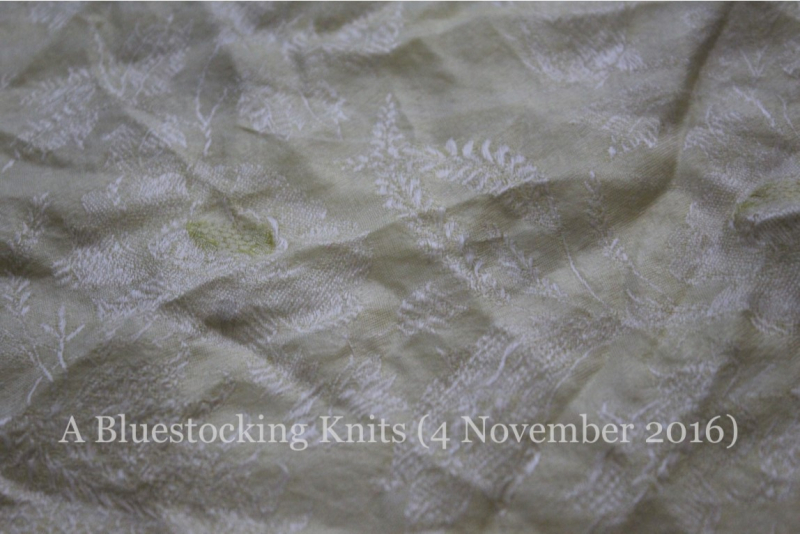
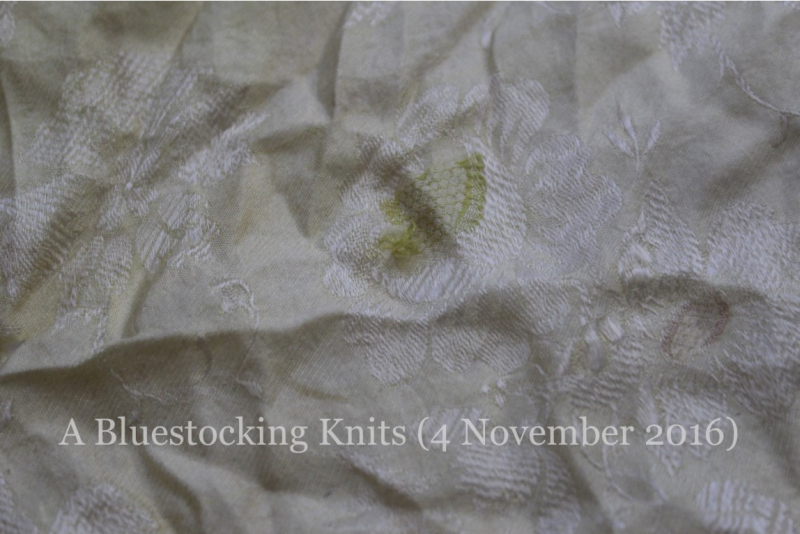
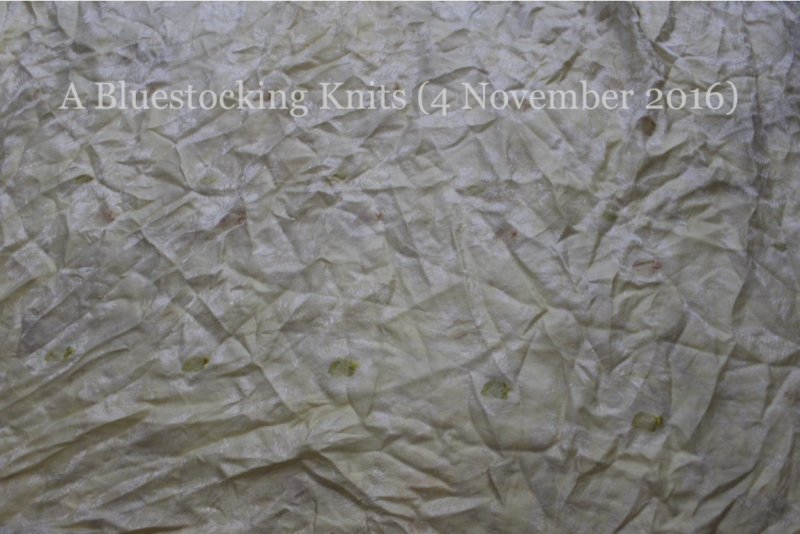
The spots are the centers of the flowers, which appear to have been dabbed on with a brush as they are not regular.
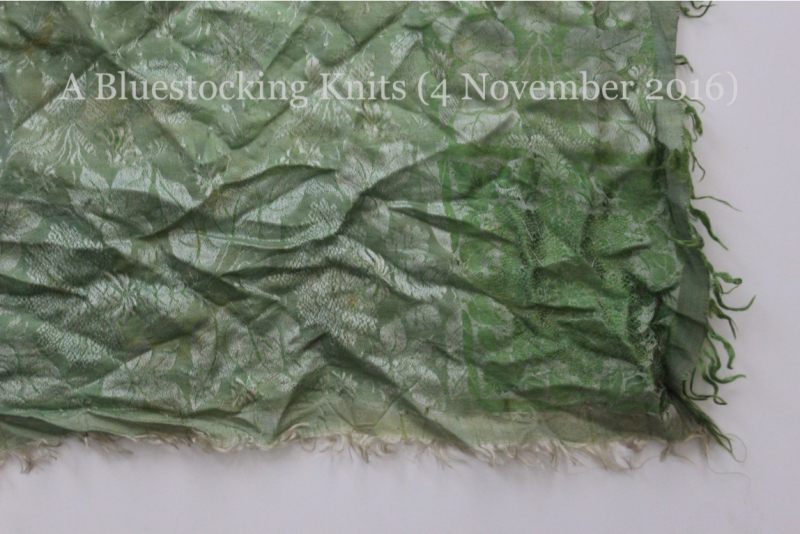
A corner of the green scarf. While the yellow scarf has the same pattern all of the way across, the green one has wide borders of a slightly darker green.
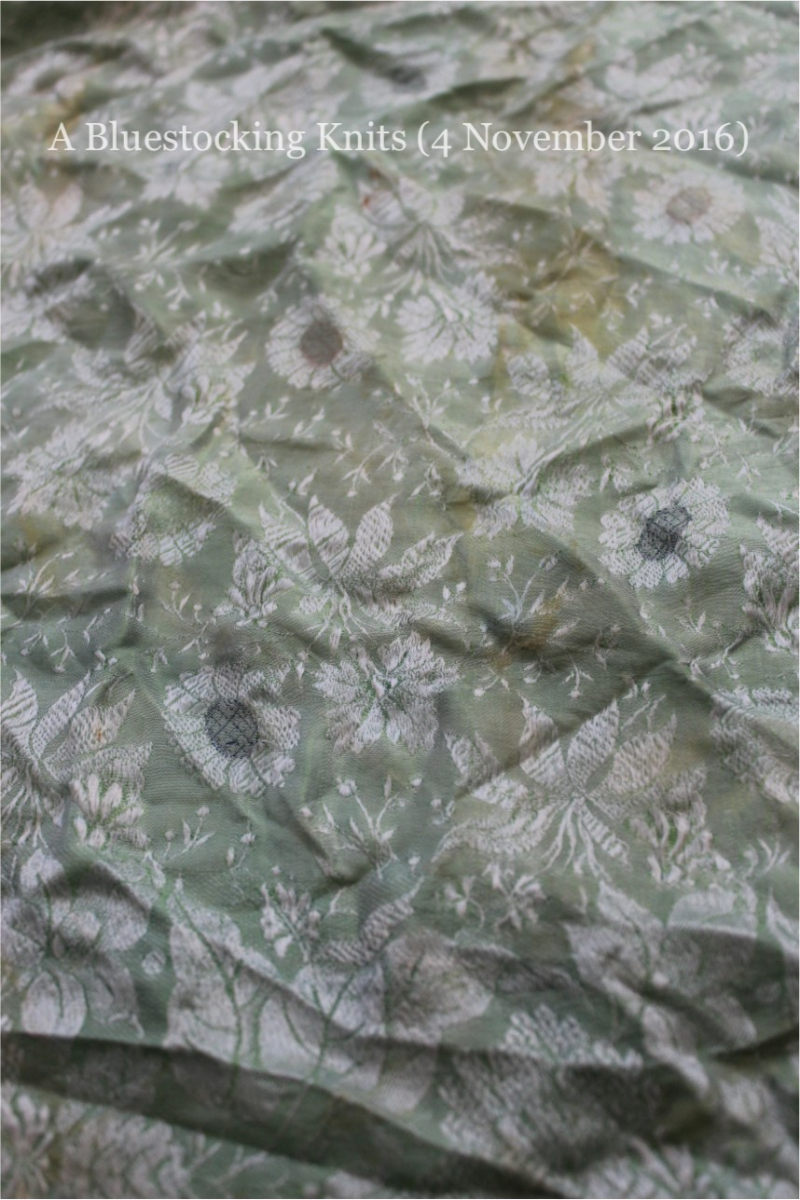
The “painted-on” (?) flower centers are more successful on this scarf than on the yellow one, being much more uniform; perhaps the darker color helps a little, too.
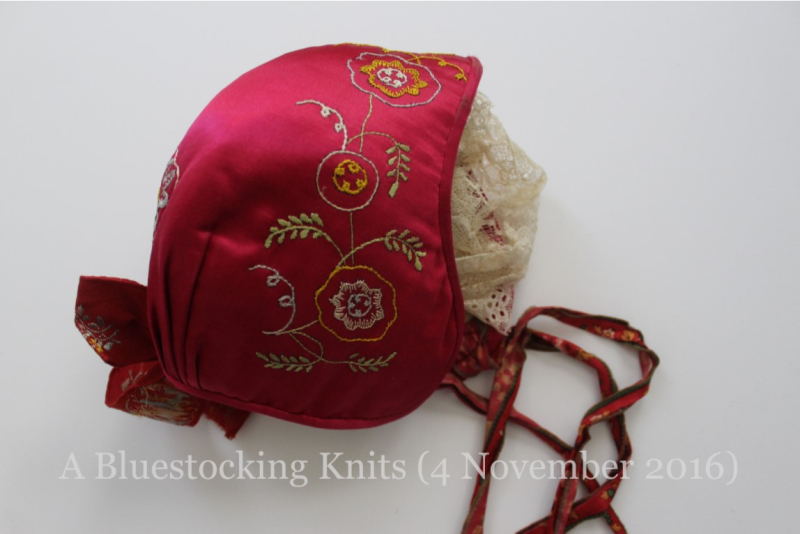
A bindmössa (close-fitting cap) is made of a heavy-paper base covered with fabric, usually embroidered, which is seamed down the center for part of the shaping and pleated at the back for the rest. A large bow decorates the back, and it is usually worn with a lace tuck framing the wearer’s face.
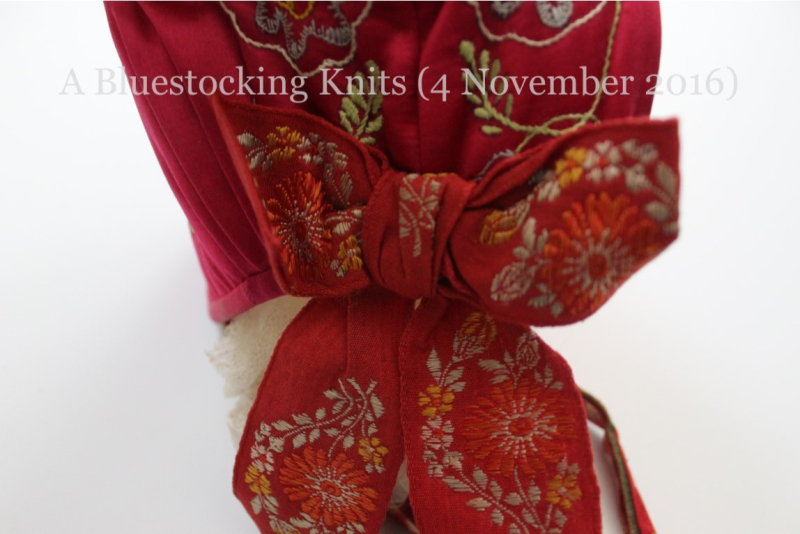
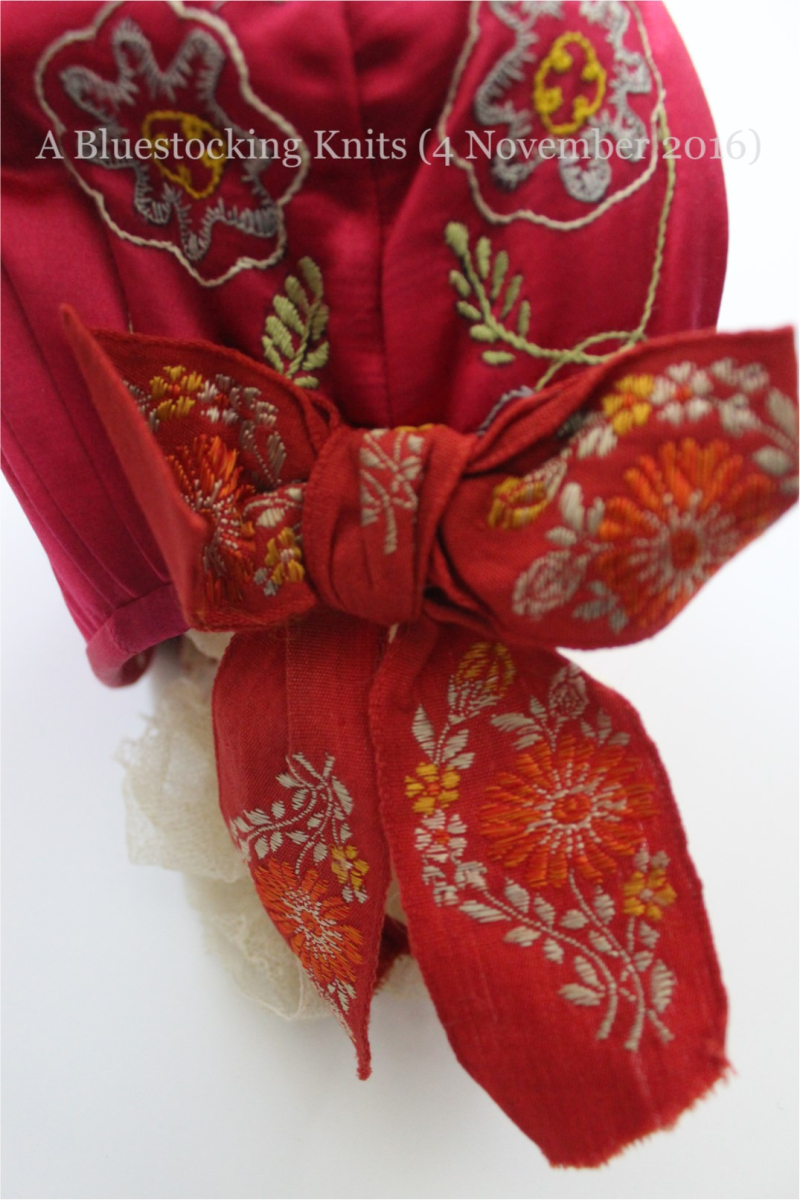
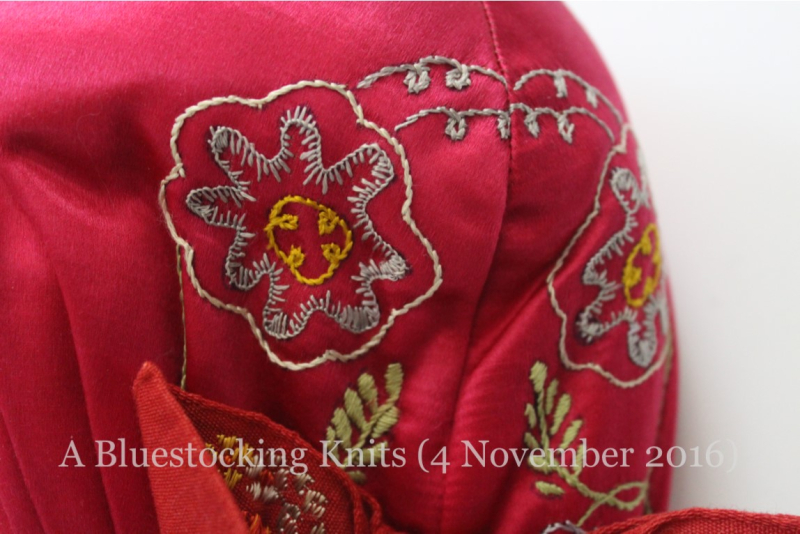
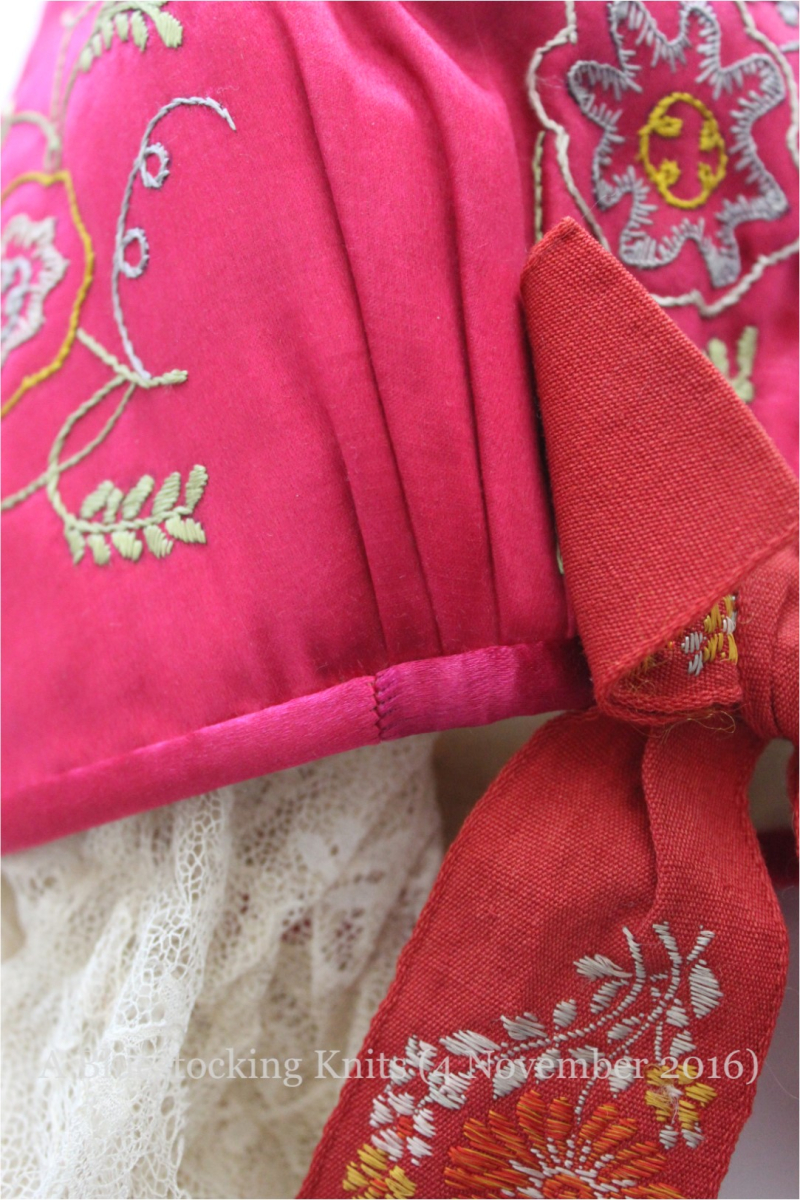
The rose-pink satin is neatly pleated at the back, to fit smoothly.
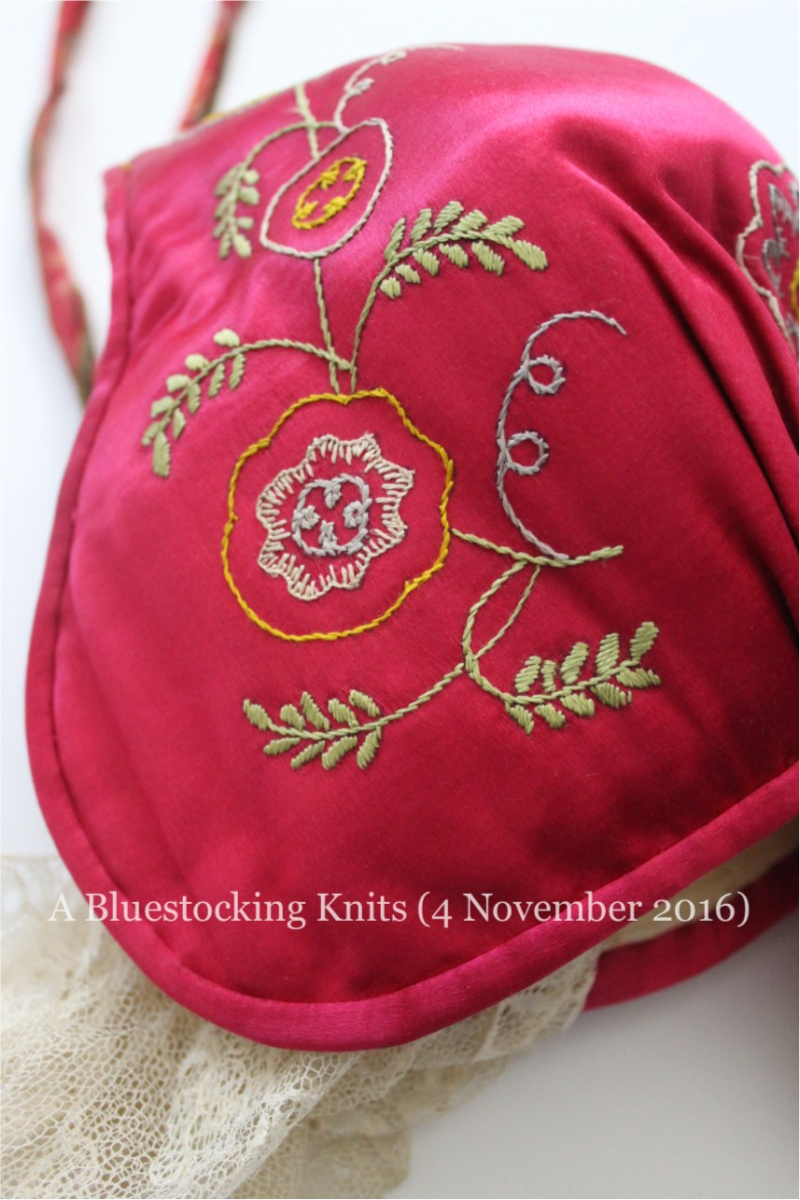
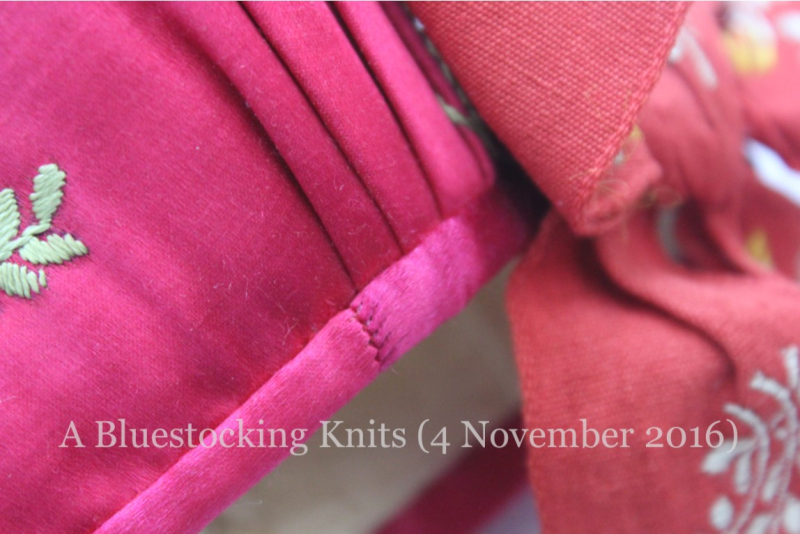
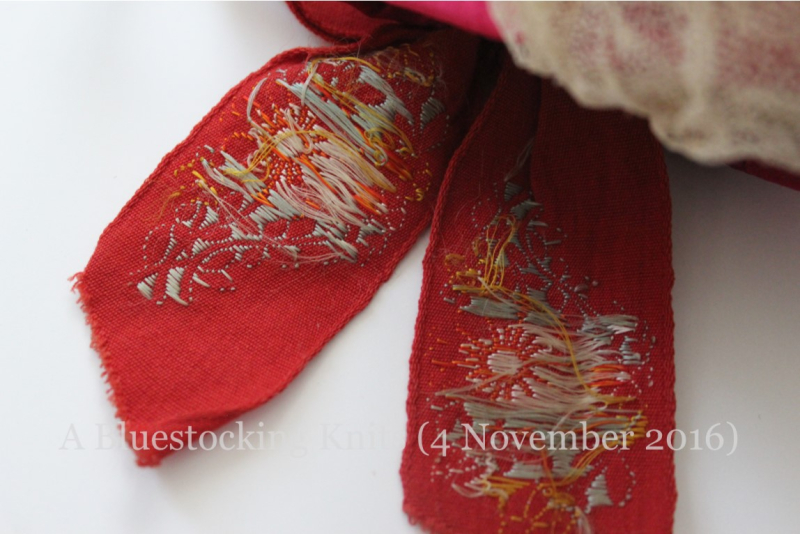
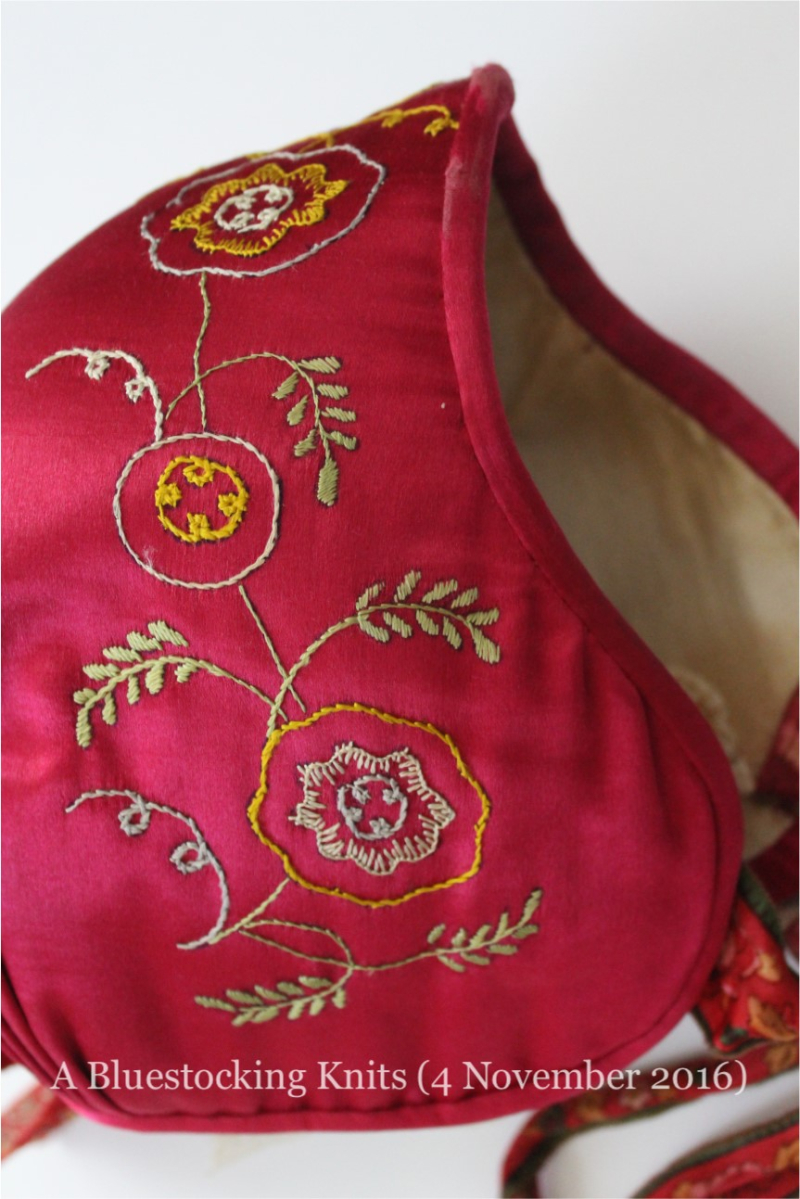
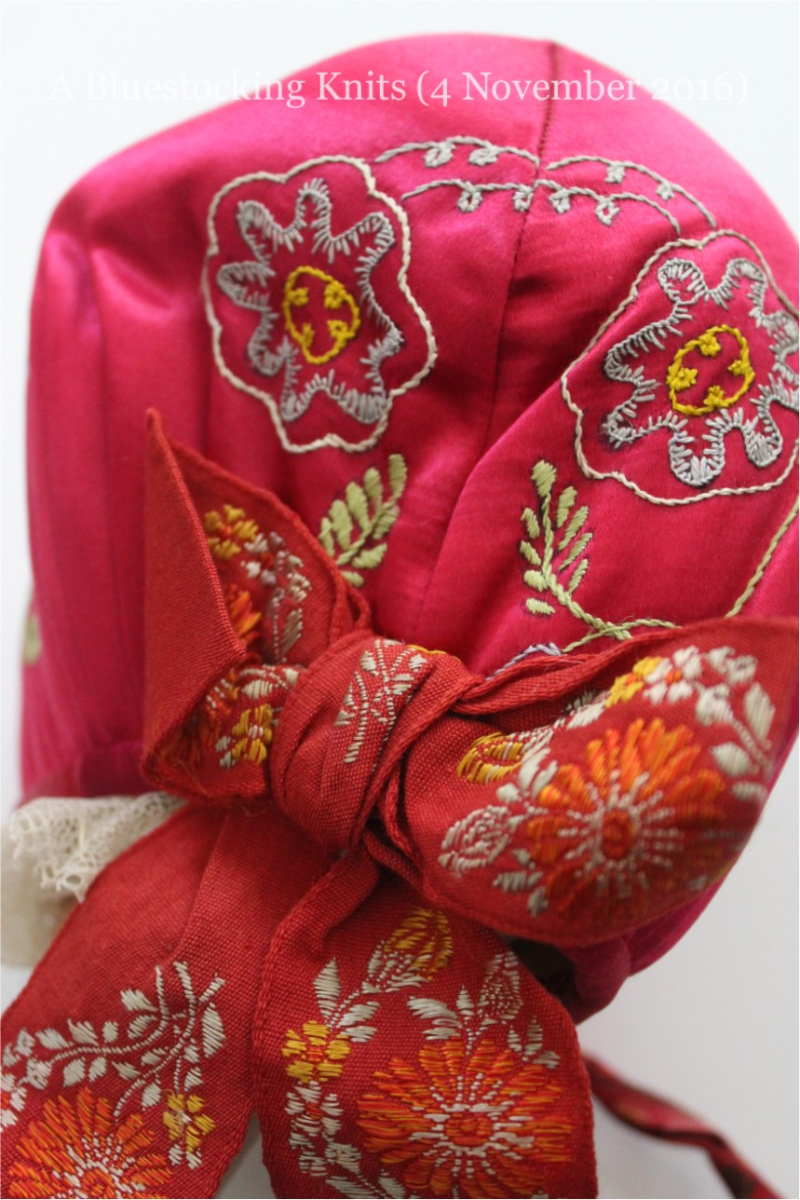
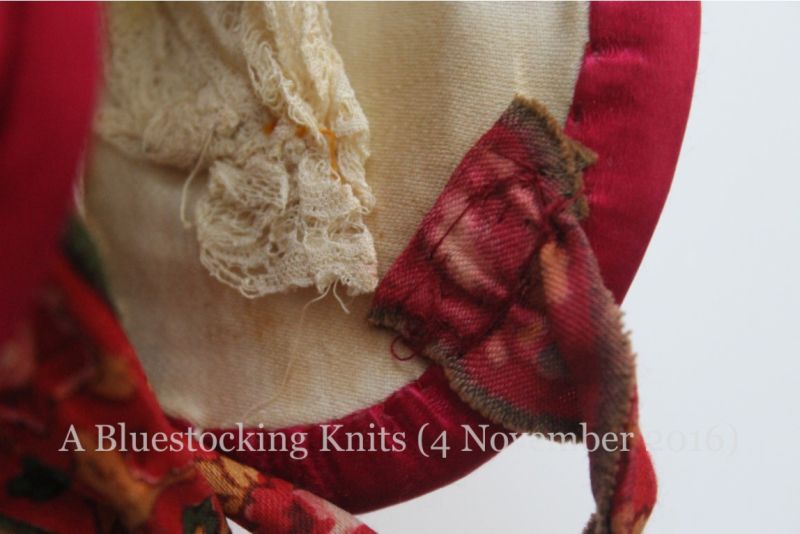
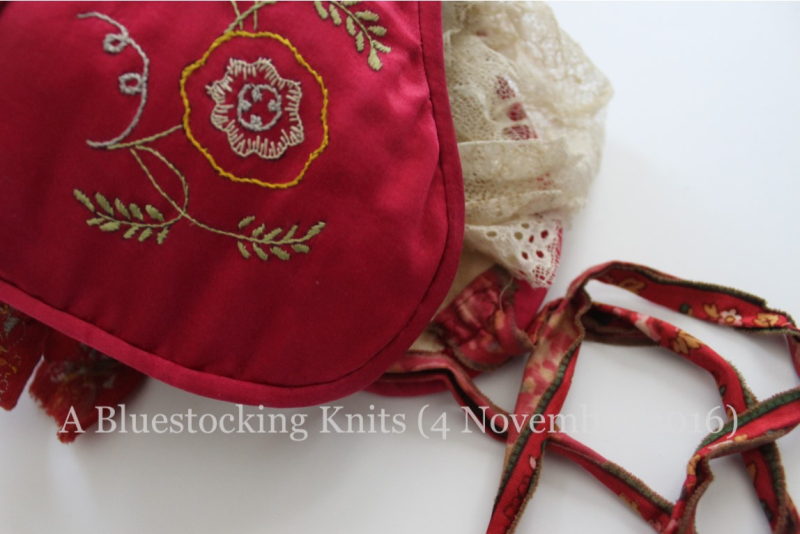
The narrow binding appears to have been machine-stitched to the outer fabric, then tacked down neatly by hand on the inside.
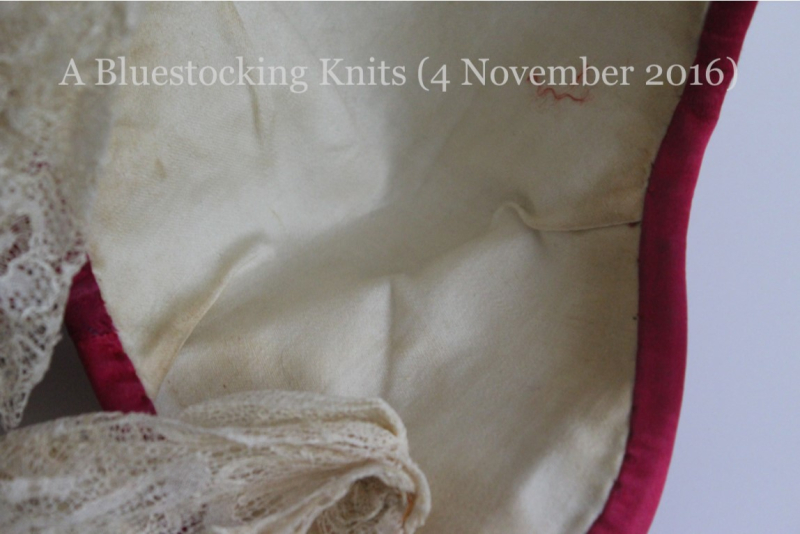
The heavy-paper base of the cap was unfortunately crushed, certainly in shipping to me if not earlier.
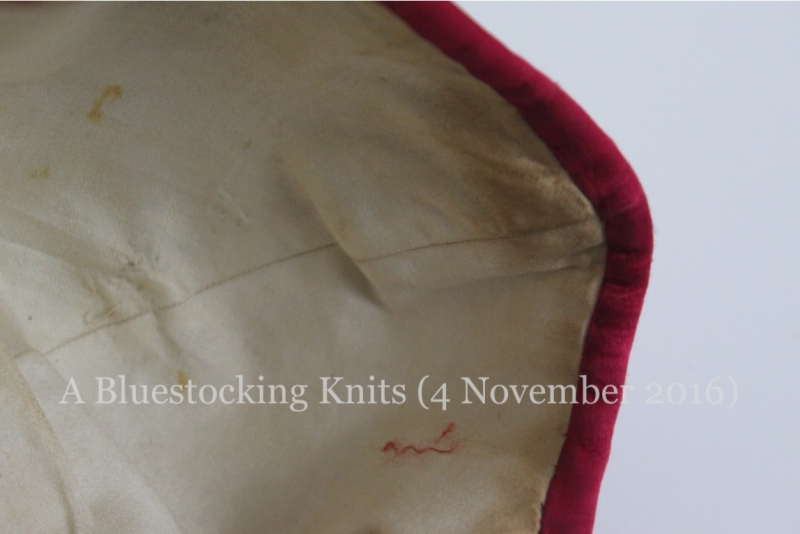
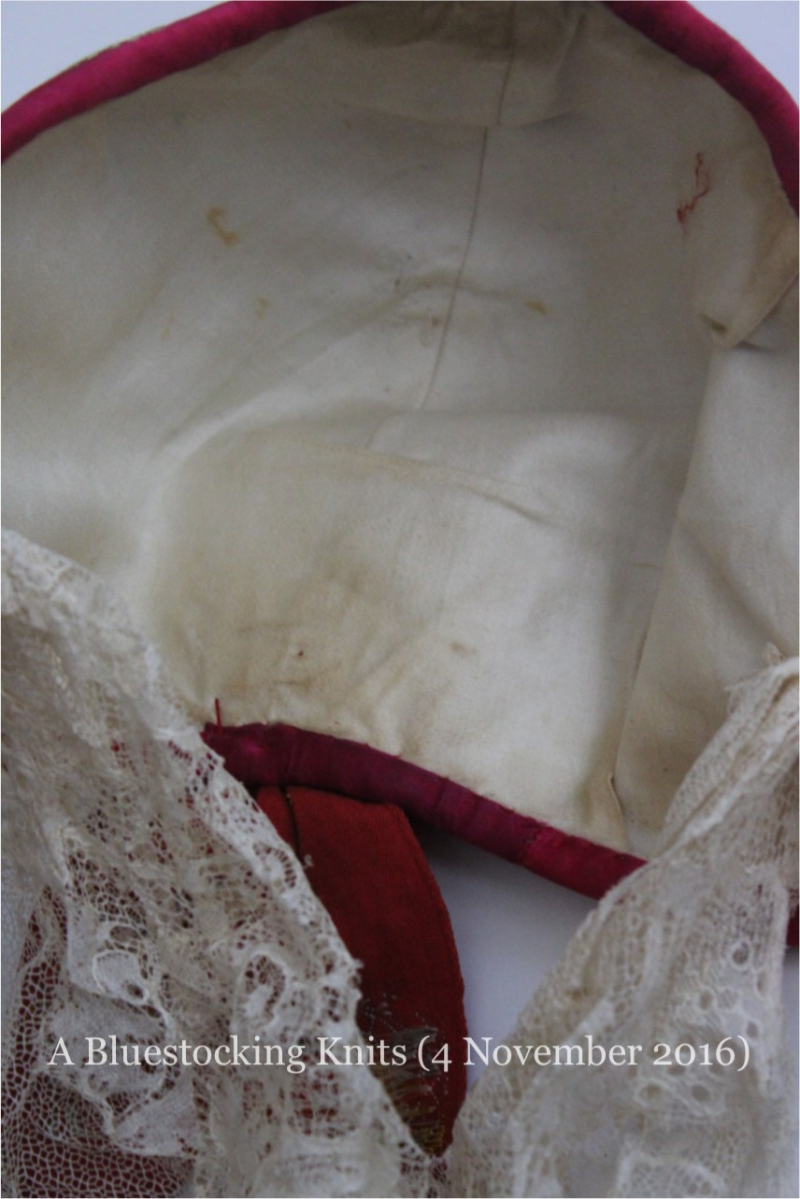
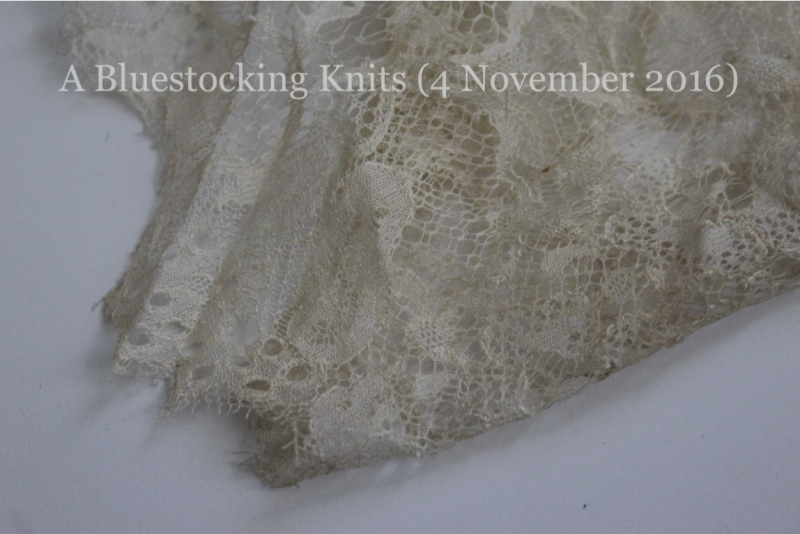
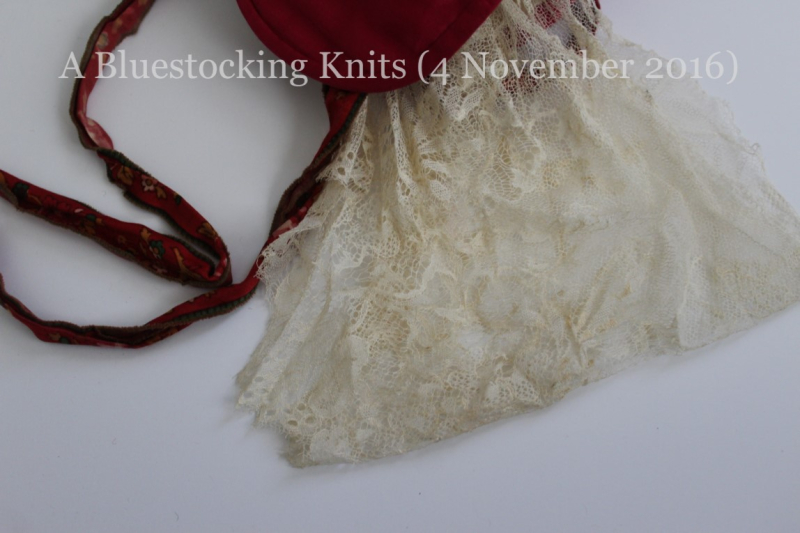
The lace is surprisingly wide for something that is attached only at two points inside the cap; it seems to me that this would make it a bit of a bother to arrange neatly! This photo shows the lace pulled out in the opposite direction of the way it would fit inside the cap when worn.
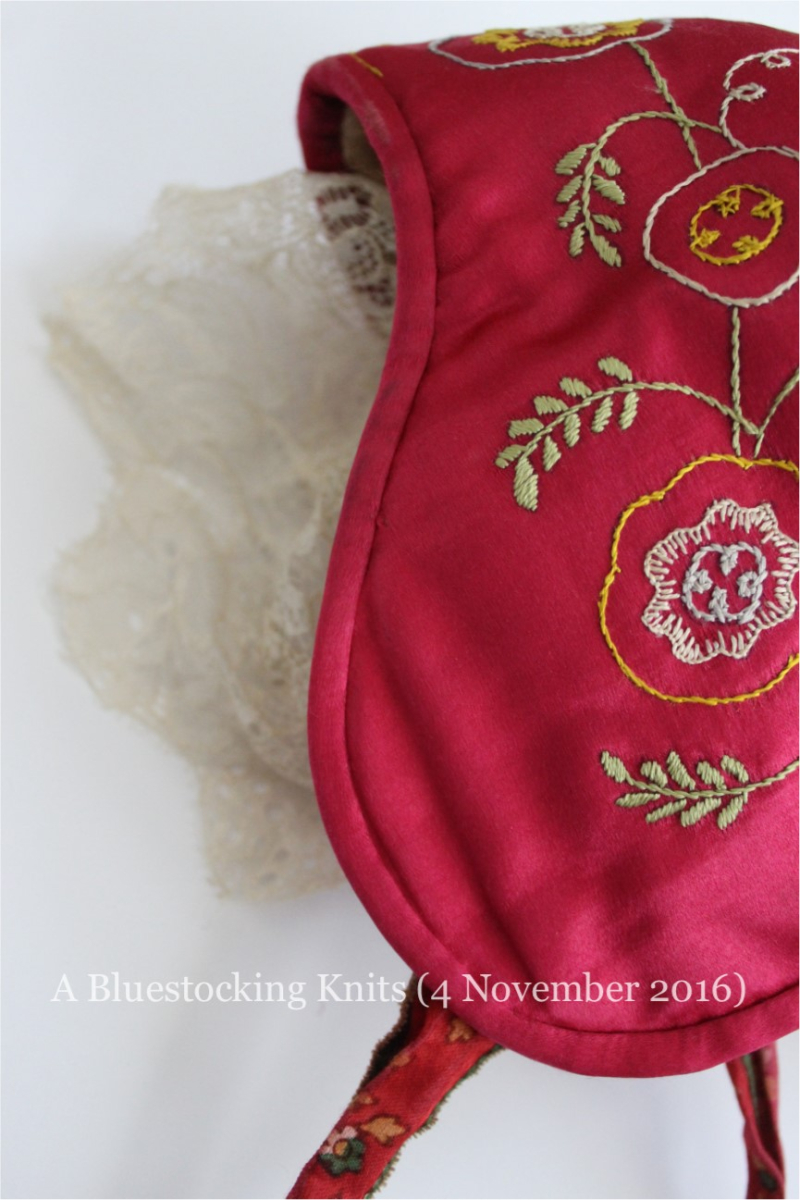
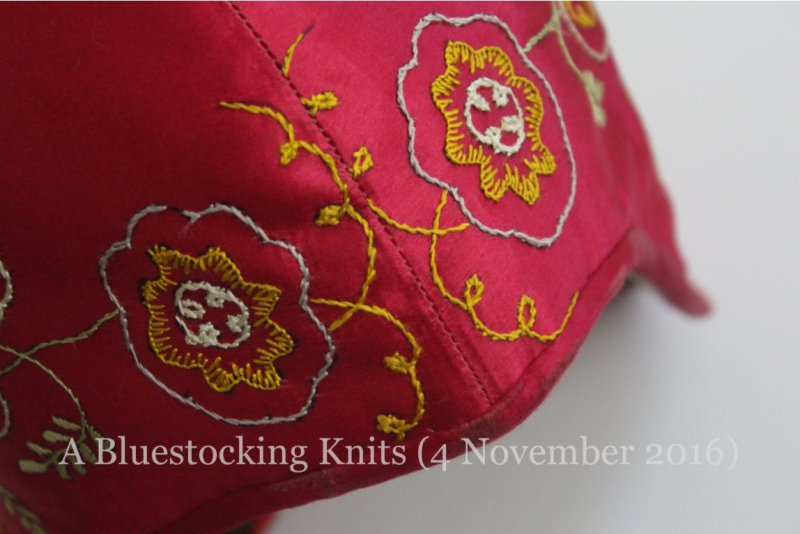
The front edge at the top is the only part of the cap, other than the ribbon tie, that shows much wear.
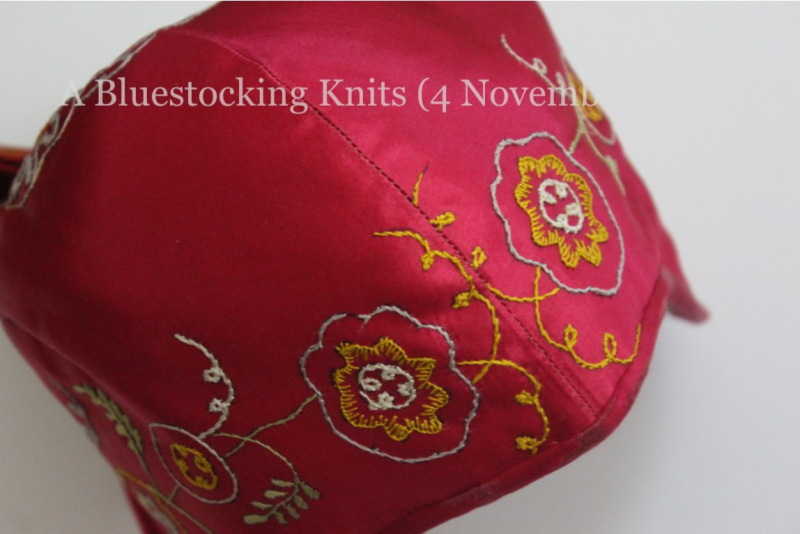
Measurements (all approximate):
Yellow scarf: 96.5cm x 94cm (selvage to selvage), 40g.
Green scarf: 91.5cm square, 48g.
Cap:
center seam (forehead to nape) 24cm
bound edge of front opening very approx. 32cm “cheek to cheek”
the “indentation” at each side of the forehead is approx. 4cm at the deepest point
tie 91cm
lace 34cm long (unstretched) not counting seam allowance; 20.5cm at middle/widest point (unstretched), possibly considerably less at the ends but this is difficult to tell as it is gathered into 2cm!
jacquard ribbon 4.25cm wide, ends of bow 10cm on longer side, bow 12cm across
 A Bluestocking Knits
Leave a comment