
We have a very large pine tree in our backyard, planted smack in the middle some seventy years ago, now about eighty feet tall and home to various squirrels, birds, and perhaps a possum or two, as well as a deliriously long-reaching swing. The drawbacks of it are, obviously, pine tar spots on the deck and unsuspecting bare feet, a constant carpet of needles, and that the canopy reaches literally from one side of our property to the other. But when I saw this seed packet at the market a few months ago, I thought, "Shade? we’ve got that!"
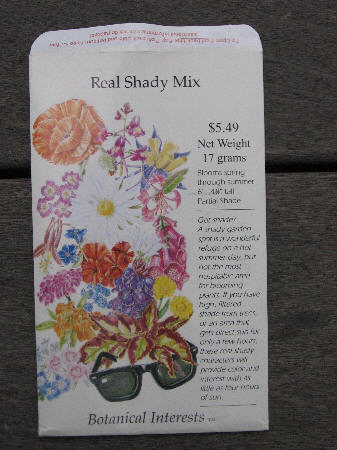
The girls and I had a grand time, then, poking holes in the earth and dropping a pinch of seed into each — by the time we’d gotten about halfway through the large packet, I thought, "oh, well!" and simply flung them into the air to fall where they would. I haven’t done a thing to them since, except for watering now and then in a dry spell, and we’ve been rewarded with a veritable flower meadow.
We haven’t seen the forget-me-not and baby-blue-eyes varieties yet, nor I think much of the self-heal and blue pimpernel — curiously enough, all blue — nor the foxgloves, but the yellow button daisies (Chrysanthemum multicaule) are just starting to open — you can see the yellow dots in the top photo — and about two-thirds of the others are well in evidence.
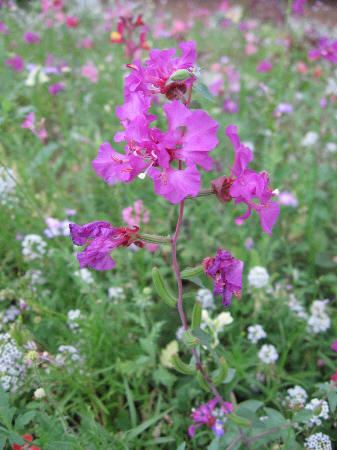
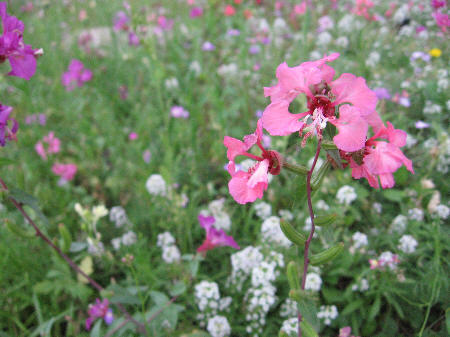
These charming things, which I’d never heard of before, are mountain garland (Clarkia unguiculata), in a variety of purple and pink shades. Lots of the sweet alyssum (Lobularia maritima) in the background, freely reseeding itself for the past few years — patches of dichondra (D. micrantha), too, amusingly, from some long-forgotten lawn I suppose.
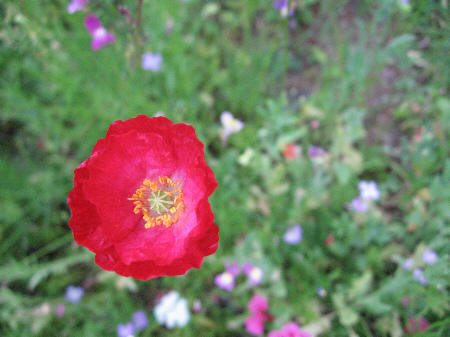
The packet says only Shirley poppies (Papaver rhoeas), although the red one hasn’t got the black underpinnings of the Shirleys, and there are many more colors than simply red.

The bees are happy to see them, too.
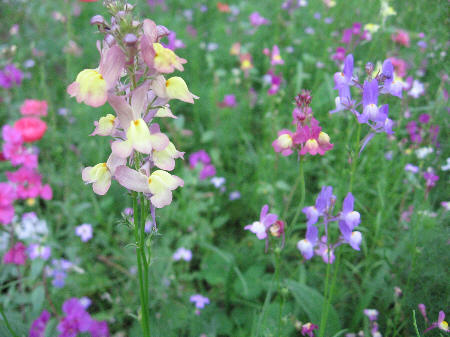
Toadflax or "baby snapdragon" (Linaria maroccana) —
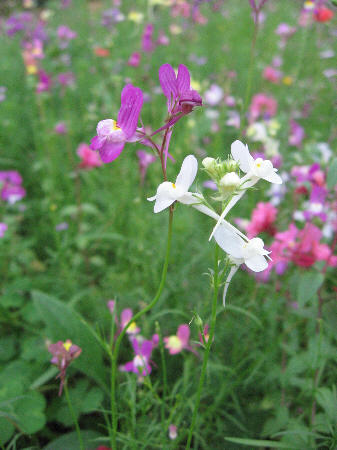
and tiny columbines (Aquilegia hybrida).

I probably should thin things a bit, as they are living in each other’s pockets, as it were, but the charm is the accidental posies, here with some of the pale blue Virginia stock (Malcomia maritima) just underneath.


 A Bluestocking Knits
Leave a comment